 Μake us preferred on Google
 Lt. Lev Stupnikov pulled his truck up to the edge of a field in eastern Ukraine on a frigid February morning, followed by a convoy of senior Russian army officials coming to observe a training exercise near the front line.
For several consecutive days, Russian infantrymen, medics and officers had been drilling on the frozen mud, preparing for an offensive on the nearby city of Vuhledar. The only cover was a line of bare trees.
Stupnikov approached a group of waiting soldiers and snapped a photo, keeping his cellphone close to his chest to avoid drawing attention. Then he quickly tapped out a message: “There must be between 120 and 150 men here.”
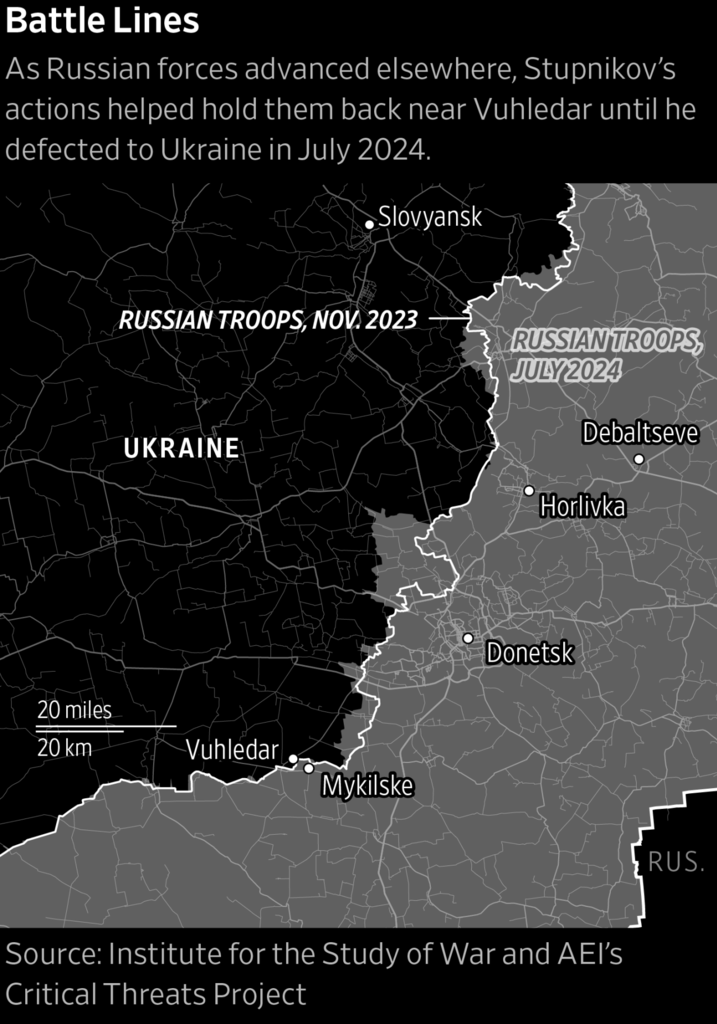
Stupnikov, a recent graduate from a prestigious military academy in St. Petersburg, Russia, had a secret. Earlier that month, he had begun covertly sharing information with Ukrainian intelligence.
He had already given his contact the exact coordinates of the field.
Now, with scores of Russian soldiers and their commanding officers gathered there, Stupnikov would have only moments to move out of the line of fire.
“Walk away,” the Ukrainian contact replied, then: “I’m waiting for a message that you’ve left.” Having received no answer, the contact sent a note in all caps a minute later: “LEAVE.”
Stupnikov was already on the move, sidling up to a group of drivers smoking beside idling vehicles. Feigning a grimace and clutching his stomach, he asked them for a pack of wet wipes. Then he disappeared into the nearby stand of trees and stooped down, pretending to relieve himself.
He was knocked to the ground by an explosion that sent shrapnel careening into a nearby truck. The Ukrainians had fired a barrage of missiles.
When he got to his feet, Stupnikov was stunned by the gruesome sight. Dozens of mutilated bodies lay strewn across the field. Victims groaned in their death throes. Others were motionless over pools of blood on the black earth beneath them.
His phone buzzed. “Were there explosions? Send a photo.”
“There’s just meat,” he answered.
Later that day, he shared a confirmed tally with the Ukrainians: 68 killed and 60 wounded. Among the dead were 10 officers, including one of Kyiv’s top targets: Col. Gusein Musayev, commander of the 36th Motorized Rifle Brigade. The death toll was among the highest from any single strike since Russia began its invasion of Ukraine two years earlier.
It was the first in a string of attacks that the Ukrainians carried out with Stupnikov’s help, making him one of the most consequential saboteurs in recent military history. Ukraine used the intelligence and coordinates he supplied to kill more than 300 Russian soldiers, according to interviews with his handlers, video footage, text exchanges and official Russian reports.
The 26-year-old’s story offers a rare window into a shadow war waged by Ukrainian military intelligence. Ukrainian agents communicate over encrypted platforms with thousands of Russians, ranging from homemakers living near military factories to soldiers on the front line.
The operation taps into growing political disaffection inside Russia. The aim isn’t just to end Russia’s invasion; Ukraine is trying to build an army of Russian turncoats with the training and determination to one day mount an armed struggle inside Russia and help bring an end to Russian President Vladimir Putin’s decadeslong grip on power.
Stupnikov’s decision to turn against his own comrades came after years of deepening disillusionment with the Russian military. But his deadly act of betrayal, which inspired others to follow his lead, was ultimately enabled by an unlikely person, seeking to get him out of harm’s way—his mother.
Protecting the Fatherland
More than three years before Russia’s full-scale invasion of Ukraine, a teenage Stupnikov stepped up to a podium at the Budyonny Military Academy of the Signal Corps to give his oath of service.
“I solemnly swear allegiance to my Fatherland, the Russian Federation,” read the stocky 17-year-old, decked out in a fresh military uniform with a rifle slung across his shoulder.
His mother, Tatiana Yantsen , watched him with a sense of alienation from the other beaming parents around her. She had moved the family to Russia from Kazakhstan six years earlier, under a program to repatriate Russians living abroad.
Her father had told her: “We are russky ,” or ethnic Russian. “Our historic homeland is Russia.” She had taken the chance to start a new life in the Siberian city of Omsk.
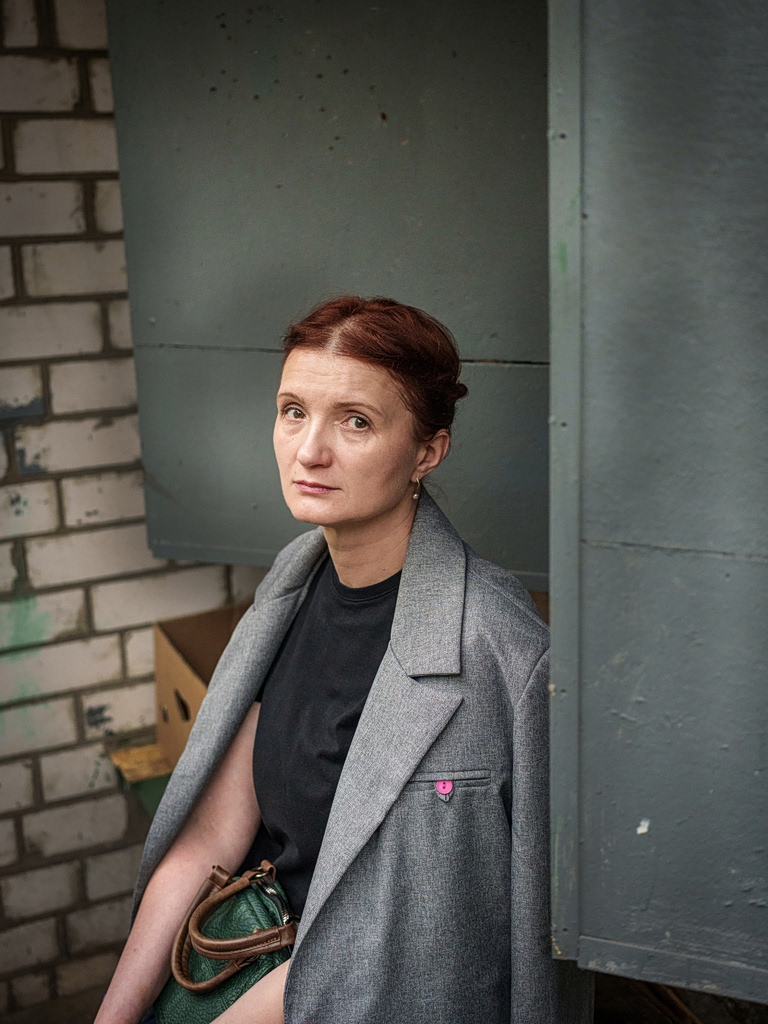
Stupnikov’s mother, Tatiana Yantsen, played a pivotal role in his defection. Justyna Mielnikiewicz for WSJ
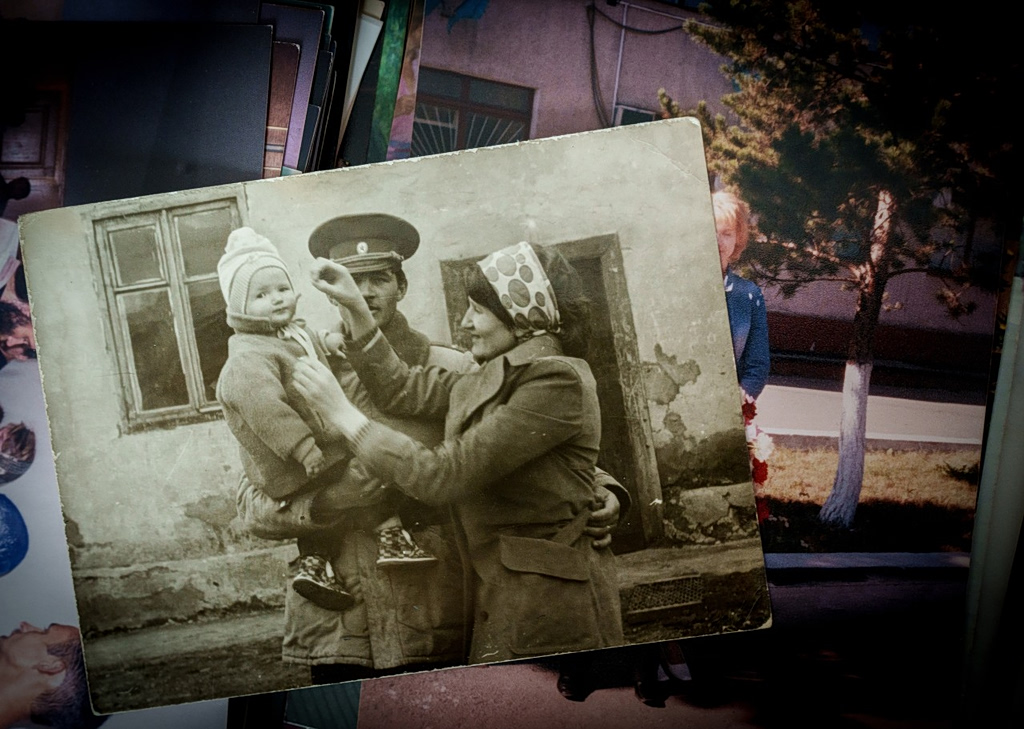
A photo from 1978 showing Tatiana as a child with her parents in Georgia, then part of the Soviet Union, where her father was serving in the military. Justyna Mielnikiewicz for WSJ
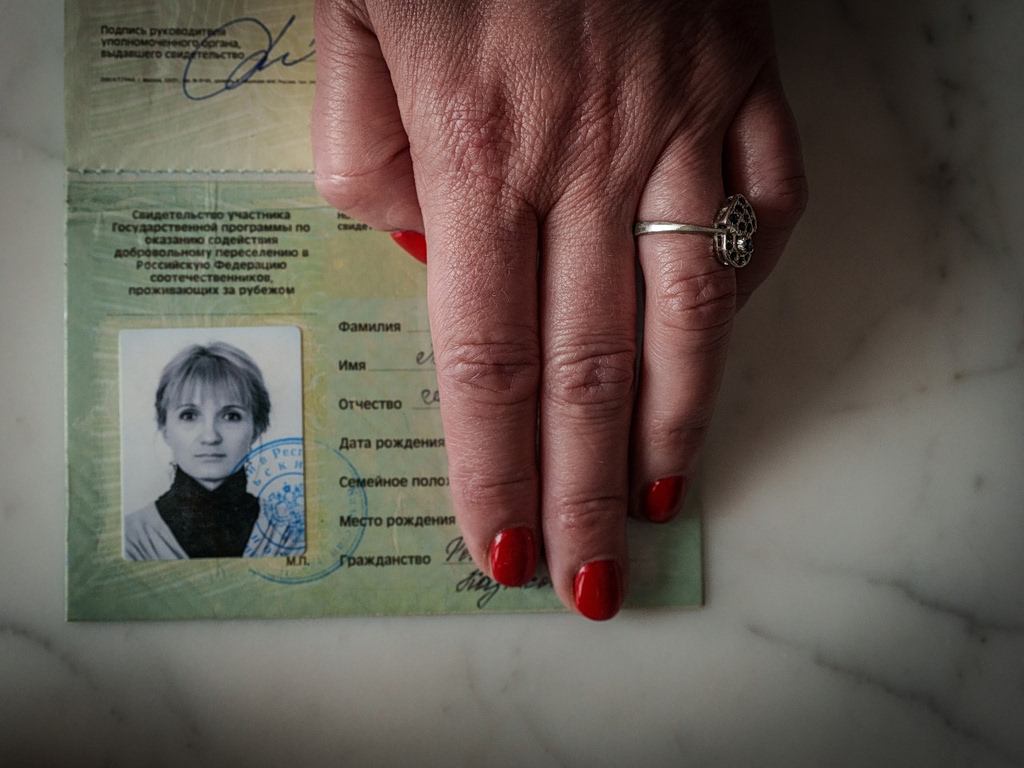
An ID Tatiana received after relocating to Russia from Kazakhstan as part of a repatriation program. Justyna Mielnikiewicz for WSJ
In the years since, however, the 49-year-old office worker had grown opposed to Putin and joined protests against his rule. A single mother abandoned by her husband, she didn’t want her only son serving in the army.
Academy life was fueling Stupnikov’s own disenchantment with the army, even as he excelled in sports and schoolwork. It began when he was rejected by a pilot school at 17 because he refused to pay a bribe. Now, at the academy, cadets had to fork over to leave the compound, take longer vacations or choose their military base after graduation.
He was shocked at the dilapidated Soviet-era vehicles he saw during training.
By the time he married his teenage sweetheart, Liza, in 2021, he was already planning a life outside of the military. He wanted to become a fitness instructor and start a family.
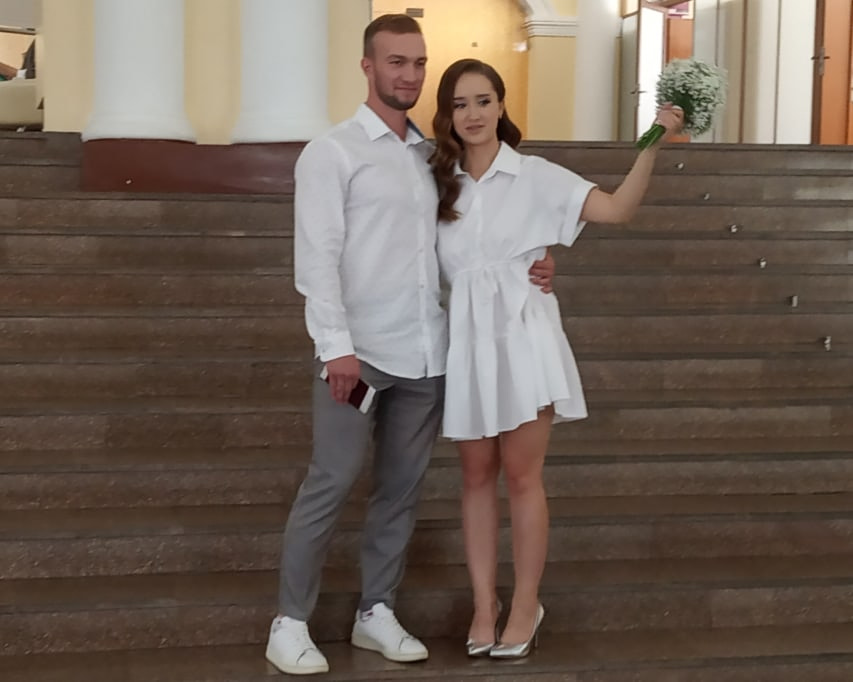
Stupnikov and his wife, Liza, at their wedding in 2021. Justyna Mielnikiewicz for WSJ
At his wedding he stood with ramrod military posture as guests scrawled wishes on his vest. They toasted the couple and placed donations in either a pink or a blue box, betting on the sex of their first child.
Events outside of his control would soon upend his plans.
‘Inside, I Was on Fire’
He awoke one morning in February 2022 to clips on his phone of Russian helicopters flying over Ukrainian cities and bombs exploding in the first hours of Russia’s full-scale invasion.
He was appalled by the violence and wanted no part in it. “They were dropping bombs on innocent civilians,” he said. “It was evil.”
Almost overnight, the conflict transformed the atmosphere on campus. Cadets lined up on the parade ground each morning as an officer read out battlefield updates. They learned which villages had been “liberated” and the number of Ukrainian “nationalists” killed overnight.
They were herded into the academy’s grand auditorium and shown speeches by Putin about the need for the “special military operation” against NATO aggression.
Stupnikov sat toward the back with a vacant stare. He thought of the images emerging from Ukraine and wondered of his comrades: How can you all continue living as normal, as if nothing has happened? He spent his evenings at home with Liza, watching Russian opposition clips and interviews with prisoners of war captured by Ukraine.
A small coterie of dissenters began exchanging knowing glances on campus. Some asked to quit the academy. Their requests remained pending for months. It was clear that de-enlisting was no longer an option.
Stupnikov was careful to conceal his views. He became skilled in a sort of double-think. “I couldn’t show my emotions,” he recalled. “But inside, I was on fire.”
His graduation wasn’t until June, but the bungled war effort urgently needed a fresh crop of officers. So in April, the 450 cadets in his cohort gathered in the parade ground and marched forward one by one to pick up shoulder patches decorated with two gold stars and a red stripe denoting their new rank: lieutenant.
As dusk settled, Stupnikov stood in a circle with other newly minted officers holding, per Russian military tradition, a combat helmet filled with champagne. As Liza watched, he shouted the name of his assigned military base in Russia’s Far East. Then he downed the champagne to loud cheers.
A Mother’s Fear
One crisp morning in Omsk, in November 2023, Tatiana arrived early at work. She brewed a strong coffee, then fired off a message to her son: “How are you holding up?”
She was hanging up her jacket when her phone lighted up with his reply. Instead of a message, it was a scanned army document. Marked “URGENT” in all caps, it said her son would be dispatched to the war, along with a dozen other troops, “for the timely replenishment of losses.”
Tatiana sat down at her desk and lowered her head into her hands. She was shaking, her heart pounding in her ears. “It dawned on me: The moment has come,” she later recalled. “I have to do something.”
She had already spent 18 months waging her own inner struggle. She took Stupnikov’s younger sister, Alisa, out of school classes that celebrated Russia’s war effort. On her drive to work, she would blast songs by Ukrainian ska punk band Zhadan and the Dogs, singing along to lyrics that mixed denunciations of the war with empathy for its Ukrainian victims. At traffic lights, she would reach for the volume control, wary of drawing attention. Alisa, then 14, worried her mother would get herself in trouble.
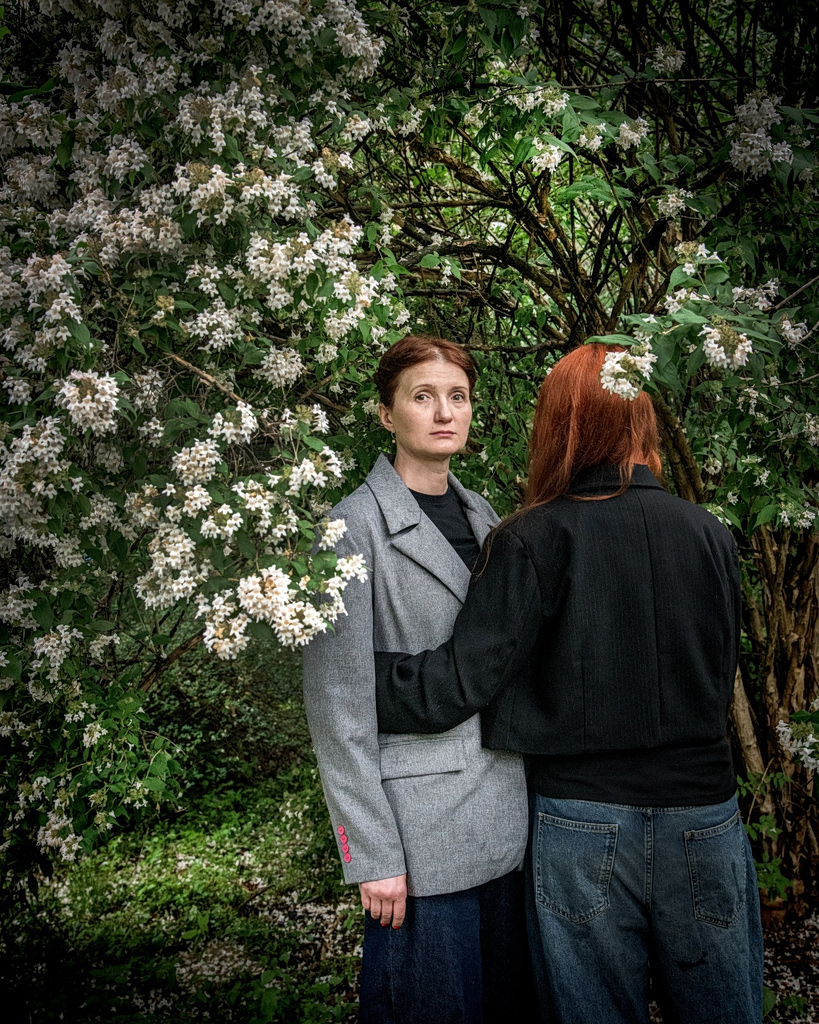
Tatiana Yantsen, Stupnikov’s mother, with his half-sister Alisa at an undisclosed location outside Russia. Justyna Mielnikiewicz for WSJ
When Stupnikov visited Omsk with Liza after his graduation, Tatiana and her son spent hours on the phone with human-rights lawyers and nonprofit groups that helped Russian soldiers desert. Some advised him to head to Belarus, a staunch Russian ally, and then to Armenia, where he would be stuck in legal limbo. Others said: Get in touch when you are actually at war.
But Tatiana wanted to act before it was too late. She knew her son’s journey to the Ukrainian border had a stopover in Moscow. She urged him to board a flight there to Kazakhstan, where relatives would put him up.
Fearing the potential consequences, Stupnikov didn’t go through with it. Instead, he arrived that fall in the front-line village of Mykilske, part of Russia’s 36th Separate Guards Motor Rifle Brigade.
One night, Tatiana headed to the Omsk city center with a stack of posters denouncing the war. With trembling hands, she taped them to two dozen posts. When she retraced her steps the next day, all the posters had been taken down.
Growing Resentment
Stupnikov was appointed the chief signals officer for a battalion tasked with helping capture Vuhledar, a stronghold central to Ukraine’s defense of the strategic Donbas region. His job was ensuring commanders had smooth communication with their units and access to feeds from reconnaissance drones and surveillance cameras.
The 36th Brigade was a storied unit that had advanced on Kyiv in the first days of the invasion. But after nearly three years of war, it had almost no volunteers or contract soldiers left. Most of the Russians fighting under Stupnikov were convicts granted early release and untrained recruits who had signed up for money.
He was disgusted by their conduct. One afternoon, he watched as a group ransacked an alcohol store, roughing up its Ukrainian owner. The brigade command post in Mykilske, where Stupnikov often sat behind a set of screens, was decked out with chairs, sofas, carpets and large-screen televisions looted from local homes.
Walking with a subordinate to check Russian surveillance cameras on the outskirts of Mykilske one day, Stupnikov motioned toward the ruined homes flanking the street, and asked aloud: “How hard must it be to be a civilian here?”
The subordinate scoffed. “Well, why did they clamor to be part of Europe then?” he said, echoing a Kremlin argument that Ukraine’s Western political course had left Russia no choice but to invade.
Stupnikov bit his tongue. “Yeah, I guess so,” he replied.
Learning to Speak in Code
In February 2024, three months into Stupnikov’s front-line service, Tatiana wrote to Dmytro Karpenko, a computer programmer working closely with Ukrainian military intelligence. Could he help her son desert?
Karpenko was well-known for posting video interviews with Russian prisoners of war to his YouTube channel. Some POWs contacted him after returning home, offering military secrets for cash.
In October 2023, he announced payments of 250,000 rubles, equivalent to around $2,700, for any Russian serviceman who supplied information to aid Ukraine’s war effort.
Russians from all walks of life began reaching out: employees of state energy companies; agents from Russia’s Federal Security Service, or FSB ; even anxiety-ridden grandmothers of Russian soldiers.
Karpenko, who has a round face, close-cropped black hair and bags under his eyes, spent his waking hours smoking cigarettes, taking calls and scrolling through messages on a dozen smartphones with some 40 accounts he used to field informants. The shoulder patch on his military-style jacket read: “Fuck, it’s like I live in a mental asylum.”
“You cast your line, and you don’t know what you’ll pull in,” he said of his program. “You might pull in a tiny fish or you might pull in a whale.”
Stupnikov recognized Karpenko’s name when his mother told him about her outreach . He had watched dozens of his POW interviews. He composed a message on WhatsApp. “I’m ready to work with you, and to give myself up,” it read. He appended his name, rank, location, and battalion and brigade names.
In a phone call that evening, Karpenko relayed his conditions. He proposed a schedule of interaction, with an appointed time each week when the two would get in touch to discuss the next target and the cash sum it would earn. Stupnikov would have to regularly erase any record of their exchanges.
They also established a code language. A number agreed in advance—the day of the month, plus five—would be typed after each greeting. A message sent on Feb. 20 should start with “Hello 25.” If no number was given, Karpenko would know his source had been compromised.
Stupnikov agreed to work with the Ukrainian. He set just one condition of his own: No money, he said, was to change hands.
A Traitor in the Ranks
Their first collaboration—the strike on the field in eastern Ukraine—was more successful than anything Karpenko had previously arranged. Stupnikov helped his fellow soldiers with the cleanup, loading the dead and injured into waiting trucks. Then he headed back to barracks, where he sat with the surviving troops and pretended he had suffered a concussion.
That night, he slept badly, fearing the FSB would soon haul him in.
Four thousand miles away in Russia’s Far East, the town of Borzya, home of the 36th Brigade, lowered flags to half mast. Officials promised compensation to relatives of the dead. Russian channels ran footage of the gruesome aftermath, prompting soldiers and war correspondents to rail against the military command. “As usual, no one is going to pay the price,” one wrote.
FSB agents summoned the brigade’s deputy commander for questioning, as well as a soldier who had recorded a video later broadcast by Ukrainian and Western media. Troops in Stupnikov’s battalion were instructed to surrender their phones for inspection. Stupnikov slipped away and buried the compromised device—one of three in his possession—in the garden of the house where he was billeted.
As the Ukrainians urged him on, Stupnikov stepped up his campaign, sabotaging his brigade’s work with actions large and small. He shared radio frequencies, troop locations and detailed battle planning. He disabled cameras monitoring Ukrainian territory and cranked up the voltage on a battery pack attached to a drone controller, causing it to overheat and malfunction halfway through a mission.
Thanks to Stupnikov, the Ukrainians knew exactly who was being sent where and when tanks would advance. His brigade was losing soldiers at a rate that stood out—even in a Russian army that was hemorrhaging men.
In March, the Ukrainians killed several officers at a large brigade gathering flagged by Stupnikov. In May, they struck the basement of a former hotel where two assault units were staying, killing 20 men including a captain. Other tips led to a strike on a brigade command post during a high-level meeting.
Some nights, as Stupnikov began drifting off, he would suddenly see and hear explosions like the ones he had helped bring about. In those moments, he tried to brush aside the guilt and rationalize what he was doing. He told himself the victims were bad people. Russia would have sent them to their slaughter anyway. At least their mothers would now get their bodies back and qualify for a payout from the state.
“If I was a pious person, I could have concluded that I had committed murder, and that all those souls will haunt me forever,” he said.
The Slip-Up
The more his sabotage efforts succeeded, the more Stupnikov feared he was sticking out. Eventually, he was the battalion’s only remaining officer from the cohort that was there when he joined in November. Every other soldier involved in planning the unit’s combat operations had been killed, wounded or moved to another part of the front.
Increasingly, suspicion of a high-level saboteur grew.
Stupnikov was sitting in the Mykilske command post one day in June when his commander suddenly threw up his arms in exasperation. The senior officer had been monitoring the battlefield on a set of computer screens. Kyiv had just launched another successful strike against his force.
“Nothing we’re doing is working out. I have a feeling there’s a Stierlitz in our ranks,” the commander said, invoking the name of a fictional sleeper agent—the hero of a popular Soviet movie—who had infiltrated the Nazi leadership. Scanning the room, the commander settled his gaze on Stupnikov.
Stupnikov tried to play it off as a joke. He laughed and quickly turned back to his work. But he feared it would only be a matter of time before his secret was discovered.
“It was constant, endless tension,” he said. “Real spies get training in espionage. I had received no such training at all.”
The mounting toll of secrecy soon led to a slip-up that nearly cost him his life. One evening toward the end of May, he shared with Karpenko a screenshot from Google Maps showing the brigade’s new headquarters in Mykilske. The Ukrainian told him there was a problem: The file he sent wasn’t loading.
Stupnikov had already deleted the screenshot, so he sent a new one. Some time later, he went to sleep.
A deafening blast soon jolted him awake. He saw a gaping hole where the walls had collapsed and realized he had accidentally sent the coordinates of his own basement location. He narrowly survived.
Weeks later, in early July, Stupnikov was in the brigade command post when he got a message from Karpenko: “Come to the edge of Mykilske at an appointed time later this week,” it said. “Leave any weapons behind.”
His long-awaited exfiltration was about to begin.
A Nighttime Escape
The night of July 6 was warm, clear and cloudless. A light breeze rustled in the trees as Stupnikov walked to the outskirts of the village, carrying his military radio and his smartphone. His mother checked in as she always did before bed.
“Go to sleep,” he texted her, revealing nothing about his plans. “Everything is fine.”
The Ukrainians had flown a drone over the path he should follow. Reviewing the footage they sent, he had noted the deep tank tracks and the destroyed armored vehicles on the final approach to Ukrainian-held land.
He was provided with a password to give a Ukrainian unit waiting on the other side. He chuckled to himself when he read the phrase—so absurd in light of the ordeal he was about to face.
As he neared the edge of the village, Stupnikov heard a shout from one of the two-story homes on the street, which served as a brigade observation post. A Russian soldier was checking: Was he friend or foe?
Stupnikov named his battalion, and said he was out to inspect surveillance cameras and test the radio connection. “Is it possible to go farther in that direction?” he asked the soldier, motioning toward Ukrainian territory.
“Yes, but not very far,” the man answered.
“It’s OK,” Stupnikov replied. “I’m not planning to go far.”
A few hundred yards farther he maneuvered around a set of antitank obstacles and paused near a tree line. Then he heard the whir of the Ukrainian drone sent to guide him.
Inside an underground bunker several miles away, a group of soldiers from Ukraine’s 72nd Brigade sat before a set of large screens. They watched as the crosshairs of the drone’s camera zeroed in on a small figure—colored white in the drone’s thermal imaging lens, in stark contrast to the surrounding gray terrain. Stupnikov emerged from a street flanked by damaged buildings and took his first steps into no-man’s-land.
one of the Ukrainians wondered.
another said.
Stupnikov was indeed afraid. He had told his mother the prospect of crossing the front line terrified him. He knew all manner of things could go wrong.
The Russians—or even the wrong Ukrainians—could spot him at any moment and call in a strike.
He had no time to linger on such thoughts. He pressed forward and tried to calm his nerves by imagining himself in a hot bath.
Knotted lengths of metal, left by wire-guided antitank rockets, kept catching in his feet. They were hard to distinguish from the tripwires of the antipersonnel mines that covered the area, which for two years had demarcated the front line. Many of the explosives were masked by a fresh layer of grass.
He moved steadily north, using his smartphone to illuminate the ground. He couldn’t discern a clear path. From their bunker, the Ukrainians discussed ways to bring the guidance drone closer to Stupnikov and center it over the intended route. The drone camera panned round to assess the surrounding terrain: miles of marshland pockmarked with craters from artillery strikes.
About 40 minutes in, he heard ducks quacking. It was a reassuring sign that he was headed in the right direction: His destination lay on the edge of a pond.
Inside the bunker, the Ukrainians were transfixed by the live feed of his passage. “He’s so close now,” one excited drone operator said as Stupnikov neared the tree line where the forward positions of Ukraine’s 72nd Brigade were concealed.
Then suddenly, barely perceptible amid the trees and undergrowth, like insects moving along a cauliflower bud, several tiny white figures popped up on the Ukrainians’ drone footage. On the ground, peering out of a dugout, three Ukrainian troops aimed their rifles at the approaching man.
One of them appeared twitchy. He gripped a machine gun with shaking hands, Stupnikov later recalled.
he barked.
Stupnikov answered with the words that had earlier made him chuckle: “Peanut shop.”
He was checked for weapons, blindfolded and led to a pickup truck.
‘Where I Was Supposed to Be’
It was 8 a.m. in Omsk when Tatiana was awaked by a phone call. The number displayed on her screen was Karpenko’s, but when she picked up, groggy and disoriented, it was her son’s voice that she heard.
“Are you awake?” he asked. Birds chirped as he sat on the porch of a house near the front line, still in his Russian uniform. “Listen: I have come to where I was supposed to be.”
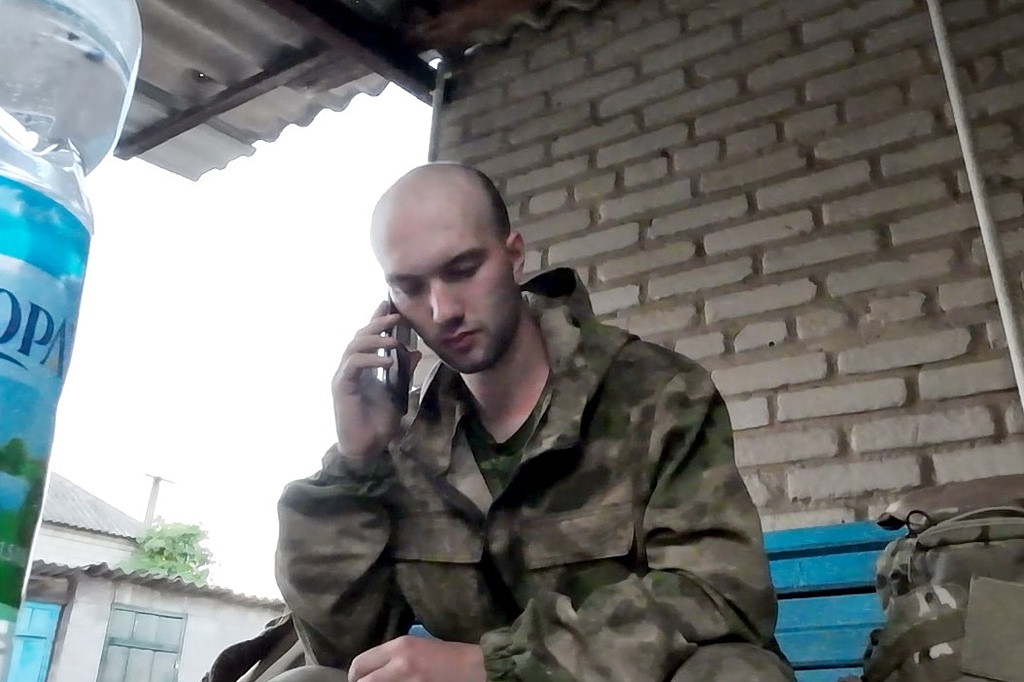
Still from a video that shows Stupnikov calling his mother just after his escape across the frontlines. He tells her: “I have come to where I was supposed to be.” Justyna Mielnikiewicz for WSJ
Tatiana sprang to her feet. Her son hadn’t mentioned Ukraine—they assumed their calls were being recorded—but this was a phrase they had agreed on in the event he made it to the other side.
After the call, she collapsed on the bed and buried her head in her pillows. She had bottled up her emotions for months, afraid that leaning in to them would draw unwanted attention and distract her from the task of helping her son. Now she wept, with a huge smile spread over her face. “I felt a lightness in my soul,” she said.
But anxiety soon crept in. Karpenko instructed her to wait two days and then call Stupnikov’s military base, to report his disappearance. After that, the Ukrainian said, they would begin the process of getting her and her family out too.
A One-Way Ticket
Stupnikov was placed in a cell, isolated from other POWs. On the second day, he was driven to a building near the front line and brought to a basement room. A broad-shouldered military commander with black stubble entered.
Denis Kapustin led the Russian Volunteer Corps, or RVC, a Ukrainian army unit composed of ethnic Russians opposed to Putin’s regime. The RVC had led armed raids into Russia and doubled as a far-right political organization advocating for Putin’s ouster. The RVC lacked a communications specialist, and Kapustin wanted Stupnikov on board.
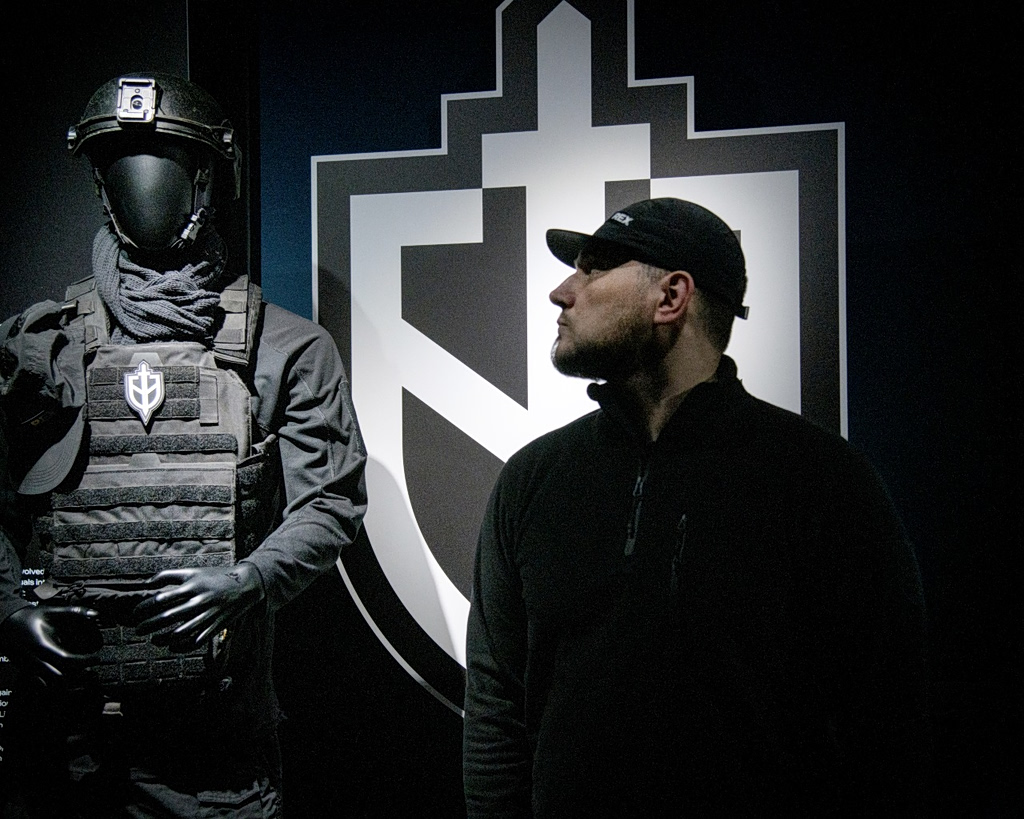
Denis Kapustin, Moscow-born commander of the Russian Volunteer Corps, at an exhibition in Kyiv honoring his unit’s contribution to Ukraine’s defense effort. Justyna Mielnikiewicz for WSJ
But the Moscow-born commander, a top target for Russia’s intelligence services, couldn’t take chances, not knowing yet whether he could trust the defector. Several bodyguards surrounded Kapustin as he laid out his bargain: The RVC was offering membership in an elite fighting force, he told Stupnikov, but it was a one-way ticket. Once you join, you stay through the war.
Stupnikov had earned his freedom. After crossing the front line, he had handed the Ukrainians a smartphone with the passcodes to multiple communication channels they would use for months to access live feeds from a dozen Russian drones and surveillance cameras. He was wary of wading back into war, and tempted to try to build a life elsewhere.
That option was fraught. Another defector, Russian army pilot Maksim Kuzminov, had flown his Mi-8 attack helicopter into Ukraine the previous year and turned it over to Kyiv for a $500,000 reward. Six months later, Kuzminov was arriving back at a rented condo by the Spanish seaside when an assassin shot him dead. Anyone thinking of betraying Russia had gotten the message.
Stupnikov understood a central paradox of his situation: The safest place for turncoats like him was in Ukraine—close to the troops and country they left behind. Two days after their meeting, he passed a message to Kapustin: He was in.
A major issue remained unresolved. Stupnikov’s wife had remained in Borzya, integrated with the tightknit community of officers’ wives. After joining the RVC, he called Liza to ask if she was ready to join him.
He wasn’t prepared for her response. She told him she wanted a calm life far from the war and close to her parents. Stupnikov told her he had escaped the Russian army to give her and his family a better life abroad.
After that call, he messaged her repeatedly, trying to convince her. A major battle in northern Ukraine helped distract him from a deepening depression. But Liza had made up her mind. In one text, she told him: “This was your dream, not mine.”
Stupnikov sent a final message to her in late September. After it was met with silence, he followed up: “So, are we no longer talking?” She never answered.
One year later, after Stupnikov shared his story in a two-hour video interview with Karpenko, Liza was questioned by Russian authorities as part of a criminal probe into his desertion. She told Russian state media his decision to help Ukraine amounted to treason. “He betrayed me too,” she said .
Until the interview, Russia’s military command had no proof Stupnikov was alive. He had been listed as AWOL, presumed dead. Now, prosecutors visited his relatives in Omsk and called on residents of housing blocks where his family had lived. But by this point, Tatiana and Alisa were no longer there.
‘Is This Really Our War?’
In February 2025, mother and daughter packed a backpack and suitcase each. They were headed for Moldova, where they were to cross by foot into Ukraine and be met by Karpenko.
They packed light, in line with their cover story about a brief holiday abroad. But Tatiana couldn’t resist one indulgence: In a folder, she placed a lock of baby hair that she kept from Alisa and Stupnikov’s infancy, as well as some old photos and his high school certificate.

Tatiana and her daughter Alisa, Stupnikov’s half-sister, are now building a new life outside Russia. They haven’t seen Stupnikov in months. Justyna Mielnikiewicz for WSJ
She had spent the previous months fielding calls from Russian military officials. They urged her to convince Stupnikov, if he was alive, to give himself up. She pretended to be a distressed mother and argued hysterically that it was their job to find him.
When she reached Omsk airport, the customs officer checked their passports and then turned to Alisa. “Is this your mom?” he asked the 16-year-old. Alisa nodded. “When is your mom’s birthday?” the man followed up. It was a routine question, to verify their relationship. But Alisa froze, her mind blank. She blinked, paused, and then muttered: “In the winter.”
Tatiana turned cold—then sought refuge in humor. “You know what teenagers are like,” she joked. “They don’t care about their parents.” The officer gave a wan smile. “Yeah, I also have teenagers,” he said. Then he stamped their passports and waved them through.
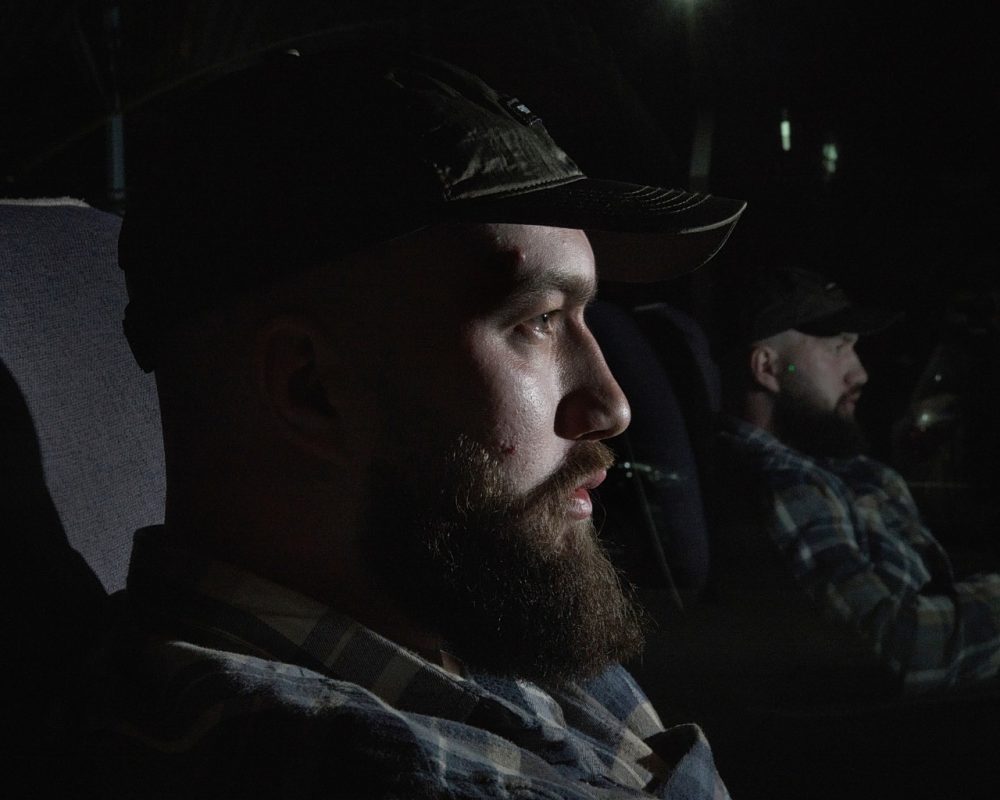
Stupnikov got a break from front-line service to greet them at their temporary accommodation in Kyiv. Tatiana hadn’t seen him in a year and a half, and was moved by the change in his appearance. He had put on a bit of weight and had a full beard and thick handlebar mustache, a look typical for RVC fighters inspired by Russian counter-revolutionaries from 1917.
In conversations over the following days, Tatiana told him she was conflicted over his decision to once again leave his family and go back to fighting. “Is this really our war?” she asked him.
Stupnikov explained the sense of duty he felt. He wanted to atone for being part of a brutal invasion force. He believed every Russian citizen bore responsibility for the war and for helping end it. “Yes,” he answered his mother. “This is our war.”
A New Mission on the Other Side
This summer, Stupnikov was among dozens of RVC fighters who gathered in a forest clearing near the front lines in eastern Ukraine. They lighted a set of fires and formed a circle around the stone remains of an ancient pagan church.
Holding rifles that once belonged to comrades killed in battle, and were now inscribed with their call-signs, they walked forward one-by-one and placed the guns on the ground. They delivered a brief eulogy, then pressed their fists to their chests and called out: “Forever in our ranks!”
Stupnikov is now facing off against the Russian brigade he left behind. His story has inspired others. One Russian drone pilot tossed a live grenade into his military barracks before sprinting across the front lines earlier this year. Another defector who aided Ukraine said he had wanted to beat Stupnikov’s record of 300 Russians dead. Karpenko’s informant pipeline has become a 24/7 operation, with longtime sources earning $4,000 a month.
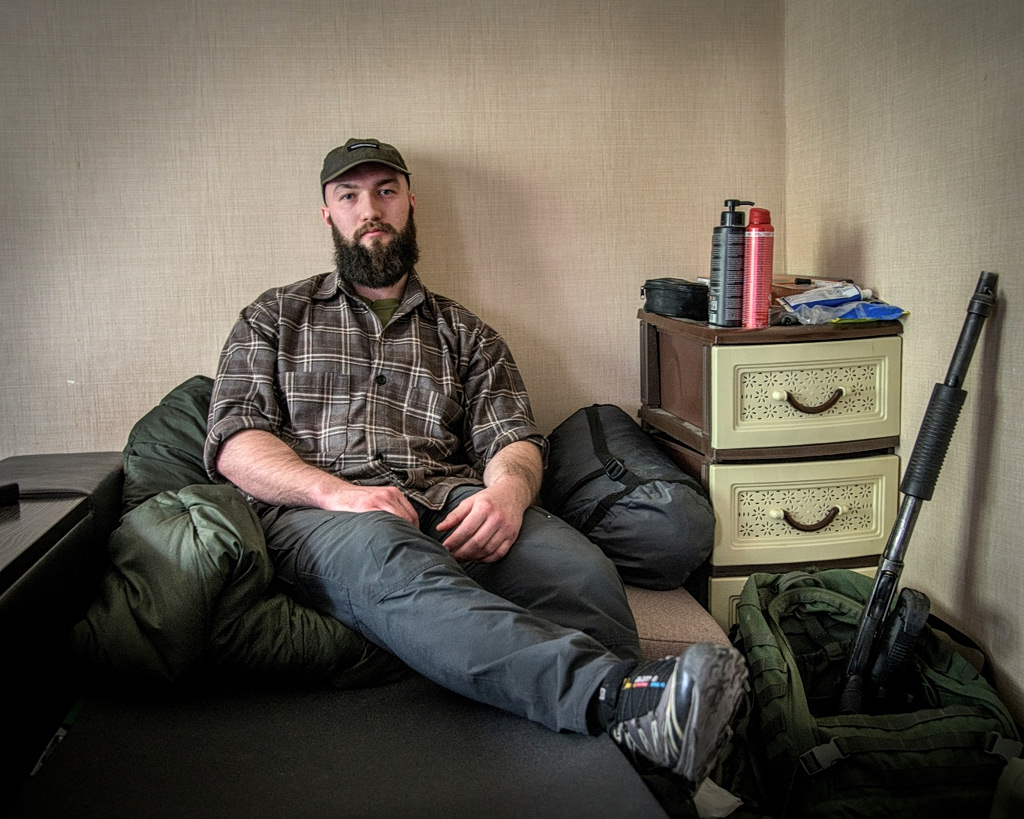
Stupnikov at his temporary apartment in Ukraine, where two sacks contain all his possessions and an anti-drone gun rests against the wall. Justyna Mielnikiewicz for WSJ
As Stupnikov watched the ceremony commemorating the fallen, his eyes began welling up. He had lost his wife. His mother and sister were in a safe location, but he hadn’t seen them in months.
An apartment where he was staying suggested a spartan lifestyle. He kept all his possessions in two sacks. Propped against the wall was an antidrone gun he took on trips to maintain communications equipment deep inside the so-called kill zone between Russian and Ukrainian positions.
In Ukraine, he was no longer an officer. He looked at the other unranked Russians beside him. Some had set fire to army recruitment offices inside Russia, or risked jail at protests. All were now fighting together to take back their country. These men, Stupnikov said, were his new family.
He reflected on the promise he had made at the military academy, almost a decade earlier. “Did I betray my oath? I pledged to defend freedo