 Μake us preferred on Google
 Every Greek island has its own pasta shape, and often its own name for it. These handmade specialties tell the story of a time when island households had to make the most of whatever they had. Prepared with the simplest ingredients—flour and water, occasionally enriched with eggs or milk—some pastas were dried under the August sun and stored for the winter, while others went straight from the kitchen counter into a pot of boiling water.
Their history stretches back centuries. Travel from ancient Greece to the Byzantine Empire, and you will encounter preparations that resemble the pasta we know today. The ancient Greeks made laganon, a dough of flour and water skillfully cut into strips. The Romans adopted the preparation under the name lagana, a word that may sound familiar to lovers of lasagna.
During the Byzantine Empire, cooks prepared itria, thin, elongated, cordlike strands of pasta. Later, Venetian rule left its mark on everyday life and local cooking across parts of Greece, bringing Italian influences to the Aegean and Ionian islands. Over time, these imported culinary ideas adapted to local ingredients, creating distinctive regional traditions.
The result is an extraordinary range of island pastas, each reflecting the landscape, resources and ingenuity of the place where it originated. From rich meat sauces to tangy sheep’s-milk cheeses and rustic soups, these dishes turn humble ingredients into something worth celebrating.
Crete: Skioufikta and xinohondros
In Crete, traditional pasta-making is almost a ritual. One of the island’s best-known varieties is skioufikta: small pieces of dough twisted by hand into distinctive shapes. Their name comes from the Cretan word for twisting.
Traditionally, skioufikta are boiled in meat broth and served with plenty of aged anthotyro, a traditional Greek cheese, along with some of the cooking liquid. The result is a simple but deeply satisfying dish that lets the pasta absorb the flavors of the broth.
Another Cretan specialty is xinohondros, made from cracked wheat and fermented goat’s milk. The mixture is shaped into lumps and left to dry in the sun, preserving it for later use.
Once cooked, xinohondros delivers the tangy, hearty flavors of traditional rural cooking.
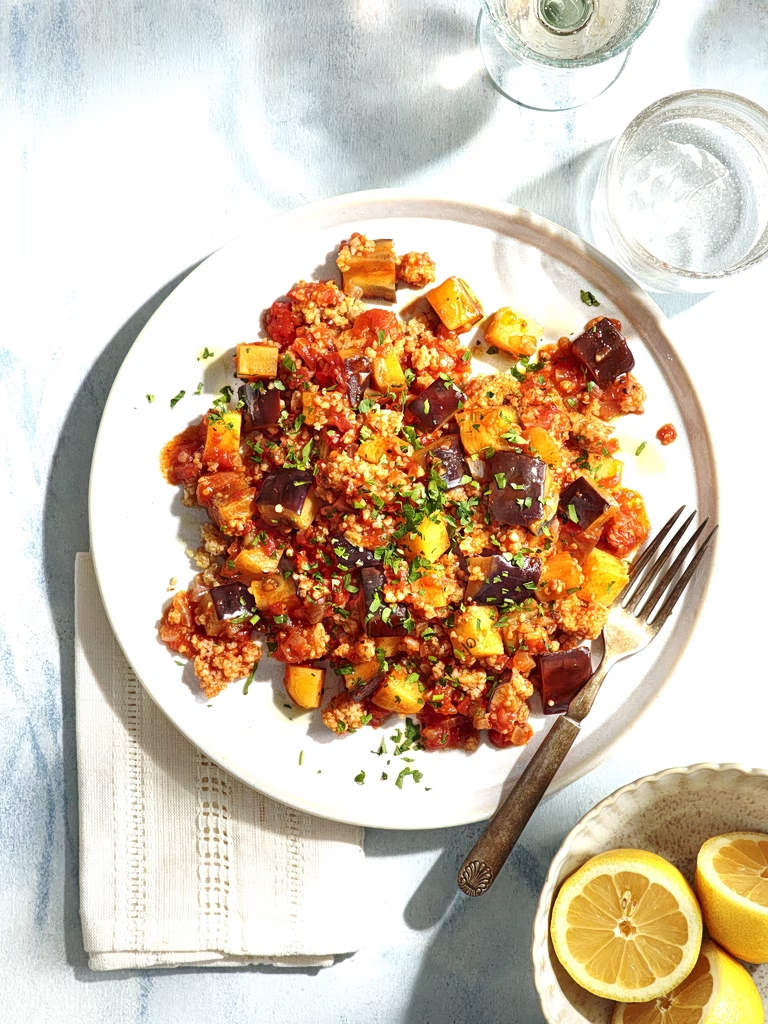
Cretan xinohondros cooked with eggplant. Photo: Giorgos Drakopoulos; food styling: Olivia Artemis Webb.
Folegandros: Matsata, the island’s answer to fresh pasta
On the Cycladic islands, where water has historically been scarce and resources limited, pasta often served as a substitute for bread.
On Folegandros, one of the islands in the southern Aegean, the local specialty is matsata. These broad, ribbon-like noodles are traditionally made fresh and served almost exclusively with meat braised in tomato sauce—rabbit, rooster or young goat—topped with generous amounts of aged mizithra, a traditional Greek whey cheese.
Matsata is a perfect example of how island cooking turns a few basic ingredients into a meal designed for sharing.
Karpathos: Makarounes with caramelized onions
The makarounes of Karpathos, in the Dodecanese island group, are among the Aegean’s best-known traditional pastas.
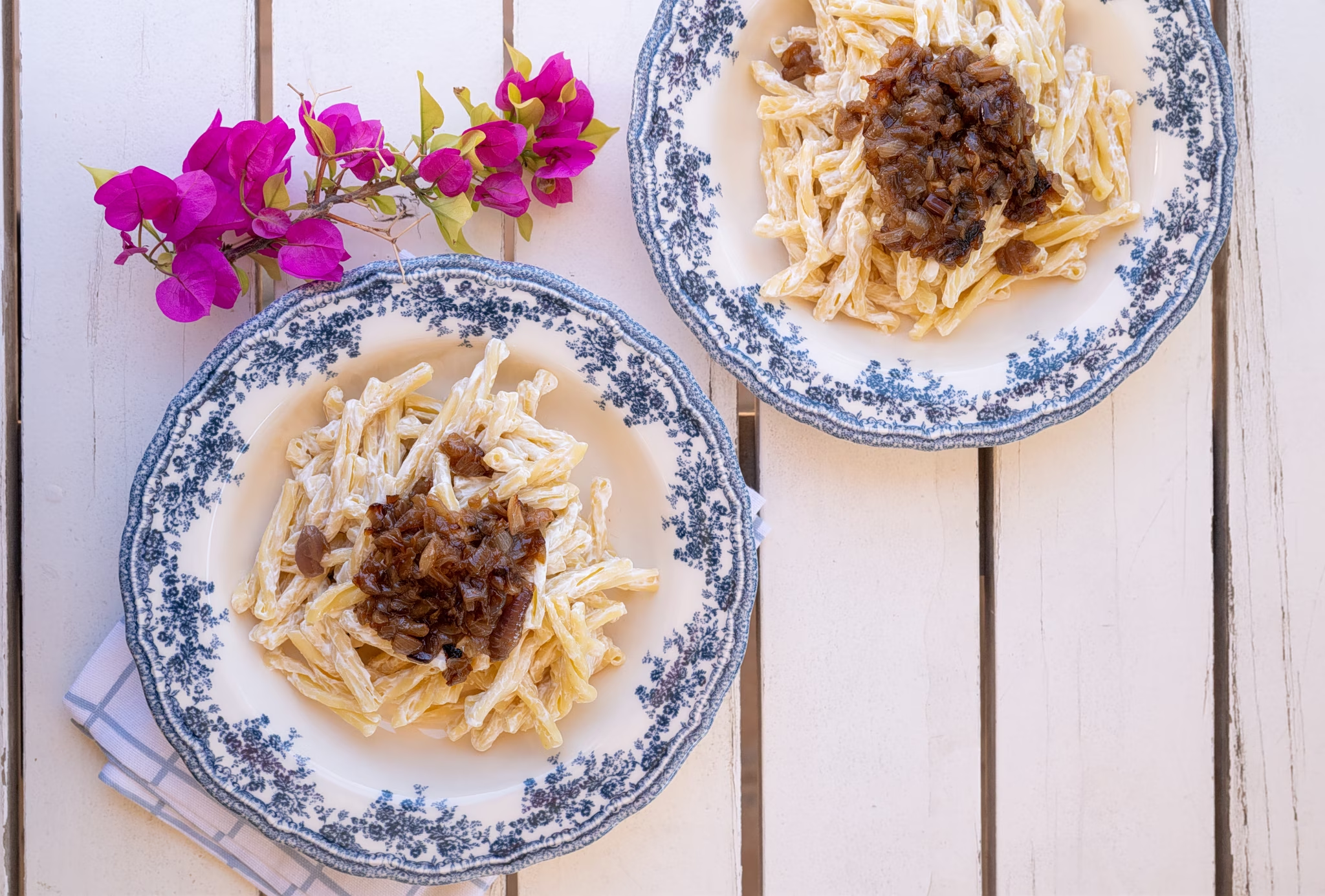
Their distinctive hollow shape allows them to catch and hold a rich sauce. But what truly sets the dish apart is the finishing touch: tsiknóma, finely chopped onions slowly caramelized in locally produced goat’s butter and spooned over the pasta just before serving.
The combination of tender pasta, sweet onions and fragrant butter creates a dish that is both rustic and intensely flavorful.
Chios: Aftoudia, the Greek island version of orecchiette
Farther north, on the island of Chios, cooks prepare aftoudia, small pasta shapes that closely resemble Italian orecchiette, or “little ears.”
Made with just flour, water and salt, they are often served with meat cooked in tomato sauce or a thick, rich tomato sauce on its own.
Their simple shape and ingredients make them a versatile foundation for the bold flavors of traditional island cooking.
Lemnos: Flomaria for festive tables
On Lemnos, an island in the northern Aegean, the local pasta of choice is flomaria. Made with flour, fresh milk and farm-fresh eggs, these rich noodles resemble roughly cut egg pasta.
Flomaria are particularly popular alongside rooster braised in tomato sauce, a dish often served at festive family gatherings. Their richer dough gives them a distinctive flavor that stands up well to hearty sauces.
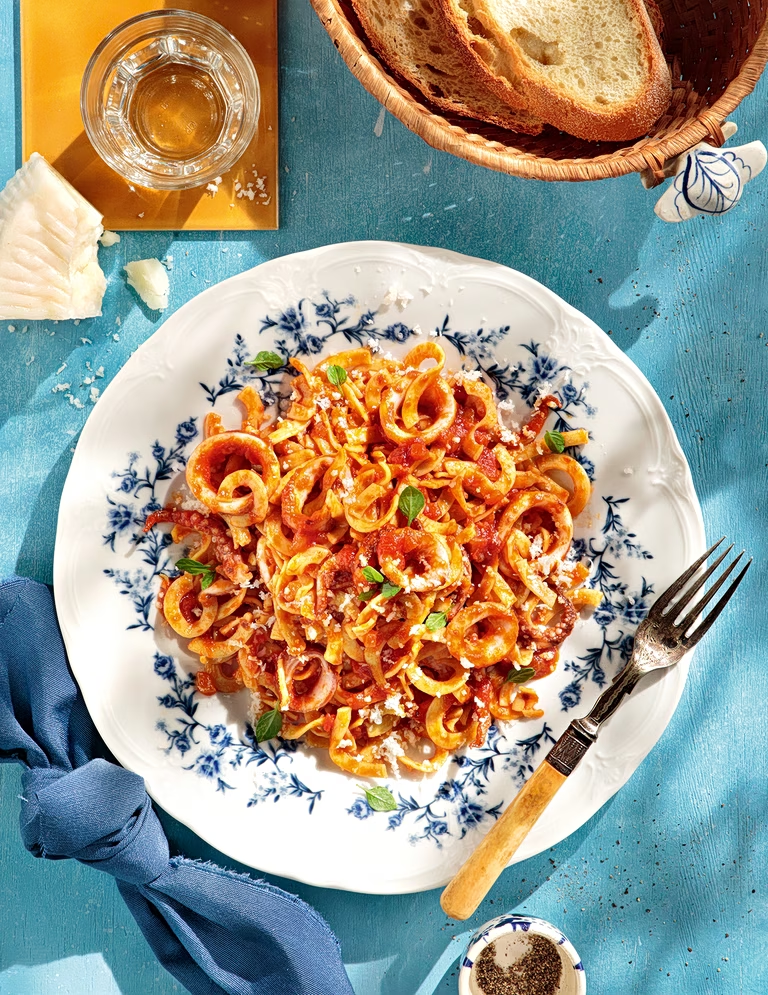
Flomaria with braised squid in tomato sauce—a dish that tastes unmistakably of Lemnos. Photo: Giorgos Drakopoulos; food styling: Olivia Artemis Webb.
Lesbos: Hachles, little cups of cracked wheat
No guide to traditional Greek island pasta would be complete without hachles from Lesbos.
These small, cup-shaped pieces of dough resemble trahana or Cretan xinohondros in flavor. Like those preparations, they are made with cracked wheat and sheep’s milk, sometimes with yogurt added instead.
Hachles are usually filled with local cheeses and tomato, then baked in the oven. Alternatively, cooks break them into small pieces and prepare them much like trahana, simmering them into a comforting soup.
Their shape, ingredients and preparation reflect the practical ingenuity of island kitchens, where food had to be nourishing, economical and easy to preserve.
Corfu: Spageto and the art of the sauce
On the other side of the Greek mainland, in the Ionian Islands, Corfu has its own traditional pasta: spageto.
The name refers to a familiar, thick spaghetti-like pasta with a hole running through the middle. That hollow center makes it ideal for holding the rich tomato-based sauces that are a hallmark of Corfiot cooking.
Like so many Greek island specialties, spageto is designed not merely to accompany a sauce but to become part of it, allowing every bite to capture the dish’s full flavor.
The enduring appeal of Greek island pasta
Despite their different origins, shapes and ingredients, Greece’s traditional island pastas share the same philosophy. They are the products of a handmade craft born out of necessity and elevated at the Sunday family table.
Flour, water and whatever else the household could spare became the foundation for dishes that brought people together. Some recipes preserved food for the winter; others transformed fresh ingredients into meals for celebrations and everyday life alike.
Today, these pastas offer a taste of the islands’ culinary heritage—and a reminder that memorable cooking does not need complicated ingredients. Sometimes, all it takes is a little flour, water, patience and a recipe passed down through generations.
Folegandros Matsata with Braised Rooster
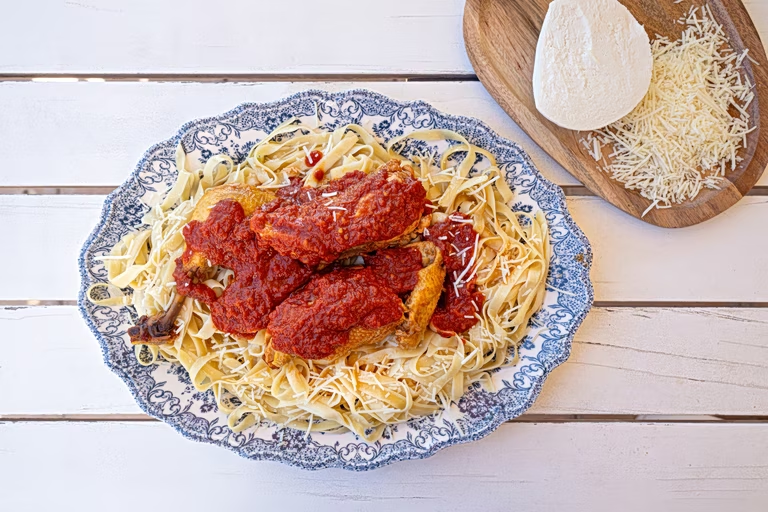
Photo: Alexandros Alexandris
Preparation: 20 minutes · Cooking: 1 hour 20 minutes · Difficulty: Easy · Serves 4
Ingredients
- 500 g (1.1 lb) matsata pasta
- 1 whole rooster, cleaned and cut into 6–8 portions
- 1 yellow onion, finely chopped
- 1 garlic clove
- 100 ml (about ⅓ cup plus 1 tablespoon) red wine
- 500 g (about 1.1 lb) grated tomatoes
- 1 tablespoon tomato paste
- Salt and pepper
- Extra-virgin olive oil
- Coarsely grated mizithra cheese, for serving
Instructions
- Heat olive oil in a wide, heavy-bottomed pot. Once hot, brown the rooster pieces thoroughly on all sides. Transfer them to a platter, cover and keep warm.
- Add a little more olive oil to the pot and sauté the onion and garlic for 5 minutes.
- Return the rooster to the pot. Mix the tomato paste into the red wine, then pour the mixture over the meat to deglaze the pot.
- Once the alcohol has evaporated, season with salt and pepper, add the grated tomatoes and stir to distribute the sauce evenly.
- Add enough water to cover the meat completely. Reduce the heat and simmer gently for 45–60 minutes, until the rooster is thoroughly tender.
- Meanwhile, cook the matsata according to the package instructions.
- Serve the rooster with the matsata and plenty of sauce. Finish each plate with a generous sprinkling of coarsely grated mizithra.
Kasos Makarounes with Sitaka Cheese
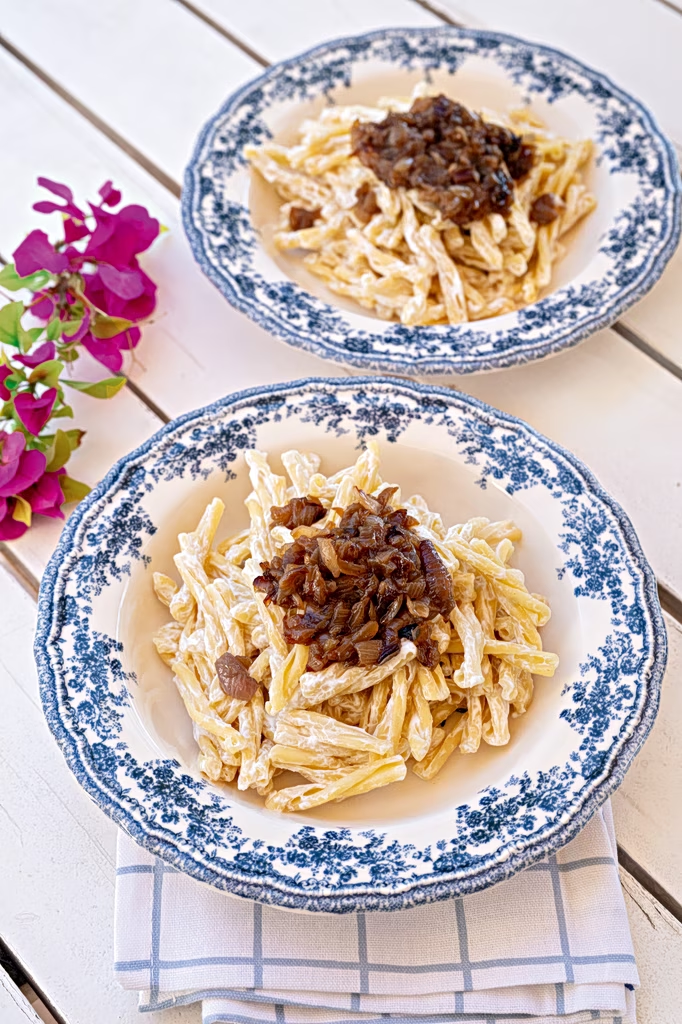
Photo: Alexandros Alexandris
Preparation: 20 minutes · Cooking: 30 minutes · Difficulty: Easy · Serves 4–5
Kasos, a small island in the Dodecanese, is known for its distinctive pasta and local dairy products. This recipe combines its traditional makarounes with sitaka, a rich, creamy cheese made on the island.
Ingredients
- 500 g (1.1 lb) Kasos-style makarounes, or another short pasta
- 300 g (10.6 oz) sitaka cheese from Kasos
- 3 medium yellow onions, finely chopped
- 3 tablespoons butter
- Extra-virgin olive oil
- Salt and pepper
Instructions
- Melt the butter in a nonstick skillet. Add the onions and cook over medium heat for about 20 minutes, stirring regularly, until they soften and turn golden brown.
- Meanwhile, cook the pasta according to the package instructions.
- Place the sitaka in a large bowl and break it up lightly with a fork.
- Add ½ cup of the pasta cooking water and stir thoroughly until the cheese forms a creamy mixture.
- Add the hot, cooked pasta to the bowl and toss until every piece is coated in the cheese sauce.
- Divide the pasta among plates. Spoon the caramelized onions over each serving and finish with freshly ground black pepper.
Milos Skordolazana with Garlic and Tomato Sauce
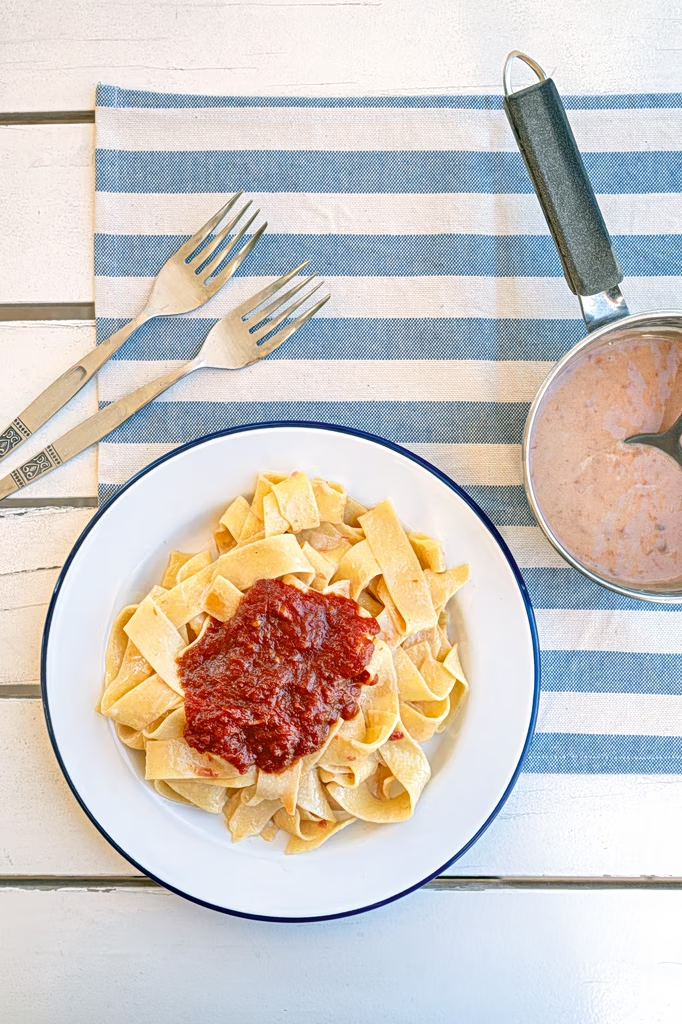
Photo: Alexandros Alexandris
Preparation: 10 minutes · Cooking: 30 minutes · Difficulty: Easy · Serves 6
Skordolazana is a traditional pasta from Milos, an island in the Cyclades. Its name hints at the prominent role garlic plays in this simple, distinctive dish.
Ingredients
- 500 g (1.1 lb) Milos skordolazana pasta
- 3 cups water
- 4 tablespoons flour
- 2 garlic cloves, grated
- 20 ml (about 4 teaspoons) vinegar
- Salt and pepper
- Extra-virgin olive oil
- 150 g (5.3 oz) grated tomatoes, drained
- Grated cheese, for serving
Instructions
- In a saucepan, whisk together the water and flour until completely smooth, forming a thin, pourable cream.
- Add the garlic, vinegar, pepper and olive oil, then stir to combine.
- In a separate pot, cook the pasta according to the package instructions.
- Shortly before serving, add the grated tomatoes to the flour mixture and stir well.
- Pour the sauce over the cooked pasta and serve with grated cheese, ideally ladotyri from Milos, a traditional local cheese preserved in olive oil.
Tip: If the flour-and-water sauce becomes too thick, warm it gently and add a little more water to thin it out.