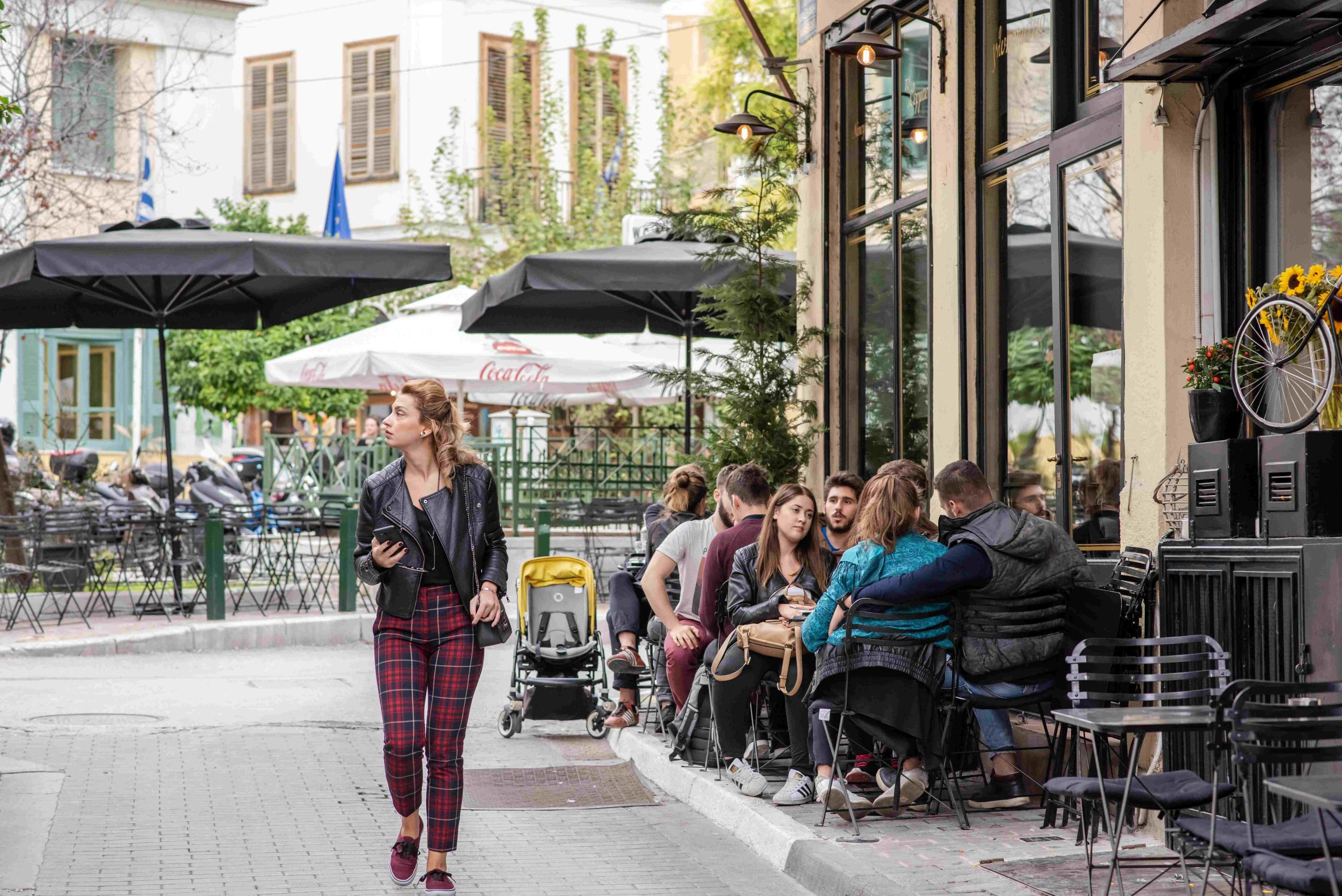
Fluorescent lights. One’s flickering in the distance. Half of them don’t even work. Walking down a corridor in a municipal building. Identical doors, all closed—you pass them by. An empty departure lounge in a provincial airport late at night. Absolutely still. Empty offices passing by walking past open doors in a yellow corridor at a real estate company. Tables, tables, tables. Liminal spaces, that’s what they’re called. Places you pass through, neither starting points nor destinations. Places unstuck in time, familiar yet alienating. Now: stick in some aluminum tables and chairs. A terrazzo floor. Big windows. A minimalist font. Square white shiny tiles. Write the menu with a marker on the tiles. A listening bar. Sell coffee, sell biodynamic wines, sell tapas/mezze/nibbles, in a shop in Exarchia, Kypseli, Notting Hill, Metaxourgeio, Brooklyn, Le Marais. The same shop, across Europe and across the Atlantic. Places unstuck in time, familiar yet alienating, an aesthetic leveling is the mark of gentrification.
The ground floors fill up with digital nomads who’d rather be nowhere at all. The semi-basements where refugees and migrants live three to a room fill with private-sector employees who can’t afford the ground floor and kick them out. Through their half-window, they’ll see impatient feet beneath white tablecloths; through the other half, they won’t see anything at all. When something gets gentrified, something gets leveled. After all, the industrial aesthetic of dereliction is part and parcel of what we call an ‘aesthetic’. And the fact we use the word unqualified to talk about this specific-but-fuzzy aesthetic, the content-less aesthetic, the commodified aesthetic that never quite knows what it is—that’s also gentrification.
A content-less aesthetics brings soul-less spaces into being. The corner of a tapas bar, three LPs on an antique-shop table, a candle melting over a tattered Livre de Poche edition of Camus’ L’Etranger, a wooden bar, a show kitchen, off-white or white Naxian marble. You can come every day, but it will never feel like home.
The spaces of the all-and-nothing aesthetic are comfortable and pleasant. Easy and predictable like scrolling, artificial intelligence, populism. You go, but never really get there. You leave emptier than you came. Perfectly framed and Instagrammable. You approach, you sit, but you always come up against the glass in the frame, it always keeps you at a safe distance. You always forget the barista’s name, no matter how many times he tells you. And if you open the door beside the toilet of the wine bar in Neapolis, you come out in the all-organic restaurant in Psirri. Go down to its basement, and you emerge in the new-age raki joint in upper Kypseli. Liminal spaces, passed through the algorithm mincer, as homogenized as multinational offices, airport duty frees, and short-term rental apartments.
The authentic is packaged and resold, alternative is standardized, as the world searches en masse for that missing something, the je ne sais quoi that will somehow counter a sense of futility that’s hard to put into words, while sipping an expensive cocktail at the bar everyone was desperate to go to, but can’t figure out why now they’re there.
Every new space-non-space like this that opens is a harbinger of rent increases and indirect evictions. The locals get angry, daub damnation of the hipsters and tourists on the walls, to free the neighborhood of their presence. But the tourists take selfies with the graffiti. The hipsters apologize: they hadn’t meant to come. They’d just opened a door and found themselves here. Then the all-so-nothing aesthetic apologizes in turn: “I just came to decorate the wreckage; it wasn’t me called in the bulldozers”.
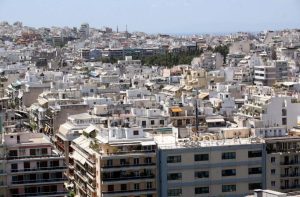
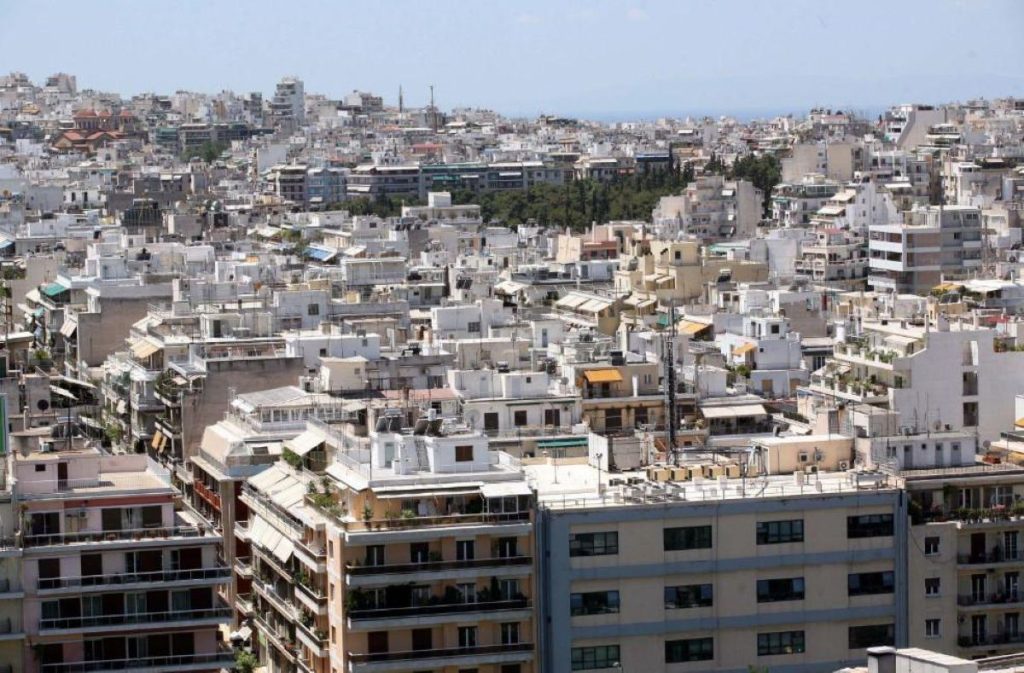
Athens is a vast construction site. A dense forest in the hunting season, fertile ground for what the academics call the “financialization of housing”: whole city blocks turned into portfolios and snapped up by funds and other investment schemes. Two hundred meters from where a metro station will soon be opening, foreign and domestic direct investment gobble up entire apartment blocks and spew out luxury residences and boutique hotels. Entire histories are being erased to make room for the Golden Visa stamp. A massive concentration of capital in the hands of a few, money that flies over the city, then up up and away.
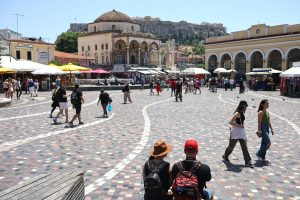
But if we’re talking about the city itself, if we’re talking about the broad steps up to the church, the rocks on the hill, the view over the Aegean, the cinema in the arcade, the tall tree on the plot opposite, which I loved from first sight until the day before yesterday, when they put up some corrugated iron and a permit number and knocked it down, if we’re talking about Athens itself, that doesn’t change hands. The city’s soul isn’t given over to tourists, investors, hipsters. Starving and naked, freezing and orphaned, it belongs to no one. It’s framed perfectly and slips in behind the glass. Athens is stripped of its utility.
No, it wouldn’t be better if we left Athens to wither, to hemorrhage its people and die alone. Its blighted neighborhoods wouldn’t be any better. But was selling out and gentrification our only alternative? And, ultimately, who is it that’s driving the residents out of their city?
An answer was provided obliquely by the Minister for Immigration and Asylum. He’ll do everything in his power, he declared, to move any non-state-run refugee housing facilities out of downtown Athens, and to abolish the rent subsidy for refugees participating in the HELIOS integration program: “The apartments rented out for refugees in Athens’ center […] will be available for the residents of Athens once more”. But who are these “Athens residents” and why can they have a Golden Visa but not a refugee housing subsidy? The leveling rages on, ever more furiously. If there are culprits, it’s certainly not the invader-investors. What can I say? Maybe it was the guys who lived three to a room in the semi-basements. Gentrification works along class lines, after all, which might also be racist.
It’s nice to see the neighborhood full of life. It’s nice to see the stores re-opening, nice to see the clean shop windows, nice to see the tables full. But you get up to go to the bathroom and accidentally go down the stairs instead of up, and the music fades and you’re suddenly walking alone down a long corridor with square tiles and identical doors, something isn’t right.
What’s convenient isn’t necessarily better; what’s familiar isn’t necessarily preferable; homogenization has many faces and most of them are ugly. Barbarism arrives creeping under shiny surfaces.
But Athens has ancient organs, rough and sharp, of earth and stone. And the Athenians have learned to live in an unyielding city. On un-leveled ground. There must be something that’s escaping the leveling.