Myopia has become increasingly common in recent decades, with around one in three children now requiring glasses for distance vision. While the condition’s reported “epidemic” proportions remain difficult to define, one trend is clear: children who spend more time outdoors appear to face a lower risk of developing nearsightedness.
A new study suggests that the protective effect of outdoor exposure may be linked to violet wavelengths in sunlight, which are largely absent from artificial lighting. Exposure to violet light prevented the development of the eye-condition in laboratory animals, according to an international research team whose findings were published in Cell Reports Medicine.
If the results are confirmed in humans, Richard Lang of the University of Cincinnati, a member of the research team, said that lighting enriched with violet wavelengths could potentially offer a safe, passive and easily implemented way of reducing the risk of myopia during childhood.
Lang and his colleagues experimented on tree shrews, small, day-active mammals that rely heavily on vision and share some similarities with humans. Myopia occurs when the developing eye becomes elongated, causing light to focus in front of the retina rather than on it, resulting in blurred distance vision.
Tree shrews do not normally develop myopia. To induce it experimentally, the researchers fitted them with tiny glasses that shifted the focal point of light behind the retina. In response, their eyes elongated, producing myopia as a compensatory mechanism.
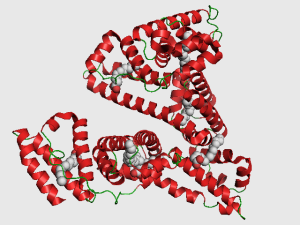
The experiments showed that exposure to violet light, with wavelengths ranging from 419 to 446 nanometres, prevented the development of myopia, unlike longer wavelengths such as blue light. The researchers believe violet light stimulates OPN5, a light-sensitive protein in the retina that has previously been associated with myopia, although its precise role in the process remains unclear.
It is also not yet known exactly how violet light may help the eyeball maintain its shape. Nevertheless, the findings appear to support the theory that spending more time indoors has altered children’s exposure to natural light in ways that may influence eye development.
The research team’s next step will be to investigate whether installing specially designed lighting in nurseries can help prevent myopia in young children. The study has also led to the creation of Electric Indigo, a University of Cincinnati spin-off developing glasses equipped with violet LEDs.