 Μake us preferred on Google
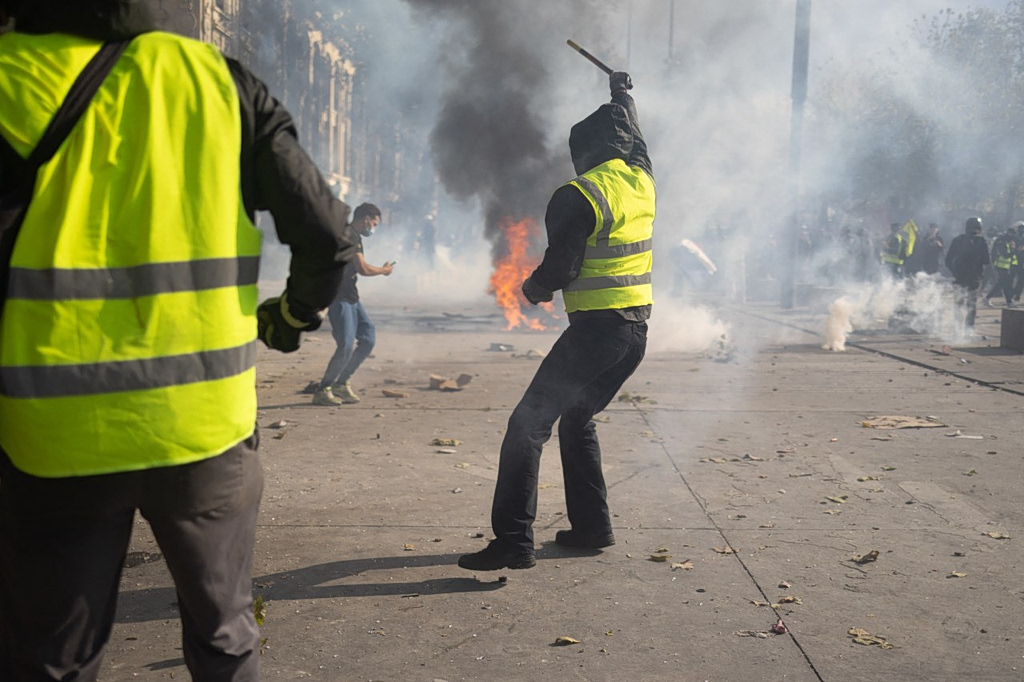
PARIS—The yellow-vest protest movement paralyzed Paris eight years ago, as hundreds of thousands of people from rural France took to the streets to demand lower fuel prices and higher wages.
Now, it is re-emerging as part of a widening coalition of groups protesting a lack of investment in public education, low wages and the rising cost of living. That is posing a test for French leaders as they seek to address their concerns and contain some of the worst unrest to sweep the country in years.
The yellow vests are calling for more protests on Saturday after France was rocked last weekend by demonstrations and rioting that led to widespread destruction of government buildings and stores throughout the country.
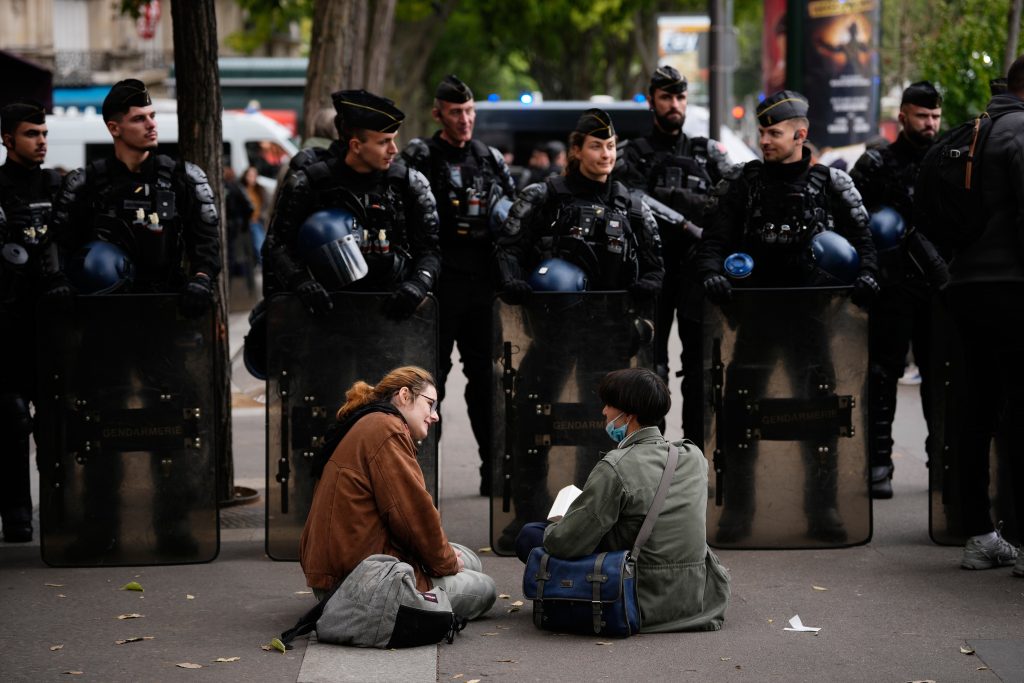
Students sit in front of policemen during a gathering against poor education school conditions in Paris, Thursday, Oct. 22, 2026. (AP Photo/Teresa Suarez)
The addition of the yellow vests adds potential staying power to recent protests, which started with students calling for better conditions in schools. The movement also has a history of violence, posing a fresh challenge for a government already trying to calm the streets.
“Most great revolutions in France started with young people,” said Hervé Caut , a 41-year-old yellow vest blogger. “Everyone has rallied together.”
The gilets jaunes , or yellow vests, is a predominantly rural movement that sprang up in 2018 in response to President Emmanuel Macron ’s proposed fuel tax increase. It broadened to include other demands such as higher wages and became a general protest against Macron, who was criticized as a “president of the rich.”
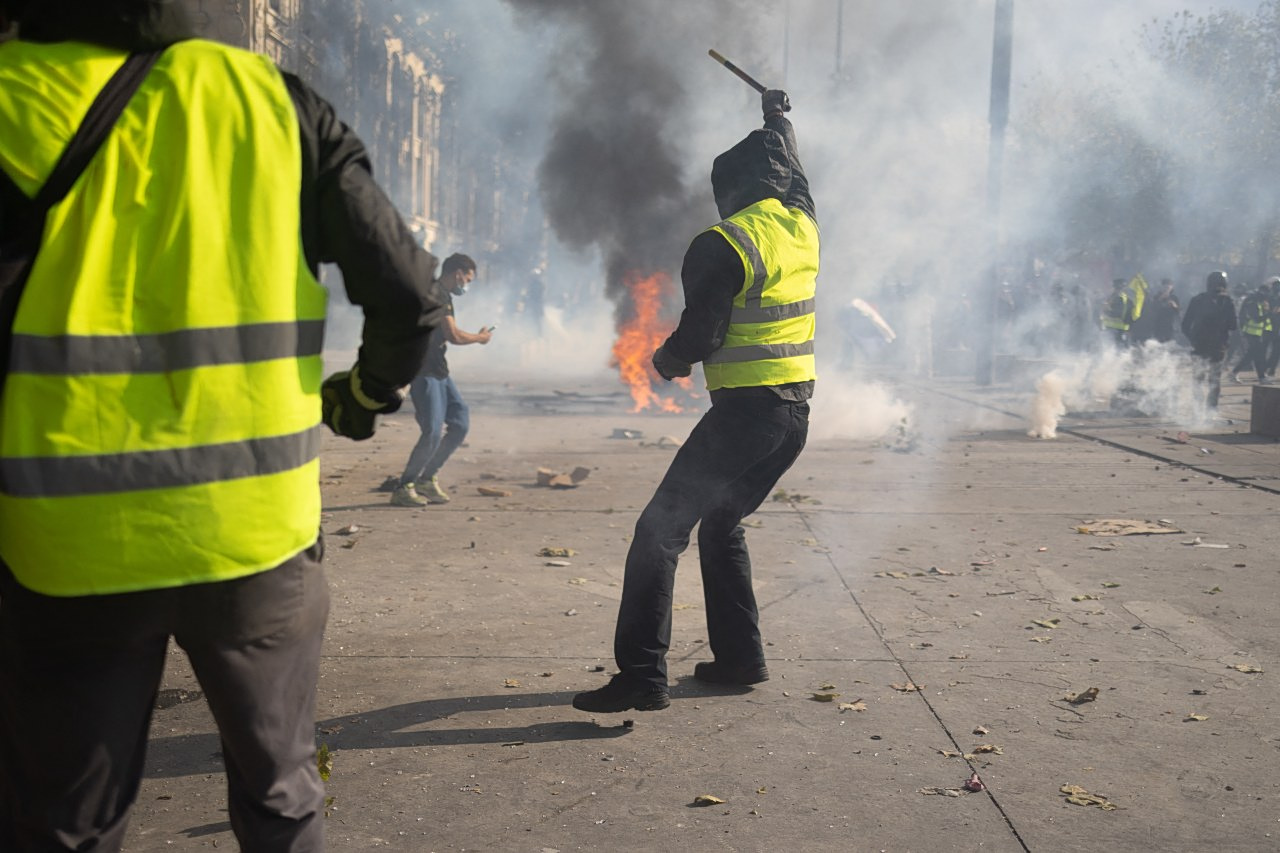
For months, protesters took to the streets every Saturday, with many of them donning reflective yellow safety jackets, which everyone in France is required to keep in their cars, to symbolize their reliance on vehicles and fossil fuels to get to work.
The group had no official leaders or formal structure, allowing anyone to declare themselves a member. They blocked highways and regional roadways, bringing traffic to a standstill.
The movement also became violent at times, with rioters rampaging down the Avenue des Champs-Élysées, smashing storefronts and setting cars ablaze. A group of the protesters used a small forklift to smash through the door of the building housing the office of the prime minister’s spokesman.
The protests eventually lost momentum after Macron called off the fuel-tax increase and boosted the minimum wage. He also went on a listening tour of the country in an effort to show he was attuned to the needs of France’s rural working class.
Unlike in 2018, when Macron was a newly elected leader with a majority in parliament and France’s finances were relatively healthy, the government now has limited options to mollify protesters.
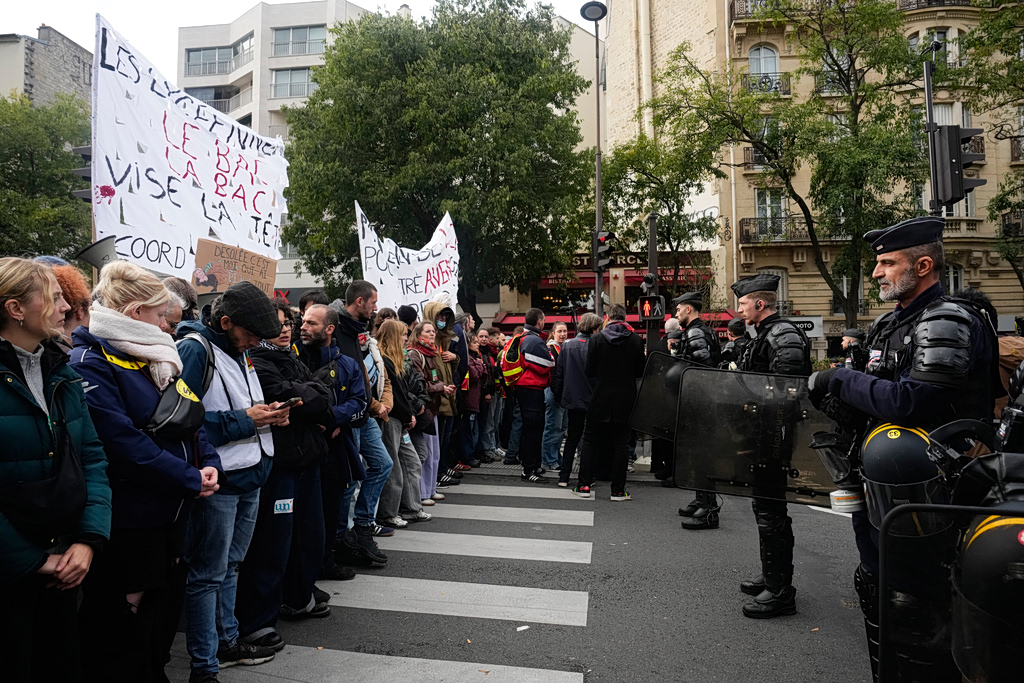
Police face protesters holding a banner reading : “High school students target the Bac. The Bac (Anti-Crime Brigade) target the head ” as they gather against poor education school conditions in Paris, Thursday, Oct. 22, 2026. (AP Photo/Teresa Suarez)
Macron in a Sunday speech acknowledged that fuel prices and cost of living were legitimate concerns, and noted that they were shared in other European capitals. This week, the Élysée said the president had secured additional diesel supplies from Saudi Arabia and the United Arab Emirates and was working to get volumes from Bahrain as well.
But Macron is now a lame duck president, and the campaign to replace him is adding to the political tension in the country. His party has no majority in parliament, and his government’s proposed budget has attracted criticism from the presidential race’s leading candidates, far-right leader Marine Le Pen and far-left firebrand Jean-Luc Mélenchon .
“There’s a very obvious general paralysis,” said Christian Le Bart , a political scientist at the Sciences Po Rennes university. “You have a protest movement that, like every social movement, is impatient and wants responses immediately.”
Meanwhile, the government is now in the grips of a fiscal crisis that was fueled in part by the steps Macron took to end the 2018 protests. France has a budget deficit that is surpassed only by the U.S. among other advanced economies. This week, 10-year French bond yields surpassed 5% for the first time since 2002.
Cutting fuel taxes, which make up about half of what drivers pay at the pump, or introducing a cap on energy prices would result in billions of euros lost. And France has to rollover a mountain of debt that it issued around the time of the yellow vest crisis, when borrowing rates were much lower.
“Issuing debt to fund new measures, as it was done during the yellow vest crisis, isn’t possible anymore, especially considering market pressure,” said Mathieu Plane , an economist at the French Economic Observatory at Sciences Po in Paris.
French authorities are seeking to reassert control over the protests after they spiraled into widespread destruction last weekend. Macron said this week that he recommended that there be no demonstrations in the coming days, and local authorities have banned demonstrations from taking place on Saturday across France.
In Paris, authorities rejected a plan by some yellow vests to march to a busy luxury shopping area on Saturday. Looters stormed luxury shops in other parts of the city last weekend. French Interior Minister Laurent Nuñez said that elite units would be deployed to the streets—as would soldiers who usually patrol train stations and other public venues. The moves have prompted criticism from some left-wing politicians who said France risks turning into an authoritarian state.
Students and unions have welcomed the yellow vests in hopes that a coalescing of protesters of all stripes would put maximum pressure on the government. The groups are calling for a national strike on Nov. 5.
The rising cost of living is fueling protests elsewhere on the continent. In Italy, Naples is effectively paralyzed by truckers protesting over fuel costs, and the government announced 175 million euros—about $196 million—in new aid for the trucking, farming and fishing industries. Protests over housing costs have roiled Portugal and Spain.
Some young protesters now see themselves as walking in the footsteps of the 2018 yellow-vest movement. At the most recent demonstrations in Paris, some wore vests with the words “ Gilet jaune saison 2 ,” or yellow vest season 2, emblazoned on the back.
Coppélia Moreau, a student organizer at Nanterre University, said yellow vests and students are united in denouncing bleak prospects for the country’s youth. She said she was inspired by protests in Spain, where students and workers have joined forces.
“The anger we see among youths today has to do with rejecting a society where there’s no future,” she said.
Write to Benoît Morenne at benoit.morenne@wsj.com