 Μake us preferred on Google
Our starting point is that, from time immemorial, certain places have a special symbolic value for people. They include places believed to be “the navel of the Earth”, as was the case with Delphi in ancient Greece; or were seen as sacred by one or more religions, as is still the case with Jerusalem; or embody the mystique of a lost civilization, like the Inca city of Matsu Picchu. A contemporary place that carries such a sacred aura, in my view at least, is the United Nations Headquarters (UNHQ) complex in the Turtle Bay area of New York City.
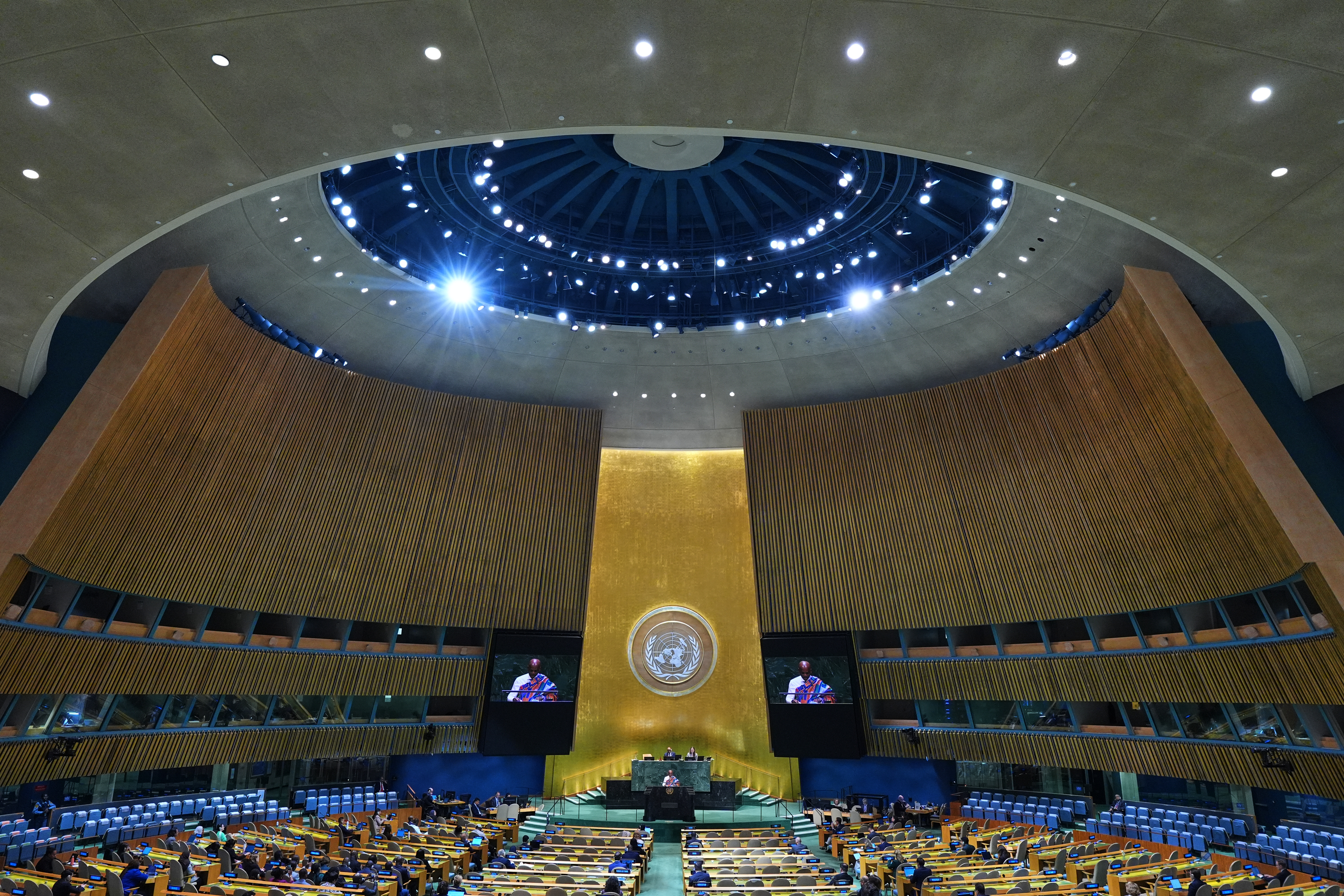
The United Nations was built on the dead bodies and the ashes left behind by World War II. By a twist of fate, the actual grounds purchased by J. D. Rockefeller Jr. and donated to the UN for its headquarters previously hosted slaughterhouses, adding animal blood to that of humans. The UNHQ complex was designed by a group of renowned architects from around the world, including Wallace Harrison (US), Oscar Niemeyer (Brazil) and Le Corbusier (France). They built a monument to human cooperation, impressive externally, with its iconic 39-floor Secretariat glass tower, and functional internally, with spacious and symbolically decorated conference rooms, like the General Assembly Hall and the Security Council Chamber. They did not build a temple, but in a way they did.
More than its origin and appearance, it is the 81-year history of the place and of the UN more broadly that makes it hallowed. From the adoption of the Universal Declaration of Human Rights to nuclear non-proliferation, women’s rights, the Law of the Sea, climate change and numerous other conventions, to the invention and deployment of peacekeeping operations, the adoption of the Millennium Development Goals (MDGs) and later the Sustainable Development Goals (SDGs), to name but a few instances, this has been the place where the heart of humanity has been beating for major issues of peace, fairness and prosperity. With its near-universal country membership and increasing involvement of non-state actors, the United Nations has been the civic centre of our global village, where humanity comes together to consider the most important issues affecting us all.
One would expect all people to revere this place and to stand in awe outside and inside it. One would also expect this from world leaders representing their countries at the annual high-level week of the UN General Assembly. Instead, some leaders feel free to call the United Nations a “useless organization” and describe UN officials as a “caste of fatally arrogant parasites, masquerading as well-intentioned bureaucrats”, as did last month Argentine President Javier Milei; or wonder whether they should “annihilate” and “drive… into hell” another country, with “no chance of survival and no hope of future greatness or generations”, as did US President Donald Trump vis-à-vis Iran. A small but telling sample of profane attitudes on sacred grounds, without shame or remorse, a reflection of the deception and indecent profit-making, intolerance and hatred, killing and destruction that are proliferating all around.
When I was visiting the Ecumenical Patriarchate at the Phanar in Constantinople / Istanbul some years ago, I was taken through a meeting room that could be that of the Holy Synod. There I noticed a majestic armchair that dominated the room and dwarfed the other chairs around it. I asked whether that was where the Patriarch sat when he chaired meetings with his hierarchs. The answer intrigued me: the chair was kept vacant and was dedicated to Jesus Christ, whose spiritual presence symbolized by the chair was supposed to guide the thoughts, words and actions of the Church officials.
I would very much like to have such a “Jesus chair” installed at UNHQ, in various prominent positions, including the General Assembly Hall, the Security Council Chamber (this could be added to Security Council reform ideas and would certainly be easier to implement), the ECOSOC Chamber, the Office of the soon-to-be-appointed new Secretary-General. To avoid religious bias, this chair could be symbolically reserved for Mother Earth, or the Divine in any and all of its manifestations, or the founding “We the peoples” from the UN Charter’s Preamble. No matter the higher authority it would be dedicated to, the omnipresent empty chair might help focus the minds of those around on the sanctity of the place and the obligation to comply with the highest standards of justice, morality and compassion, when operating within it, in its name or under its auspices. Maybe that way the profane and selfishly transactional behaviour of several leaders and their representatives might be moderated, with a commensurate expansion of humane and broadly beneficial attitudes.
There is no need to be physically present at UNHQ to feel the vibes of the world, the sanctity of humanity and the planet, and the responsibility that follows for us all, more so those occupying leadership positions and wielding significant power. In our digital era in particular, a virtual space is basically as good as a “real”, 3D space. In that light, the UN and what it represents is a concept and a virtual reality that exists in cyberspace and in our minds and can be revered there and everywhere, through our thoughts, words and deeds. All this as a reminder of what we have and what more we could have, and to wish you all a Happy UN Day, 24 October 2026.