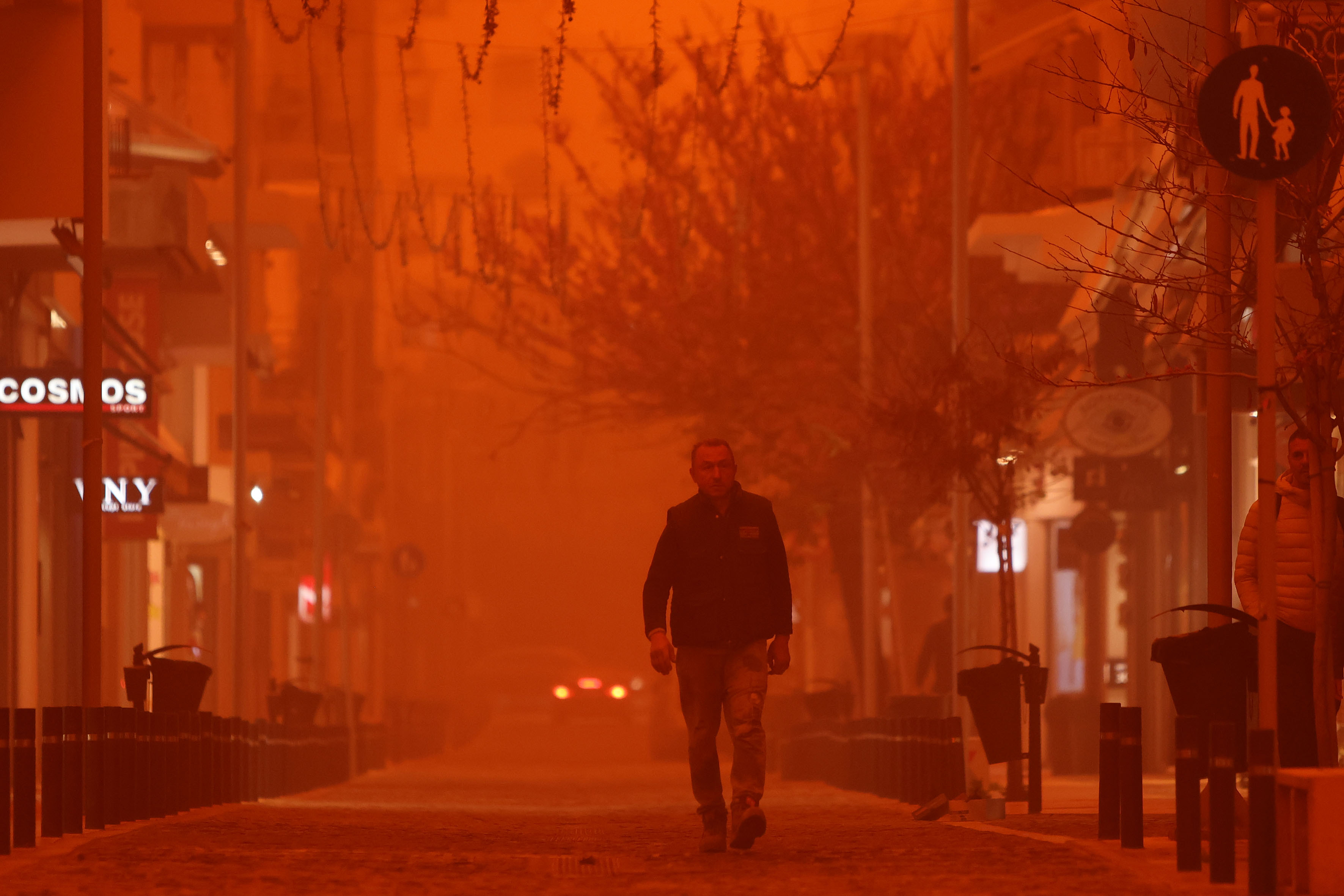
A dense wave of African dust has blanketed the island of Crete, severely reducing visibility, disrupting flights, and prompting authorities to urge residents—especially vulnerable groups—to stay indoors as pollution levels spike.
The phenomenon has turned skies a deep orange across the island, creating surreal conditions while significantly degrading air quality. Measurements taken on Wednesday showed extremely high concentrations of airborne particles, with levels approaching 1,000 micrograms per cubic meter in some areas, according to data from monitoring stations operated by the National Observatory of Athens.
View this post on InstagramNEWSLETTER TABLE TALK
Never miss a story.
Subscribe now.The most important news & topics every week in your inbox.
Flights disrupted, visibility drops
Low visibility—down to about 1,000 meters—combined with strong winds has caused major disruption at Heraklion’s international airport. Several inbound flights from abroad were unable to land and were diverted to alternative airports in Athens, Corfu, and Chania.
In one case, a flight from Manchester originally bound for Rhodes was rerouted to Heraklion but ultimately failed to land there as well, before being redirected again to Athens.
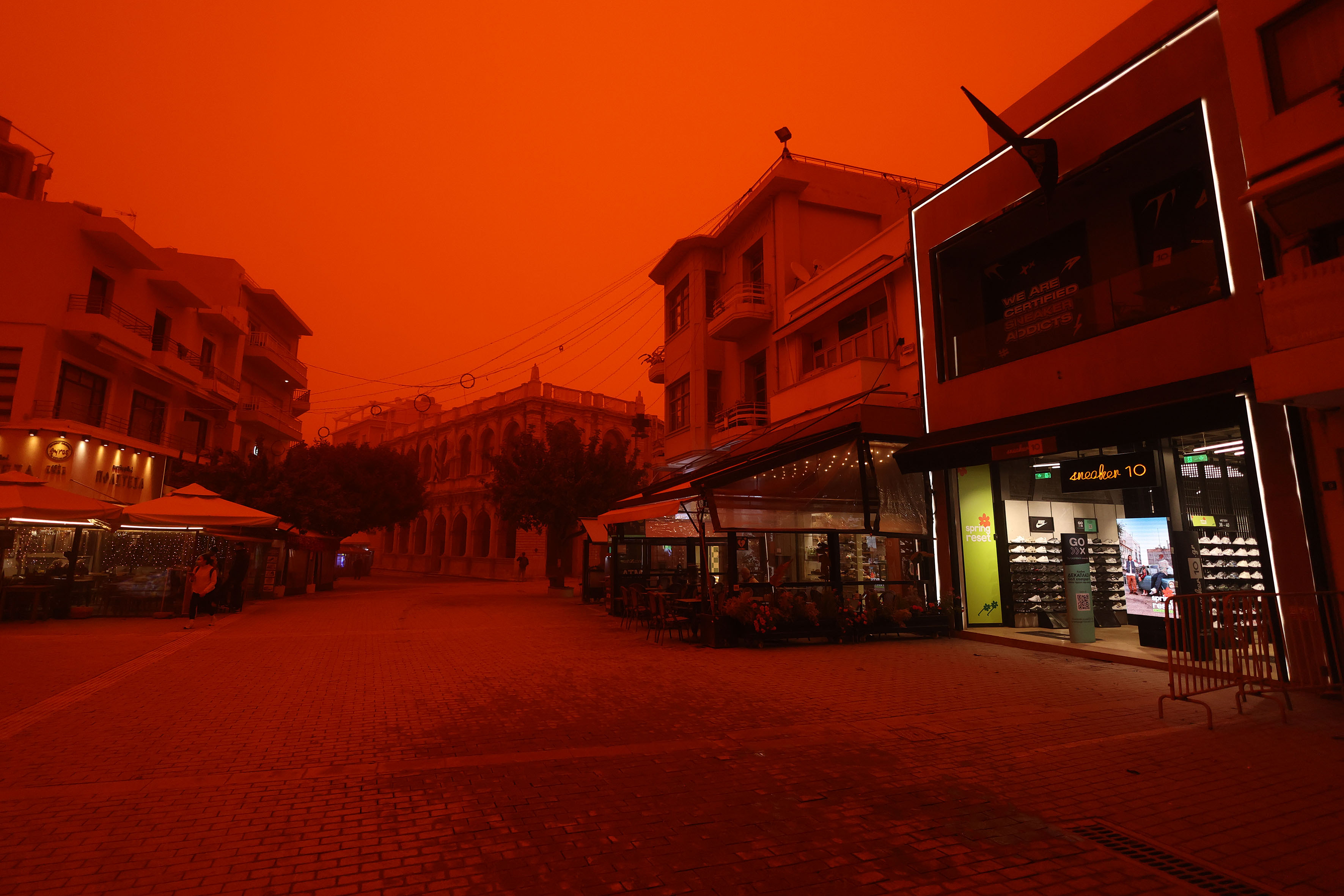
Authorities report ongoing delays and disruptions as weather conditions continue to affect air traffic.
Maritime restrictions and power outages
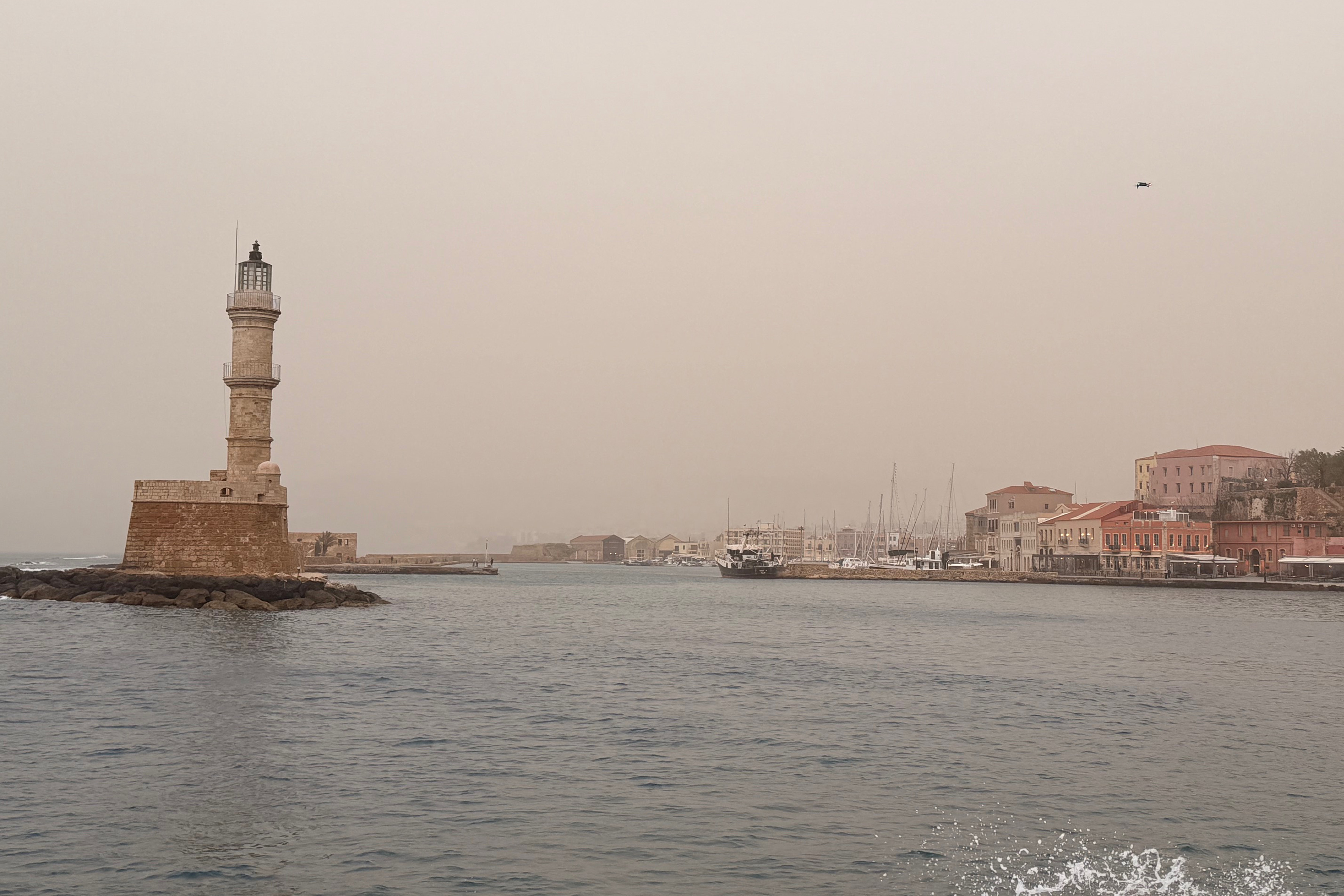
The adverse conditions have also impacted sea travel. Port authorities in Heraklion and Chania imposed a sailing ban due to poor visibility and hazardous conditions at sea.
Meanwhile, widespread power outages have been reported across parts of Heraklion, affecting homes, businesses, and infrastructure, including traffic signals. Utility crews are working to restore electricity, but efforts are being slowed by the severity of the weather.
Health concerns as dust peaks
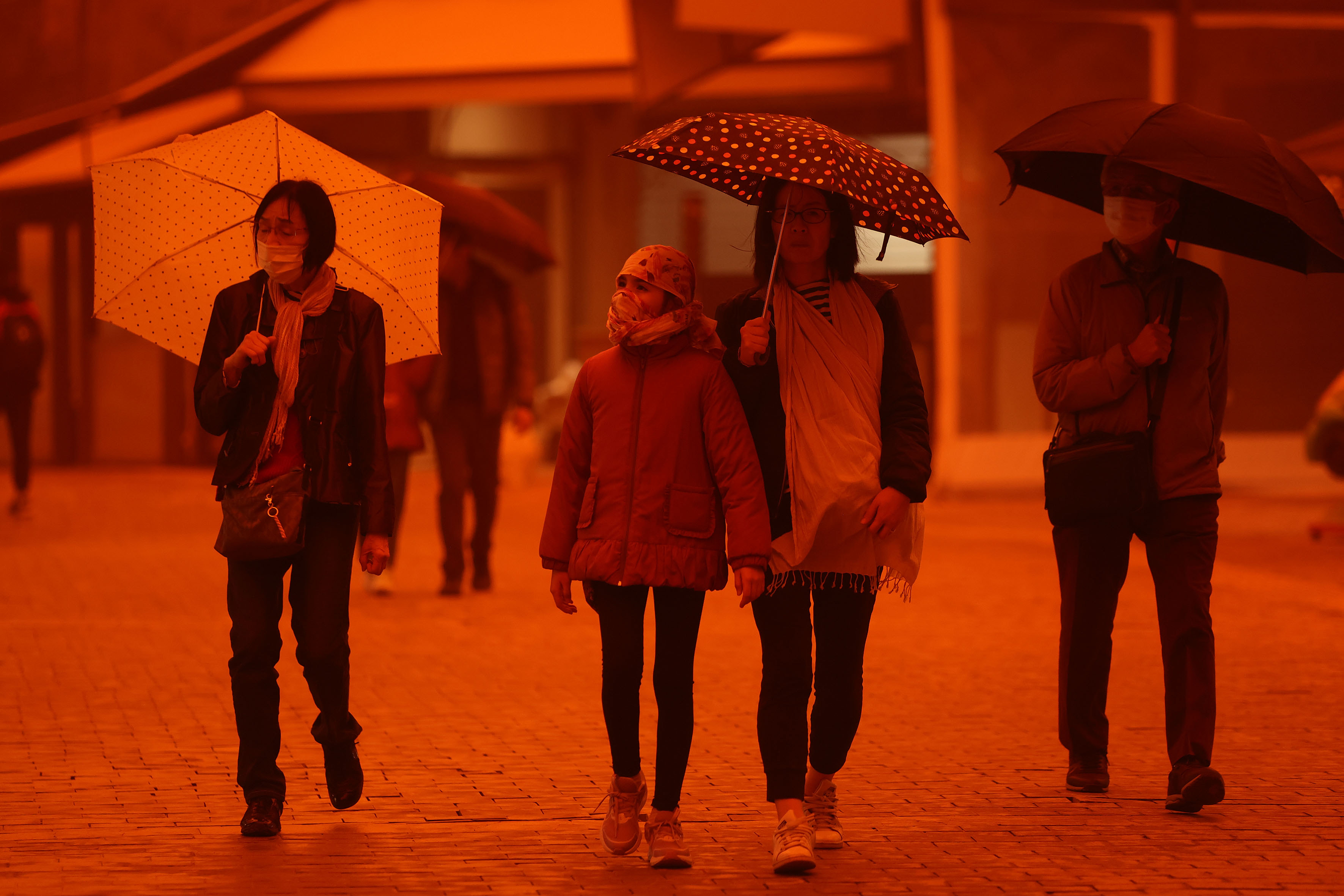
Regional authorities warn that the dust episode is expected to intensify, peaking around midday on Thursday. Eastern parts of Crete, including the regions of Heraklion and Lasithi, are expected to face the highest pollution levels.
Officials advise people with respiratory conditions, heart disease, children, and the elderly to avoid outdoor activity. The general population is also urged to limit time outdoors, keep windows closed, and monitor for symptoms such as coughing, eye irritation, or breathing difficulties.
Schools and facilities close
Several municipalities have taken precautionary measures. Schools and daycare centers in parts of the island will remain closed on Thursday. Similar measures are under consideration or already implemented in other areas.
Public sports facilities in Heraklion have also been temporarily shut down to protect public health.
Authorities expect the dust concentrations to gradually subside later in the week, with conditions improving from Friday, April 3. However, forecasts indicate that another wave of African dust could affect the island before the current episode fully dissipates.