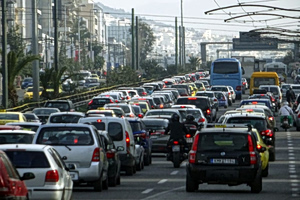
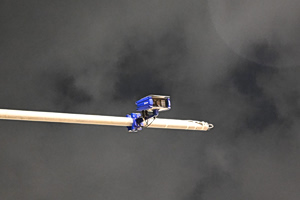
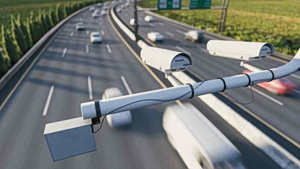
Greece’s new artificial intelligence-powered traffic camera system has faced significant criticism during its pilot operation, with experts reporting that 90% to 95% of recorded violations were later found to be incorrect after human review by police authorities.
The system, designed to automatically detect traffic offences and issue digital fines, has reportedly identified thousands of alleged violations that were rejected after further examination.
According to figures presented during a discussion on Greek television program Koinonia Ora MEGA, only 400 out of 5,500 recorded violations were considered valid, while the rest were attributed to errors involving the interpretation of images and driving situations.
Among the rejected cases were 1,300 alleged mobile phone violations and 3,800 speeding violations.
Challenges with AI interpretation
Lawyer Trifonas Tsoumanis said the main concern is that artificial intelligence lacks the ability to understand special circumstances and apply judgment.
“When there is a traffic officer, we can explain that there was an emergency situation,” he said, referring to cases where a driver may need to act differently because of an urgent need, such as a problem involving a child.
“The basic issue with AI cameras is that they lack leniency,” he added.
Tsoumanis also pointed to cases where the system allegedly misinterpreted shadows, changes in speed, or other visual elements. He questioned which AI model is being used and whether the software is based on newer or older technology, noting that newer AI systems are generally more accurate.
Focus on difficult-to-detect offences
Transport expert Stavros Konstantinidis said cameras are necessary tools for improving road safety but argued that the challenges appear mainly in offences that take place inside vehicles.
According to him, some violations, such as running a red light or excessive speed, are easier for cameras to detect accurately. However, issues involving seat belts and mobile phone use are more difficult because they depend on visual details such as shadows, colors and camera angles.
He added that the problem becomes more complicated when citizens must challenge an AI-generated decision before authorities.
Tsoumanis said drivers may find it difficult to prove they did not commit an offence when the initial decision is based on an automated system, even though they have the right to access the camera footage.
Konstantinidis noted that the widespread use of AI cameras for detecting all types of traffic violations is still a relatively new development internationally.