Greek air traffic controllers have warned that the country’s Flight Information Region (FIR) faces the risk of another major systems failure during the peak summer travel season unless critical air traffic control infrastructure is replaced.
Speaking to To Vima, representatives of the Greek Air Traffic Controllers Association said communication and surveillance systems that are between 25 and 30 years old remain in operation despite repeated failures, including the nationwide disruption that affected the Athens FIR on Jan. 4. They said the aging equipment continues to cause operational problems on an almost daily basis, contributing to flight delays and increasing pressure on the country’s air traffic management system.
Analyzing last week’s widespread flight delays, the controllers cited obsolete technology and staffing shortages at Athens International Airport as the principal causes. They warned that unless the systems are replaced, the possibility of another operational blackout remains real.
One of the main concerns is the Civil Aviation Authority’s Voice Communication System (VCS), which was identified by the official investigation into the January disruption as relying on obsolete technology.
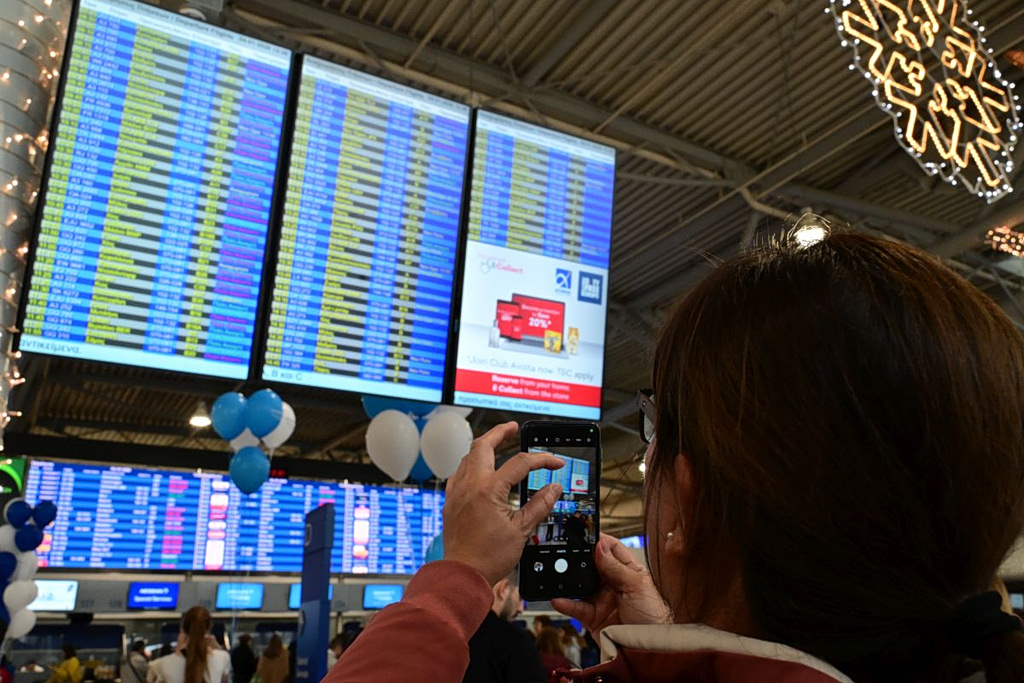
Greek authorities rule out sabotage in the Athens FIR blackout, pointing to a technical failure that disrupted air traffic communications and caused widespread flight delays
“The installation of the replacement system has begun and it will most likely become operational during the summer of 2027,” Olga Toki, second vice president of the Greek Air Traffic Controllers Association, told To Vima.
She added that no contract has yet been signed to replace the radar surveillance system, which suffered a major technical failure in August 2025, causing controllers to temporarily lose aircraft surveillance data and triggering widespread flight delays.
“That particular system is supposed to be replaced every 10 years, while ours is already 26 years old,” Toki said. “With these aging systems, we cannot cope with continuously growing traffic. When, for example, we are able to handle up to 35 departures per hour but the airport schedules 45, delays are inevitable.”
Controllers said that beyond major incidents, they are frequently forced to contend with smaller technical failures that complicate day-to-day operations.
“The main system may fail and we are forced to switch to the backup system, which does not provide all the capabilities of the primary system. That happens quite often,” association president Panagiotis Psarros told the newspaper.
According to Toki, Athens International Airport has long exceeded its operational limits from an air traffic management perspective.
“As far as air traffic management is concerned, we have reached the maximum,” she said, recalling instances in which arriving aircraft were forced to wait on taxiways because no parking stand was immediately available. Aircraft are sometimes left holding on taxiways—which connect runways with aircraft parking positions—until a stand becomes available, she said.
The warnings come after significant flight delays affected Athens International Airport over the past week. According to To Vima, aviation authorities are preparing to place the airport under the stricter IATA Level 3 slot coordination regime beginning with the upcoming winter scheduling season, making airline slot allocations legally binding in an effort to reduce congestion during peak operating hours.
The move follows growing pressure from record passenger traffic, aging air traffic control infrastructure, increased traffic through the Greek FIR linked to geopolitical developments in the Middle East and the airport’s ongoing expansion works, which are expected to constrain operational capacity over the coming months.