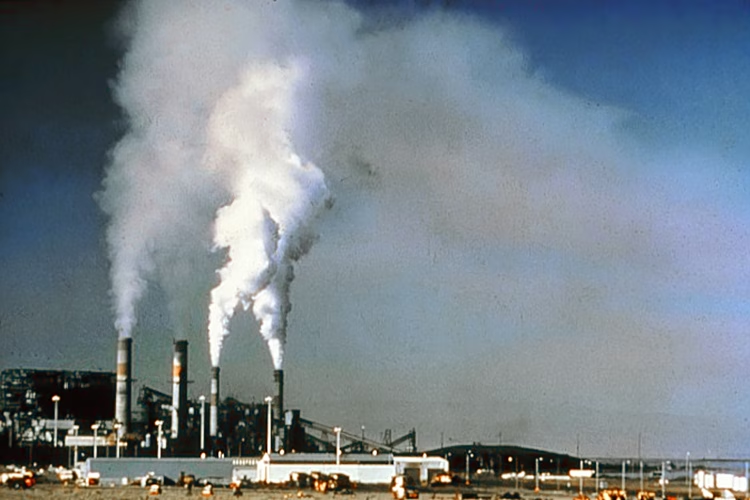
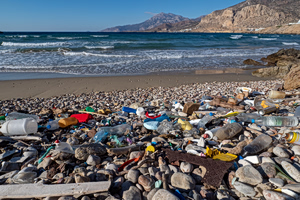
A recent police operation in the western Athens region of Egaleo brought to light a reality that has remained hidden for years, perhaps decades. The operation led to the arrest of a tanker driver as he discharged highly acidic industrial waste into a drain connected to the city’s largest river, called Kifisos.
Kifisos, has systematically been turned into an uncontrolled receptacle for hazardous substances and debris. It is now a dark brown river. The danger, however, extends beyond its appearance and the discharge of waste into the Saronic Gulf.
“The fish are dying because oxygen levels fell to zero”
Chrysanthi Georgiou is president of Roí, the Citizens’ Association for Streams. Speaking to Orange Press Agency, she described troubling footage recorded on the Kifisos in Nea Filadelfeia:
“In the video, we see fish struggling to survive as they move toward the edges of the riverbank, where the water has not yet been as heavily polluted. But they, too, gradually die, because the water’s oxygen level remained at zero for days. Nothing can live with zero oxygen. Pollution of the water is destroying our ecosystems.”
Georgiou says pollution is a frequent occurrence for nearby residents. “It isn’t rare at all. It happens very often. Over the past five or six years, pollution in our rivers, particularly in Attica, has become much more severe. Today in Nea Filadelfeia, you can see the river carrying what looks like soap. It has changed color.
“When you see the volume of water increase twentyfold within an hour, that discharge cannot be coming from a small operation. The volume increases twentyfold and the color changes. The signs are obvious to us. We search meter by meter, go into the river, find where the illegal connection begins, film it and call the police,” she said.
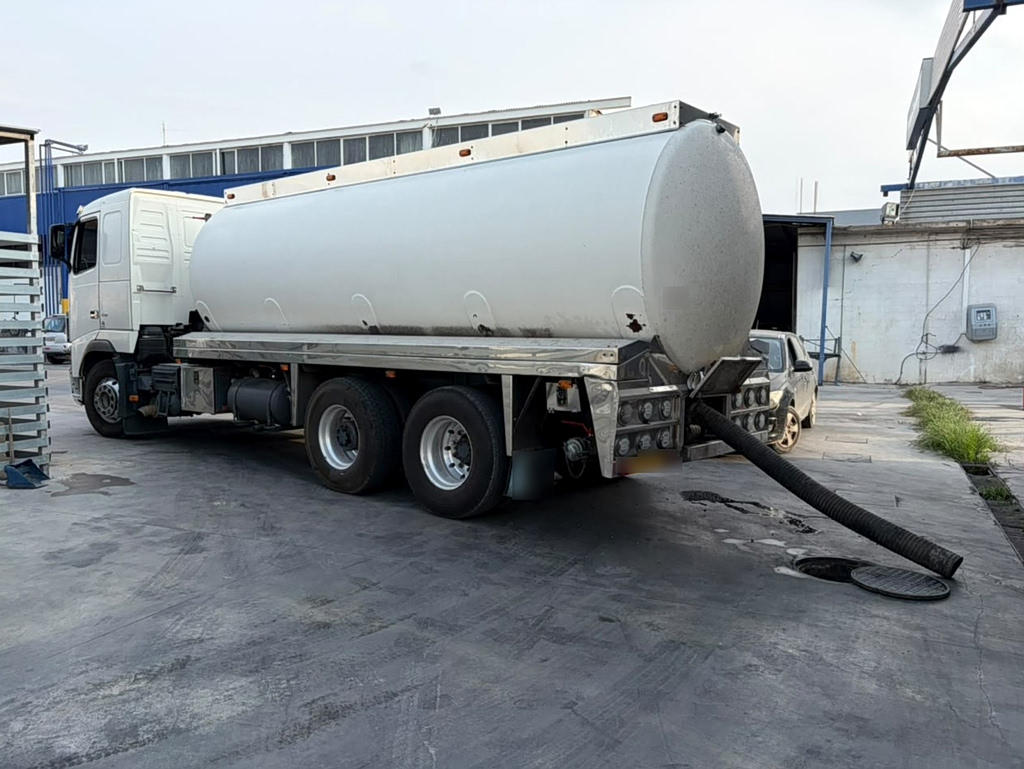
Police operation detecting illegal dumping of waste in the river. Web: www.hellenicpolice.gr
“We are breathing the waste. You live beside a moving sewer”
Discussing the consequences for Attica’s residents, Georgiou told Orange Press Agency that the pollution poses a serious threat to public health.
“A river or stream is a lung running through Attica from its sources. That lung releases substances into the atmosphere, and we breathe them in. Aquatic organisms die, animals living near the water cannot feed, and the pollution enters groundwater and our food, whether through the sea or the soil. It harms people.
“Instead of giving you the natural environment you deserve to live beside, you are forced to live next to a moving sewer. Chronic pollution is not merely an environmental issue or something unpleasant to look at. It concerns public health and our quality of life,” she said.
“Inspectors arrive three days later”
The association says its frequent complaints, supported by documentary evidence, repeatedly come to nothing.
“As an association, we file complaints at least once or twice a month, always with photos and video. Inspections are invariably carried out after the event. When an incident is reported, there is no agency that goes there immediately to see exactly where it is happening and identify the polluter. An inspection takes place two or three days later, when the incident has subsided and the waste has already washed out to sea,” Georgiou said.
She described a recurring process: “A complaint, a reference number, a reply a week later saying ‘we made recommendations,’ and then the case is filed away. We are among the only countries in Europe that treat our rivers this way. All we do is pollute them and send them into the sea, using them as sewers instead of treating them as water resources.”
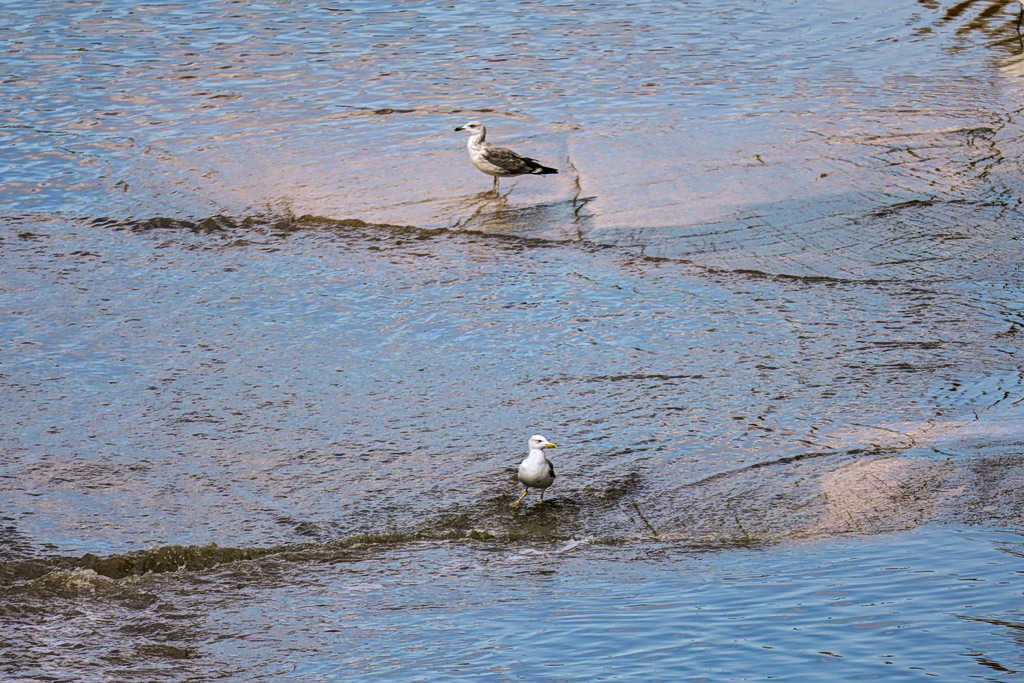
Kifisos river. 2026 Intime p.a. / Chalkiopoulos Nikos
Who is polluting the river?
Asked who is responsible, Georgiou pointed to industries and tankers allegedly making illegal discharges, while also raising questions about oversight.
“There are certainly industries that produce enormous volumes of waste and are legally required to send it for treatment. There is chemical, toxic, industrial and animal waste, as well as sewage. At the same time, some tankers never reach wastewater treatment plants but connect illegally to the pipes.
“Apart from the regional authority, [Athens’ water company] EYDAP is one of the most important bodies that could check this. It is responsible for pumping stations and wastewater treatment plants, so it can check exactly what it receives from tankers for treatment,” she said.
Monitoring stations “fell silent” as residents plan their own cameras and station
Georgiou also raised concerns about the operation of public water quality monitoring stations.
“If you visit the Hellenic Center for Marine Resarch’s [HCMR] website, which hosts data from monitoring devices on the Kifisos, you will see that several stopped working recently, when we had many serious pollution incidents. For example, at the ‘Upper Kifisos’ station in Kifissia, the recording of measurements stopped on September 2, 2026, when the water had a very high concentration of suspended solids.
“Sometimes we become suspicious, although I am not making an allegation about that now,” she added. Under normal conditions, she said, the measurements include oxygen, ammonia, solids and pH.
She said Roí and the Nea Filadelfeia group “Geitonia tis Kirkis,” which campaigns for the natural stretch of the Kifisos, plan to install their own monitoring equipment and cameras through a project. These would allow them to follow measurements independently and trigger an alarm during pollution incidents.
What HCMR’s figures show: Poor water quality
Research by HCMR, paints a grim picture of the Kifisos.
According to research by its Institute of Marine Biological Resources and Inland Waters, based on monthly sampling at five stations from the river’s sources to its mouth between April 2021 and October 2022, water quality was rated “bad” for nitrate under the EU Water Framework Directive, while its rating for ammonium ranged from “moderate” to “bad.”
The findings show pollution increasing as the river passes through the urban area. Reported nitrate concentrations ranged from 1.7 to 18.7 milligrams per liter, averaging 7.6 milligrams per liter. The highest average was recorded at the Podoniftis tributary station, at 9.5 milligrams per liter, compared with 6.2 milligrams per liter upstream.
Dissolved oxygen measurements ranged from 3.6 to 16.1 milligrams per liter.
HCMR researchers say pollutant concentrations are highest in summer, when river flow is low. They refer to uncontrolled industrial discharges, urban wastewater and sewer network failures or leaks that place pressure on the river basin and the Saronic coastal area.
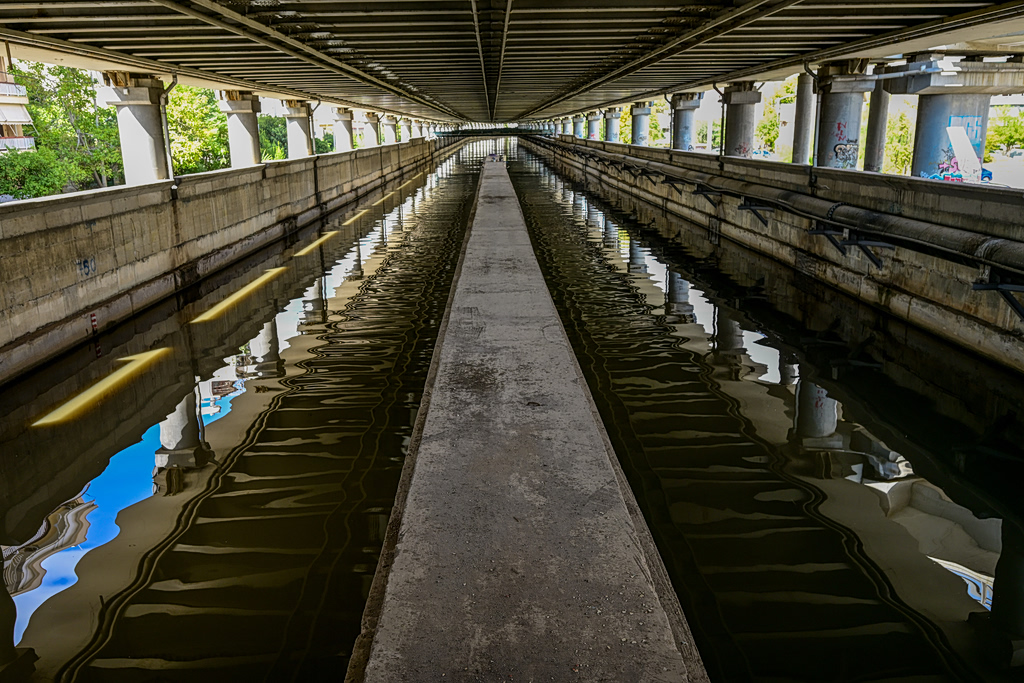
Toxic dumping into Kifisos river © 2026 Intime p.a. / Chalkiopoulos Nikos
The Egaleo police operation
The seriousness of the complaints is underscored by details released by the Hellenic Police about an operation by its Waste Dumping Prevention Unit in Egaleo on September 22, 2026.
After keeping a gas station under discreet surveillance for 20 days and documenting at least four discharges, police arrested a 41-year-old tanker driver and the 63-year-old acting manager of the station at the scene. The tanker was discharging highly acidic liquid industrial waste into a drain at the station. The waste passed through EYDAP’s stormwater network into the Kifisos and then the sea.
An Environment Ministry inspector examined the waste, while an EYDAP crew used a specialized camera and colored liquid to trace the pipe. The inspection confirmed severe pollution, including a strong odor, dark brown color and a high concentration of suspended particles. Police opened a case against four people in total for alleged breaches of environmental protection and waste management laws. Administrative fines were imposed in connection with the tanker, which was seized.
Roí has been active for the past decade. Its members work to protect and improve rivers and streams, particularly in urban Attica. Its activities include educational walks, interventions before local government bodies and legal action. In 2019, a Council of State ruling prevented the remaining natural stretch of the Podoniftis stream from being converted into a concrete stormwater channel.
Video report: Orange Press Agency.