 Μake us preferred on Google
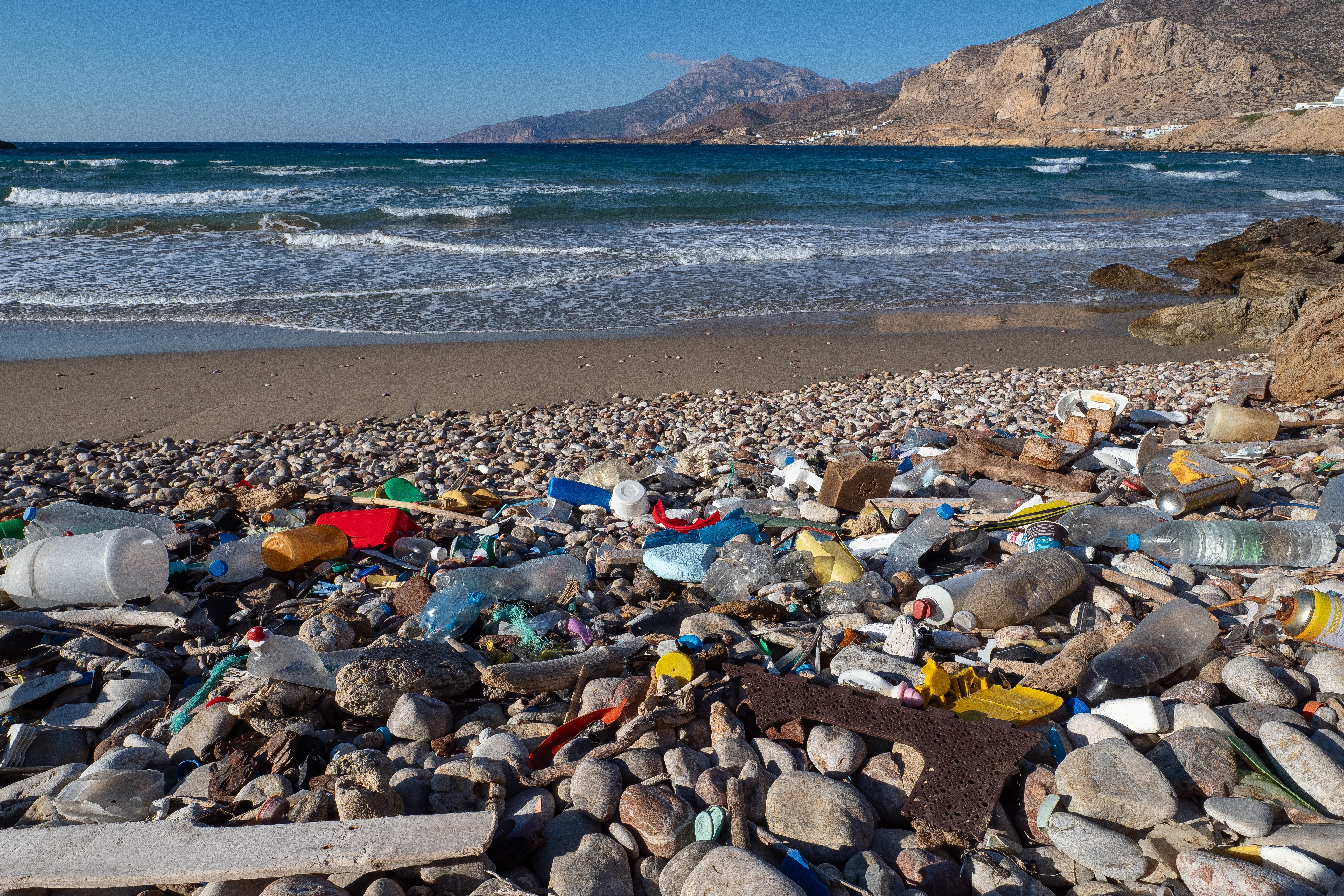
 Plastic pollution continues to pose a major threat to Greece’s coastline, with a new report documenting hundreds of thousands of pieces of waste on beaches across the country and identifying microplastics for the first time.
The findings come from the fourth annual report of WWF Greece’s “Adopt a Beach” program, which monitors marine litter through citizen participation. The report covers data collected between 2021 and 2026 and highlights both the scale of the problem and some early signs of improvement.
Plastic waste remains the dominant pollutant
Between May 2021 and April 2026, volunteers recorded a total of 464,935 pieces of waste across 204 Greek beaches, using a standard monitoring area of 100 meters per beach.
Plastic items accounted for around 80% of all recorded waste, with cigarette butts remaining the most common type of litter, representing 24.8% of all findings.
The five most frequently recorded types of waste over the years were cigarette butts, plastic fragments, plastic bottle caps, plastic straws and pieces of polystyrene foam.
The average amount of waste recorded — 428 items per 100 meters of beach — was far above the minimum threshold of 20 items per 100 meters set by the European Union’s Marine Strategy Framework Directive.
Some positive trends emerge
Despite the continued high levels of pollution, the latest figures also show some encouraging developments.
Among 15 beaches that have been monitored continuously since the beginning of the program, the average amount of waste per survey decreased by 18%.
The largest decline was recorded in polystyrene foam pieces, which fell by 62%. Disposable plastic cups decreased by 36%, while packaging from sweets, snacks and chocolate products dropped by 43%.
Cigarette butts, however, showed only a small reduction of 6%, underlining the persistence of one of the most common forms of beach pollution.
Microplastics detected for the first time
This year’s report also examined a less visible form of pollution: microplastics.
Microplastics are plastic particles smaller than five millimeters that can spread easily in the environment. Because of their small size, they can enter food chains and potentially affect human health.
For the first time within the program, nine volunteer groups collected sand samples from nine Greek beaches in areas including Thessaloniki, Crete, the Cyclades islands, Evia, Magnesia, Ilia and Keratsini-Drapetsona. The samples were analyzed by the Microplastics Laboratory of the Institute of Oceanography at the Hellenic Centre for Marine Research.
The analysis identified 323 microplastic particles in the samples, with particularly high concentrations recorded at some beaches.
Most of the particles were plastic fragments, suggesting that they mainly originated from the breakdown of larger plastic items. The findings highlight the long-lasting impact of single-use plastics, which can continue polluting the environment long after they have been discarded.
Citizen science program expands
The “Adopt a Beach” initiative, launched in Greece in 2021, relies on trained volunteer groups that monitor and record marine litter. So far, more than 200 volunteer teams have taken part, adopting more than 200 beaches and carrying out 637 waste monitoring actions.
Since 2023, the program has expanded across the Mediterranean, involving WWF offices in six additional countries: Turkey, Tunisia, Morocco, Libya, Algeria and Italy.
Konstantinos Tsoukalas, head of the WWF Greece “Adopt a Beach” program, said the latest results confirm that plastic pollution remains one of the main factors degrading Greek coastal environments.
While the reductions recorded in some categories of plastic waste are a positive sign, he said the new microplastic data shows the need for stronger monitoring and immediate action to address a problem with consequences for both the environment and human health.