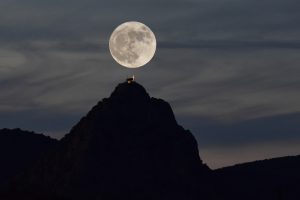
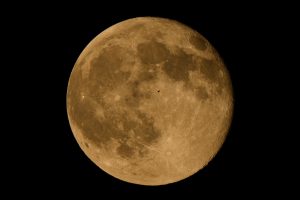
According to National Geographic, the full Wolf Moon will appear on the eve of January 2 until the morning of January 3 and will be noticeably larger and brighter than a typical full moon, marking the only supermoon until November 2026.
What is a supermoon?
A supermoon occurs when a full moon coincides with the Moon’s perigee – the point in its orbit when it is closest to Earth. During such events, the Moon can appear up to 14% larger and about 30% brighter than a micromoon, which occurs when the Moon is at its farthest distance from Earth.
While the size difference may seem modest numerically, it is often striking to the naked eye, particularly when the Moon is low on the horizon.
When and how to see the January Wolf Moon
The supermoon reaches peak illumination in the early hours of January 3, but it will be visible throughout the night of January 2–3, weather permitting.
For the most dramatic view, astronomers recommend watching the Moon at moonrise or moonset. This is when the well-known “moon illusion” makes the Moon appear especially large near the horizon, even though its actual size remains unchanged.
As National Geographic explains, the Moon often takes on a warm orange or amber glow when rising or setting. This happens because moonlight passes through more of Earth’s atmosphere at low angles, scattering blue wavelengths and allowing red tones to dominate.
In Greece, the January full moon rises in the northeast during the evenings of January 2 and 3 and sets toward the west around sunrise, making coastal areas, open landscapes, and elevated viewpoints ideal locations for viewing.
What else to look for in the night sky
This supermoon will not appear alone. Jupiter will shine brightly near the Moon throughout the night, while the familiar winter constellation Orion will also be visible. Saturn can be spotted lower in the sky around moonrise.
The timing also coincides with the peak of the Quadrantid meteor shower on the night of January 2–3. Although the bright Moon will obscure many faint meteors, the Quadrantids are known for producing exceptionally bright fireballs, some of which may still be visible, particularly after midnight and before dawn, says National Geographic.
Do you need special equipment?
No telescope is required to enjoy a supermoon. The Moon is bright enough to be admired with the naked eye, even from light-polluted urban areas.
Those interested in observing surface details such as craters and mountain ranges may prefer to do so outside the full phase, when shadows enhance contrast- typically during the waxing or waning gibbous stages.
How to photograph the supermoon
For photographers, the most visually striking images are captured during moonrise, when the Moon appears largest and most colorful.
- Cameras: A tripod and telephoto lens help capture detail. Including foreground elements — buildings, trees, or mountains — adds scale and visual interest.
- Smartphones: Use optical zoom rather than digital zoom, and stabilize the phone if possible. Foreground framing remains just as important.
When is the next supermoon?
After January’s Wolf Moon, there will be a long pause. According to National Geographic, the next supermoon will not occur until November 2026, making this January event a particularly notable moment for casual skywatchers and astronomy enthusiasts alike.