 Μake us preferred on Google
 As European countries are urged to boost defense spending, public investment in education across the EU appears to be shrinking — with Greece, according to the data, allocating significantly less of its GDP to schooling than most other member states.
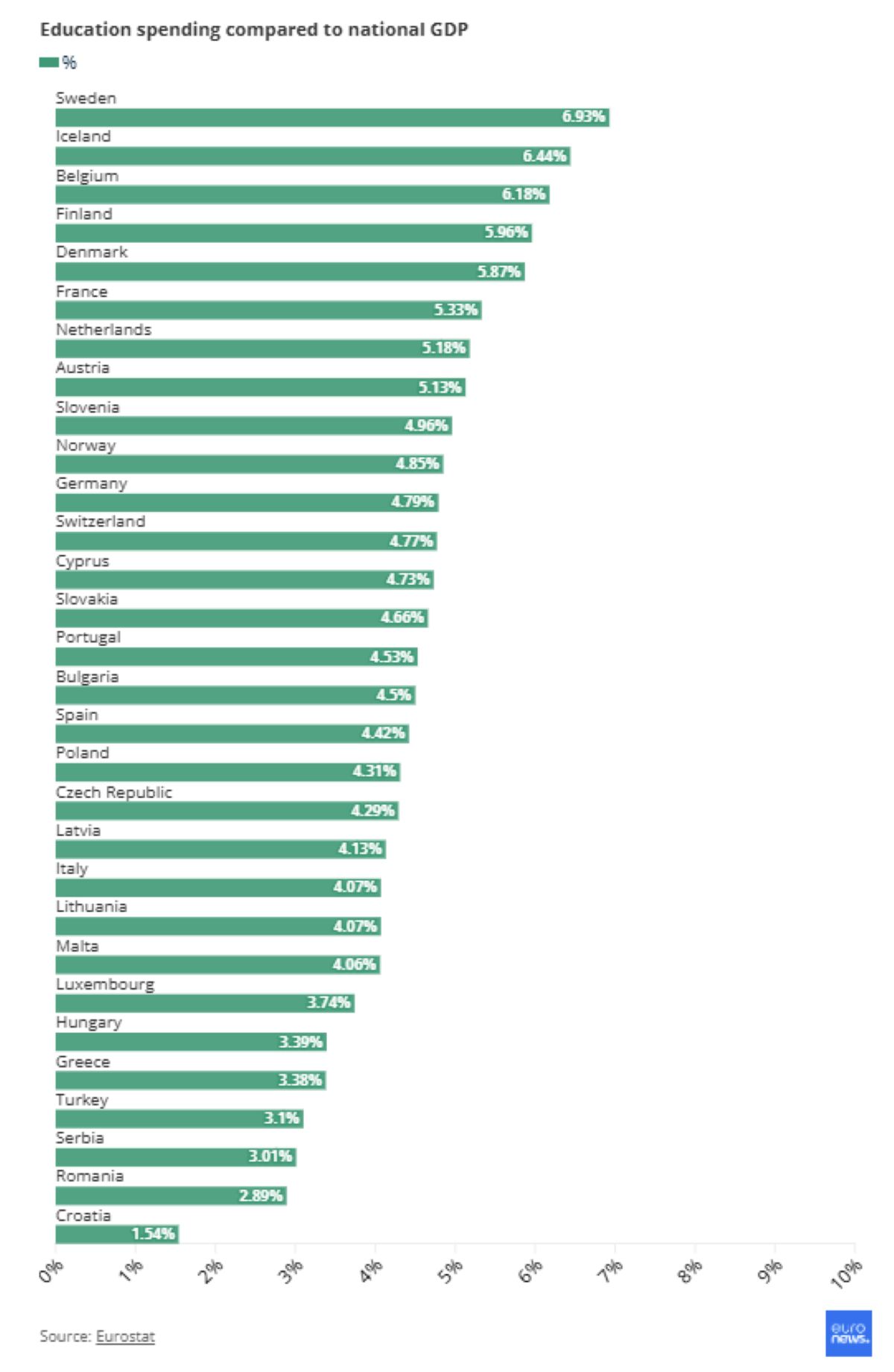
On average, EU countries spend 4.66% of GDP on preschool through tertiary education, the lowest share since 2013, according to Eurostat figures.
Sharp Cuts in Croatia, Modest Levels in Greece
When looking beyond the EU, Croatia ranks at the bottom with just 1.54% of GDP devoted to education, followed by Romania, Serbia, and Turkey. Between 2019 and 2022, Zagreb slashed education funding by 2.38% of GDP — the steepest cut recorded in the bloc, according to Euronews.
Nordics Lead the Way
At the other end of the spectrum, Sweden leads Europe with nearly 7% of GDP invested in education, followed by Iceland and Belgium at over 6%, and then Finland and Denmark.
Where the Money Goes
The bulk of public spending goes to primary and lower secondary education (40.6%), while tertiary education accounts for roughly a quarter (26.3%). Upper secondary education absorbs 21.6%, and the smallest share is directed toward preschool, at just over one-tenth (11.4%).
Financial Support: A Patchwork Across Europe
When it comes to financial support for students, the picture varies widely. On average, lower secondary school pupils receive around 1,766 euros per year in aid, compared to just 533 euros per student in upper secondary education. Yet these averages mask sharp contrasts across Europe.
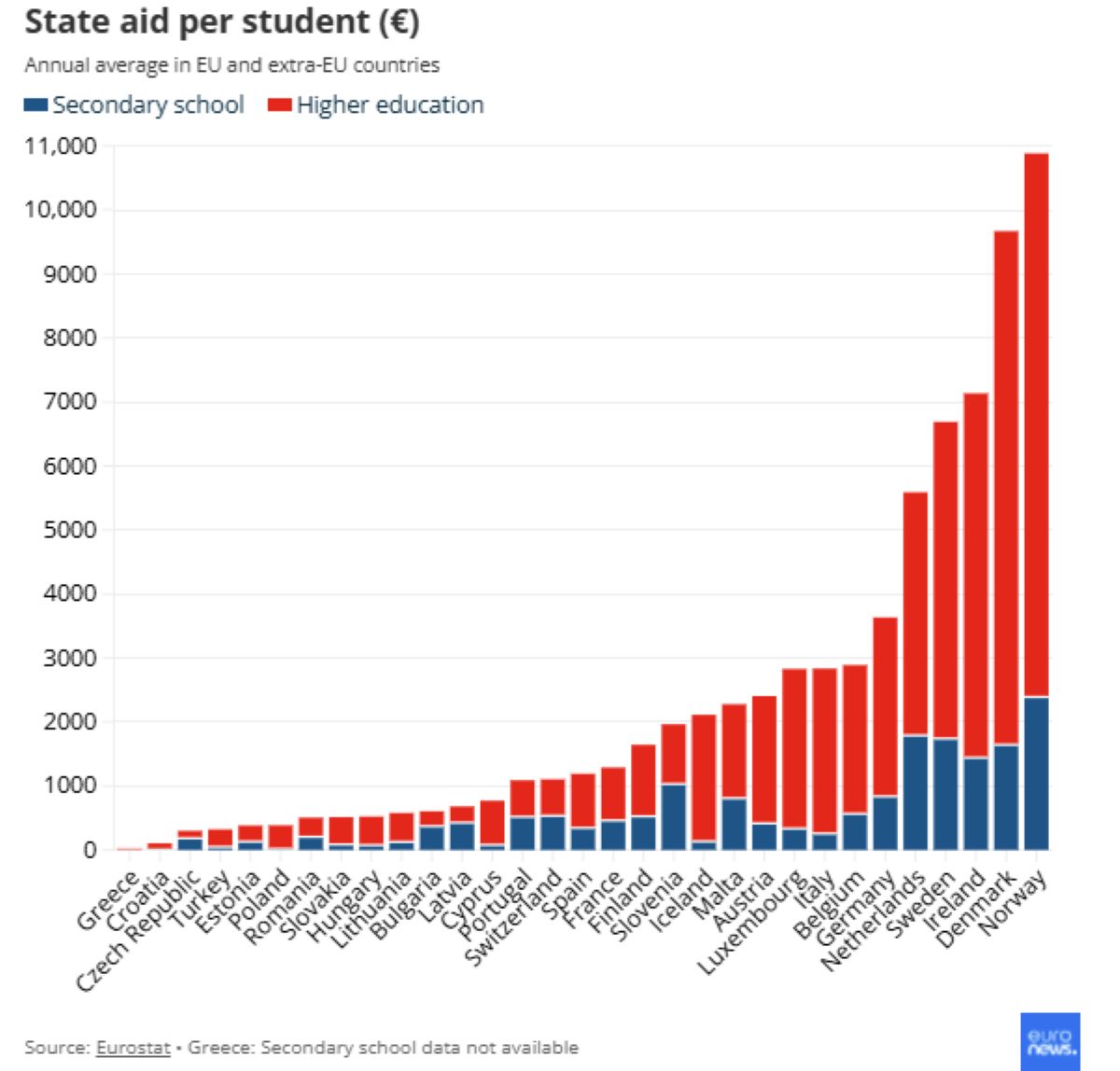
Norway and Denmark offer the most generous support, exceeding 8,000 euros per student annually during upper secondary and tertiary studies. At the other end, Greece, Croatia, and the Czech Republic provide the lowest levels of assistance.
Grants vs. Loans
While most financial aid comes in the form of grants, countries such as the Netherlands, Sweden, Norway, and Iceland rely more heavily on student loans to support their young people.