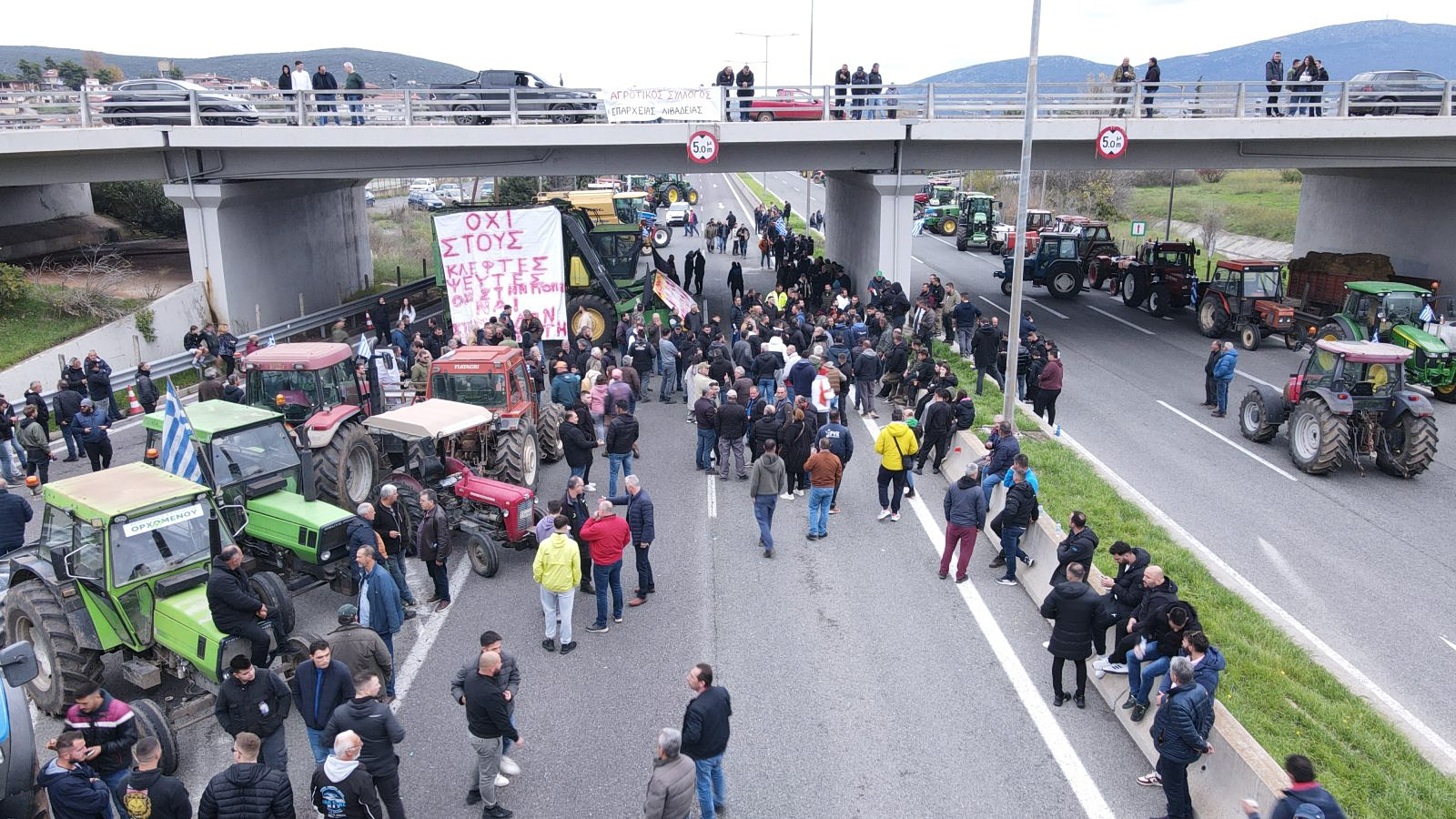
Farmers across Greece are escalating their protests this week, expanding road, port, and city blockades as they demand substantial government action on a growing list of agricultural concerns. What began as regional demonstrations has evolved into a nationwide movement, with major transport corridors disrupted and pressure mounting on the government to respond.
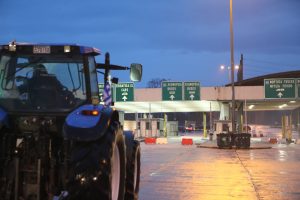
The country’s most prominent protest center remains in Nikaia, where tractors continue to block the national highway. Farmers there unanimously voted to intensify their actions, closing surrounding service roads on Monday evening to amplify their demands. They insist they will not retreat without concrete solutions.
Expanding disruptions through the week
In Thessaly, farmers are preparing one of the most symbolic actions yet: a joint blockade of the port of Volos on Wednesday morning, supported by local fishers who plan to join from the sea to highlight the impact of rising imports. On Thursday, a large regional gathering in Nikaia will bring together unions, associations, and local groups to coordinate next steps.
In western Thessaly, including Karditsa and Trikala along the E65 highway, the number of tractors grows daily. Farmers there continue holding on-site meetings, building encampments, and receiving steady support from local organizations.
Northern Greece faces severe traffic disruption
The Thessaloniki region is experiencing some of the most intense impacts. The city is now encircled by four major blockades:
- In Chalkidona, the old highway toward Edessa remains closed for long stretches.
- In Malgara, the route toward Athens is shut indefinitely, while access to Thessaloniki opens and closes throughout the day.
- At the Derveni junction, farmers from the surrounding rural areas have blocked access roads.
- At the “Green Lights” intersection, a key route to the city’s airport is closed, forcing travelers to use alternative roads through the suburb of Thermi.
Farmers in Central Macedonia are also considering moving into the city itself and possibly blocking the port of Thessaloniki later this week.
Further escalation in Larisa
In Larisa, farmers are preparing to close additional side roads around the national highway, aiming to increase pressure on authorities.
Government searches for balance
The government is attempting to navigate between acknowledging farmers’ grievances and maintaining public order, especially as the holiday season approaches. Initial attempts to prevent tractor blockades were met with resistance, including clashes with police riot units, prompting officials to reconsider a more forceful approach.
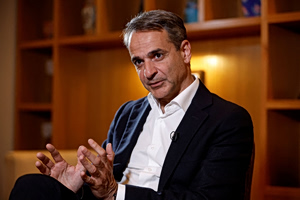
Government leadership has so far avoided direct confrontation. Prime Minister Kyriakos Mitsotakis has not yet held a meeting with protest representatives, delegating discussions to the deputy prime minister. However, officials suggest the prime minister may step in soon, depending on the progress of upcoming subsidy payments and the government’s ongoing review of possible electricity-cost relief for producers.
Insiders say the government is cautious because lawmakers from agricultural regions have warned of widespread frustration among farmers and livestock breeders. Many saw this year’s subsidies decline significantly—despite having no involvement in a recent payments-related scandal—heightening anger and fueling the current mobilizations.
As blockades tighten across the country, farmers continue to send a clear message: they have no plans to stand down until their demands are met.