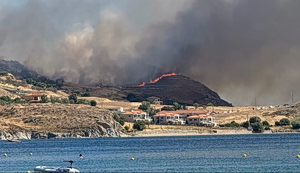
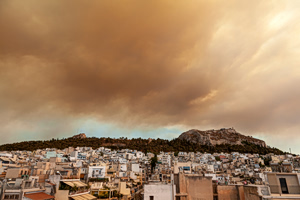
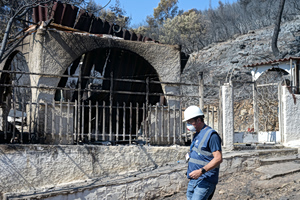
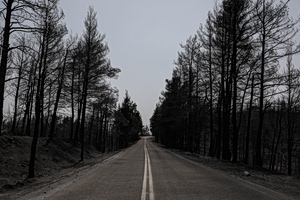
The past decade has seen tumultuous changes in Greece’s forest landscape. Attica in particular — the home of the country’s only true metropolis, with more than one-third the population — has been hit particularly hard.
Since 2017, fires have led to the destruction of approximately 126,500 acres of forest land. This corresponds to around 42% of all of Attica’s forests (out of a total of around 301,190), being destroyed by wildfires in the last 9 years, according to an analysis by the National Observatory of Athens.
Relative to the region as a whole, this forest loss alone accounts for around 20.5% of Attica’s entire land area (617,763 acres). To put that into perspective, this is an area approximately 8.7 times the size of Manhattan, or around 71,900 European football fields.
In Western Attica, a sparsely populated region, the numbers show that 120,000 acres, including forest, scrub, farmland and settlements, have burned over the course of 8 years, a figure still to be updated once the dust has settled by the end of this summer’s fire season. That’s 48% of the total land area of the region, engulfed in flames.

Fires that cross the 24,710-acre threshold, are classified as mega-fires, burning indiscriminately and leaving a trail of destruction that spares neither forest, nor home. In August 2021, around 14% of the island of Euboea (128,000+ acres) went up in flames.
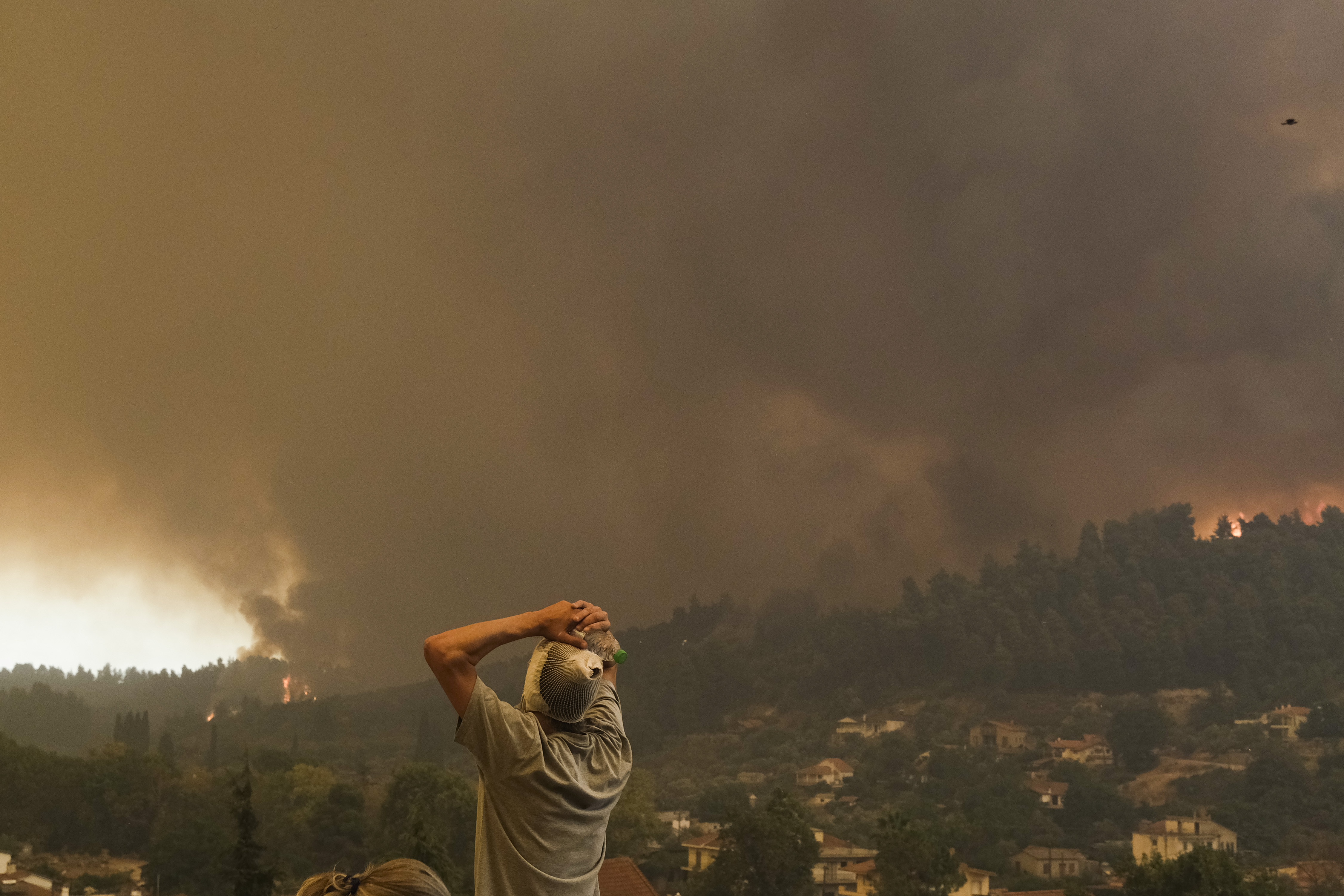
Sixth consecutive day of the wildfire at Evia Island, on August 8, 2021
In July, 2023, Rhodes lost 43,243 acres. This year’s Porto Germeno fire has burned an estimated 35,000 acres across both Attica and Boeotia.
Many fires destroy priceless ecosystems that will be nigh impossible to restore, such as the Dadia Forest in the Evros province (to the north-east of Greece) or the Preveli Palm Forest (in the south of Crete).
The former has been classified as the largest single wildfire in the EU in modern history, scorching over 197,684 acres in one fell swoop, and leading to the destruction of 58% of the Dadia forest.
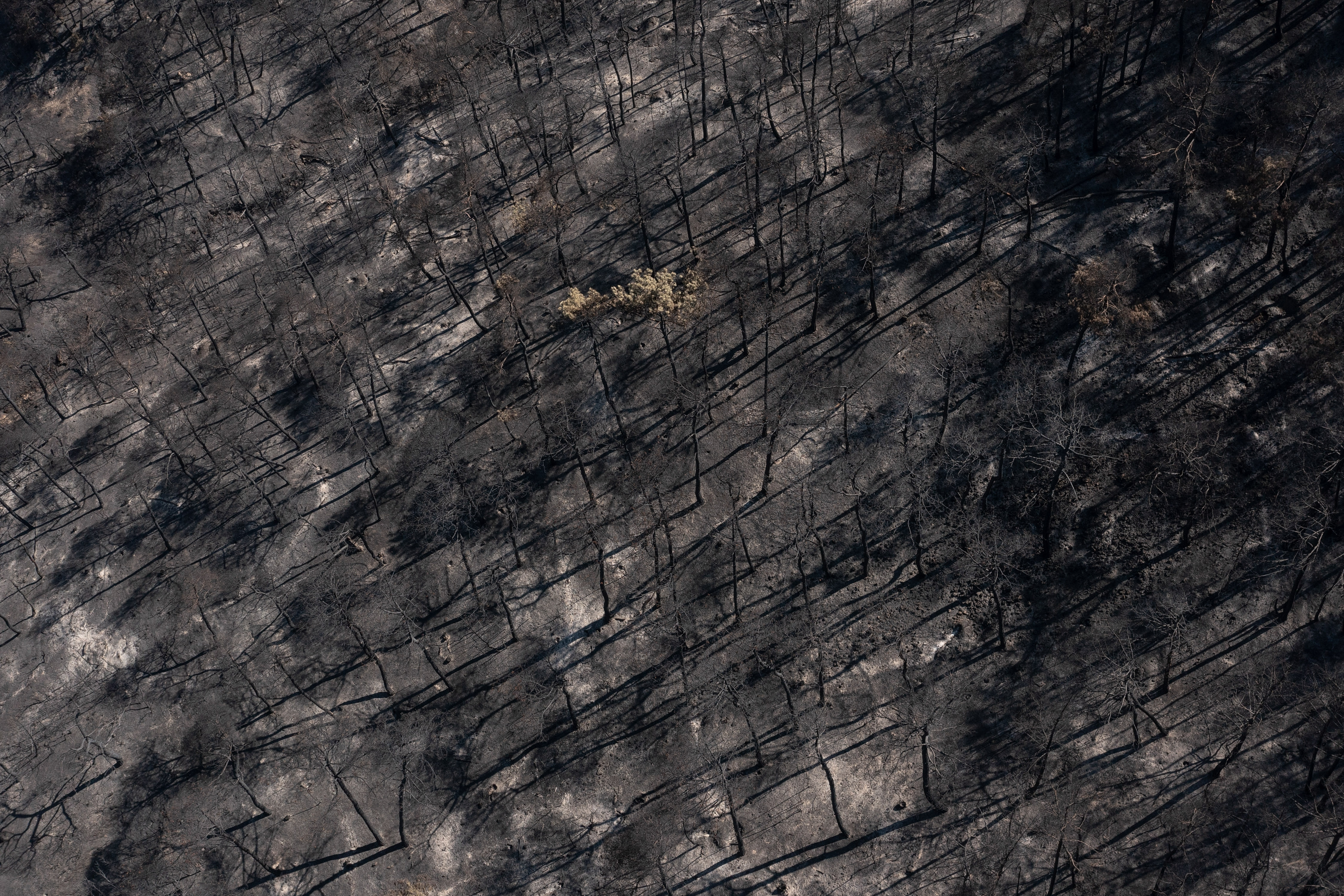
Burnt areas in the Dadia – Lefkimi – Soufli Forest National Park, Evros, Greece on July 27, 2022.
Who is to Blame?
The question of who is to blame looms large. Arrests for arson — whether for negligence or intent — are made, in an effort to offer some form of justice, but this will not restore the natural ecosystem to its former state.
Despite Greece being a dry country that is prone to wildfires, the Greek political establishment seems completely incapable of systematically addressing the existential threat that megafires pose. With climate change accelerating, this political ineptitude is no longer merely causing sporadic damages but is resulting in cataclysmic whirlwind campaigns of total destruction.
Successive governments have failed to take responsibility. Politicians like Vyron Polydoras blamed the “General Wind” for the catastrophic 2007 wildfires that erased 2/3 of the Parnitha Natura 2000 park.
The Mati disaster, in 2018, that led to the death of 104 people and the destruction of more than 3,000 houses, was the second-deadliest wildfire of the century after the 2009 Australian bushfires and as the deadliest wildfire in Europe since 1900 according to a Brussels-based disaster research database.
The SYRIZA government at the time, led by PM Alexis Tsipras followed the same argument as the government of Karamanlis had 11 years before — that winds were responsible for the fire’s spread, since they were blowing at up to 120 kilometers (75 miles) an hour, allowing very little operational control. To make matters worse, many motorists, instead of being diverted away from the fires, were accidentally directed towards the flames and became trapped in Mati’s narrow streets.
In more recent years, the government of Kyriakos Mitsotakis echoed the same excuse of weather unpredictability, but has paired it with an annual ritual reassurance that year after year, the country is becoming more robust and ready to face the seasonal fires.
- On the 19th of June, 2020, in a speech at the ceremony for the handover of 20 firefighting vehicles donated by the company “Papastratos”, the PM noted that “this year we are more prepared than ever”.
- On 14 June, 2022, in an interview with ERT1 journalist George Kouvaras he stated “we will be much more prepared this summer compared with last year”.
- On 24 May 2025, in an interview with Parapolitika, the Minister of Climate Crisis and Civil Protection, Mr. Giannis Kefalogiannis, stated that “we are more prepared than any other year, both in terms of prevention and in terms of personnel and available resources.”
- On 22 July, 2026, Mitsotakis said, following his meeting with Portuguese PM Luís Montenegro that “we are at the highest level of preparedness”.
Somehow with every year’s incalculable losses, these remarks don’t seem to offer much comfort. The average citizen has little conception of what “prepared” is supposed to look like and when they see the results each year, they shake their heads in frustration and anger.
Of course natural weather conditions are becoming more volatile and unpredictable, as shown in the OECD’s 2024 country case study on Greece.
However, the same report noted that not only does Greece have no unified fire prevention strategy, but responsibility for wildfire prevention is dispersed across more than 45 agencies and bodies. This would well render the whole system a bureaucratic nightmare.
So, the question I ask is then, how can we say the country is at maximum readiness? And who, then, is responsible when things go awry?
How far can we assign the blame to outside forces and not consider our own failure in pre-emptively preparing for and having rigorous mechanisms in place to avert catastrophic snowball effect phenomena?
Various experts share their know-how on the matter, to perhaps quell some of the feelings of helplessness we all feel. All agree that prevention needs to take precedence over firefighting.
Prevention above all else
In a conversation I had with Dr. Konstantinos Lagouvardos, Director of the National Observatory of Athens he noted that with rural communities slowly withering away, activities such as grazing which helps reduce combustible material, are no longer carried out. The result is that forests accumulate a lot of combustible material, which dries out significantly and becomes flammable, even when temperatures are not extreme.
Dr. Lagouvardos also noted the need for the state to make better use of scientific tools before and after a fire, such as the risk map.
He states that the problem is that the categories used by the Ministry for Climate Crisis and Civil Protection, are too general to provide meaningful intervention input. Specifically, he argues that the five color categories cover a whole administrative unit overseen by the fire brigade, so are not granular enough to inform decision making at the local level.
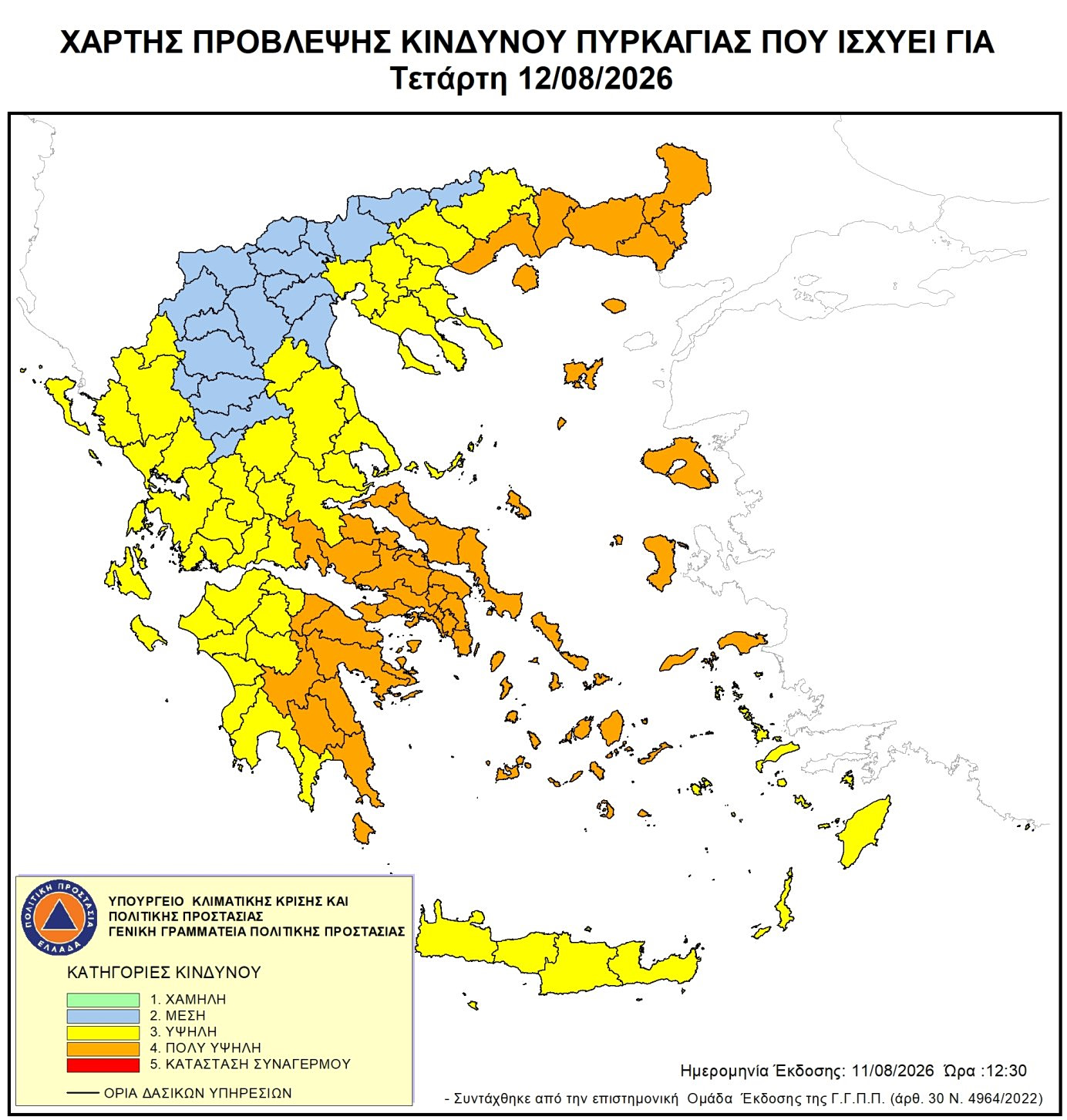
Fire risk prediction map in effect for Wednesday, the 12th of August, 2026. Red denotes the highest level of danger, while light teal denotes the lowest. Source: Ministry for Climate Crisis and Civil Protection
In contrast, he argued that better tools and knowledge exist that allow for a more detailed picture. He referred to maps used by the pyrometeorologist FLAME team, whose focus is advancing scientific understanding of extreme fire-weather conditions and extreme wildfire behavior in Greece. FLAME operates under the METEO unit of the National Observatory.
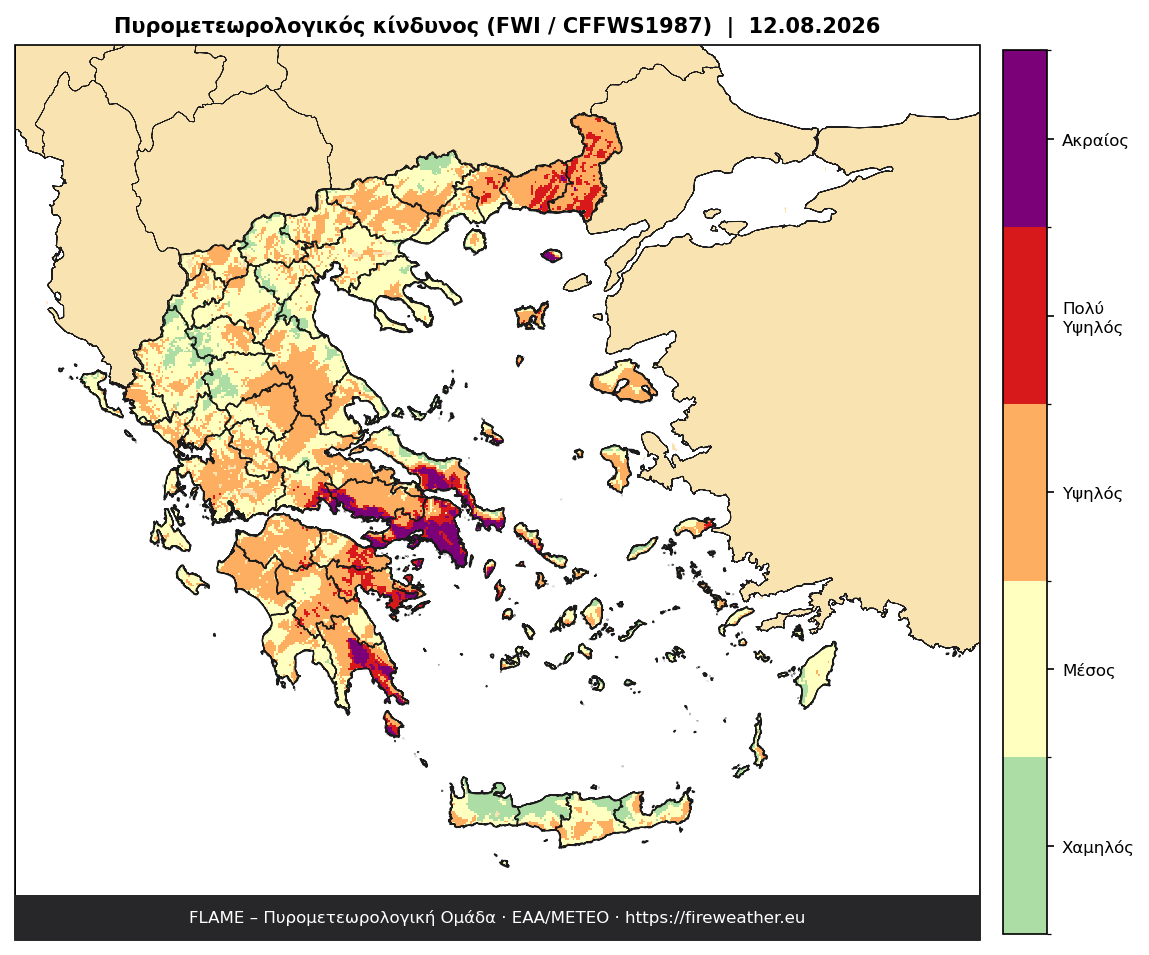
Map of Fire weather danger for Wednesday, the 12th of August, 2026. Purple denotes the highest level of danger, while light green, the lowest. Source: FLAME pyrometeorological team
He notes that ”25 years ago, such high spatial resolution didn’t exist. Now we have the tools. The problem is that many don’t want to look at the detail available at every point on the map”.
Other tools include the use of wind and humidity forecasting, which he also argues aren’t being utilized to their full potential.
In his view, shared by many of his colleagues, authorities/operational bodies need to work with meteorologists and fire-meteorologists to facilitate effective use of scientific knowledge in the field. This way, the latest research in the field can be harmonized with practice on the ground.
A Second Perspective: Operational Meteorology
Wanting to get a more granular view of the matter, I also spoke to pyrometeorologist Thodoris Giannaros, a researcher at the Institute for Environmental Research and Sustainable Development” (IERSD), and founding member of the FLAME team.
He reiterated many of the points made by Dr. Lagouvardos including controlled grazing, prescribed winter burning for removal of excess vegetation. He also emphasized the development of operational meteorology through close cooperation between researchers and scientists (such as meteorologists, foresters, geographers, engineers, and many more) and the Fire Service for better risk assessment, and early detection of threats as well as real-time analysis of fires when they occur.
There can be no talk of preparation for the fire season, if all these are not addressed.
He also explained how we generally prefer to talk about “heroes” after battles with fire are fought rather than to move to actual practice of implementing tools we have available.
The 2026 Forestry Law
He went further to speak favorably of the new law 5281/2026 issued in the Government Gazette A’ 28/25.02.2026, which not only established a unified protection policy that combines all available tools, but also includes a 10-year forest management plan, which, due to its long duration, is not overturned with every change of government, so it can have a truly long-term effect. He expressed regret that the law did not have enough time to truly have an impact before the latest wildfires. Still, a ten-year plan only needs one government to actually follow it, which is more than Greek fire policy has had before.
In light of this law, the Directorate for Combating Arson Crimes (DAE) has been strengthened with enhanced investigative capabilities allowing them, after major incidents, to quickly and in a coordinated manner document the cause of the fire’s outbreak.
For Dr. Giannaros, it is very important that we have data showing the causes of fires and the percentages for each cause (arson by negligence, arson by intent, accident, and natural causes). Right now, he notes, this comes out piecemeal/haphazardly. The ultimate goal is to “drown out” the conspiracy theorizing (about wind turbine installations) through documented data.
‘We don’t know the cost of suppression’
He also addressed an important gap, this time not in prevention but in fire extinguishment. The fact that the general public has no consistent conception of the actual cost of suppression measured in the number of firefighters, fighting hours, the number of aerial assets, including the cost of leasing them and operating them.
He also believes that the existence of seasonal firefighters is a mistake, as it highlights the focus of the state on fire extinguishment instead of fire prevention. He argues these could be easily put to work during the fall and winter to anti-fire projects, increasing the preventative measures of the state.
The Key Takeaway:
Gathering input from experts on the current state of fire safety in Greece, one key takeaway is that Greece has all the available tools at its disposal, and knows what must be done. The country possesses risk maps down to the neighborhood level, a fire-weather team that’s been ready for 25 years, and — as of this year — a law that finally puts prevention on a ten-year footing instead of an annual press conference.
What it still lacks is the political will and coordination to effectively make the most of them. Without these two, no risk map, however granular will be enough, and wildfires will continue to ravage our country for years to come.
Write to Angelos Gassenschmidt at agassenschmidt@tovima.com