 Μake us preferred on Google
 October 16 is World Food Day, a date you may not have known existed until you heard it mentioned on the radio during your morning commute, read it in a headline while opening your favorite browser, or caught sight of it while biting into a sesame bread ring as a colleague offered you a cheese pie.
Chances are, you did not wake up thinking that today celebrates everything we eat: the food that keeps us alive and brings us small and sometimes extraordinary pleasures every day.
Omnivores and flexitarians, pescatarians and vegetarians, vegans, raw-food enthusiasts and fruitarians all have reason to pay closer attention to this day. Not necessarily because of the date itself—October 16 marks the founding of the United Nations Food and Agriculture Organization (FAO) in 1945—but because of what it represents: the urgent need to take food, and the way it is produced, distributed and consumed around the world, far more seriously than we do today.
Because in an age of artificial intelligence, technological breakthroughs and record-breaking food production, one question remains as disturbing as ever: How can billions of people still go hungry?
We produce more food than ever. So why are people starving?
The numbers tell a deeply contradictory story. As dull as statistics may seem in an article not intended for statisticians, these figures are so stark that anyone can understand what they mean.
Starting with the global picture, food production has reached historic highs. According to the FAO, despite climate change and geopolitical turmoil in various parts of the world, annual production of major crops is approaching 9.9 billion metric tons. Global meat production stands at approximately 370 million metric tons, while fisheries and aquaculture supply 189 million metric tons of fish and seafood.
In terms of production, then, and with the considerable help of technology, the world is doing remarkably well.
So why do 645 million people worldwide—7.8% of the global population—live with hunger, while 2.69 billion cannot afford a healthy diet? Why do 25.8% of the world’s people, or 2.1 billion individuals, lack reliable access to sufficient food and therefore experience food insecurity?
How can humanity produce more food than ever before and still fail to feed everyone? How, in the age of AI, are children in Africa still dying of hunger?
Africa remains the region hardest hit by food insecurity. Around 20% of its population—309 million people—experiences hunger. Asia follows, with 292 million people affected, and Latin America, with 32 million.
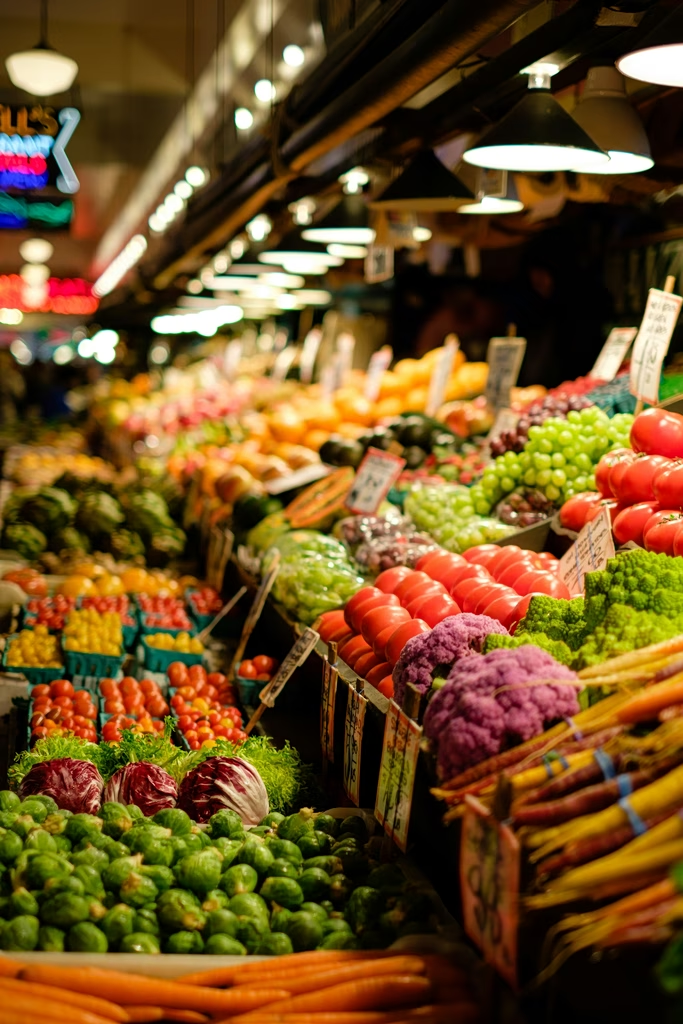
Global food production is reaching record highs. Yet a substantial share of the world’s population continues to experience food insecurity.
The figures speak for themselves, and their most obvious explanation is difficult to escape: the problem lies in getting food to the people who need it. Some are left out of the distribution system altogether; others simply lack the financial resources to buy what they need.
Either way, money remains at the heart of the problem. One-third of the world’s population cannot afford the food required for a healthy, nutritious diet. Meanwhile, armed conflicts and climate change drive up prices and create serious obstacles to food distribution. Add the enormous quantities of food that continue to be wasted, despite the growing zero-food-waste movement, and the crisis becomes even more severe.
Greece exports billions in food while grocery bills soar
Now consider our own small corner of the world.
In Greece, agricultural and livestock production is concentrated in several key regions, including Thessaly, Macedonia, the Peloponnese and Crete. These areas produce an impressive range of high-quality goods: cereals, cotton, vegetables, dairy products, fruit, legumes, meat, rice, citrus fruits and, of course, olive oil.
Yet much of this produce never reaches Greek consumers. Instead, it is packaged and shipped directly abroad.
Greece’s total food exports are worth approximately €9 billion a year. According to Eurostat, export values increased by 10.5% over the most recent eight-month period, reaching €6.7 billion in turnover. Olive oil leads the country’s food exports, followed by dairy products—particularly feta cheese—as well as fruit and farmed fish.
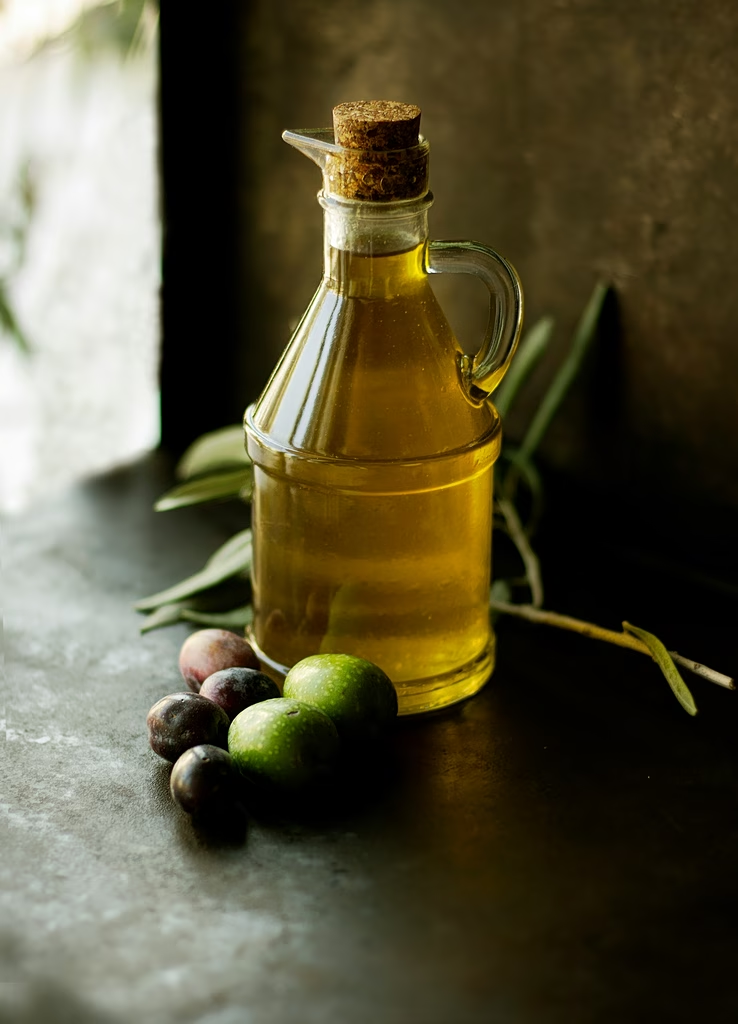
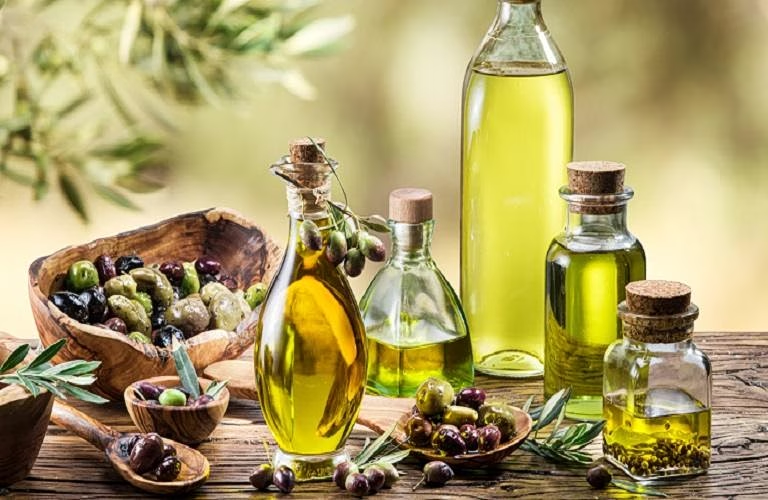
Olive oil is one of Greece’s leading exports. Its price has risen dramatically in recent years.
The result is a growing disconnect between what Greece produces and what Greek households can afford to put on the table.
With fewer Greek products making their way onto domestic refrigerator shelves and into kitchen cupboards, prices inevitably rise. Over the past six years, they have climbed sharply, putting them beyond the reach of many households.
Food prices in Greece have increased by approximately 35% overall. Shopping at a supermarket, an open-air street market or a neighborhood grocery store now requires a considerably fuller wallet. And although the latest Eurostat figures show that the annual rate of food-price inflation has slowed to 0.2%, some everyday essentials—including olive oil, fresh fruit and vegetables, and beef—remain prohibitively expensive for the average household.
In general, Greeks pay more for food than consumers in most other European countries. This says a great deal about how Greek products are produced and distributed, with some now effectively becoming luxury items.
What about imports? Some imported products can certainly offer better prices. But those savings, the argument goes, can come at a significant cost in quality—a trade-off that may prove far more damaging in the long run.
Hunger in Greece in 2026: A growing problem
Official data from ELSTAT, Greece’s national statistics authority, show that food insecurity affects a significant number of people in the country. The proportion has increased in recent years and now stands at approximately 7.5% of the population.
In practical terms, hundreds of thousands of people in Greece struggle to secure sufficient, high-quality and nutritious food every day. Some may even find it difficult to meet their most basic dietary needs.
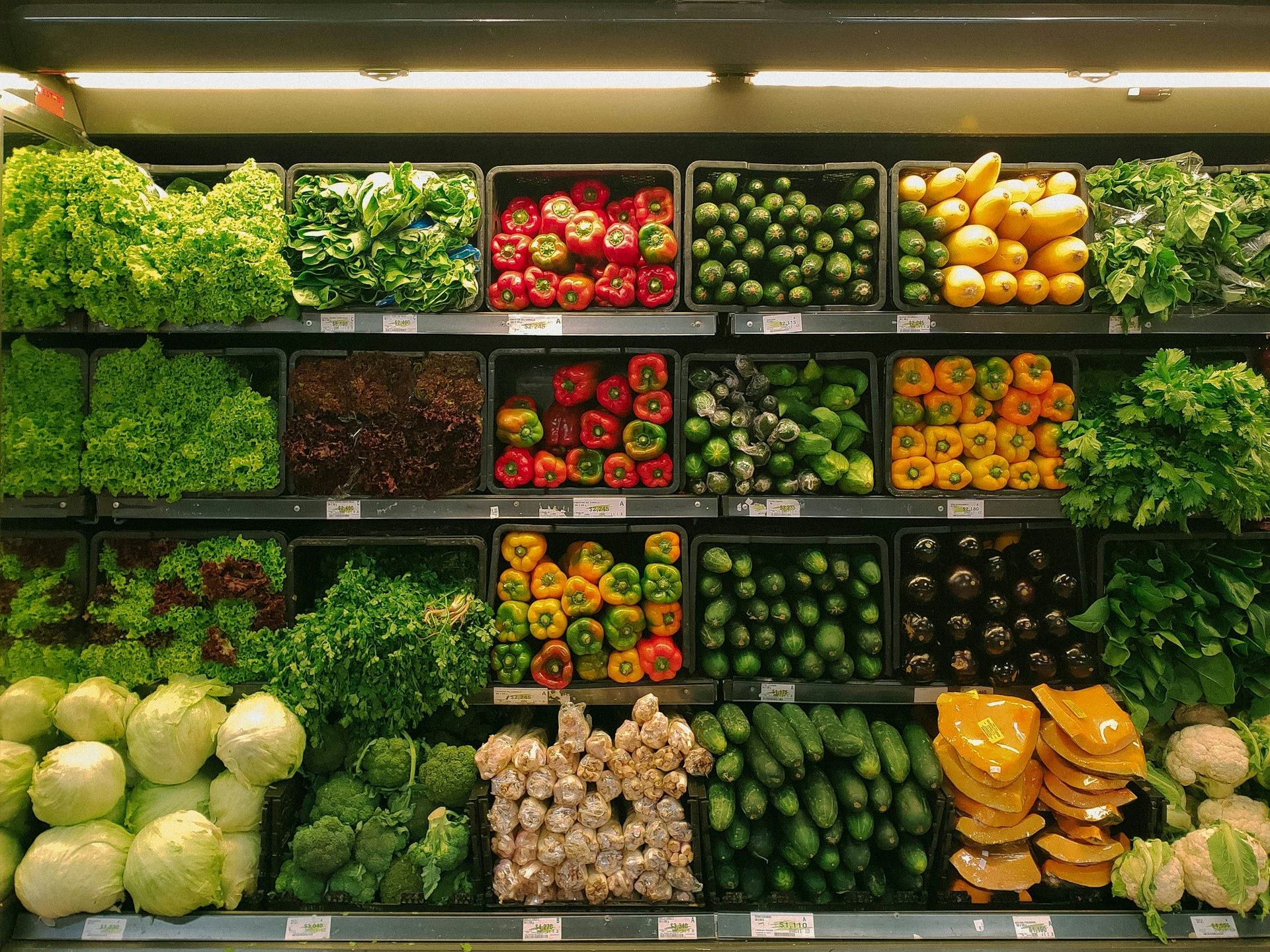
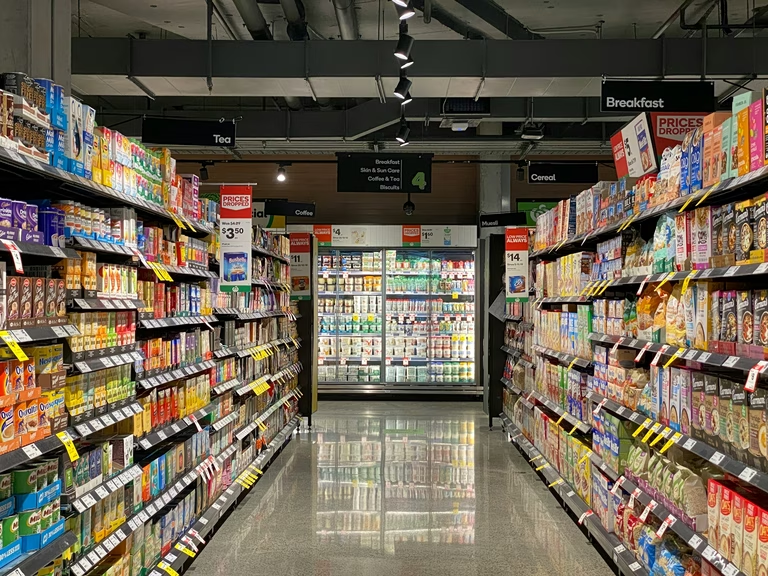
Supermarkets have become modern temples of consumption. With prices soaring, every trip through the aisles and past the refrigerated shelves puts increasing pressure on consumers’ wallets.
The problem is particularly acute in major urban centers, especially Athens, the capital, and Thessaloniki, Greece’s second-largest city.
In these cities, much of the population has become disconnected from food production and relies almost entirely on retailers for supplies. Housing, energy and other living expenses also tend to be higher, leaving households with less money to spend at supermarkets and greengrocers.
Food quality suffers, and hunger reaches more households.
In rural areas, the picture is somewhat better. Smaller communities often benefit from informal support networks and a degree of self-sufficiency. Many residents produce at least some of their own food, meet part of their household needs independently, exchange basic goods with neighbors or buy products directly from people they know at lower prices.
In other words, practices that sustained Greek villages centuries ago still survive to some extent today. This offers a measure of protection against food insecurity and points toward a possible way forward.
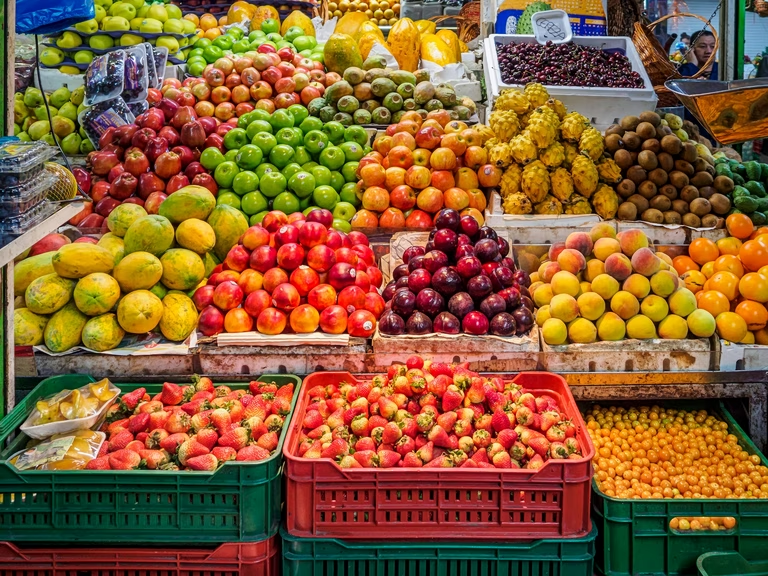
Greengrocers in major cities sell fruit and vegetables sourced from around the world, often at steep prices. Those who stick to seasonal, locally grown produce spend less and, evidence suggests, eat better-quality food.
Local food, seasonal produce and a fairer food system
Technology is also on our side. But it must do more than increase the quantity of food produced. As the figures show, the world already produces far more food than it did in previous decades. The greater challenge is ensuring that food reaches people more fairly.
That is the central message of this year’s World Food Day: “Hand in Hand for Better Foods and a Better Future”—a call to use innovation to nourish tomorrow. According to the FAO, technological solutions must work alongside traditional knowledge to reduce the environmental impact of food production while ensuring that a greater share of the world’s population has access to the food it needs.
The effort must be collective and coordinated. Farmers, fishers, livestock breeders and foresters all have a role to play, alongside investors, business owners and, of course, political decision-makers.
No one can be left out, and no one can afford to act in isolation.
How easy is that when profit is everyone’s primary motivation? Not very. Yet the need for change is so urgent that it cannot be ignored. After all, money makes markets move. If fewer and fewer people can afford to spend it, those markets will suffer, too—and that is in no one’s interest.
The goal is to make World Food Day more than a date on the calendar: an opportunity for reflection, discussion and a fundamental shift in how we think about food.
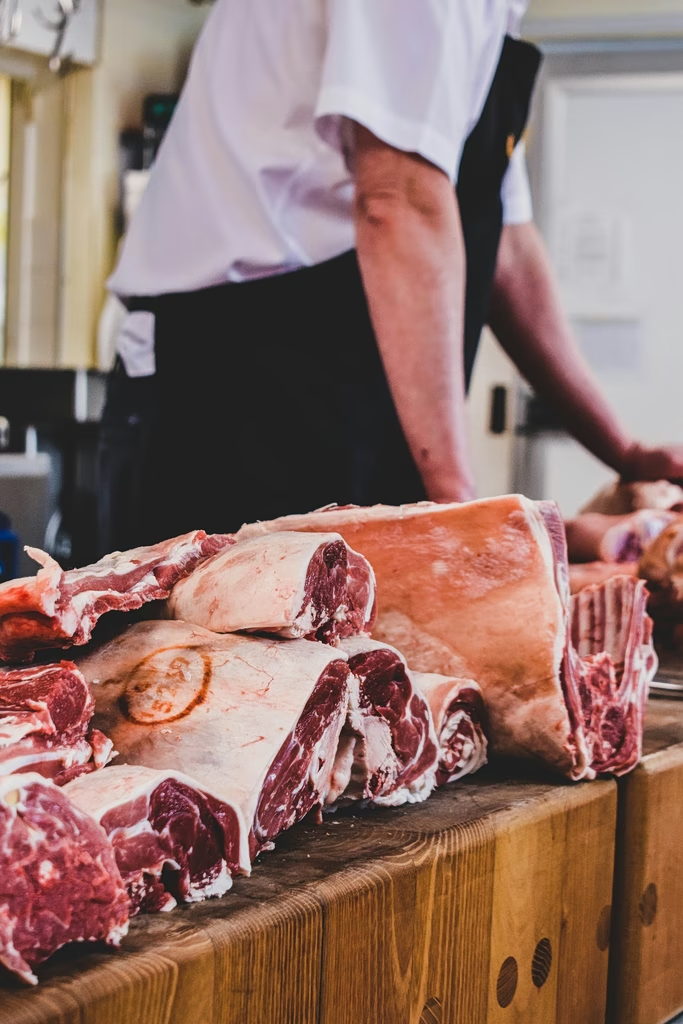
Adopting farming practices that protect the environment must become a priority for food producers.
What we eat—and what we waste—can make a difference
In professional kitchens, several trends have been gaining ground for years: eliminating food waste, rediscovering humble and overlooked ingredients, and prioritizing seasonal and locally sourced produce.
Many chefs, particularly those working in fine dining, have embraced these principles and built their cooking around them.
Artists often have a heightened sensitivity to social change. They pick up on emerging concerns and adapt to society’s needs. And society clearly needs to change—and as consumers, we are beginning to recognize that ourselves.
We are better informed, more conscious of what we eat, and increasingly attentive to what we buy and where it comes from.
By supporting local producers, traditional farming practices and people who respect both the environment and the food they produce, we can make a small but meaningful contribution to building a healthier, safer and fairer food system.
It may not solve global hunger overnight. But it is a place to start.
And that, surely, is worth celebrating—not just today, on World Food Day, but every day.