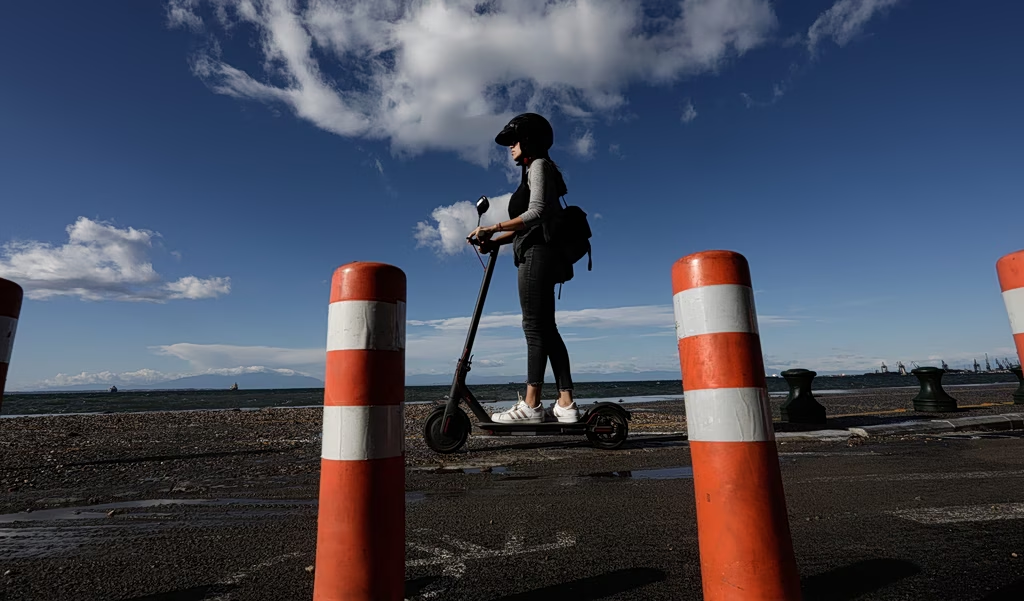
Greece is preparing to introduce stricter regulations on electric scooters, aiming to address growing safety concerns linked to their widespread use on urban roads.
The new legislation, expected to be unveiled next week and voted on in June, will impose a series of requirements on riders and operators, including mandatory helmet use, insurance coverage and speed restrictions.
New Rules for E-Scooter Users
Under the proposed framework, electric scooters will be required to carry a special identification label instead of a license plate and will be fitted with speed limiters restricting their maximum speed to 25 km/h.
Riders will be prohibited from using scooters on major avenues and on roads where the speed limit exceeds 30 km/h. The legislation will also ban the use of electric scooters by anyone under the age of 18.
In addition, local authorities will be granted greater authority over the number of shared rental scooters operating within their jurisdictions.
Municipalities Seek Greater Control
The issue has been particularly prominent in Athens, where the large number of tourists has contributed to a rapid increase in shared scooter use.
Athens authorities previously attempted to introduce stricter local measures, including fines imposed through rental companies on users who abandoned scooters on sidewalks and in parks, obstructing pedestrians, elderly residents, people with mobility difficulties and parents with strollers. However, those measures were blocked because they were not supported by the existing legal framework.
Officials expect the new legislation to resolve those legal obstacles.
Athens Mayor Supports Age Restriction
Athens Mayor Haris Doukas welcomed the planned ban on underage riders, arguing that stronger regulation is needed.
Speaking on national television, he noted that approximately 5,000 rental scooters currently operate across the capital and said previous municipal efforts to impose stricter controls had been rejected for being too restrictive under current law.
Hundreds of Violations Recorded
The push for tougher rules comes as police continue a nationwide road safety campaign focused on helmet use.
Between May 11 and May 17, traffic police carried out 17,441 inspections and recorded more than 2,500 violations.
Among them were 2,319 offences committed by drivers and 194 involving passengers. Authorities recorded 919 violations by riders of light personal electric vehicles, including electric scooters.
A regional breakdown of the violations shows that the highest number was recorded in the Athens region, with 1,211 offences. Other areas with significant numbers included the South Aegean islands (283), Crete (197), Western Greece (189) and Thessaloniki (168).
The remaining violations were recorded in the Ionian Islands (118), Thessaly (83), Central Greece (60), the Peloponnese (48), Eastern Macedonia and Thrace (42), Central Macedonia (37), Epirus (36), the North Aegean (26) and Western Macedonia (15).
Tougher Penalties Already in Force
Under Greece’s updated Highway Code, stricter penalties already apply for helmet-related offences.
Motorcycle riders who fail to wear a helmet face a €350 fine and a 30-day driving license suspension. The same penalties apply to riders who do not ensure their passenger wears a helmet. Passengers themselves face a €350 fine, while operators of light personal electric vehicles can be fined €30.
Authorities have also warned that penalties increase significantly for repeat offenders.
The upcoming legislation is expected to form part of a broader effort to improve road safety and bring clearer regulation to the rapidly growing electric scooter sector.