 Μake us preferred on Google
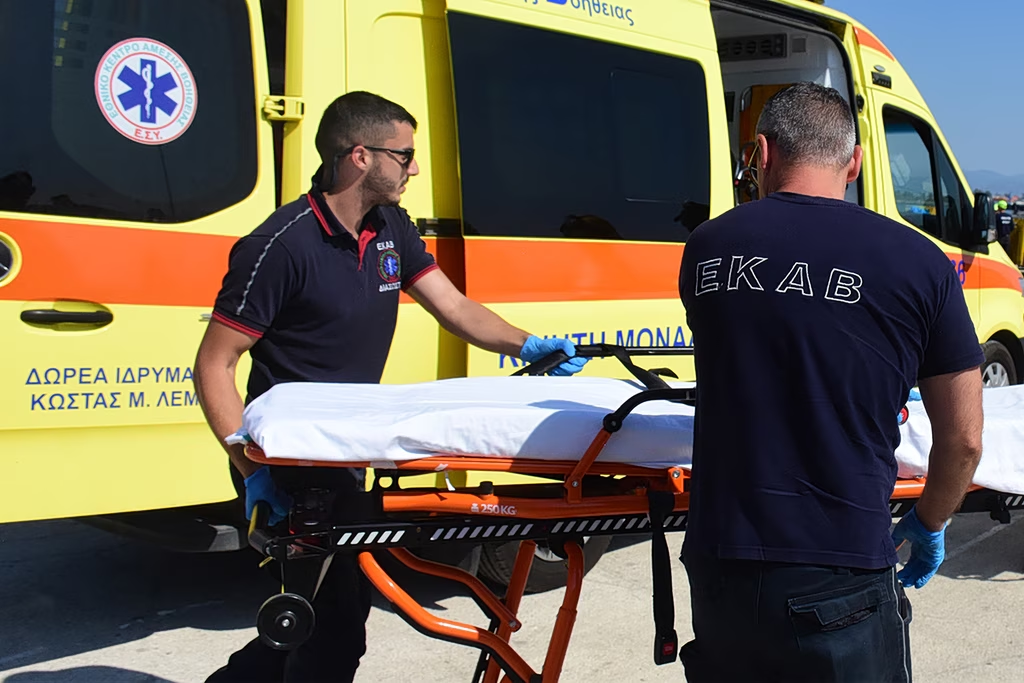
 Greece’s government is preparing to classify nurses, nursing assistants, ambulance drivers and ambulance rescue assistants working in the National Health System and the national emergency medical service as employees in hazardous and unhealthy occupations, Labor and Social Security Minister Niki Kerameus announced.
Speaking in a television interview, Kerameus described the measure as an important step aimed at supporting healthcare professionals whose jobs involve particularly demanding working conditions.
“This is a significant regulation that supports a sector that is objectively very difficult,” the minister said, adding that the government intends to strengthen a profession considered critical to the functioning of the healthcare system.
The announcement follows recent commitments by Prime Minister Kyriakos Mitsotakis to introduce a broader package of measures aimed at supporting nursing staff.
No Cuts to Survivor Pensions
Kerameus also addressed concerns regarding survivor pensions following a ruling by Greece’s highest administrative court.
She stressed that no reductions would be made to survivor pensions, regardless of any legislative action that may follow the court’s decision.
“We will examine the issue in its entirety and legislate if necessary, but there will be no cuts to survivor pensions,” she said.
New Equal Pay Legislation in the Works
The labor minister also revealed that a new bill focused on pay equality between men and women performing the same work will be presented to the cabinet next week.
According to Kerameus, although progress has been made across Europe, wage disparities remain. She cited cases where women earn 12% to 13% less than men despite performing the same job and having identical qualifications.
Calling such discrepancies “unacceptable,” she said the proposed legislation would introduce additional pay transparency requirements for employers both before and after hiring.
Under the planned rules, all job advertisements would have to be gender-neutral, while employers would be required to disclose either a salary range or the exact salary before interviews take place. Employers would also be prohibited from asking candidates about their previous earnings.
Greater Transparency and Stronger Enforcement
The proposed legislation would also give employees the right to request additional information about their own pay and the remuneration of workers in comparable positions if they suspect unequal treatment.
Kerameus noted that differences in pay would only be acceptable when supported by objective factors such as experience, specialized skills or qualifications.
If a pay gap exceeds 5% without adequate justification, the case could be reviewed by the Ombudsman and subsequently by labor inspectors, who would have the authority to issue recommendations and sanctions.
The minister emphasized that the law would apply equally to both men and women. She added that wage inequalities in Greece are more commonly observed among older workers with greater professional experience.
Collective Agreements Expanding
Kerameus also pointed to progress under the country’s National Social Agreement framework, stating that nearly half a million workers have already been covered by the first collective labor agreements introduced under the new system.
She said additional agreements are currently being negotiated, arguing that stronger collective bargaining can contribute to higher wages and improved working conditions.
“The goal is to support employees through a more protective framework that encourages collective agreements,” she said.