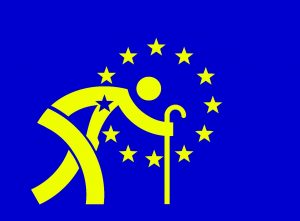
Greece is aging and shrinking at alarming rates. Empty classrooms, deserted villages, and older faces in the streets illustrate a country confronting a stark demographic crisis.
According to the Hellenic Statistical Authority, only 69,675 babies were born in 2024, the lowest post-war figure. Meanwhile, deaths reached 128,101, resulting in a natural population loss of 58,584—the largest negative balance in decades.
The trend is persistent. In 2023, 71,249 births were recorded against 127,169 deaths, leaving a natural decline of 55,920 people.
“Today—and until at least 2050—Greece is among the oldest countries in the EU,” says Byron Kotzamanis, director of the Laboratory of Demographic and Social Analyses. “23.5% of our population is over 65, compared to 21.6% across the Union, and the median age is nearly 47. Greece is aging faster than the European average.”
Kotzamanis warns that if the current trajectory continues, with more deaths than births and zero net migration, Greece’s population could fall below 9 million by 2050, losing about 1.5 million people.
Migration as a Demographic Lever
Migration could play a critical role in counteracting population decline. In 2023, 118,816 people moved to Greece, while 76,158 left, resulting in a net gain of 42,658 residents contributing to the economy and society. For comparison, 2022 saw a net migration of just 16,355 people.
“Natural balances will remain negative for decades,” Kotzamanis notes. “To prevent dramatic population decline, net migration must be positive. The more positive it is, the smaller the loss.”
Despite these numbers, the government’s stance is cautious. Migration Minister Thanos Plevris has stated:
“Legal migration is useful, but it is not a solution for the demographic problem.”
The government’s policy emphasizes control and deterrence rather than integration of migrants already living and working in Greece. While some legal adjustments simplify residence permits, experts argue there is no cohesive strategy linking migration to demographic renewal.
Integration: A Missed Opportunity
Political scientist Dimitris Christopoulos of Panteion University underscores the math behind population dynamics:
“Population change is determined by births, deaths, and migration. When births fall below deaths, migration is the only hope for growth. These are not ideas—they are simple mathematics.”
Christopoulos highlights a hard truth: without migration, Greece cannot offset annual population losses. Yet public debate remains fragmented, driven by fear and deterrence.
“Greece has never had an organized integration policy,” Christopoulos says. “There have been social dynamics that de facto incorporated migrants, but instead of leveraging them, migration is treated as a threat.”
He points to citizenship granted to the second generation—children of migrants born or raised in Greece—as an example. Despite opposition at the time, reality has forced political accommodation, albeit with bureaucratic hurdles.
A Comprehensive Strategy Is Needed
Addressing Greece’s demographic crisis requires a holistic plan: from housing and income support to policies fostering integration and social cohesion. Measures must support families, empower young people to have the children they desire, and leverage migration as an opportunity rather than a threat.
“Social cohesion is not a game. If all you do is burden people, it backfires. Managed responsibly and humanely, migration can deliver positive outcomes,” says Christopoulos.
Greece faces a crucial choice: continue with half-measures, letting aging and population decline dictate its future, or invest in strategies that treat migration and family as pillars of renewal. The stakes are not just numbers—they concern the survival of society as we know it.