What would happen if the Civil Defense sirens suddenly sounded across Greece? Where would civilians go—and are there shelters available?
These questions are addressed in Greece’s General Civil Defense Plan, much of which remains classified. The system outlines how the population would be protected in the event of war or another major national emergency.
At the center of that protection strategy—though not the only method—are civil defense shelters.
Shelters and Civilian Protection
In Athens alone, 992 shelters are believed to exist, with an estimated capacity to host between 280,000 and 360,000 residents.
Some experts place the number even higher—up to 2,000 shelters.
Their construction began during the era of Ioannis Metaxas, Greece’s leader before World War II. After the war, shelters continued to be built in apartment buildings throughout the 1950s and 1960s, largely due to fears of nuclear attack during the Cold War.
According to retired officers who previously served in senior military positions, these shelters were integrated into newly constructed apartment blocks.
“It was common knowledge which buildings had shelters,” they explain. “For many years after they were built, Army inspection teams regularly visited them. You would go down the stairs next to the elevator, reach the basement, and there would be a door leading to a space designated as a shelter.”
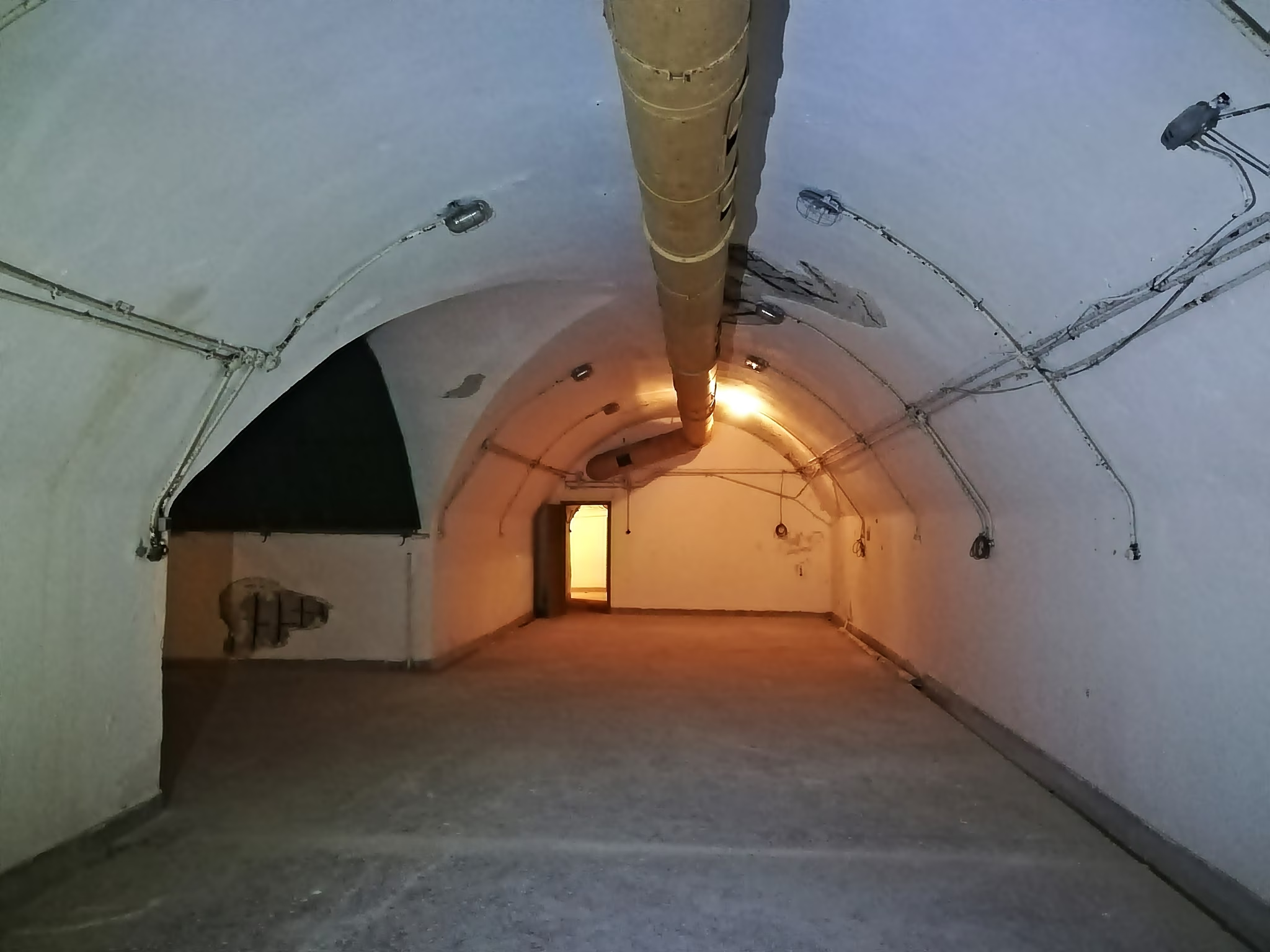
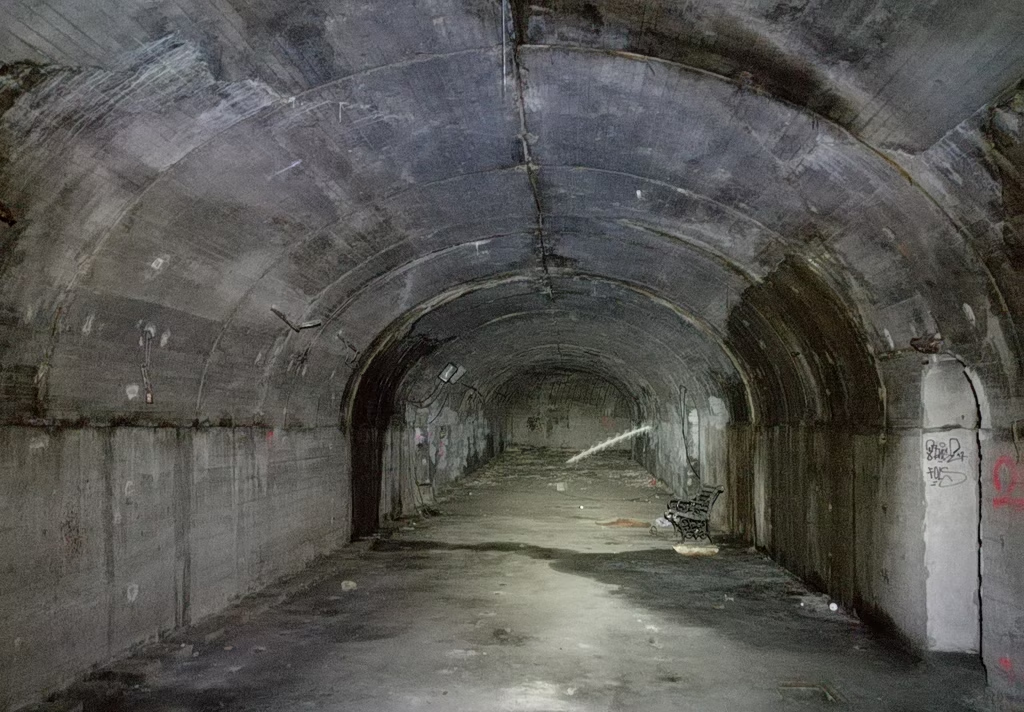
An air-raid shelter on Lycabettus hill
Public and Private Shelters
Some shelters are public facilities equipped with full infrastructure, including:
- Water supply
- Sewage systems
- Ventilation
- Medical rooms
Others are privately owned spaces that serve different purposes in peacetime.
For example, a parking garage or storage room may function as a shelter if necessary. In such cases, the owner must evacuate the space within 24 hours if authorities declare an emergency.
For security reasons, the exact locations of shelters remain classified.
Citizens who participate in annual Civil Defense training programs—organized by Greece’s regional authorities—are informed about what procedures to follow during an emergency. They learn where to report and which gathering points will display maps and instructions.
Shelter lists are updated every three years by specialized regional teams that identify suitable spaces and report them to Civil Defense authorities.
In large cities, particularly Athens, constant construction and urban redevelopment mean shelters are regularly created—or lost.
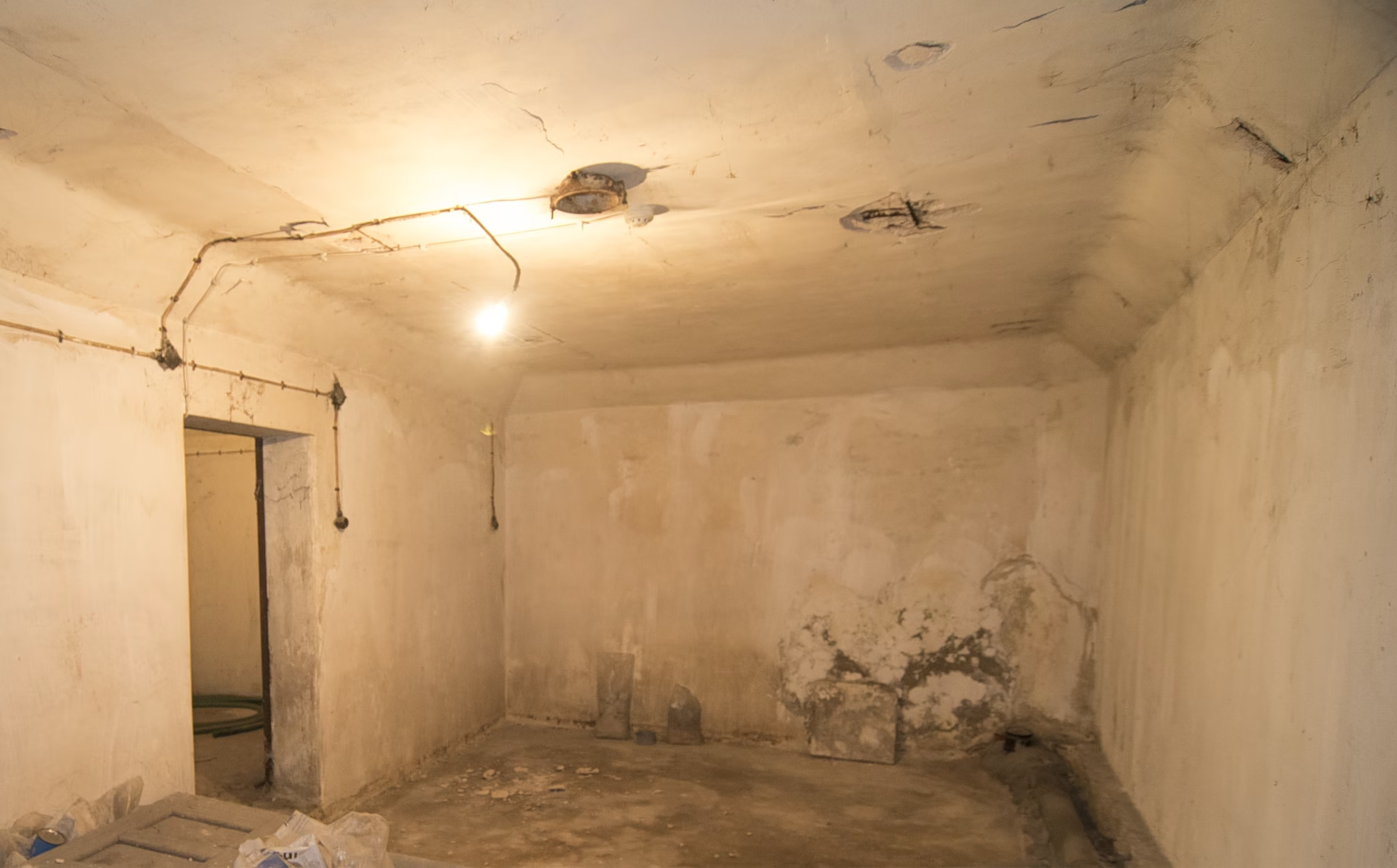
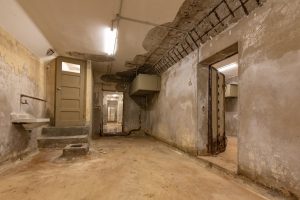
An air-raid shelter under Karageorgi Servias street.
Could the Athens Metro Become a Shelter?
Many Greeks believe the Athens Metro could serve as a shelter during an emergency.
This idea gained traction after images from Kyiv in 2022 showed thousands of civilians taking refuge in subway stations during Russian bombardments.
According to available information, Greece’s Civil Defense and Emergency Planning Service (PAM–PSEA) has indeed incorporated metro infrastructure into emergency planning.
Citizens could seek protection on platforms and station areas—and, under certain conditions, even inside the tunnel network.
From World War II to Today
In 1940, the wider Attica region had approximately 12,000 shelters.
Around 5,500 were built by private citizens in apartment buildings, factories, and industrial sites
The rest were adapted underground spaces reinforced for protection
The last official shelter was constructed in December 1956, when the Metaxas-era law that mandated their construction was abolished.
Since then, the number has declined significantly.
Some estimates suggest that around 2,000 shelters remain operational today.
Urban development has played a major role in their disappearance.
“As construction expanded, many shelters built before 1956 were lost,” historian and author Konstantinos Kyrimis, who specializes in the subject, recently told Greek newspaper Ta Nea.
Even the old shelter beneath the Greek Parliament building has been destroyed—replaced by a parking facility.
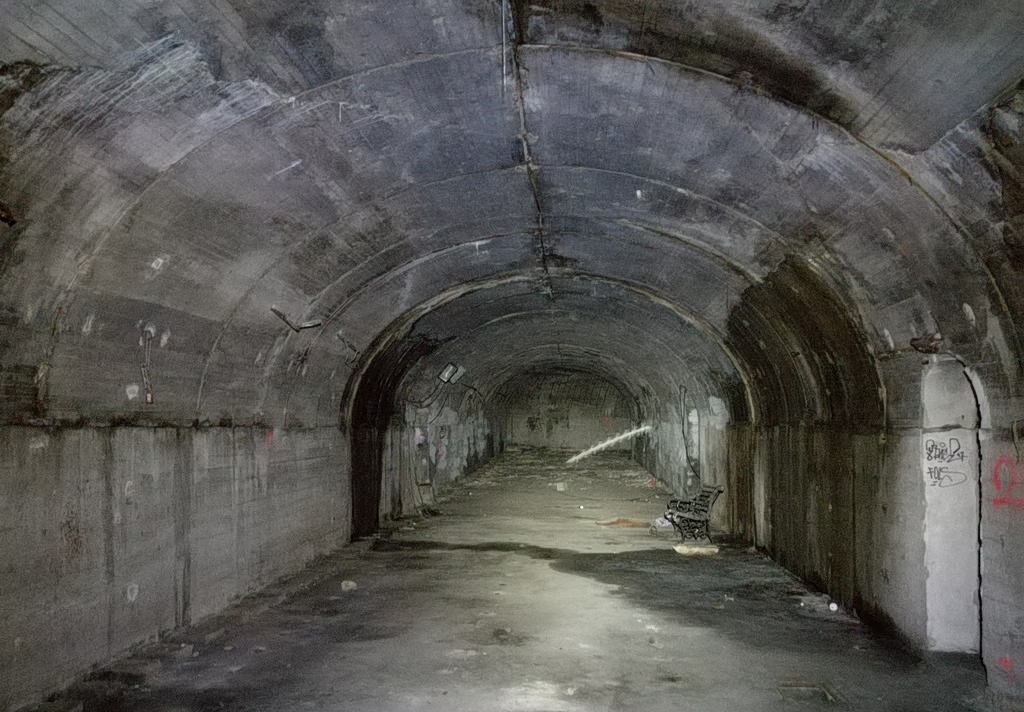
An air-raid shelter under Ardittou street
The Hidden Map of Athens
Although official shelter locations remain secret, urban legends and partial records have created an unofficial “map” of Athens’ underground shelters.
These include:
- Small apartment-building shelters that can hold about 50 people
- Larger facilities built to military standards
Among the most notable:
- The Lycabettus Hill shelter, covering roughly 400–500 square meters
- A shelter on Ardittos Hill, capable of housing up to 1,300 people
Today, the only shelter open to the public as a historical site is located on Korai Street in central Athens.
During the German occupation of Greece in World War II, the underground anti-aircraft shelters there were turned by Nazi forces into detention and torture chambers—leaving behind a powerful reminder of the city’s wartime past.
Shelters Across the Rest of Greece
Civil defense shelters are not limited to Athens.
According to official data presented to the Greek Parliament in November 2025 by Deputy Minister for Citizen Protection Ioannis Lampropoulos, the country currently has:
- 2,892 designated shelters across all regional units
- Total capacity for 1,981,514 people, with the possibility of increasing that capacity by 30% if needed