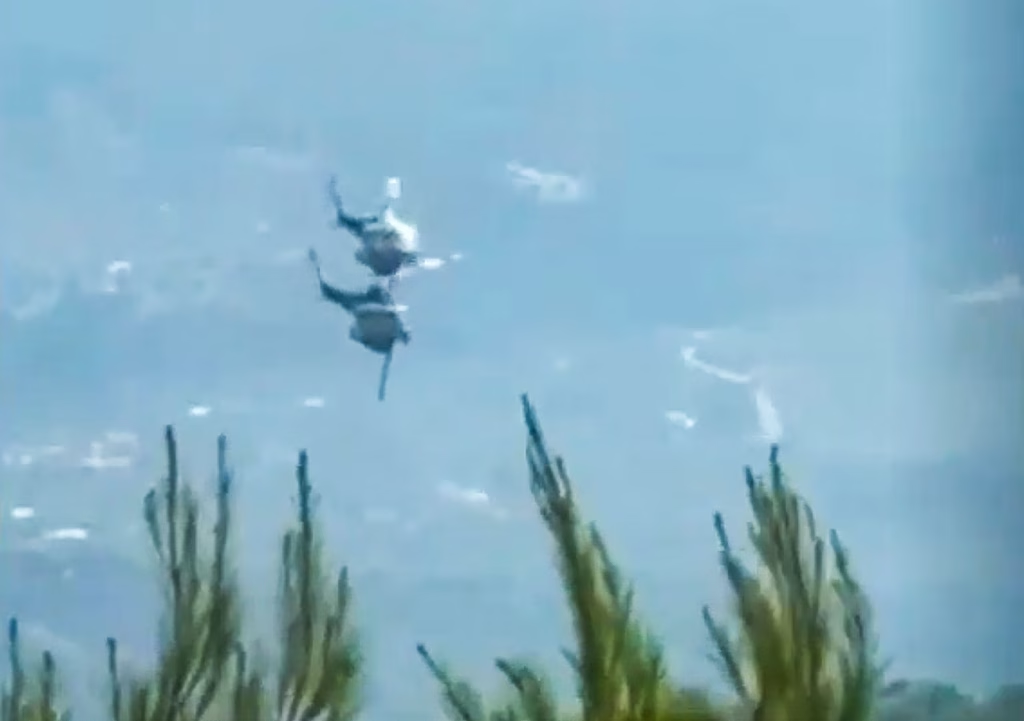
A Fire Service officer who was coordinating aerial operations has told Greece’s Greek FBI that the firefighting helicopter that crashed in Psatha on August 2 should have been operating in another nearby area, according to testimony obtained by Ta Nea.
“The firefighting helicopter that crashed in Psatha at the beginning of August should not have been at that location, according to my records. It should have been operating in another nearby area that had also been engulfed in flames,” the officer said in testimony given to investigators.
The officer was aboard the supervisory helicopter “Floga” during the critical hours when two firefighting aircraft collided on August 2, killing the Danish pilot and a Greek interpreter instantly.
Helicopter was allegedly outside its assigned sector
The officer said he was responsible at the time for monitoring the movements of all Fire Service aerial assets, except those operating over the Psatha fire front, where directions were being issued by an officer on the ground.
According to his testimony, however, the helicopter that crashed was within his sector of supervision, meaning it should have been operating outside Psatha.
He said the aircraft ended up, for an unknown reason, in a different location, where it collided with another helicopter.
The testimony could prove significant in determining how the fatal collision occurred. It follows descriptions and claims from crews operating firefighting helicopters over Psatha, who said the helicopter carrying a British pilot and a Greek crew member struck the aircraft that entered its flight path from another area.
The fact that the helicopter that crashed did not have water in its tanks also points to questions about why it was operating in the area, according to the report.
Ground coordinator’s testimony expected
Authorities are also awaiting testimony from the Fire Service officer who was coordinating aerial assets from the ground in Psatha during the operation.
That testimony is expected to shed light on the instructions given to the aircraft operating in the area and help clarify why the helicopter was at the location where the collision occurred.
Investigators are also considering the recordings from the Fire Service’s operations center, which could provide information about communications during the critical moments of the incident.
Some of the communications, particularly those involving coordination from the ground, were reportedly conducted locally using analog radios, which could affect the available records.
The investigation is therefore focusing on the movements and assignments of the aircraft, the instructions issued to their crews and the communications made immediately before the fatal collision.