 Μake us preferred on Google
 The family of British pilot Andrew Hutchinson, who survived last week’s midair collision between two firefighting helicopters while battling a major wildfire in western Attica prefecture, has described his escape as “nothing short of a miracle,” paying tribute to the 48-year-old’s experience and exceptional flying skills.
Σύγκρουση δύο ελικοπτέρων στο πύρινο μέτωπο της δυτικής Αττικής – Σώοι είναι ελαφρά τραυματίες το πλήρωμα του ενός ελικόπτερο. Οι αστυνομικές δυνάμεις και ασθενοφόρα βρίσκονται στο σημείο του ατυχήματος. Δύο χειριστές του δεύτερου ελικόπτερο που έχει καταπέσει περισυνελλέγησαν… pic.twitter.com/D8Y4CWKAT4
— Ε🇬🇷Λ🇬🇷Λ🇬🇷Α🇬🇷Σ (@GRHellasGR) August 2, 2026
Hutchinson was taking part in aerial firefighting operations over the Psatha area, near the coastal resort of Porto Germeno, when the Bell 214ST helicopter he was flying collided with a second Bell helicopter during water-dropping operations.
The crash claimed the lives of Danish pilot Rune Kindahl and Greek Fire Brigade liaison officer Aris Theodoropoulos aboard the second aircraft. Hutchinson and the Greek officer travelling with him survived after he carried out a successful autorotation and emergency landing despite catastrophic damage to his aircraft. Both men were taken to the 251 Air Force hospital in Athens after the helicopters had departed from the nearby military air base at Elefsina.
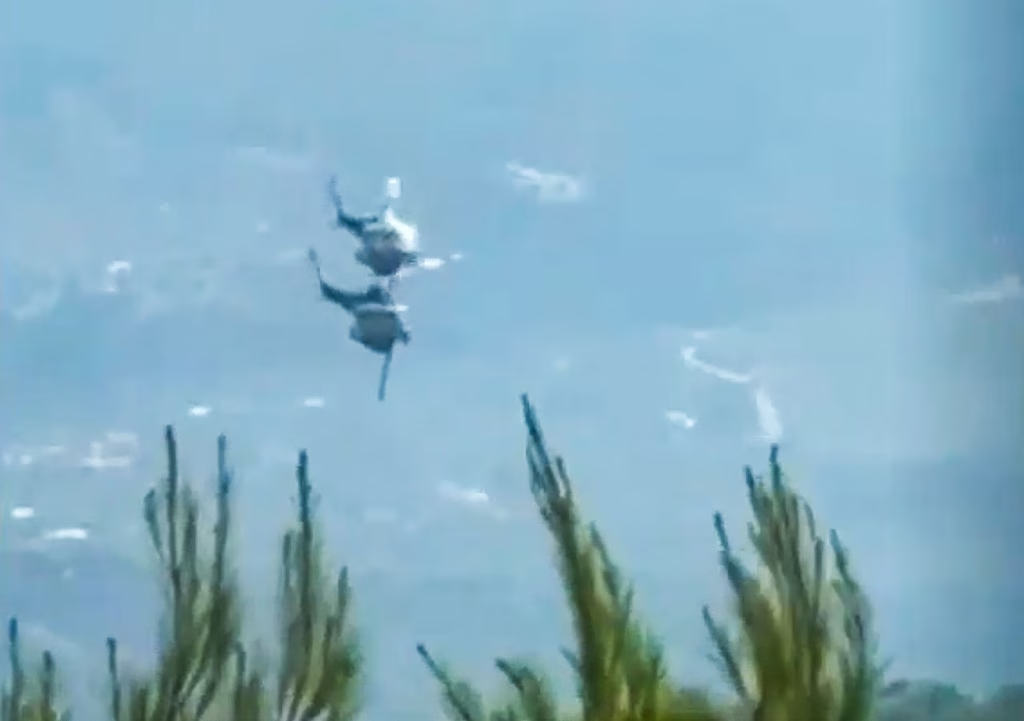
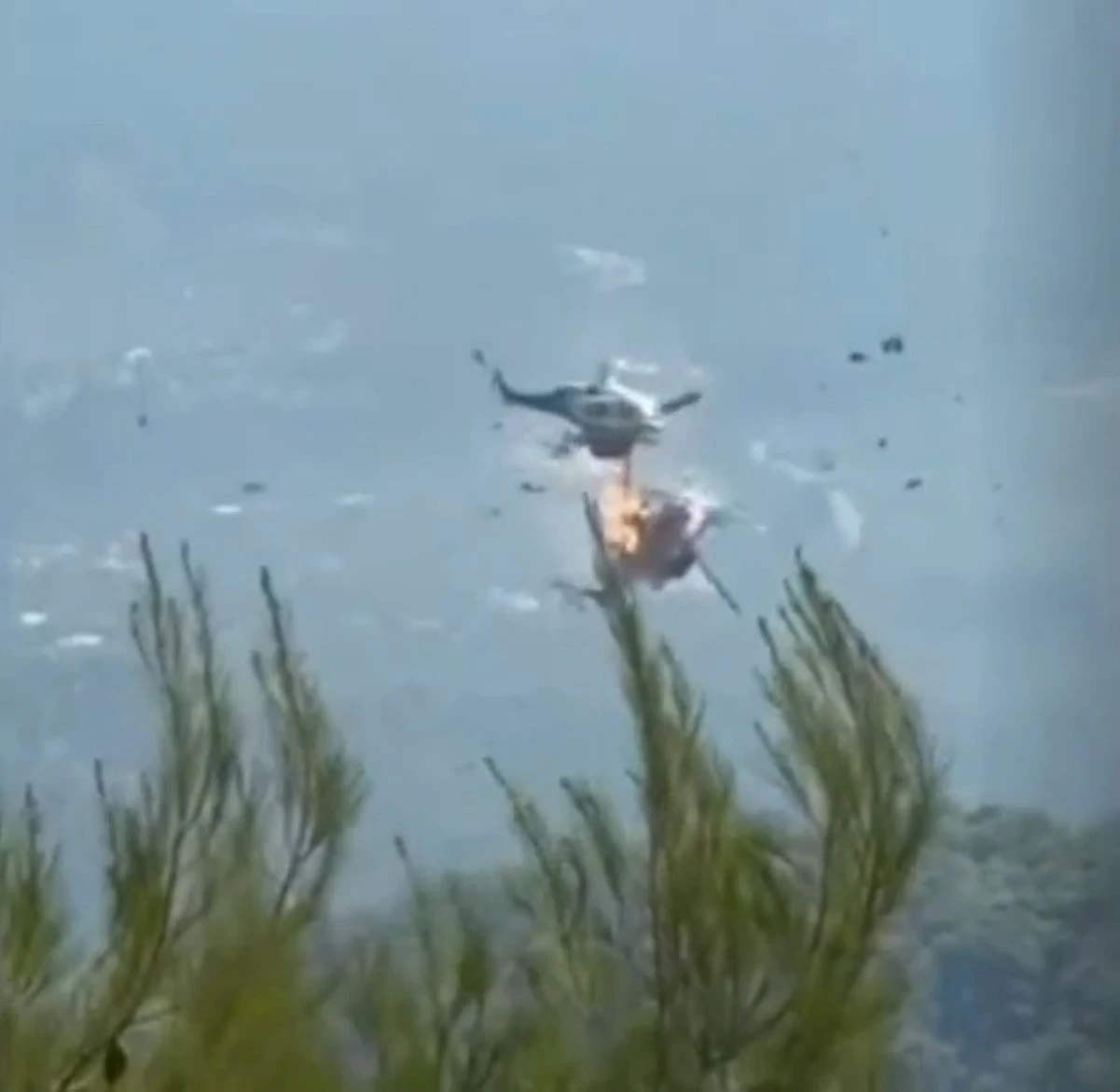
Video footage of the collision shows one helicopter gradually converging with the other before their rotor systems made contact. One aircraft burst into flames and crashed into a ravine, while the second managed an emergency landing.
According to relatives, Hutchinson told them he and the Greek officer escaped only moments before their helicopter exploded.
His uncle, Michael Hutchinson, told The Times that the pilot’s survival reflected decades of experience, saying very few aviators would have been capable of safely landing a helicopter after losing engine power under such conditions.
“He crashed into woodland and got out at the last moment,” Michael Hutchinson said. “His mobile phone was completely destroyed in the fire. He and the officer with him escaped just before the helicopter exploded.”
The uncle recalled flying with Hutchinson during his early training, when he practiced autorotation — the emergency procedure allowing a helicopter to land safely without engine power.
“He told me, ‘I’m going to shut the engine down,’ and then landed the helicopter without power. He’s been flying helicopters for many years. He’s exceptionally careful and knows exactly what he’s doing,” he said.
A father of three, Hutchinson owns the Yorkshire-based helicopter operator Hutchinson Helicopters, headquartered near Northallerton in northern England. International aviation records show he has accumulated years of experience in specialist helicopter operations, including wildfire suppression missions in Britain and Australia.
His wife, Dawn Hutchinson, and their three children travelled from North Yorkshire to Athens following the accident. According to the family, Hutchinson underwent spinal surgery to stabilize serious injuries with metal rods and screws and is expected to be medically repatriated to Britain once doctors approve his transfer.
Raised on a farming family, Hutchinson taught himself to fly helicopters before building a career in aerial operations. His relatives said they had long worried about the dangers of seasonal firefighting missions, but he remained committed to returning each summer to help combat wildfires overseas.
Every summer, Greece supplements its aerial firefighting capability with foreign pilots and aircraft under the European and international wildfire assistance framework as increasingly severe fire seasons stretch domestic resources.
The two Bell 214ST helicopters involved in the collision were leased by the Greek authorities from Australian aerial firefighting specialist McDermott Aviation, which has supported Greece’s wildfire operations for seven consecutive fire seasons. Following the accident, Greek authorities grounded the company’s Bell helicopter fleet pending the outcome of the investigation. McDermott Aviation said it was cooperating fully with investigators and extended its condolences to the victims’ families.
The collision occurred during one of Greece’s most challenging wildfire outbreaks of the summer. According to recent reporting, firefighters have been battling multiple large blazes fueled by prolonged heat, drought and gale-force winds, conditions that have repeatedly limited the use of aerial firefighting assets despite the deployment of hundreds of firefighters and international reinforcements.
The fatal collision marked an unprecedented loss for Greece’s aerial firefighting campaign and prompted an immediate review of operational procedures involving contracted helicopters while the official investigation continues.