 Μake us preferred on Google
 The Hellenic Air Force has opened an investigation into the final maneuvers of the F4 Phantom fighter jet that crashed near Tanagra air base on Saturday, killing both pilots aboard, 40 year old Wing Commander Ioannis Blesias and 37 year old Squadron Leader Dimitrios Petros. The crash occurred in the final seconds of a flight that, from takeoff to impact, lasted less than two minutes.
The planned route
According to information gathered so far, the flight plan called for the Phantom to take off, climb rapidly, turn left and pass over the crowd gathered for Athens Flying Week, an annual air show held at the Tanagra base northwest of Athens. It then called for a right turn to bring the aircraft back into line with the runway, flown at low altitude and high speed.
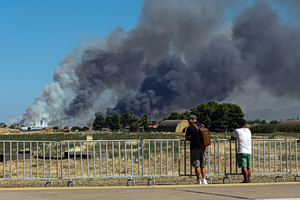
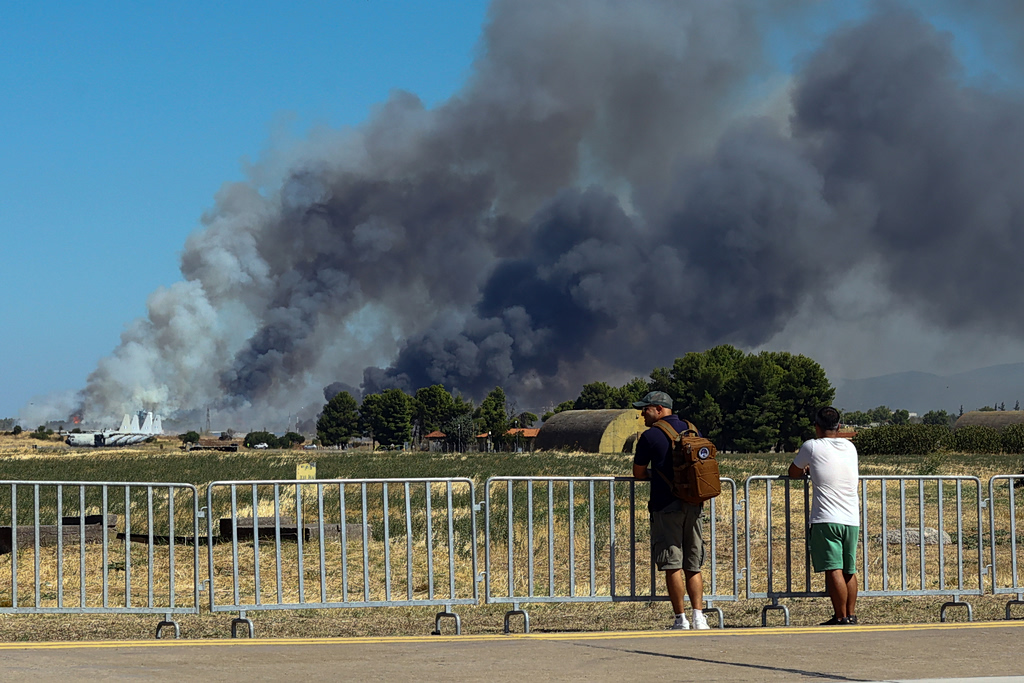
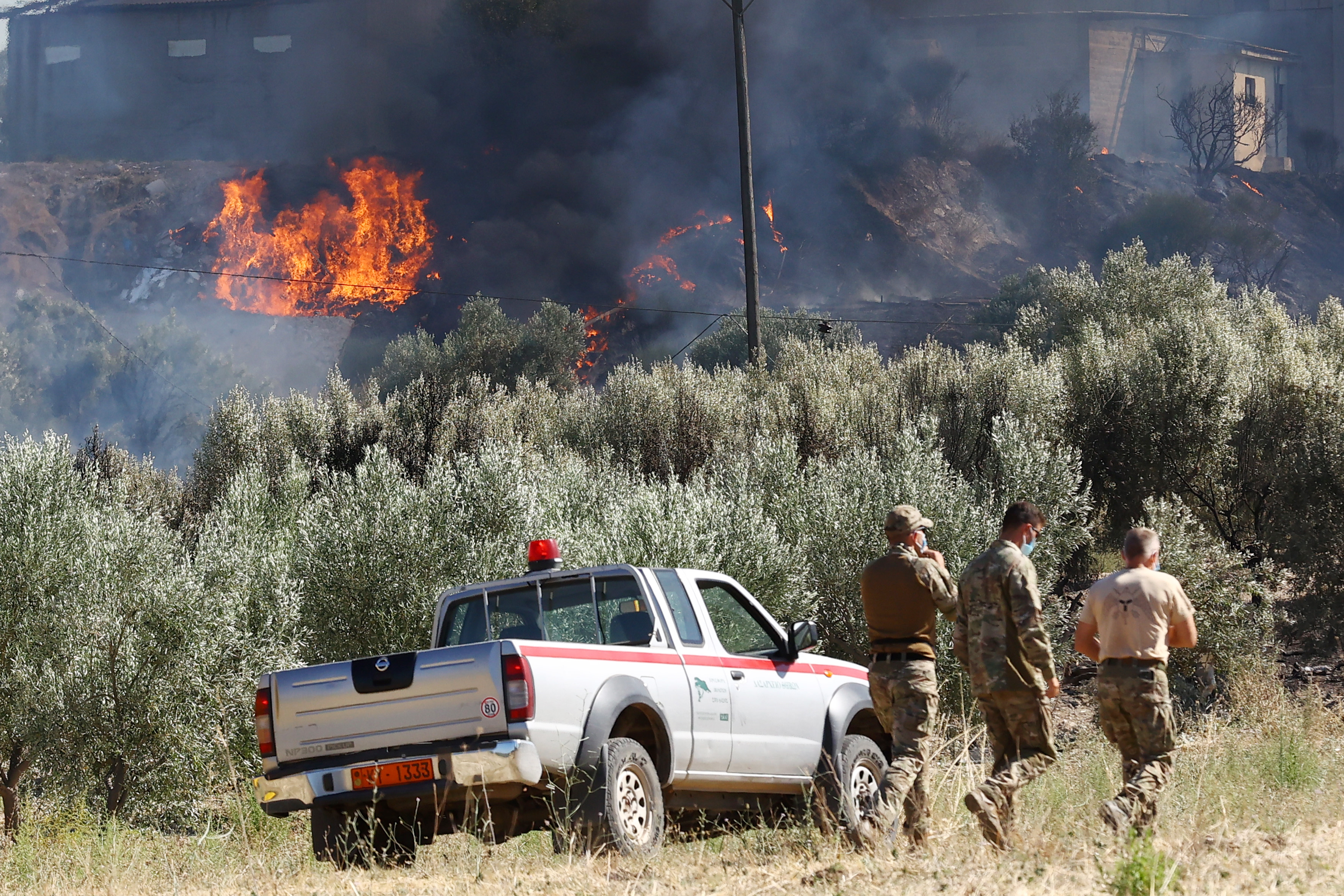
It was during that right turn, roughly two to three nautical miles from the runway, that the aircraft lost altitude abruptly. Under the plan, the Phantom was to climb to about 2,000 feet before descending into the turn, then make a low pass at roughly 300 feet and about 550 mph before climbing again. The crash happened shortly before that low pass, while the aircraft was still descending through the turn. The jet went down within seconds, crashing between two warehouses that later caught fire.
What are investigators examining?
Officials have collected the wreckage, technical flight data, recordings of the crew’s communications with the control tower and video shot by cameras and phones during the display. They are reviewing that footage frame by frame to reconstruct the takeoff, the sudden loss of altitude and the aircraft’s path to the crash site.
Investigators are weighing several possible scenarios.
One line of inquiry centers on the aerodynamics of the right turn itself. A steeply banked turn requires more lift to hold altitude, which raises the g force on the aircraft and its angle of attack, the angle between the wing and the oncoming air. Even at high speed, a fighter jet can reach an angle of attack at which it stalls, losing lift and experiencing severe aerodynamic shaking before departing controlled flight. At the altitude the Phantom was flying, a stall of that kind would have left the crew almost no room to correct it.
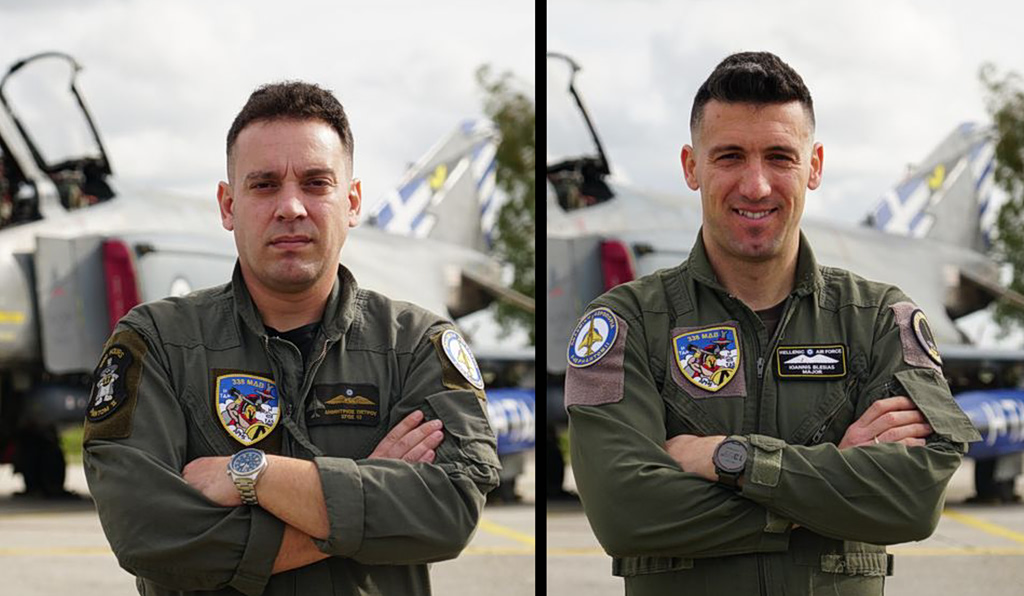
Wing Commander Ioannis Blesias, 40, and Squadron Leader Dimitrios Petros, 37, the two Hellenic Air Force pilots killed when their F4E Phantom II crashed during the Athens Flying Week 2026 display at Tanagra on Saturday, September 5, 2026 (Hellenic Air Force General Staff Press Office / Eurokinissi)
A second line of inquiry concerns whether the turn’s bank angle, speed, g force and altitude stayed within the limits planned for the maneuver, or whether they combined to put the aircraft in a position from which it could not recover. Investigators are also looking at the aircraft’s energy state during the turn, the relationship between its altitude and its speed. A demanding maneuver can use up that margin quickly, and once it runs out, altitude can be lost with little warning.
A third possible cause is a technical malfunction. The inquiry will cover the aircraft’s two J79 engines, its fuel supply, hydraulic systems, flight controls and stability augmentation systems, for any fault that could have contributed to the crash, particularly one that surfaced during a high load maneuver. No evidence collected so far points to mechanical failure.
A fourth possibility is that no single cause was responsible. A technical problem, a change in speed or bank angle, and the very low altitude the jet was flying could all have played a part and contributed to the crash.
It remains unclear why Blesias and Petros did not eject before the crash. The two scenarios under consideration are that either the pilots had no time to activate the ejection system, or they chose not to use it, attempting instead, in the aircraft’s final seconds, to regain control and steer the jet away from the air base and the crowd watching the display.