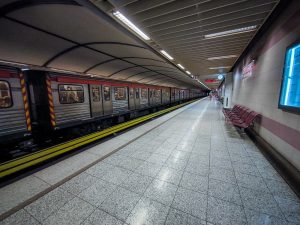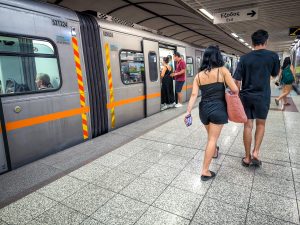
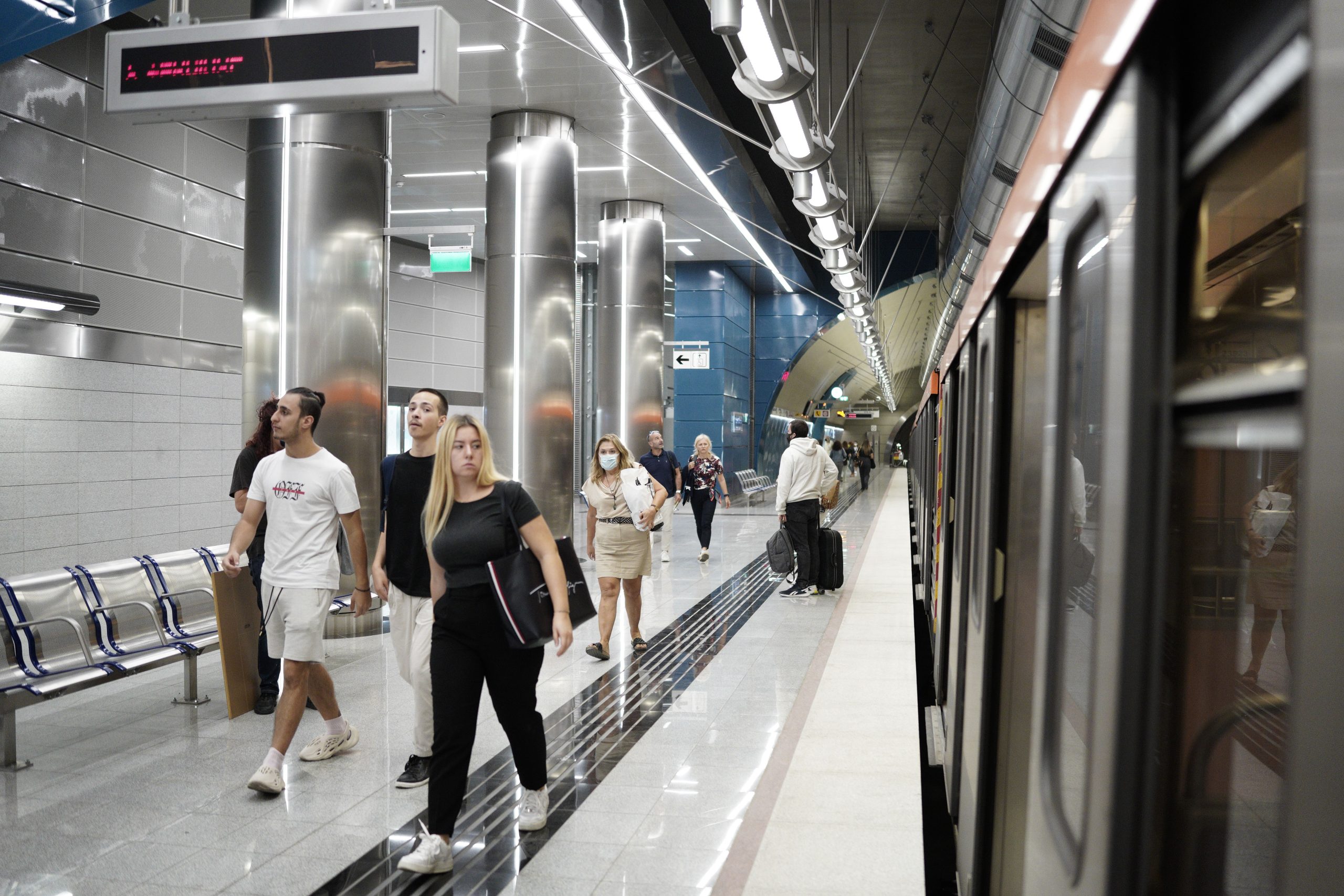
Athens’ urban transport is entering a new era as the city officially launches permanent 24-hour operation of its metro, tram, and select bus lines every Saturday, starting September 13, 2025. The move comes as part of broader efforts to improve safety, ease congestion, and provide more convenient travel options for passengers.
According to the Ministry of Infrastructure and Transport, the Athens Urban Transport Organization (OASA) will now run Metro lines 2 and 3, Tram lines T6 and T7, and selected bus routes around the clock, covering major hubs across the Attica basin.
Metro and Tram Services
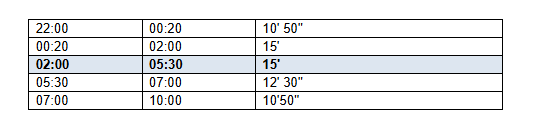
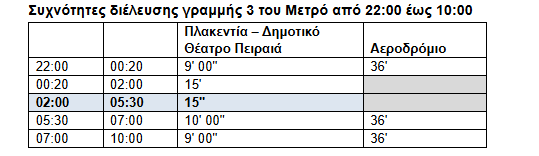
The 24-hour metro service will cover lines 2 and 3. Night-time frequencies vary, with trains running every 9–15 minutes during off-peak hours:
Line 2 (22:00–10:00): 10–15 minutes between trains
Line 3 (22:00–10:00, Plakentia – Airport): 9–36 minutes depending on the segment
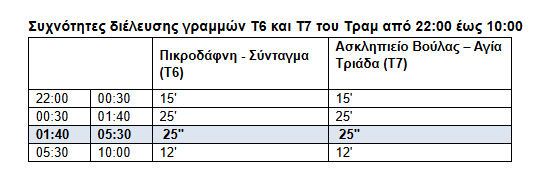
For the tram, lines T6 (Pikrodafni – Syntagma) and T7 (Asklipieio Voulas – Agia Triada) will operate overnight, with trains every 12–25 minutes between 22:00 and 10:00.
Expanded Bus Network
In addition to existing 24-hour and night routes, 11 new bus lines will join the permanent Saturday service, connecting areas including Piraeus, Kaisariani, Kifisia, and Agia Paraskevi. Highlights include:
- 049: Piraeus – Omonia
- 221: Panepistimioupoli – Akadimia
- 224: Kaisariani – Eleftherios Venizelos
- 421: Agioi Anargyroi – Agia Paraskevi
- 550: Palaio Faliro – Kifisia
- 608: Galatsi – Akadimia – Nekr. Zografou
- 703: Piraeus – Agioi Anargyroi – Agios Eleftherios (via Thivon)
- 842: Perama – St. Korydallos
- A15: St. Larisis – Dasos
- B11: Pl. Vathi – Ilion – Petroupoli
- B12: St. Attiki – Ano Liosia
OASA also continues to operate several bus routes 24/7 every day, including airport connections (X93–X97) and central city lines like 040 Piraeus – Syntagma. Night routes covering other major corridors remain in place, offering safe travel options at all hours.
A Move Toward Safer, Smoother Travel
The extended 24-hour service aims not only to make Athens more accessible at night but also to improve passenger safety. It is part of a broader strategy, which includes highway upgrades, stricter road monitoring, tougher penalties for traffic violations, and the installation of surveillance cameras, addressing Greece’s persistently high road fatality rate.