 Μake us preferred on Google
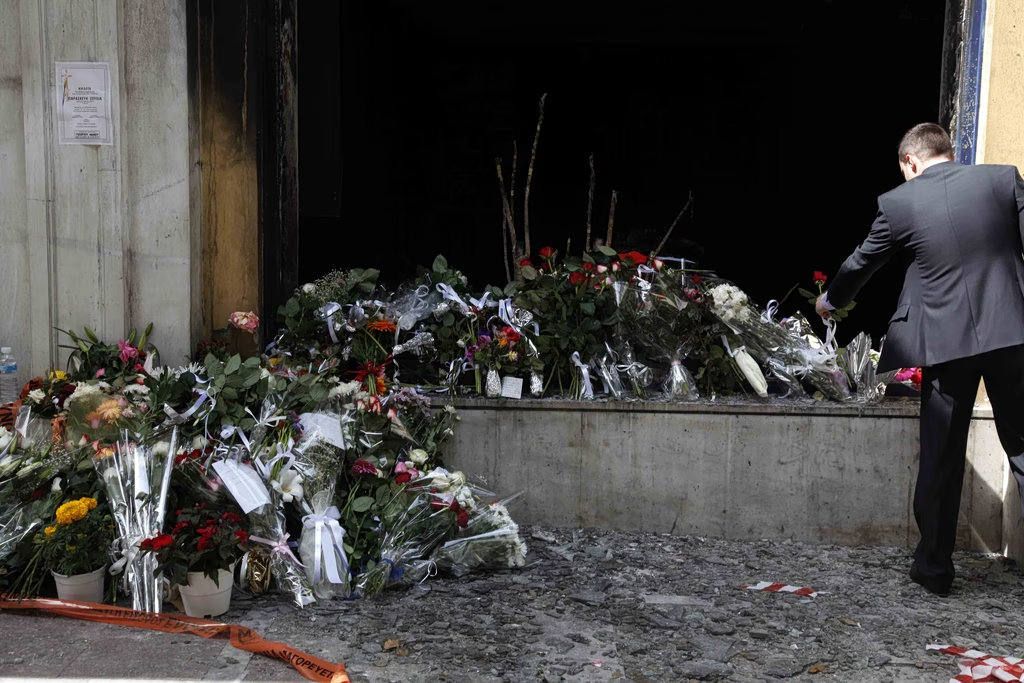
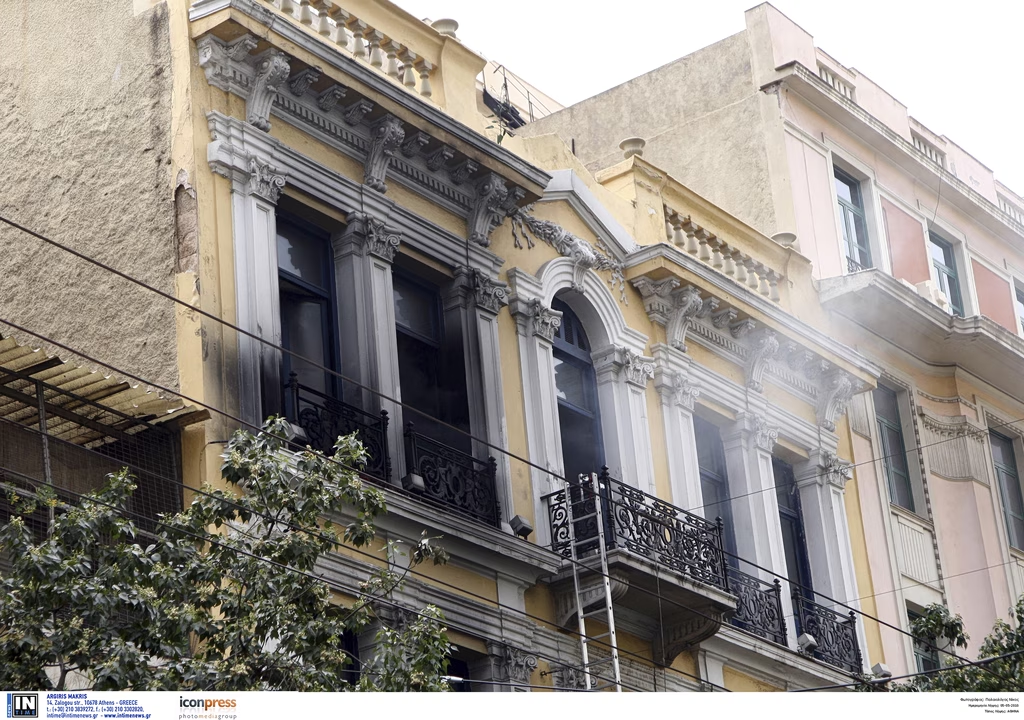
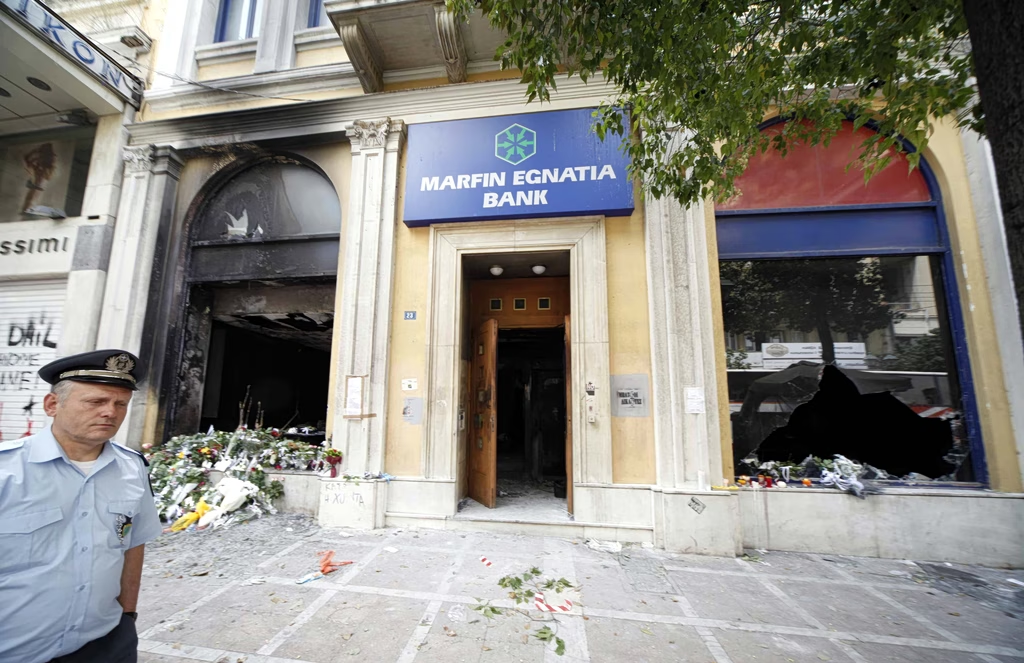
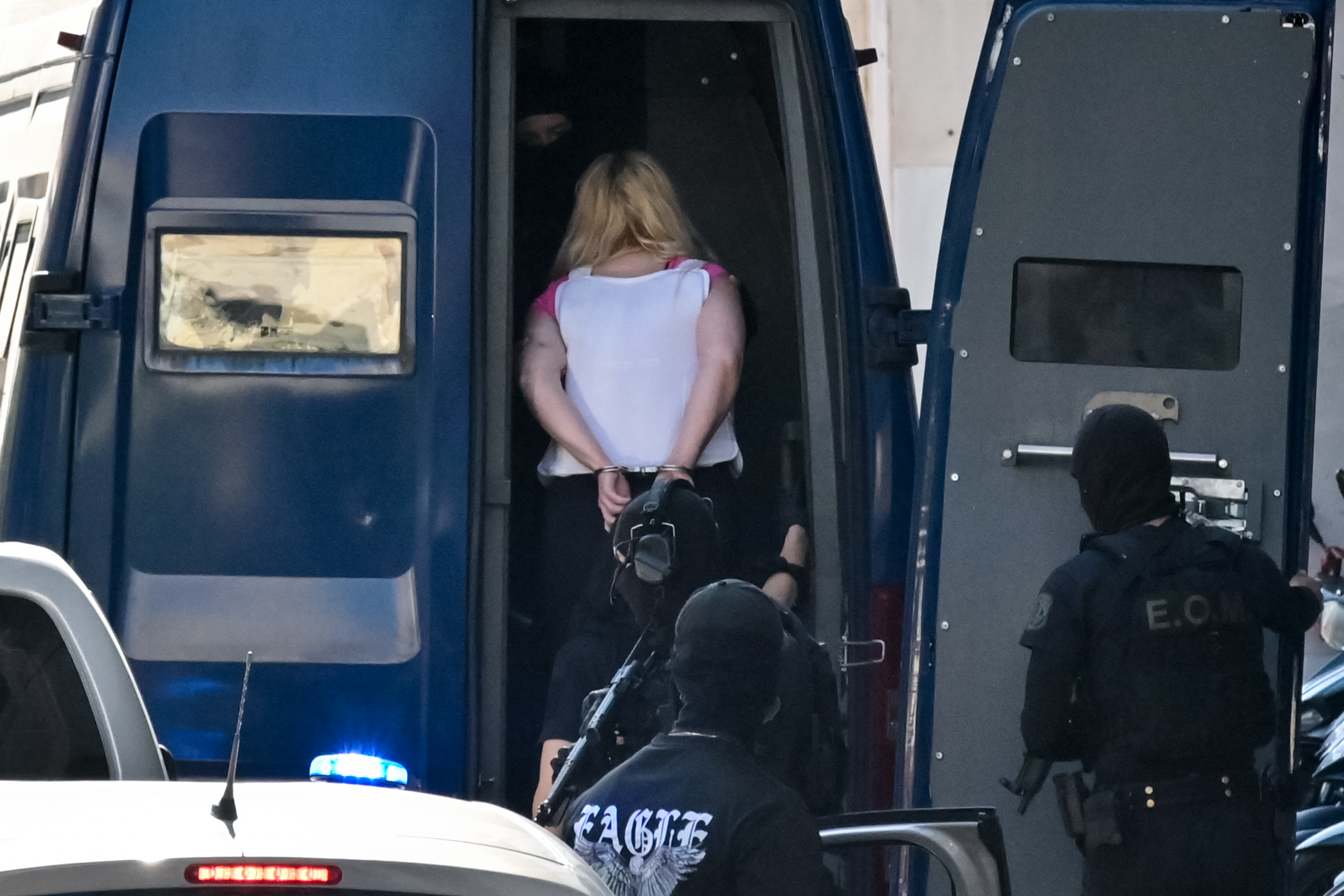
 A 46-year-old woman accused of involvement in the 2010 Marfin bank attack in Athens has been remanded in custody following her questioning by an investigating magistrate, with the prosecutor’s agreement.
The woman, who was extradited to Greece from the United Kingdom, faces the same charge as two 42-year-old men who were arrested after warrants were issued and have also been placed in pretrial detention: multiple counts of joint homicide.
The 46-year-old submitted a lengthy written defense statement through her lawyer, Kostas Papadakis, and subsequently answered questions from the investigating magistrate.
Her lawyers have strongly challenged the decision, questioning the evidence used to identify her and raising concerns about the influence of publicity on judicial proceedings.
Lawyer warns of pressure from publicity
Speaking to Greek television program Koinonia Ora MEGA, lawyer Thodoris Karagiannis said cases that attract significant public attention can receive greater scrutiny from authorities, potentially affecting decisions.
Karagiannis stressed that he was not taking a position on the specific evidence in the case, but argued that an investigation reopened 16 years after the events raises questions about the reliability of evidence.
“Certainly, when we have a case solved 16 years later, uncertainty immediately arises as to whether the evidence is still solid enough to establish a case,” he said.
He argued that such a long period of time inevitably creates the possibility that evidence has deteriorated or been altered. He also noted that, with the exception of homicide, the other criminal offenses in the case have become subject to the statute of limitations.
Karagiannis said the justice system must balance the need to investigate the deaths with the obligation to avoid imprisoning someone without sufficient grounds.
He also argued that pretrial detention can be easier to impose in cases that attract extensive media attention.
“Publicity exerts a certain amount of pressure,” Karagiannis said, particularly regarding pretrial detention, which he described as the first line of defense for an accused person. He said this should not happen but suggested that it was difficult to deny that media attention can influence proceedings.
Defense challenges photo identification
Papadakis, the 46-year-old’s lawyer, described the detention decision as judicial arbitrariness and said the police had previously failed to identify his client using the same photographic material.
He said his client’s defense rests on two central arguments.
First, he said there was no identification of the woman according to the police evidence. Second, he said the same photographs had been examined four years ago by the Directorate of Criminal Investigations, which had reached the conclusion that there was no identification. The case was subsequently archived by a prosecutor, he said.
“These issues, which are the main defense arguments, have no answer in the reasoning for the pretrial detention,” Papadakis said.
He said he would appeal the decision and was considering making public, in anonymized form, the reasoning of the prosecutor and investigating magistrate as well as the defense memorandum.
Papadakis also criticized what he described as the “communications monopoly of the government’s lies,” arguing that it had created an atmosphere to which the investigating magistrate and prosecutor had succumbed.
Police cite new image-analysis technology
According to the police, the new identification became possible through the use of modern and more sophisticated digital image-processing software.
George Kallikmanis, speaking during the same television discussion, said the police had been able to analyze photographs taken by a photojournalist near the Marfin bank, alongside other photographs and security-camera footage.
According to Kallikmanis, the analysis linked images of a woman wearing her hair in a bun, a particular mask and clothing bearing a distinctive print. He said the material was also compared with other photographs found in a storage facility in the Koukaki area of Athens.
Kallikmanis acknowledged the defense argument that the same photographs had previously been examined but said the police had now used new software to analyze the material in greater detail.
He also emphasized the need to avoid imprisoning an innocent person, saying that the evidence should be examined carefully by the judges.
Karagiannis, meanwhile, said technological advances have increasingly become part of criminal investigations over the past 15 years. But he argued that technology cannot eliminate the effects of the passage of time on evidence.
“The issue is to find that golden balance,” he said.
Karagiannis also noted that the 46-year-old had agreed to be extradited to Greece, despite the possibility of relying on procedural obstacles to prevent her extradition. He said several European countries had refused in recent years to extradite Greek citizens to Greece because of conditions in Greek prisons.
What the accused says
The 46-year-old has denied involvement in the attack.
“I am innocent. I took part in the demonstration, but I had nothing to do with the incidents. I know my co-defendants by sight from the anarchist scene,” she said, according to her defense.
Her sister, who had been with her during the demonstration, also testified as a defense witness.
According to the sister’s testimony, the two women were together during the march and had passed in front of the bank before the attack took place. The defense says the testimony supports the woman’s claim that she was not at the location at the critical moment.
The defense further argues that the police photographic analysis does not amount to an identification but instead provides only “limited support for similarity.” It maintains that the same evidence was examined in 2022 and resulted in the investigation being archived.
“There is no identification of me in the police report, while the same photographs had been examined in 2022 and the investigation had been archived,” the woman said. She also argued that the case could not properly be reopened on the basis of an anonymous and completely vague email.