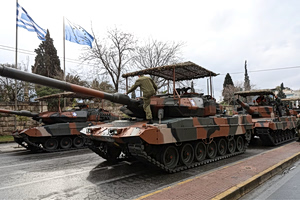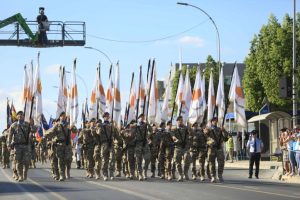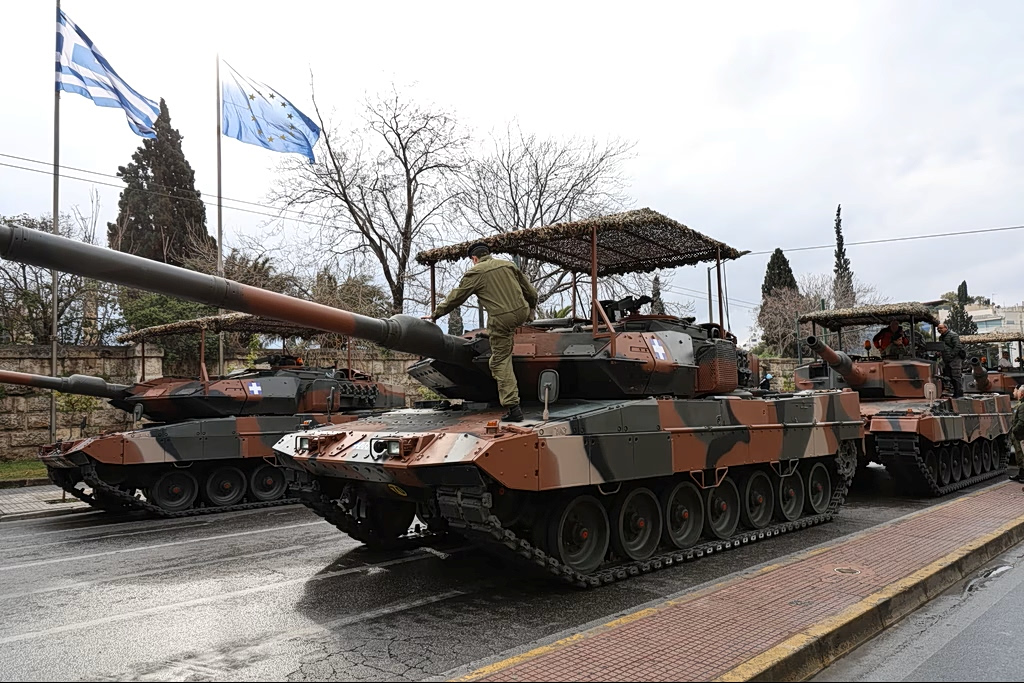
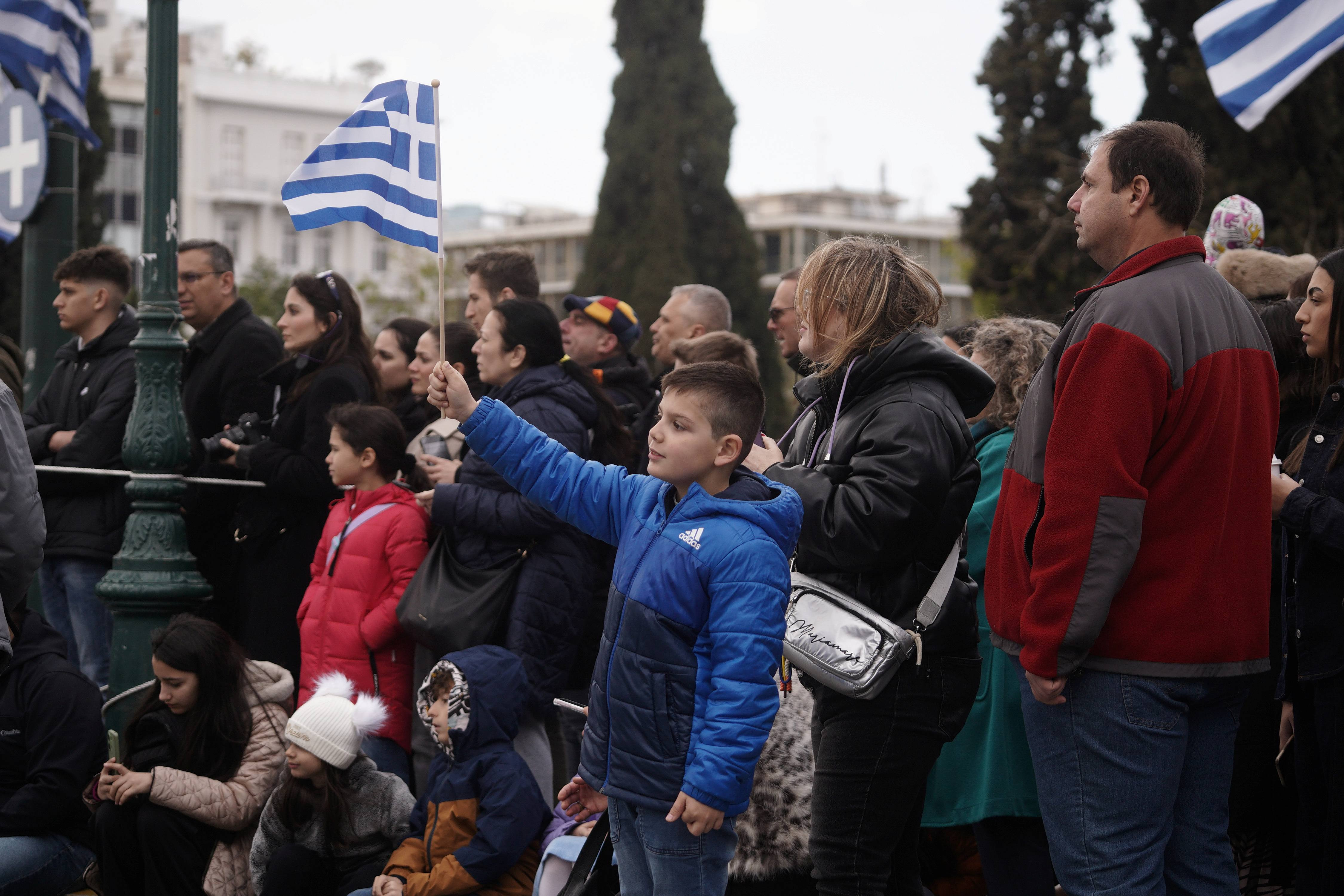
Greece and Greeks around the world on Wednesday celebrated the 205th anniversary of the March 25 Independence Day, with the annual military parade through central Athens again being the focal point of the commemoration.
This year’s parade was noteworthy due to the display of certain weapons systems that Athens has identified as marking a shift in the country’s defense strategy and related reforms called the “Agenda 2030”, i.e. structural changes, long-term armament planning and the integration of advanced technologies.
A key element of the new approach is the development of a domestic defense innovation “ecosystem”, alongside the introduction of new weapons systems designed to enhance Greece’s deterrent capabilities. In a symbolic move, all personnel in the parade wore the new “modern warrior” service uniform, designed to provide improved protection, flexibility and combat effectiveness.
Among the systems presented was the “Centaur” (Kentavros) anti-drone platform, a domestically developed system already deployed on Hellenic Navy vessels operating in the Red Sea and around Cyprus. Its successor, the “Hyperion” system, is currently undergoing advanced testing and is billed as providing enhanced capabilities with 360-degree drone detection and neutralization.
The parade also featured a range of advanced systems, including the German-made SeaHake-4 torpedo used by submarines and the Aster 30 long-range surface-to-air missile system, a cornerstone of modern air and missile defense.
Unmanned systems were also prominently featured, including the S-100 drone integrated into new Belharra-class frigates, the vertically launched “Archytas” UAV developed through academic and industry collaboration, and the “V-BAT” system, known for its endurance and operational flexibility. Naval units also employ A900 unmanned helicopters for real-time surveillance.
Other innovations included mobile drone production units capable of manufacturing up to 1,000 FPV drones annually in the field, as well as advanced command-and-control centers and communications hubs such as the “Metoikos” system, designed to maintain connectivity in challenging environments.
The parade further showcased dual-use capability units, such as the “Deucalion” mobile disaster response team, which can coordinate emergency operations using integrated communications, drones, and thermal imaging systems.