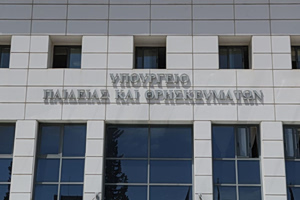
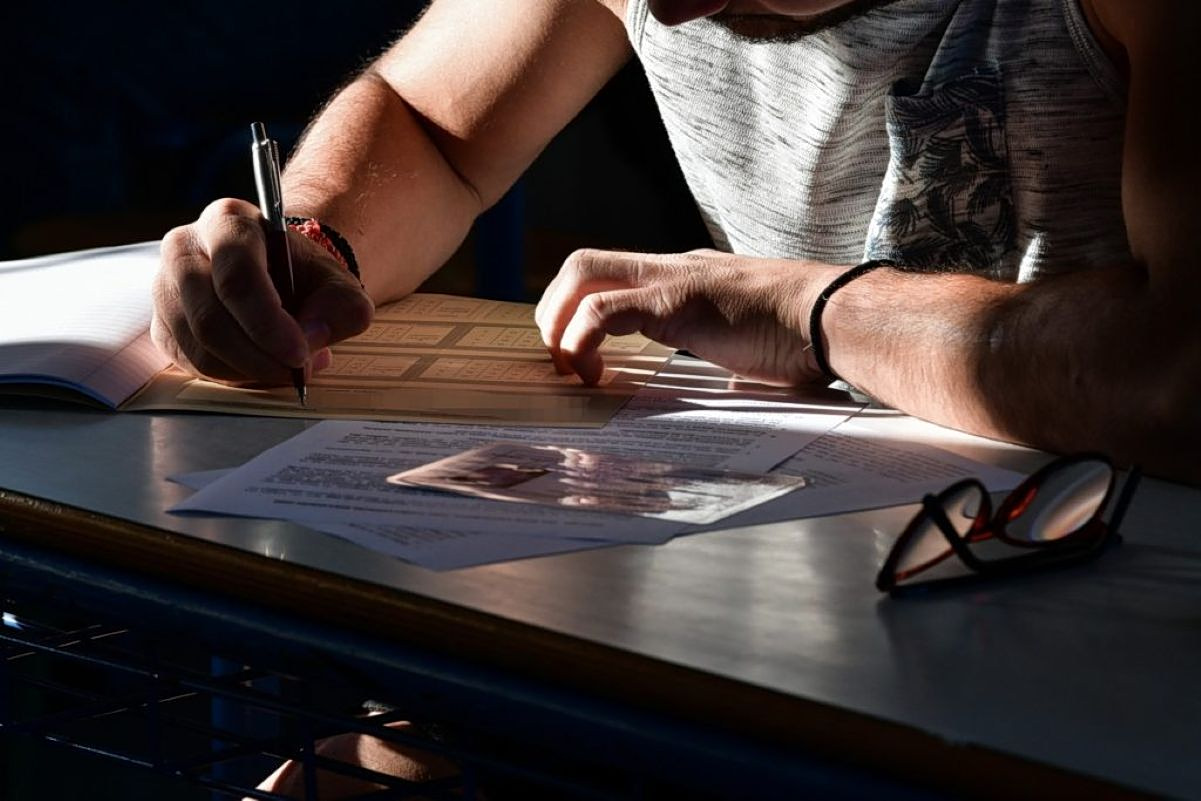
There is no question of abolishing Greece’s nationwide university entrance exams in the immediate future, Education Minister Sofia Zacharaki said in an interview with state broadcaster ERT, stressing that the current system will remain in place in the coming years.
As she clarified, students currently attending senior high school, as well as those now in the third year of junior high school, will sit their exams under the existing framework. Any changes, if ultimately decided, will not be implemented before 2027 or 2028. “Our priority is the peace of mind of our children,” she said, assuring families that there will be no sudden shifts.
The minister said the nine-month consultation on the proposed National Baccalaureate (school diploma) is set to conclude with a report by late November. The reform aims to bolster the role of upper secondary education and introduce a more comprehensive assessment system, potentially factoring in grades from multiple school years for university admission.
At the same time, safeguards are being considered to curb extreme discrepancies between oral and written grades. Among the proposals under discussion are the creation of a National Examinations Authority, the establishment of a National Corps of Graders, further digitization of exam scripts, and the upgrading of the national question ban
On higher education, she said four non-state, non-profit universities have been operating since last year, with the deadline for new applications closing tomorrow. Three new institutions are slated to open in September, another is planned for 2027–2028, and five universities have reapplied, while a major U.S. university is expected to submit a proposal for a postgraduate program in Greece.
Student housing was another priority, with plans to create 10,000 new dormitory beds over the next five years, including projects underway or scheduled in Crete, Thessaly, Western Macedonia, Chios, Athens and Patras.