A strong and unpleasant gas-like smell spread across several areas of Athens on Tuesday, causing widespread concern among residents. Hours later, the source of the odor remains unknown.
Speaking to MEGA, chemistry professor Michalis Halaris criticized what he described as a failure by the relevant authorities and emergency mechanisms to respond properly. According to him, the Ministry of Environment and Energy, in cooperation with the Region of Attica, should have immediately carried out air quality measurements and pollution analyses.
“If the mechanism had been fully activated, measurements and analyses would already have been conducted,” he said. “We are dealing with a potentially dangerous phenomenon, and we still do not know its origin or anything else about it. There was simply a very intense odor. The competent services — meaning the Ministry of Environment and Energy together with the Region of Attica — should have sent specialized teams to analyze air quality and pollutants.”
Professor Halaris dismissed the possibility that the smell was caused by a leak of natural gas or liquefied petroleum gas (LPG). He suggested instead that the odor could be linked to phytoplankton activity in the Saronic Gulf, potentially influenced by climate change.
He also criticized the response of Civil Protection authorities, who ordered precautionary evacuations of schools and other buildings without first identifying the source of the smell. According to him, in incidents involving the possible spread of chemical agents, evacuation is typically not recommended; instead, people are advised to remain indoors.
Meanwhile, meteorologist Theodoros Kolydas investigated how the strong odor spread across Athens’ southern suburbs.
In a social media post, Kolydas wrote that “the intense odor detected in areas of Attica, including Nea Smyrni, the coastal front and central Athens, caused concern among citizens and mobilized the relevant authorities.”
“Checks carried out so far do not indicate a natural gas leak, which shifts the investigation toward other possible sources,” he added.
The meteorologist explained that preliminary HYSPLIT back-trajectory analysis showed the air masses reaching the affected areas had previously traveled from a south-southeastern maritime or coastal sector. “This makes a marine or coastal origin meteorologically plausible, though it does not prove the exact cause,” he noted.
Possible sources that should be investigated, according to Kolydas, include port or shipping activities, fuels, sewage, organic decomposition, or phytoplankton.
“To draw safe conclusions, field chemical measurements and cross-checking with meteorological data are required,” he stressed.
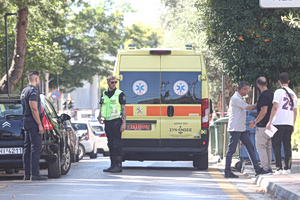
The odor was first reported around noon and was reportedly so intense that offices and businesses in Kallithea and Nea Smyrni were evacuated as a precaution. Authorities also ordered the evacuation of schools.
Reports of the smell came from numerous areas including Kallithea, Nea Smyrni, Palaio Faliro, Alimos, Voula, Vouliagmeni, Moschato, Glyfada and Piraeus, prompting a major response from emergency services.
According to the Fire Service, multiple reports from citizens describing the characteristic smell were received from Tuesday morning onward, leading to the immediate mobilization of authorities.
Andreas Kondylis, the mayor of Alimos, confirmed that the unexplained odor had been noticeable in the area since morning and said neighboring municipalities had remained in constant communication.
He stressed that local authorities were awaiting official information and instructions from Civil Protection regarding any measures necessary to protect residents.
“The most important thing is to know whether this is safe for people’s health and whether citizens should take any protective measures inside their homes. Many people have been contacting us since the morning. There is significant concern,” he said.
Town Hall and School Evacuated
A resident of Athens’ southern suburbs said the odor became noticeable shortly before noon and returned intermittently throughout the day. According to one witness, a woman reportedly felt dizzy because of the smell.
Authorities evacuated the Palaio Faliro Town Hall, while the principal of the 4th Junior High School of Nea Smyrni also ordered the school evacuated.
Source Still Unknown
The smell appeared to be strongest in the southern suburbs, but according to the Fire Service, inspections carried out so far have failed to identify its source.
Reports indicated particularly strong odors in Glyfada, Piraeus, Drapetsona, Nea Smyrni, Kallithea, Dafni, Alimos, Neos Kosmos and Faliro.
As the afternoon progressed, additional reports came from more central and northern districts, including Galatsi and Neo Irakleio.
Christos Vrettakos told Greek public broadcaster ERT that “the same phenomenon occurred about a month ago.”
“We need answers from the competent authorities. Neither the previous time nor now have we received any explanation,” he said, leaving open the possibility that “the phenomenon may originate from ships transporting liquefied gas.”