St. George’s Day, one of the most distinctive celebrations on the Orthodox Christian ecclesiastical calendar, will be observed this year on Thursday, April 23, 11 days after Orthodox Easter Sunday on April 12.
The great feast’s date can either remain fixed or shift depending on the timing of Easter, as determined by the Church. When Orthodox Easter falls later in the Spring, the commemoration remains fixed on April 23; when Easter Sunday falls earlier in the Spring, it may be moved according to the Church two millennia of tradition.
This year’s celebration again entails historical and cultural significance, as the names Georgios (Giorgos in the informal) and Georgia – as they are pronounced in Greek – remain the most common in Greece. In fac, since the 1940s, nearly every Greek family has a member with one of these names, according to the Hellenic Statistical Authority (ELSTAT).
As a result, on April 23, tens of thousands of people across the east Mediterranean country will celebrate their “name day” in honor of the saint.
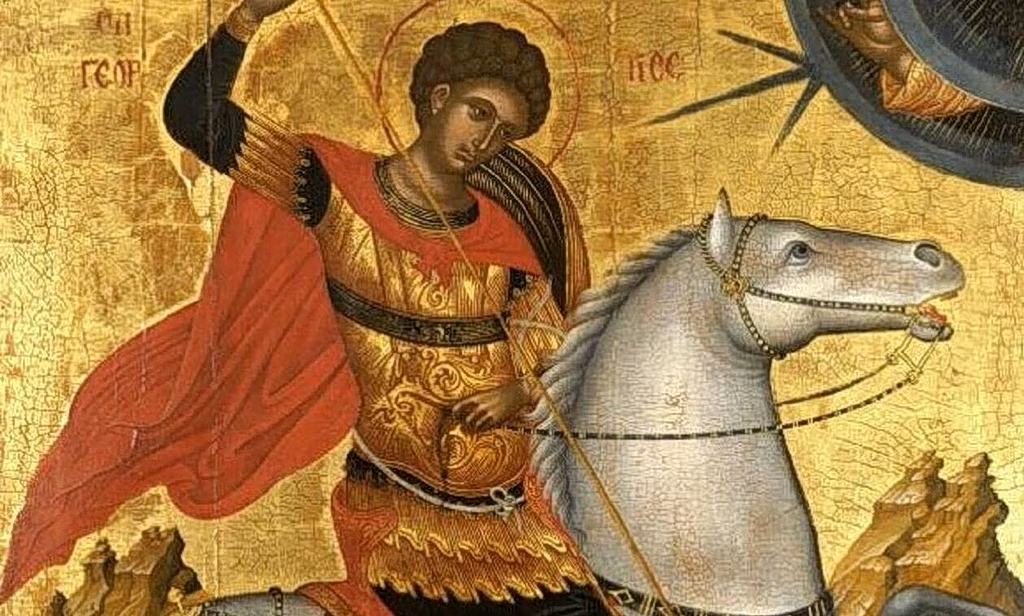
The Life of St. George
St. George, known as the Great Martyr and Trophy-Bearer, lived during the reign of Roman Emperor Diocletian (late 3rd–early 4th century). He was born into an aristocratic family in the Asia Minor province of Cappadocia and served as a Roman army officer.
In 303 AD, when Diocletian’s severe persecutions of Christians commenced, George openly professed his faith. Refusing wealth and status in return for renouncing Christianity, he endured extreme torture according to the Church’s history, including being pierced with spears, placed on a wheel of knives, and forced to walk in red-hot metal shoes.
Miraculously, according to ecclesiastical tradition and history, he survived until ultimately being beheaded on April 23, 303, which coincided with Good Friday, according to the historian Eusebius. His relics were later transported to Lydda in Palestine, and eventually to the West by the Crusaders.
St. George’s Day is thus not only a religious observance but also a cultural celebration for Hellenism around the world, reflecting both devotion and the deep historical roots of Christian tradition.