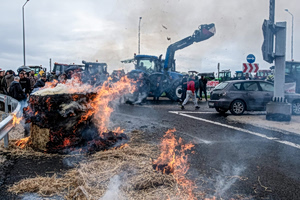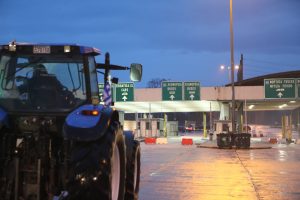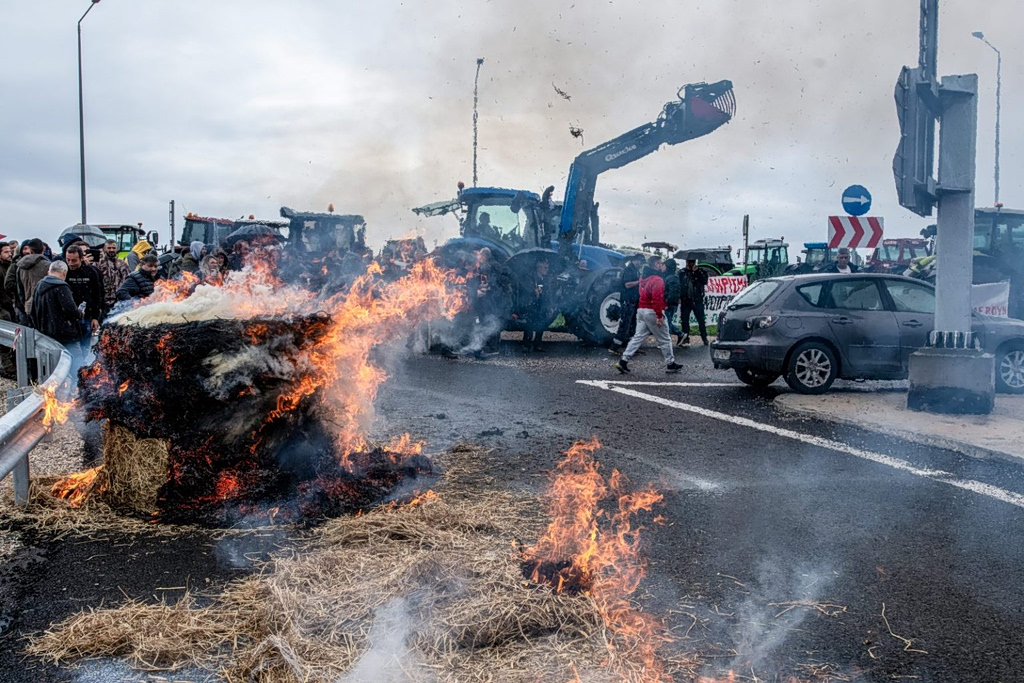
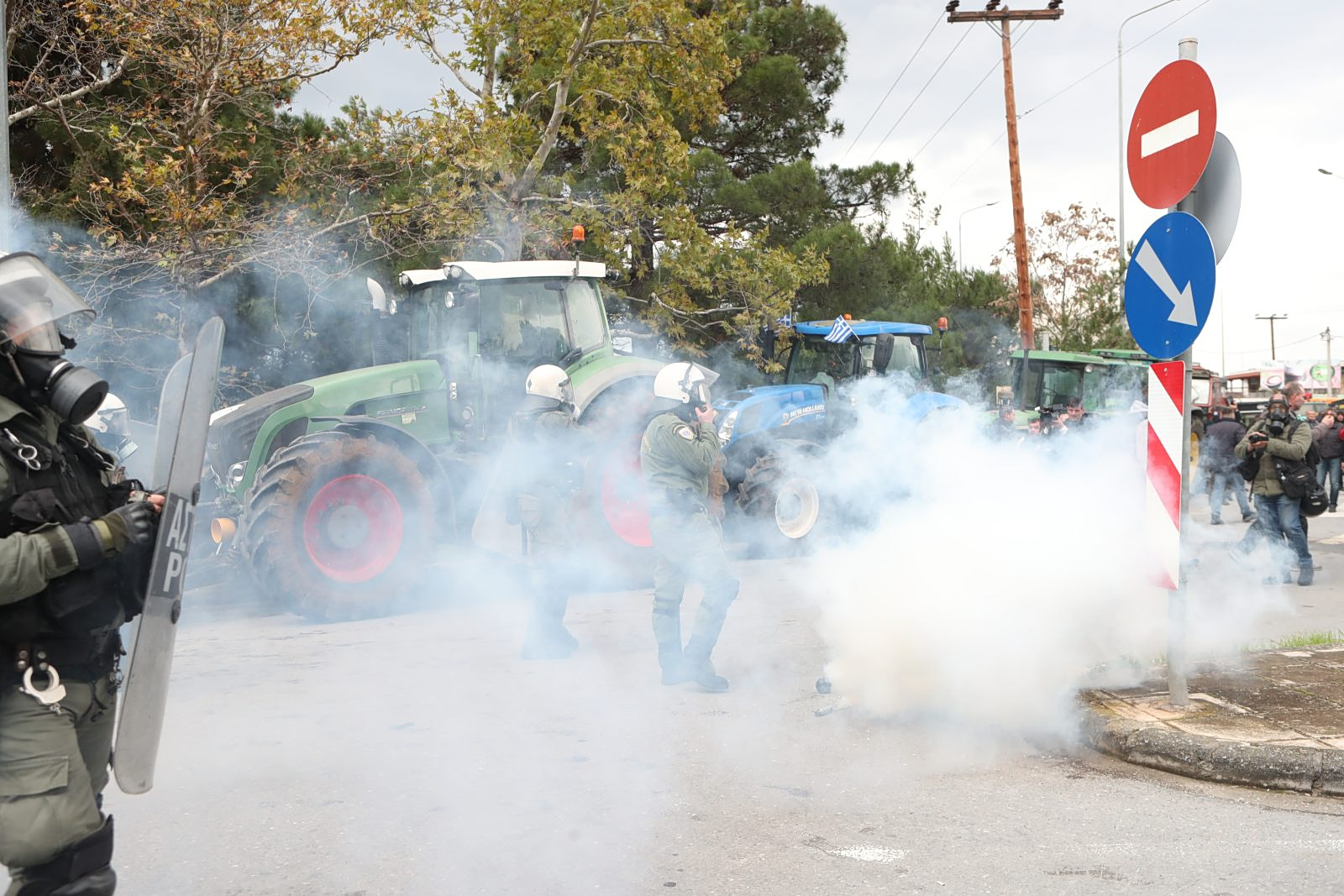
Tension escalated on Wednesday near Thessaloniki’s “Makedonia” Airport as police used tear gas to stop farmers who tried to push through a security line and reach the airport on foot. The protest formed part of a growing wave of farmer blockades across Greece, with more tractors joining the demonstrations “every hour,” according to participants.
Farmers from the wider eastern Thessaloniki region—coming from areas such as Epanomi, Thermi, Trilofos and Halkidiki—had gathered in a convoy heading toward a major junction known locally as “Prasina Fanaria,” the access point to the airport. Many said they had been preparing for days, “ready to spend Christmas on the road” if necessary. Their decision to set up a blockade followed a late-night meeting, and organizers stressed that an indefinite closure of the airport access road “is not out of the question.”
The confrontation intensified when police vehicles blocked the tractors on a main avenue leading to the airport. Farmers then considered walking the remaining distance. A separate incident heightened anger: an ambulance arrived at the police blockade, but officers did not move their vehicles to let it pass despite farmers’ repeated shouts and the siren sounding. The ambulance was forced to reverse and take an alternative route.
Blockades were also reported at border crossings. At the Niki checkpoint, on the border with North Macedonia, farmers maintained a closure until early afternoon and warned of further action later in the day. Near the border with Bulgaria, farmers from the Nevrokopi area set up a roadblock 500 meters from the Exochi crossing and announced a symbolic shutdown during their 17:00 general assembly.
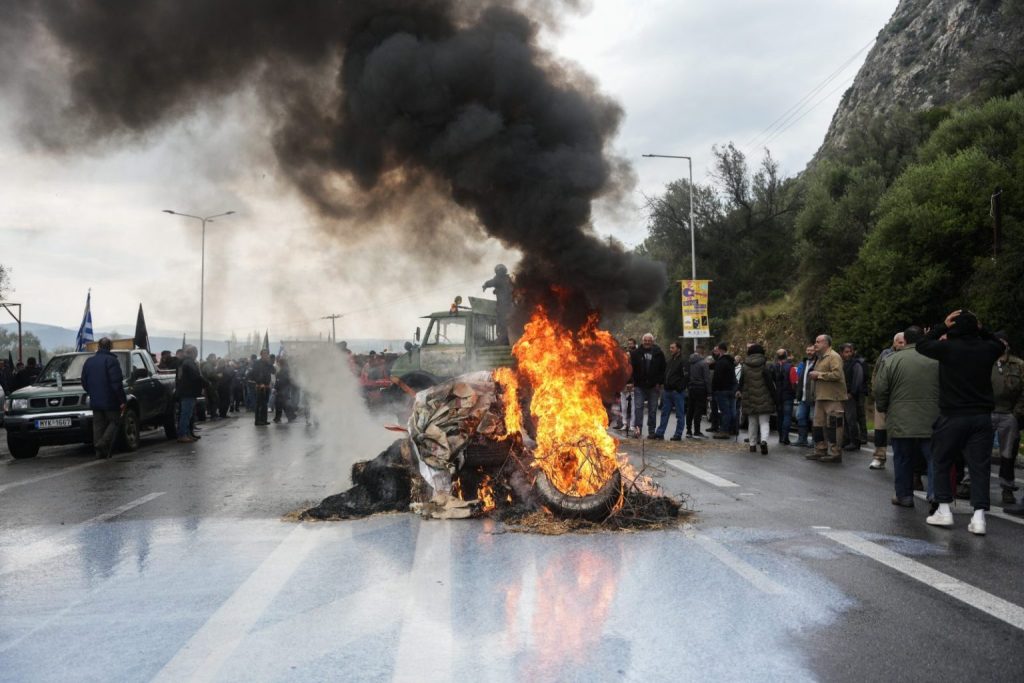
In western Greece, a new blockade formed in Achaia on an old national road linking Patras, Tripoli and Kalavryta. Meanwhile on Lesvos, farmers and livestock producers gathered from across the island—Gerra, Kalloni, Plomari, Agra and Mandamados—to block a junction from 11:30 a.m., allowing only emergency vehicles through. They denounced what they described as a “mockery of an advance payment,” saying they received only 45% instead of 70%, while “hundreds received nothing” in a year when olive production has dropped to historic lows and cultivation costs have soared.
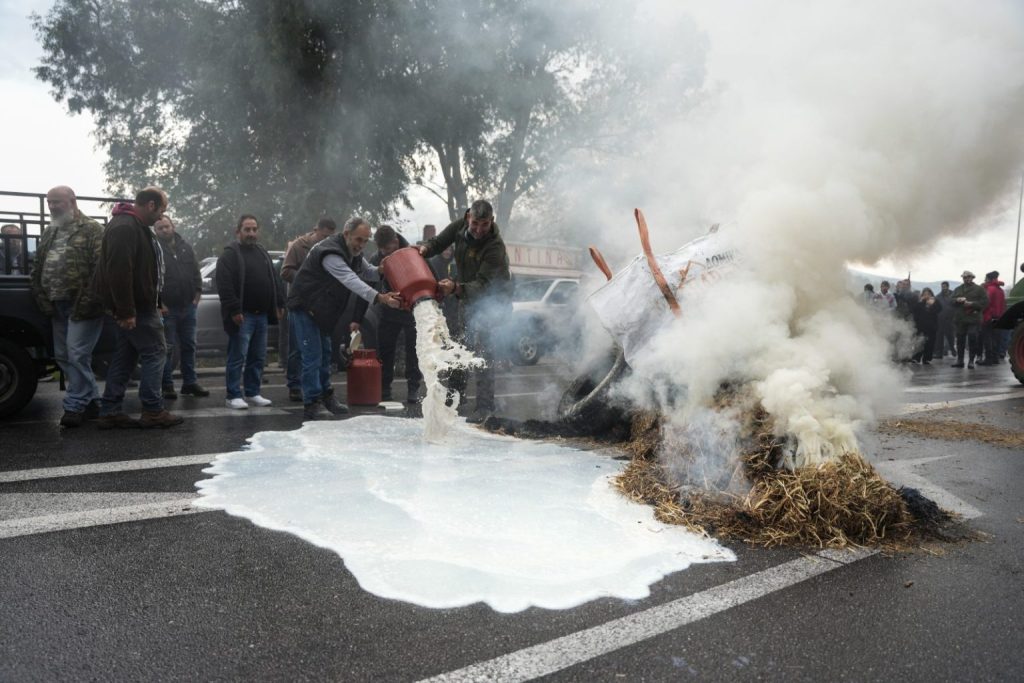
In Karditsa, central Greece, farmers gathered outside the local courthouse to support a union representative facing trial for last year’s protests. The hearing is expected to be postponed due to time constraints.
As blockades expand nationwide, farmers insist they will remain in place until their demands are addressed.