At the threshold of the new digital era, Greece still remains outside the hard core of the European data center market, but it is estimated that it is gaining increasing visibility on investors’ radar. As the mature European hubs – Frankfurt, London, Amsterdam, Paris, and Dublin – have reached their limits, our country is emerging as a candidate for the role of a “data hub” in Southeastern Europe. Athens, in fact, has already formed a first group of facilities and appears willing to carry a greater share of the burden.
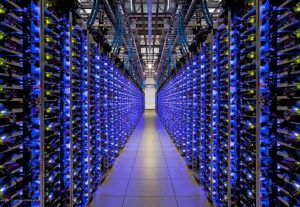
Today, 17 private and 4 public data centers operate in Greece, while more than 20 new projects by leading hyperscalers and specialized digital infrastructure providers are planned by 2030. The momentum taking shape is the result of a combination of geographical, energy, and technological factors. Greece’s position at the crossroads of Europe, the Middle East, and Africa, combined with the saturation of traditional data center markets in Western and Central Europe, is considered to be opening a new investment window.
Attica as the main hub
In Attica, Microsoft is developing infrastructure in Spata and Koropi, while Google and Amazon Web Services have announced plans for cloud infrastructure. Digital Realty is expanding its presence (it operates three data centers and is preparing a fourth in Koropi and a fifth in Crete), as is Lancom. Data4 is examining new installation locations, mainly in Attica, while Sparkle operates four additional ones. A large-scale investment has also been planned by DAMAC Group in cooperation with PPC (Public Power Corporation).
Of the 21 data centers operating in the country, with a total capacity of 44.1 MW (megawatts), 34.1 MW are concentrated in Attica.
Based on a confidential study by a major consulting firm prepared on behalf of the government, investment prospects until 2030 are significant. Based on expressed interest, the new installed capacity of data centers could exceed 1,000 MW and, under certain conditions, approach 1,800 MW.
This momentum is not limited to Attica. Western Macedonia is emerging as a key alternative development hub, as it combines energy adequacy and extensive industrial areas being released as part of the decarbonization process, offering suitable ground for major investments.
“Behind the meter”
In the grounds of the now-shut-down lignite power station of Agios Dimitrios in Kozani, PPC is planning a 300 MW data center installation with the possibility of expansion to 1,000 MW.
In fact, an agreement with hyperscalers is expected to be announced in the coming period, marking the beginning of the project’s construction phase.
The initiative will be based on the “behind the meter” model, meaning that the facility’s electricity supply will come directly from the photovoltaic plants and other renewable energy sources developed by PPC in the region, so that the national transmission system and local electricity distribution networks are not burdened.
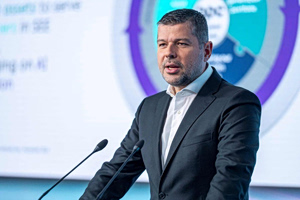
As PPC chairman and CEO Georgios Stassis pointed out on the sidelines of Eurelectric’s annual conference in Helsinki (Eurelectric represents 3,500 European energy companies), where he serves as vice-president, the mistakes of Virginia and Dublin must not be repeated. As he emphasized, the additional energy demand from data centers must be covered by new renewable energy sources.
Beyond Attica and Western Macedonia, Thessaly and Central Greece show significant prospects because they have available electricity capacity and the ability to connect new facilities. The Peloponnese and Crete are also attracting investment interest, mainly for edge and medium-scale data centers, thanks to the upgrading of telecommunications infrastructure and the passage of international undersea cables.
There is also movement in the public sector. Among the projects standing out are the installation of the “Daedalus” supercomputer at the Lavrio Technology Park of the National Technical University of Athens and the development of “Pharos,” Greece’s participation in the European AI Factories network, which aims to become a key infrastructure for artificial intelligence applications.
The issue of energy
A decisive factor for the sustainability of new investments remains energy.
Connecting data centers with photovoltaic systems and storage systems can, as is stated, reduce operating costs, strengthen their competitiveness, and improve their environmental footprint.
This is a critical parameter, given that the expansion of the sector will significantly increase electricity demand and the requirements for a reliable grid.
According to a PwC study carried out on behalf of the government, the greatest margins for connecting new data centers are found in Western Macedonia, Thessaly, and Central Greece.
By contrast, Attica, Crete, and the Peloponnese, although they attract greater investment interest, have limited available electricity capacity in their networks.
It is characteristic that more than 70% of requests for grid connections concern Attica.
To relieve pressure on the most burdened areas, the study recommends establishing licensing, tax, and investment incentives so that part of the new projects is directed toward areas with greater available capacity, namely Epirus, Thessaly, Central Greece, Eastern Macedonia, and Thrace.
The pressure on electricity networks is reflected in investment interest.
To date, 16 requests for connection to the HEDNO network have been submitted, with a total capacity of approximately 220 MW, and 13 requests to the IPTO system, corresponding to approximately 800 MW.
At the same time, the market has announced investments approaching 730 MW.
According to the study, if the most ambitious investment scenarios are confirmed, network expansions with a total capacity of up to 3.5 GW may be required.
Hyperscalers are increasingly turning toward new locations outside saturated European hubs. Greece is among the destinations being considered, together with northern countries (Norway, Sweden, Finland, Denmark, and Iceland), which have low energy costs, available land, and suitable infrastructure.
Nevertheless, the countries of Northern Europe retain a comparative advantage due to colder climate conditions, which significantly reduce the cooling needs of facilities.
The distribution of costs
The challenges, however, remain significant.
Within the framework of the “Twin Transition Commitments” initiative, signed in Helsinki by Eurelectric and Google, the two sides committed to cooperate for the sustainable development of data centers and their smooth integration into European electricity networks.
They identify as a key risk the sharp increase in electricity demand, which could burden networks and increase the risk of outages.
At the same time, if the additional consumption is not covered by new renewable energy sources, it may increase dependence on fossil fuels, slowing decarbonization.
Finally, the investments required to upgrade networks may be passed on to consumers, if there is no fair distribution of costs — an issue that has already emerged in markets such as Virginia in the United States.