 Μake us preferred on Google
 Most of the world knows Greece for its magical islands, ancient monuments and celebrated cuisine. But very few know the country for one of its richest cultural treasures: its music.
From its mesmerizing folk traditions and the urban sounds of rebetiko to contemporary jazz and electronic music, Greece possesses one of the world’s most diverse musical landscapes.
View this post on Instagram
This musical heritage extends far beyond the traditional folk songs (demotika) which, unique to each region and island, echo the sounds of ancient Greek music, to genres that tell the story of the country’s often turbulent modern history. Music that bears the marks of wars and dictatorship, exile and immigration; songs that tell of the return to democracy, the years of wealth and economic hardship.
Yet despite this extraordinary wealth, Greek music has long lacked the institutional support needed to transcend its national borders and establish a consistent international presence.
It was only fairly recently, in 1988, that Greece opened its first musical high school, in Pallini. Today, there are 52 across the country, nurturing thousands of talented young musicians and preserving both classical and traditional music education. Before then, conservatories largely focused on Western classical music, leaving a significant part of Greece’s own musical heritage outside the official educational system.
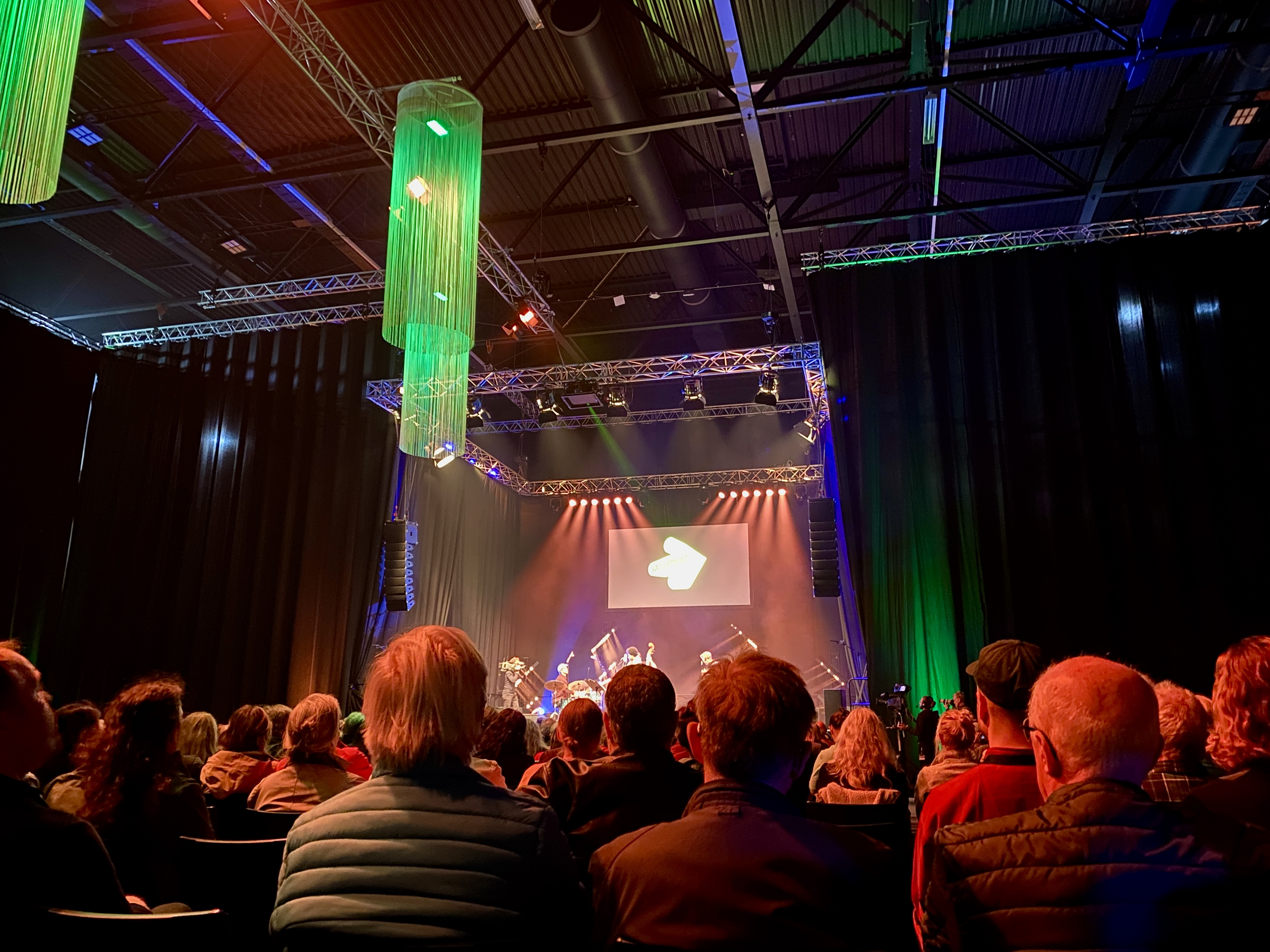
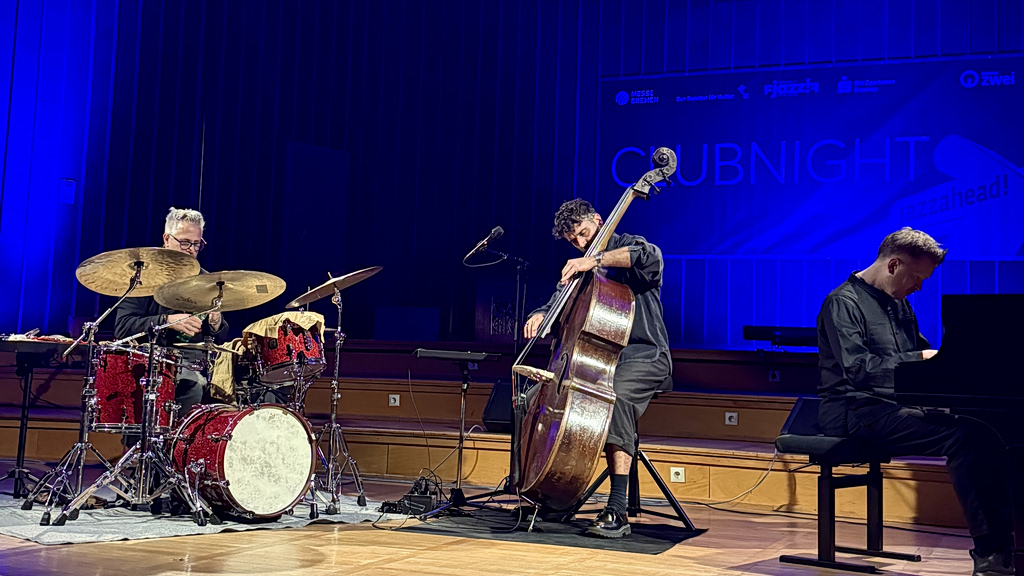
A dream come true for many Greek artists: performing abroad either at showcase events like this one at international fair jazzahead in Bremen, or in clubs and concerts. Photo: Maria Paravantes
The absence of a national strategy extended beyond education. While countries such as France, Sweden, Finland and Portugal have spent decades promoting their music internationally through dedicated export offices, Greece remained one of the few European nations without a formal music export organization.
Though late in coming, this is finally beginning to change in Greece. TO BHMA International Edition sat down Angeliki Spyridaki, the founder and CEO of Music from Greece, the country’s first music export office, which is working hard to give Greek music the international visibility it deserves.
Building the Missing Link
“Music from Greece was created to help contemporary Greek music gain the position it deserves in international markets, while creating more opportunities for Greek artists and music industry professionals,” Spyridaki says.
She insists Greece does not need to prove its musical worth.
“Our musicians, composers and songwriters have been proving that for decades. What was missing was an organized national body that could represent Greece internationally and create the conditions for Greek music to be heard on equal terms.”
Spyridaki explains that in most European countries, Music Export Offices have long been an integral part of national cultural policy. They help artists connect with festivals, promoters, labels, and industry professionals around the world, while also serving as a key tool for cultural extroversion and fostering the growth of the creative economy.
Until now, Greece was one of the few countries without such a structure. Music from Greece has now arrived to fill this gap. And its ongoing work and efforts had an immediate impact.
“Music from Greece was admitted to the European Music Exporters Exchange (EMEE) by unanimous vote. Representing more than 30 countries, the EMEE is the leading European network of music export organizations, and the acceptance of Music from Greece as an official member is a milestone. It marks our organization’s formal institutional launch, and confirms that Greece now has an organized and credible presence in the international music ecosystem.”
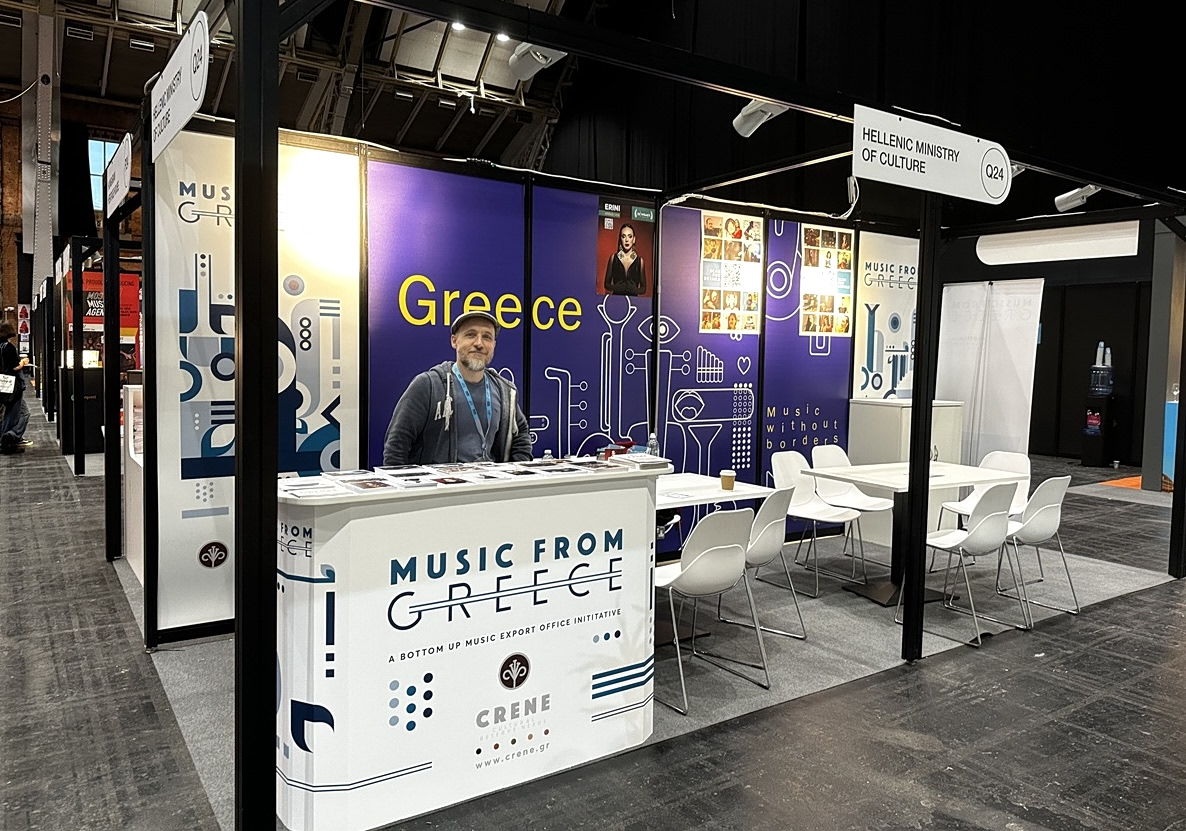
Earlier this year, Music from Greece was admitted to the European Music Exporters Exchange, the leading European network of music export organizations, by unanimous vote.
Music: A Powerful Ambassador
Spyridaki believes music can be one of a country’s most powerful ambassadors.
“Music doesn’t simply communicate sounds. It communicates stories, values and contemporary cultural identity.”
For decades, Greek artists who achieved international success largely did so alone. Figures like Mikis Theodorakis, Manos Hadjidakis, Nana Mouskouri, Demis Roussos, Vangelis and Vicky Leandros built remarkable global careers through talent, determination and personal networks rather than institutional support.
“There have always been outstanding individual success stories,” Spyridaki says. “But there was no mechanism or strategy to ensure continuity, support, and long-term planning.”
For Spyridaki, the timing is perfect. The international music market and audiences are more open than ever to new languages, different cultural identities, and authentic stories.
At the same time, the digital era has reduced traditional barriers in music distribution. “This means that countries like Greece can gain greater international appeal,” she says, “but only if they invest in the right structures.”
More Than Promotion
With an MA in Cultural Policy & Development and a seat on the Board of the Cultural Heritage Management Consulting Company, Spyridaki firmly believes that actions speak louder than words.
A music export office does much more than just organize events or participate in exhibitions. It creates the conditions for Greek artists to gain access to international music industry networks.
“This means identifying and participating in the most important international market events, developing partnerships with corresponding organizations abroad, networking with festivals, promoters, agents, record companies and cultural organizations, supporting Greek professionals and keeping them informed about the opportunities that exist internationally,” she explains.
In this respect, WOMEX, the world’s leading music industry networking conference, is a key event; here, artists, festival organizers and industry professionals establish partnerships that often lead to tours and long-term collaborations.
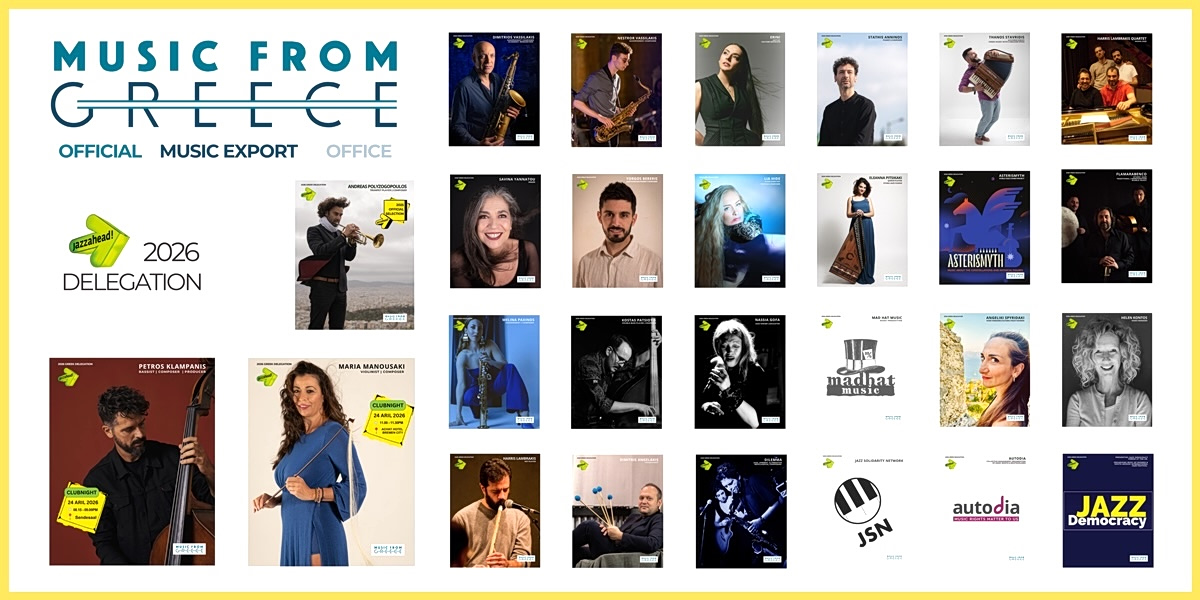
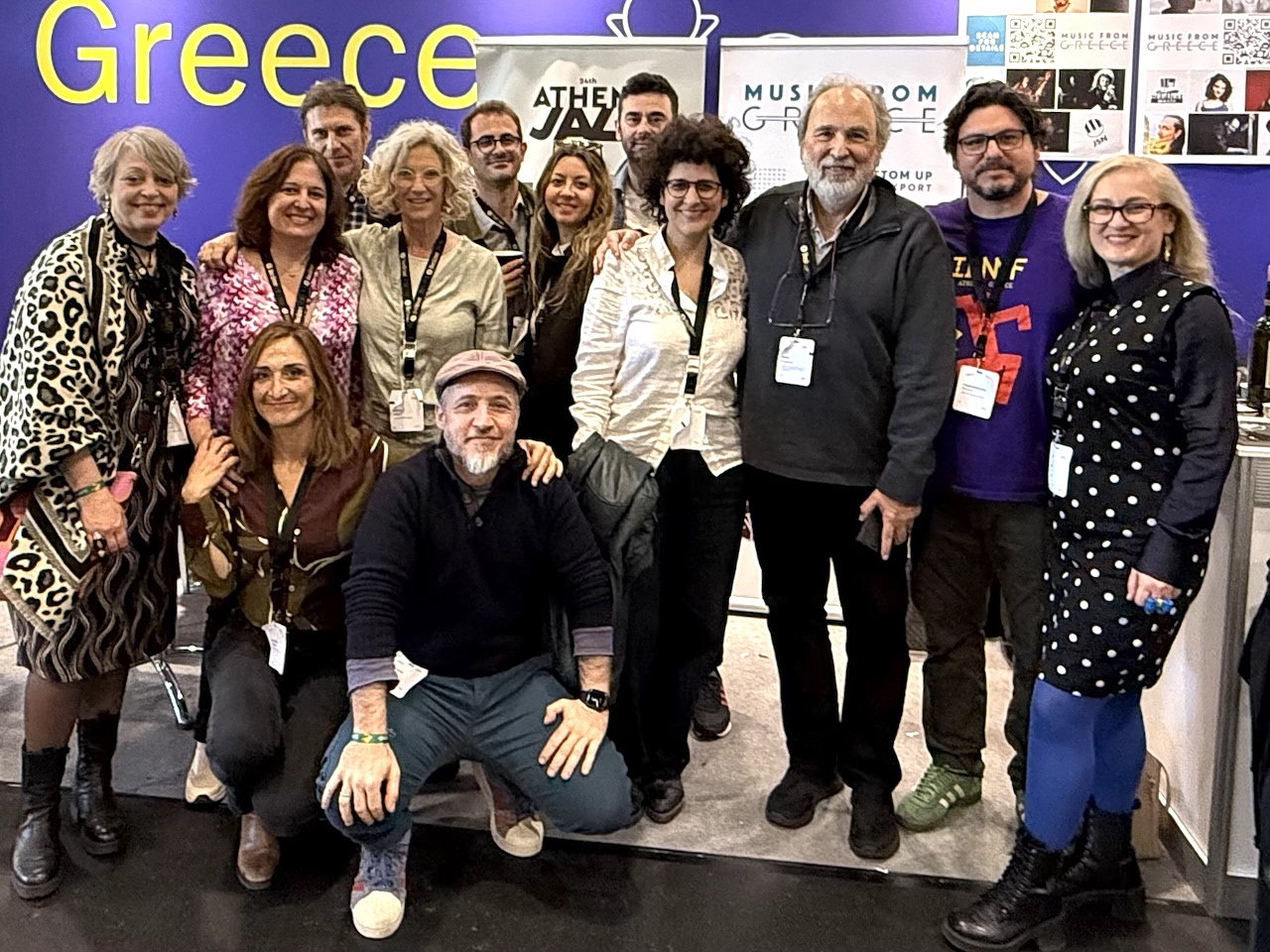
Music from Greece, the country’s first music export office, is working hard to give Greek music and artists the international visibility they deserve.
Equally important is enabling professionals from any country to discover the wealth and diversity of Greek music creation and come into contact with the people who shape it.
“For us, every international collaboration, every appearance at a major festival, every new tour, and every professional agreement represents more than an individual artist’s success. Each achievement contributes to the gradual strengthening of Greek music’s international presence and, by extension, enhances the global cultural profile of the country itself,” she notes.
Learning from Others
Unlike Greece, countries like Sweden, Finland, France, Portugal, Poland, Estonia, Germany and Canada have Music Export Offices that have been serving as a bridge between music creation and international markets for years.
“In fact,” says Spyridaki, “they are an integral part of those countries’ cultural policy.”
Spyridaki goes on to stress that, although each of these countries has very different objectives depending on its market size and cultural priorities, they all have one thing in common: they have recognized that music is a strategic asset.
Spyridaki cites some examples. Sweden, which has invested in education, innovation and a strong ecosystem of creators and producers. France, which has developed solid cultural policies that protect its language while promoting French artists internationally. Portugal, which has capitalized on the uniqueness of its musical identity, transforming Fado into a globally recognized cultural brand without compromising its authenticity. And South Korea, which has shown how coordinated long-term efforts can transform popular music into a major cultural export.
Despite their different strategies, Spyridaki says these countries share one essential principle. “They believed in the value of their own culture, and have invested consistently in it over many years.”
Rather than copying others, she believes Greece now has the opportunity to build a model suited to its own unique musical identity, while benefiting from decades of international experience. EMEE membership provides access to knowledge, partnerships and best practices that can accelerate the process and contribute substantially to the international development of Greek music in the years ahead.
Breaking Through
Talent has never been Greece’s problem; access has. According to Spyridaki, the greatest challenge facing Greek artists is entering the international networks where careers are built.
“Achieving an international presence,” she says “is not a single event; it is a long-term process that is built up step by step”
View this post on Instagram
The global music industry operates on relationships, trust and long-term collaboration. And building an international career requires strategy, consistency and patience. It also requires financial resources—something many independent artists struggle to secure.
“A great song is important, but it isn’t enough. In Greece, creators often have to become their own managers, promoters and business teams,” she says.
To address this gap, Music from Greece plans to develop specialized educational programs that will help artists understand international markets and provide the tools and skills they require to navigate the global music industry more effectively and build sustainable careers.
“In Greece, this kind of specialized knowledge and training has not been easily accessible to many artists and professionals in the field till now.”
It’s All Greek to Me
For many years, local music industry stakeholders felt the Greek language was a barrier to its reaching larger and more international audiences. Spyridaki believes that assumption no longer reflects reality.
“We’ve seen artists singing in Spanish, Portuguese, Korean and Scandinavian languages achieve enormous international success,” she says. “Audiences today are primarily interested in authenticity, not language.”
Language may influence how listeners experience a song, but it is rarely the deciding factor. “What matters most is artistic identity, quality, and finding the right audience.”
For Spyridaki, a musician and artist herself, the Greek language is not an obstacle; “On the contrary, it’s part of our cultural identity… one of the elements that makes our music special.”
After all, she says, music has the unique ability to communicate beyond words. “Emotion, rhythm, and sincerity are often far more powerful than language itself.”
Collective Efforts Go Far
National music export offices operate in line with different models across Europe. Some are state-run entities, such as France’s Centre National de la Musique, which operates under the Culture Ministry, while others follow hybrid public-private models, as seen in countries like Sweden, Finland, and the Netherlands. These organizations typically function as independent non-profits, while receiving direct state support.
Music from Greece is supported by the Greek Culture Ministry, says Spyridaki, but she stresses that no single institution can transform the country’s international musical presence on its own.
“The ministry’s institutional support is essential,” she explains, “because it provides continuity, credibility, and the capacity to plan and implement actions with a long-term perspective.”
View this post on Instagram
Successful music export strategies, however, require collaboration between government, the private sector, and the broader creative ecosystem. In countries that have developed effective export frameworks, this effort often involves cooperation among multiple government bodies, including the ministries of Foreign Affairs, Development, Trade, and Tourism, she tells TO BHMA International Edition.
“Music is culture, but it is also a tool that contributes to diplomacy, economic development, and the strengthening of a country’s brand.”
Spyridaki also emphasizes the importance of collaboration with festivals, record labels, managers, booking agencies, educational institutions and cultural organizations.
“No organization can achieve this alone. International outreach requires a shared national vision, coordination, and consistency.”
Changing Perceptions
Another challenge is changing how the world perceives Greek music. International audiences often associate Greece almost exclusively with traditional folk music.
While this genre is undeniably precious and an integral part of our cultural identity, it does not express the entirety of modern Greek musical creation.
Modern Greece is home to thriving jazz, classical, indie, hip-hop, electronica, metal, and experimental music scenes.
“One of our key objectives at Music from Greece is to introduce the world to this diversity. We don’t want to replace the existing image of Greek music, we want to expand it.”
View this post on Instagram
Looking Ahead
Spyridaki’s Cretan background makes her driven and determined. Looking ahead, she envisions a future in which Greek artists appearing at major international festivals and events are no longer viewed as exceptions. Instead, she hopes Greece will become recognized as a country that consistently produces internationally competitive music across multiple genres.
“It shouldn’t be news when a Greek artist tours internationally or collaborates with global partners,” she says. “It should be business as usual.”
If she could change one thing overnight, it would be stronger bridges between Greek musicians and the international music industry.
“The talent already exists,” she says. “What artists need is access—to the right people, the right networks and the right opportunities.”
For a country whose musical heritage stretches back thousands of years and continues to evolve through new generations of talented artists, that ambition feels long overdue. It’s finally time for the next great Greek export: its music, its artists, and their stories.