 Μake us preferred on Google
 Summer in Greece is a sensory feast. The sun lays golden kisses on endless stretches of sand. The sea—shimmering like a sapphire under a flawless sky—beckons with its cool embrace. The air is salted with the scent of grilled fish drifting from seaside tavernas, mingled with the soft hum of laughter, children’s voices, and music dancing on the waves. It is the season of carefree dives, salt-crusted skin, and the liberating joy only the Greek sea can offer.
And yet, beneath this idyllic scene, danger lurks. Every year, hundreds lose their lives to drowning—often in calm, shallow waters.
Just weeks ago, an 11-year-old boy from France drowned while playing with a snorkel mask in the shallows of Made Beach in Heraklion, Crete. Days later, another 11-year-old—this time a girl who could not swim—was swept out to sea by strong winds while floating on an inflatable ring. Despite a major rescue operation, she could not be revived. In both cases, family holidays dissolved into unimaginable grief, stark reminders that drowning can happen silently and in seconds.
A Silent, Swift Killer
Drowning is often quick, silent, and invisible. In the words of Eliza Karampetian-Nikotian, spokesperson for Safe Water Sports, “In the first seven months of 2025 alone, there have been 167 drowning incidents. In July alone, more than 75 people lost their lives in seas or swimming pools. Most victims, as in previous years, are over the age of 60 or 70.”
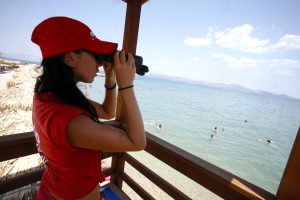
The danger peaks between 8 a.m. and 10 a.m.—the hours when older swimmers take to the water to avoid the midday heat and crowds. But these are also hours when beaches are often without lifeguards. If trouble strikes, no one may be there to help. “Precious minutes are lost,” Karampetian-Nikotian warns.
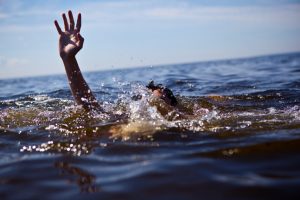
Dr. Angeliki Lambrou, head of the National Public Health Organization’s (NPHO) Directorate of Non-Communicable Disease Surveillance, explains that reaction time is critical—and often, no one notices the victim. Drowning rarely comes with screams or splashing. Especially for elderly swimmers, sudden health episodes like fainting or heart complications can make survival impossible in mere minutes.
The Statistics Are Stark
Despite its 13,000-kilometer coastline and deep cultural bond with the sea, Greece records some of the highest drowning rates in the world. In 2024, 395 people died—388 in the sea, the rest in lakes, rivers, or reservoirs. Between 2020 and 2024, the annual average was 357 deaths, or about 3.6 per 100,000 residents.
Eighty-one percent of victims were over 60, and 70% were men. In the first half of 2025, 91 fatal incidents occurred at sea—a 23% drop from the previous year, yet still tragically high.
And it’s not always pre-existing health problems. “Many overestimate their swimming ability, go in alone, drift too far, or suffer cramps,” Karampetian-Nikotian says. “If no one is nearby, it can be irreversible in minutes.”
Patterns Behind the Losses
Geographic analysis shows clusters of drownings in tourist hotspots and islands with long beaches but insufficient lifeguard coverage relative to visitor numbers.
Some of the causes are alarmingly avoidable. Eating—even a light meal like fruit or salad—before swimming can trigger dizziness or fainting as the body diverts blood flow to digestion. The recommended wait: two to three hours. Alcohol, too, plays a role in dozens of deaths each summer, impairing judgment and reaction time.
Experts stress prevention: public awareness, swimming lessons from a young age, and respect for the water. “The Greek summer can and should remain a symbol of joy, light, and freedom,” Lambrou says. “With knowledge, responsibility, and vigilance, we can enjoy the sea and pools safely—protecting ourselves and those we love.”