For Greeks living abroad, faith is more than ritual—it is identity, memory, and connection. Nowhere is this more evident than in Munich, where one of Orthodoxy’s most radiant celebrations, Epiphany, transforms into a living bridge between Greek and German cultures.
We spoke with Georgios Siomos, an Archimandrite (a senior cleric in the Eastern Orthodox Church) and President of the Council of Christian Churches in Bavaria. At the spiritual center of the Church of All Saints in Munich, he reflected on how religious tradition can unite communities, foster dialogue, and create a shared sense of belonging.
Epiphany on the Isar River
Known in Greek as Theofania, Epiphany is one of the most significant feasts in the Eastern Orthodox Church. It commemorates the baptism of Jesus Christ and is traditionally marked by the Blessing of the Waters—a ceremony in which a cross is cast into a body of water and retrieved by the faithful.
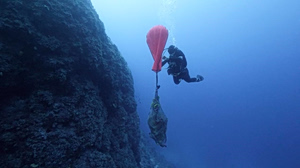
In Munich, this tradition unfolds along the Isar River, where the celebration is observed with deep reverence and strong participation. The day begins with the Divine Liturgy inside the church, followed by the outdoor ceremony, where brave participants dive into the icy river to retrieve the Holy Cross.
This custom was established 19 years ago, driven by second- and third-generation Greeks determined to keep their heritage alive—even far from home.
The challenges are considerable. Freezing temperatures make the ritual physically demanding, requiring participants to wear diving suits, while organizers must secure permits each year from Munich’s authorities months in advance. Yet the effort underscores the community’s commitment.
One notable difference from celebrations in Greece is accessibility: “The Gospel is also read in German, so local worshippers can understand,” Father Siomos explains.
A meeting of traditions
While Greeks celebrate Epiphany with the Blessing of the Waters, Germany has its own parallel observance tied to the Feast of the Three Wise Men—known as Heilige Drei Könige. In many Catholic homes, the initials C, M, and B—standing for Caspar, Melchior, and Balthasar—are written above doorways alongside the new year, as a blessing for the household.
Despite these differences, German attendees show strong interest in the Orthodox celebration. They are often struck by the depth of Orthodox theology, the symbolism of its rituals, and the way faith is expressed not just through words, but through action and participation.
According to Father Siomos, this curiosity fosters meaningful connections between Orthodox and Catholic traditions, strengthening mutual understanding.
A shared space for dialogue
The Epiphany ceremony on the Isar is far from a purely Greek affair. Alongside Greek parishes, other Orthodox communities—such as Slavic congregations—also take part, though some cannot attend due to following a different liturgical calendar.
Invitations are extended to German institutions, local authorities, and even the Prime Minister of Bavaria, giving the event a broader social and cultural dimension.
“The Orthodox Church does not proclaim its message only through words, but primarily through actions,” Father Siomos says. “Every shared prayer or participation in a ceremony becomes an opportunity for dialogue, respect, and coexistence.”
Over the years, the celebration has evolved without losing its essence. What once took place on a small bridge is now held at the historic Ludwigsbrücke (Ludwig Bridge), opposite the Deutsches Museum—a move that has added visibility and prestige. These changes reflect improved organization and experience, rather than any shift in meaning.
Young people reconnect with tradition
Perhaps most striking is the involvement of young people. Contrary to the widespread belief that youth are drifting away from religion, many show a genuine desire to reconnect with their faith and traditions.
“They are searching for ways to experience religion on their own terms,” Father Siomos notes—bridging the old with the new.
Beyond religion: a broader connection
Epiphany, in this context, goes beyond its religious significance. It becomes a platform for cultural understanding between Greeks and Germans.
As Father Siomos emphasizes, collaboration between churches—alongside shared concerns such as environmental protection and ecology—helps build a new kind of spiritual communication. Within this dialogue, the Orthodox Church contributes its own theological perspective.
Among many memories, one stands out. During a year of particularly harsh weather, crowds gathered early and stayed until the very end, waiting patiently to kiss the cross and receive the blessing. The faith and perseverance of those people left a lasting impression on him.
“Dialogue is everything”
As the conversation draws to a close, Father Siomos offers a simple but powerful message: “Dialogue and encounter are everything. Only through them can someone truly become part of a society.”
Through celebrations like Epiphany, faith becomes more than devotion—it becomes a bridge. A bridge between cultures, between people, and between past and present. Even far from home, tradition finds new meaning—and brings people closer together.