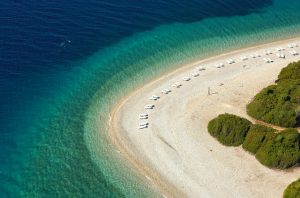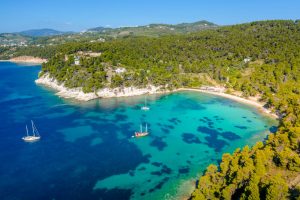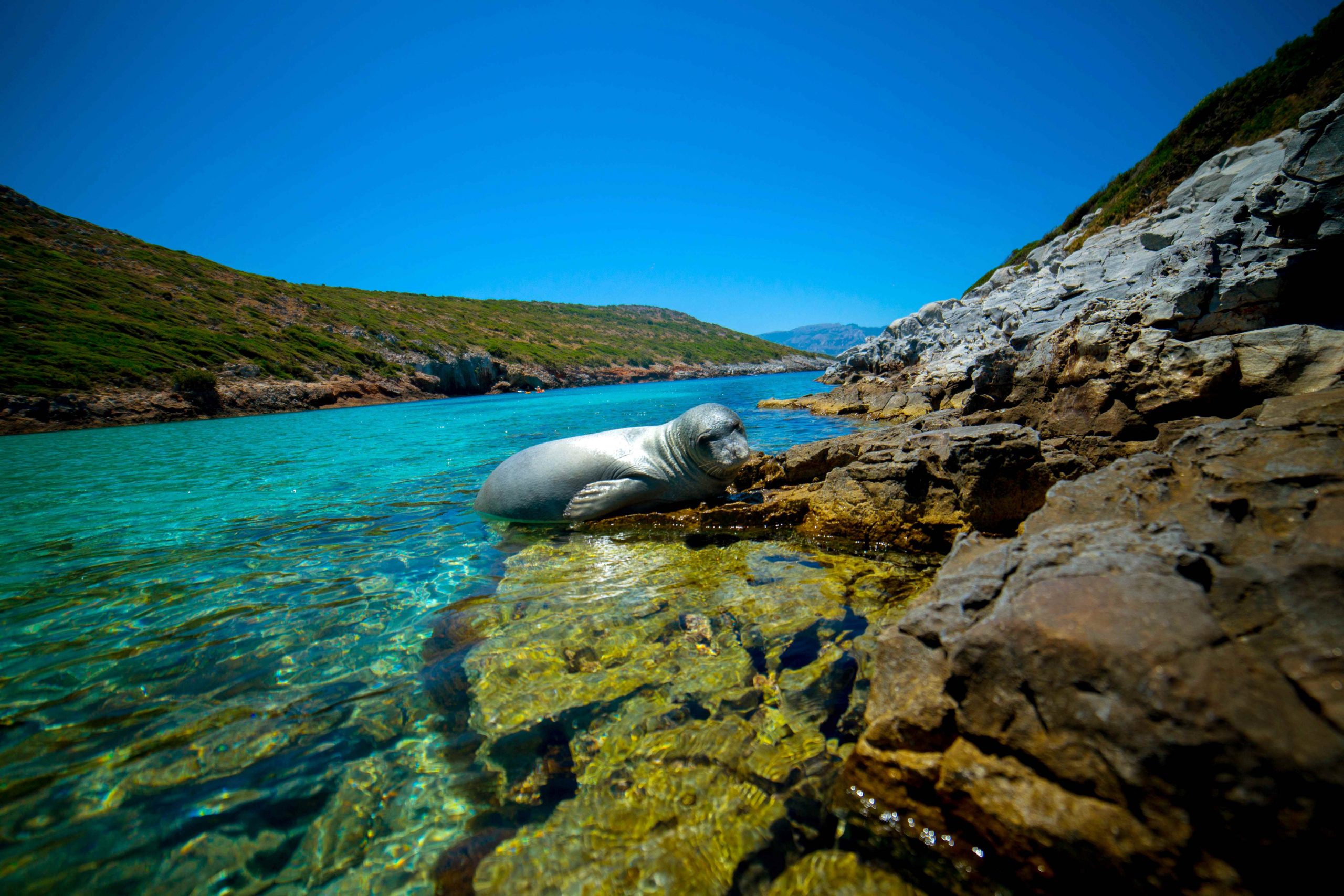

Somewhere off the island of Alonissos, in a sea cave carved into the cliffs of an Aegean islet, a female Mediterranean monk seal rests in the shadow. If she feels safe enough, she may even give birth there—away from party boats and jet skis, in the muffled quiet of one of Europe’s marine sanctuaries. She is one of fewer than 1,000 Mediterranean monk seals (Monachus monachus) left in the world, nearly half of which live in Greek waters.
Now, a new campaign called Seal Greece hopes to help their numbers grow.

©Bruno D’Amicis_The Wild Line Photography
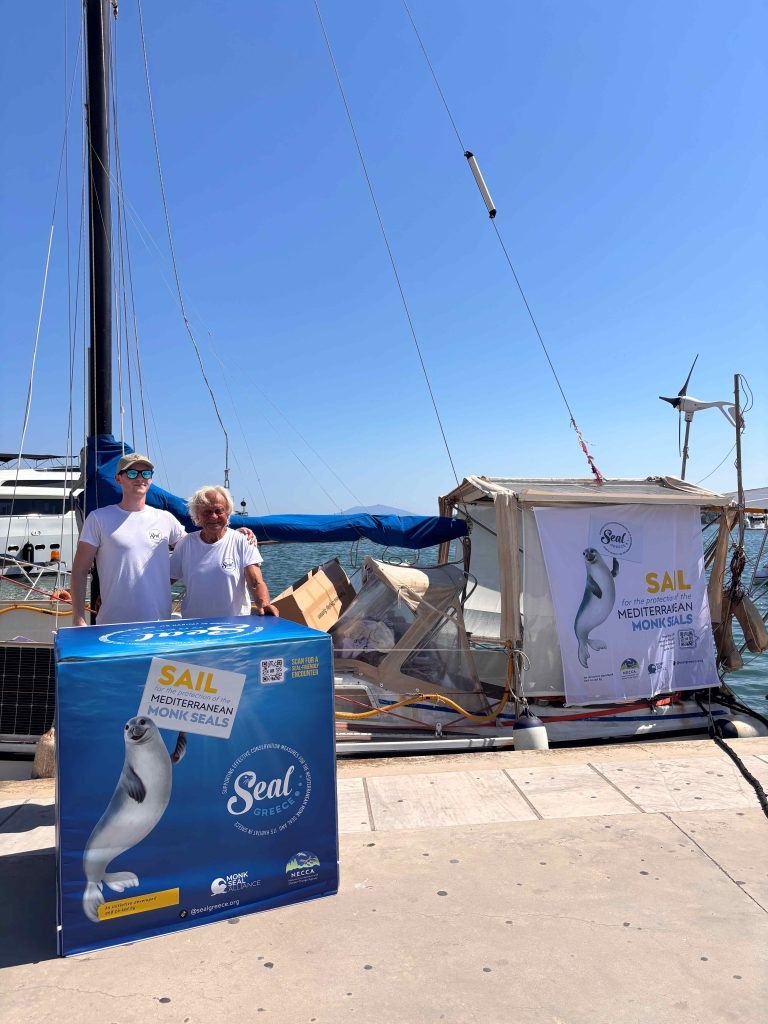
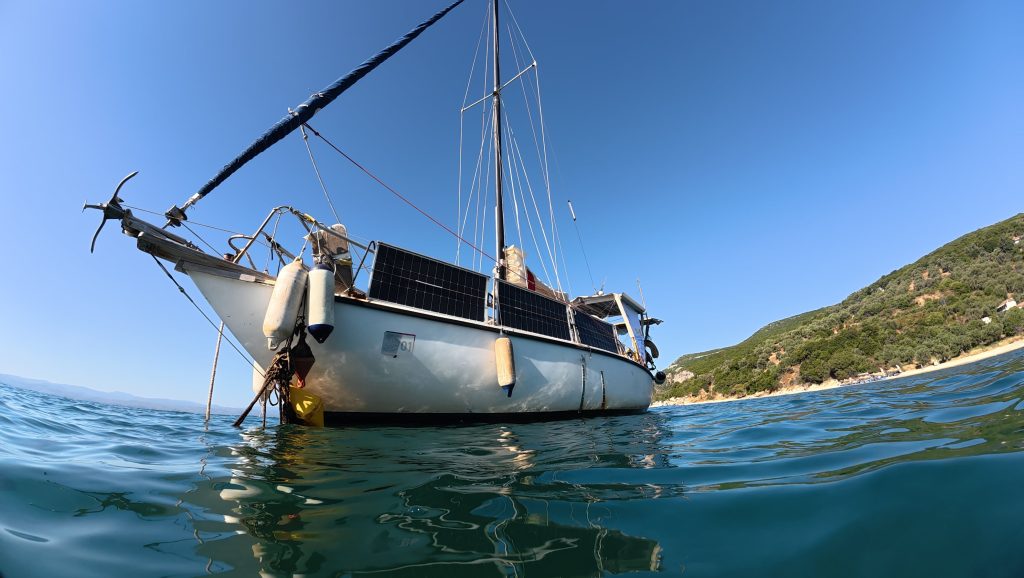
This summer, two wind-powered sailing vessels are crisscrossing Greece’s island chains on what their crews call an “Awareness Voyage.” Their aim: to engage with local communities, sailors, tourism operators and more.
The voyages are part of the Seal Greece national information campaign, which is led by NECCA (Greece’s Natural Environment and Climate Change Agency) and the Monk Seal Alliance, with backing from the Prince Albert II of Monaco Foundation. Their mission: to protect Greece’s rarest marine mammal by mobilizing the one group that unwittingly threatens it most—tourists.
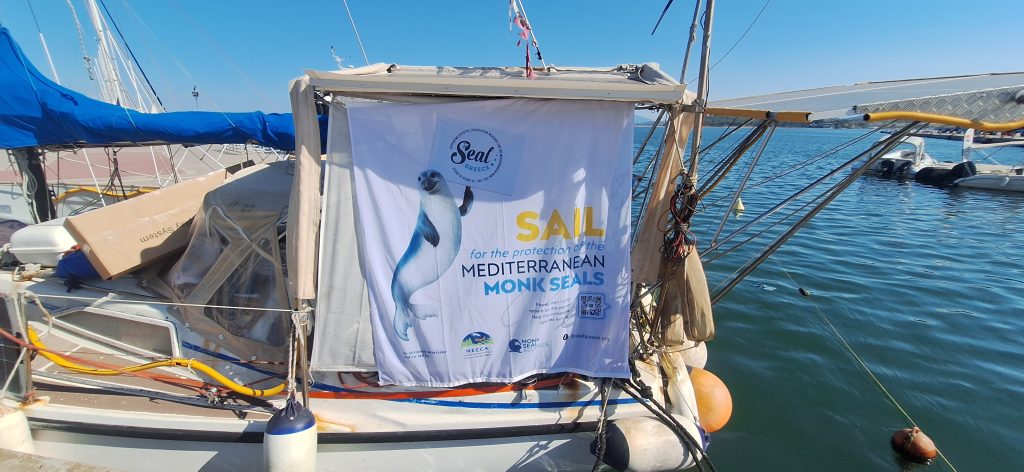
©Arran Moran_Seal Greece
Speaking about the initiative to TO BHMA International Edition, President of NECCA, Dr. Maria Papadopoulou highlights that, “Greece hosts the most significant population of this species in Europe and therefore bears an increased responsibility for its conservation. Seal Greece is not merely a monitoring or awareness campaign; it functions as a comprehensive mechanism for supporting the implementation of environmental policy in the field. Its goal is to bridge the gap between scientific knowledge, implementation of legislation and on-the-ground reality.”
She add that, “Through data collection, evidence-based interventions in very important habitats for the species, and cooperation with local communities and stakeholders, the initiative substantially reinforces national efforts for marine conservation and is fully aligned with the European framework for biodiversity and climate resilience. At a time when the loss of marine life and biodiversity is accelerating due to multiple factors, Seal Greece serves as a key pillar for preserving Greece’s natural wealth and strengthening the relationship between people and the sea.”
Why Monk Seals Matter
Once commonly found lounging on sun-drenched beaches throughout the Mediterranean, monk seals have now retreated into hidden, remote sea caves. Their decline has been driven by tourism and coastal development, as well as centuries of hunting.
But these animals are far more than relics of the past. As top predators feeding on bottom-dwelling fish, cephalopods, and crustaceans, Mediterranean monk seals play an important role in the marine ecosystem.
The presence of these creatures–which can measure up to 2.4 meters in length and weigh as much as 320 kilograms—often signals a relatively healthy, undisturbed coastal environment.

©Bruno D’Amicis_The Wild Line Photography
Speaking to TO BHMA International Edition, Auriane Pertuisot, Coordinator of the Monk Seal Alliance at the Prince Albert II of Monaco Foundation explains that “deliberate killings and entanglements in fishing gear make up most of the known human-related incidents” that lead to the death of monk seals
However, climate change is also taking a toll. “One of the most significant indirect impacts is the shift in their food supply. Rising sea temperatures and changing marine ecosystems—especially given the strong impact of invasive alien species in the Mediterranean—are likely altering the availability and distribution of the fish species monk seals depend on.”
Turning the Tide
Fortunately, in recent years and due to conservation efforts, local seal populations have started to show signs of recovery, according to the global red list of the International Union for Conservation of Nature (IUCN).
Credit: Jenny Ioannou_ Seal Greece
This can be attributed to the establishment of new marine protected areas and to greater awareness and holistic protection measures. And a monk seal recovery is expected to bolster ecological resilience more broadly, benefiting fisheries, coral habitats and marine biodiversity, the Alliance explains.
Papadopoulou offers more context, relating that, “In the past years, the conservation of the monk seal in our country faced significant difficulties, mainly due to limited coordinated action among stakeholders and the lack of comprehensive monitoring and awareness programs.”
While Seal Greece addresses the issues of coordination, Papadopoulou cautions that “challenges remain: monitoring remains difficult due to the species’ remote habitat, law enforcement requires further strengthening, and disturbances from human activities continue to pose a serious problem. Long term collaboration with all involved parties and ongoing public education are essential to overcome these difficulties.”
About the Campaign
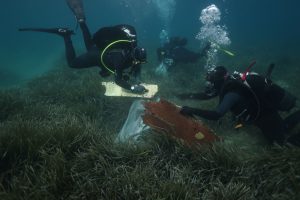
“Seal Greece” breaks from traditional conservation by blending field engagement with digital innovation. The campaign focuses on several seal hot‑spots, combining educational materials, signage, and local stakeholder outreach.
Central to the effort is an augmented-reality app—geofenced around protected caves—that deploys a virtual seal mascot named Mona who provides visitors with reminders: don’t approach, avoid noise, and practice respectful anchoring. The campaign also partners with marinas and tour operators to integrate seal-awareness into the high season.
©Arran Moran_Seal Greece
This approach echoes wider trends. A panel co-hosted by the Prince Albert II Foundation at UNOC3 in Nice this year affirmed that multi-level, technology-enabled cooperation is essential for protecting the monk seal.
Sometimes monk seals sleep underwater while holding their breath. They wedge themselves between rocks or in underwater crevices to avoid drifting away- Pertuisot
Papadopoulou enthusiastically shares that:
“What makes Seal Greece stand out is that it does not rely on theoretical directives or well-meaning declarations; instead, it actively pursues the immediate and practical protection of the Mediterranean monk seal with scientific precision and methodological rigor. It promotes the use of modern technologies—such as drones and automated audio-visual recording devices—to map and monitor critical habitats. At the same time, it invests in long term collaboration with local communities and professionals, aiming to build a strong and lasting culture of coexistence with marine wildlife. Its work goes beyond protecting a single species; it acts as a catalyst for strengthening marine governance across Greece, bringing together scientists, public authorities, fishermen, tourists, and citizens. In this framework, the current Seal Greece national awareness campaign, through the use of innovative communication tools and dedicated ecological boats currently sailing in both the Aegean and Ionian sea, is actively promoting at every level our goals and objectives.
At a time when biodiversity is under threat from climate change, overexploitation of natural resources, and indifference, initiatives like Seal Greece serve as a powerful reminder that protecting marine ecosystems is not a luxury—it is a prerequisite for the survival and well-being of future generations, concludes Papadopoulou.
When You Spot a Monk Seal
- Stay at least 50 meters away
- Power down engines
- Avoid flash photography
- Never attempt contact
- Report sightings to MOm
MOm—the Greek conservation NGO—urges citizens to call the 24/7 “Monk Seal Hotline” to report their sighting on Tel: +302105222888, Mobile +306942494471, or via their website www.mom.gr, especially if the monk seal appears to be in distress.

©Bruno D’Amicis_The Wild Line Photography
Where to spot the ‘Awareness Voyage’ this summer in Greece
AEGEAN ROUTE
- Volos: July 7–8
- Skopelos: July 9–10
- Alonnissos: July 11–12
- Chios (Volissos): July 20–21
- Psara: July 23–24
- Naxos: August 2–3
- Kimolos: August 9–10
- Paros: August 17–18
- Mykonos: August 21–22
- Tinos: August 25–26
- Syros: August 29–30

Copyright free Med monk seal
IONIAN ROUTE
- Corfu (Gouvia): July 18–19
- Paxoi: July 21–22
- Preveza: July 24–25
- Lefkada: July 26–27
- Meganisi: July 29–30
- Kefalonia (Fiskardo): August 1–2
- Ithaca (Vathy): August 4–5
- Zakynthos (Port): August 8–9
Prince Albert II Foundation: The Driving Force
The Prince Albert II of Monaco Foundation has backed Mediterranean monk seal conservation since 2011. In 2019, it helped form the Monk Seal Alliance, which unites donors and conservation groups under a shared strategy. At the 2025 UN Ocean Conference in Nice, the Foundation pledged an additional €3 million to seal protection efforts—on top of the €4 million already allocated for habitat protection, research, and awareness campaigns.
Auriane Pertuisot, coordinator of the Monk Seal Alliance since its inception, emphasizes that this strategy rests upon four pillars: the designation and enforcement of protected areas, scientific research, public outreach, and emergency response programs.
In Greece, the Alliance signed a formal Memorandum of Understanding with NECCA in 2023 to strengthen the enforcement of Marine Protected Areas and integrate monk seal protection into national coastal planning. That collaboration was deepened at the 2024 Our Ocean Conference, held in Athens, where NECCA and the Prince Albert II Foundation publicly reaffirmed their joint commitment to safeguarding the species—positioning Greece as a regional leader in marine mammal conservation.
The Foundation also works with The MedFund to strengthen protections in the Northern Sporades Marine Park—one of the last refuges of the monk seal.