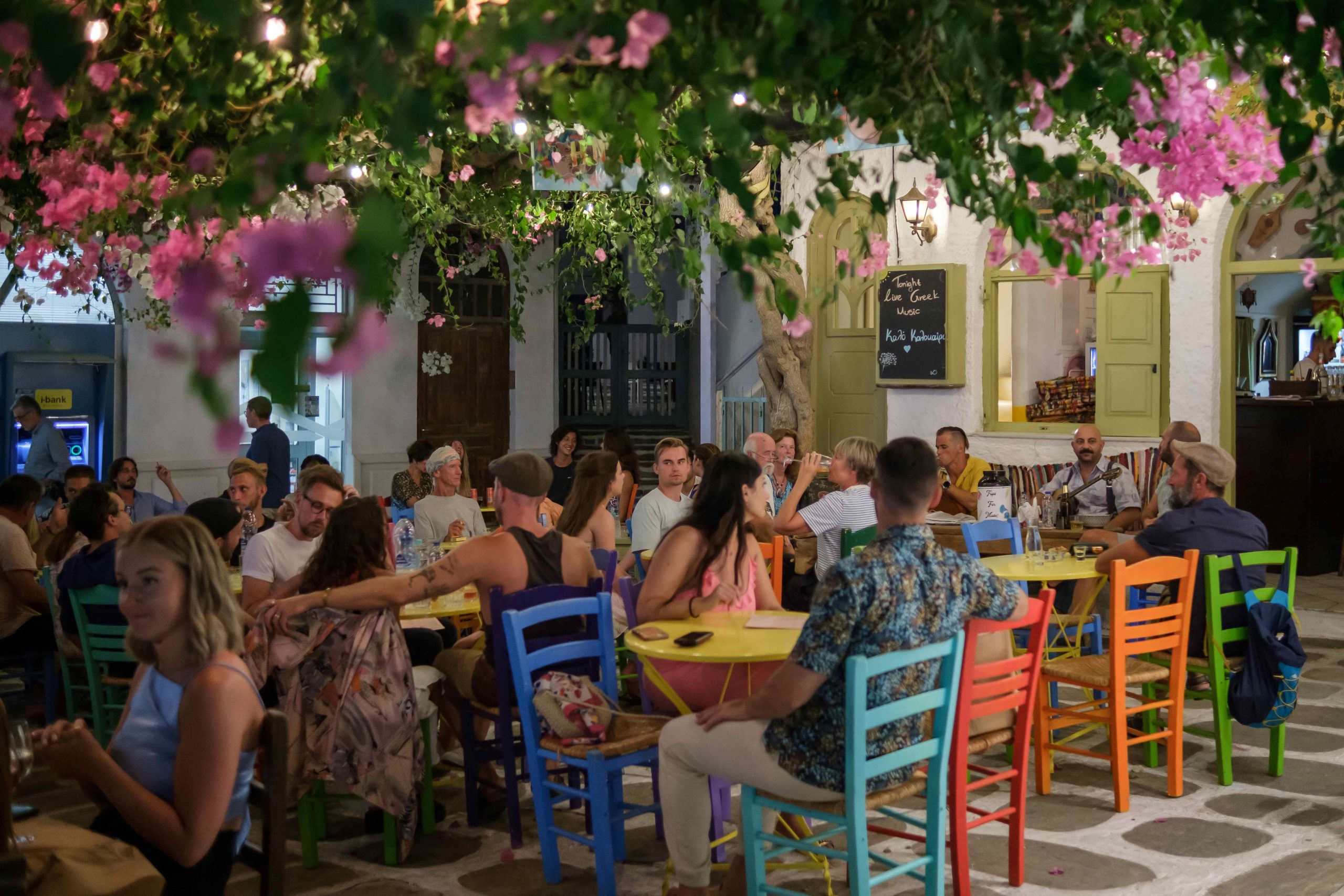
Ask a tourist who has travelled to Greece’s islands about their culinary endeavors during their trip and almost all will rave about one of three things: souvlaki, moussaka or Greek salad.
Don’t get me wrong, our horiatiki (which loosely translates to “village salad”) has just as much going for it as our sun-drenched beaches, while souvlaki is the ultimate street food, and moussaka is guaranteed to make everyone feel at home.
But unbeknownst to the majority of happy international travelers, the Greek islands are culinary treasure troves, each with a signature dish that has been passed down through the generations and become a key part of the island’s identity.
You can look upon this “edible map” as your (by no means exhaustive) island-hopping gourmet bucket list—15 iconic dishes, each native to its own island, whose flavors have unique stories to tell. Some are bound by geography, others by rare ingredients or Protected Designation of Origin (PDO) status. All are worth seeking out. So, if you’re island-hopping this summer, go off-piste at the taverna and eat like a local.
Corfu – Sofrito
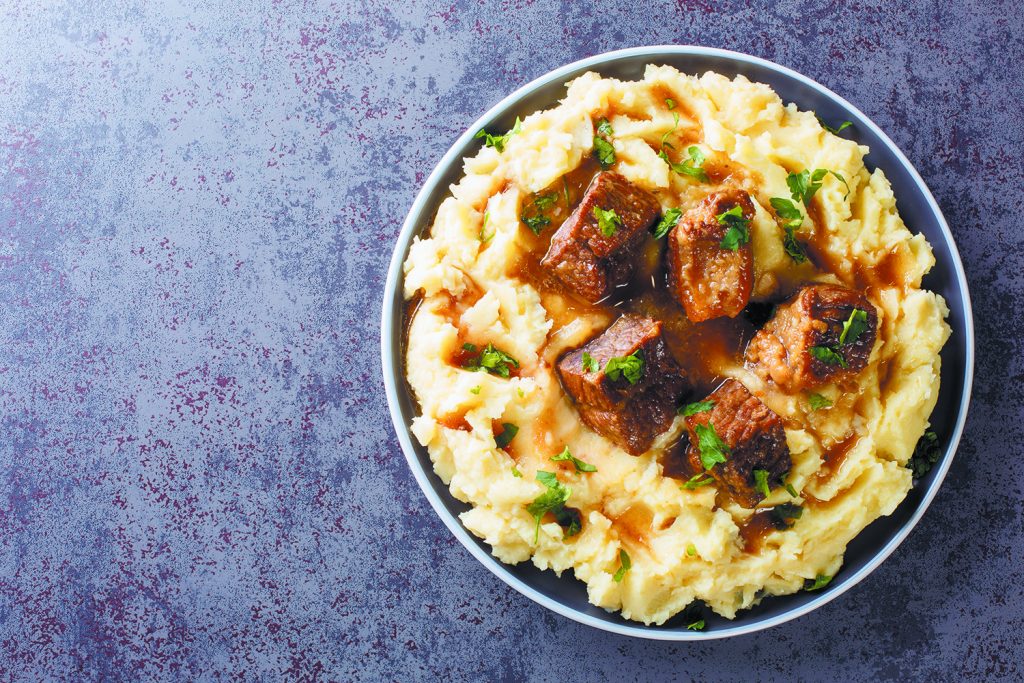
Greek Sofrito Traditional Beef Dish with mashed potatoes from Corfu with mashed potatoes closeup in the plate on the table.
A legacy of Venetian rule, sofrito—veal gently braised in garlic, white wine, and parsley until meltingly tender—is Corfu’s signature dish. Found nowhere else in Greece, its name derives from the Italian soffritto (lightly sautéed), echoing the island’s 400-year Venetian past. Traditionally served with mashed potatoes or rice, it’s a dish rooted in Corfiot aristocratic kitchens, but one that’s been embraced across generations. While other Ionian islands may share its Venetian heritage, only Corfu has preserved this exact preparation as a cultural staple.
Santorini – Fava
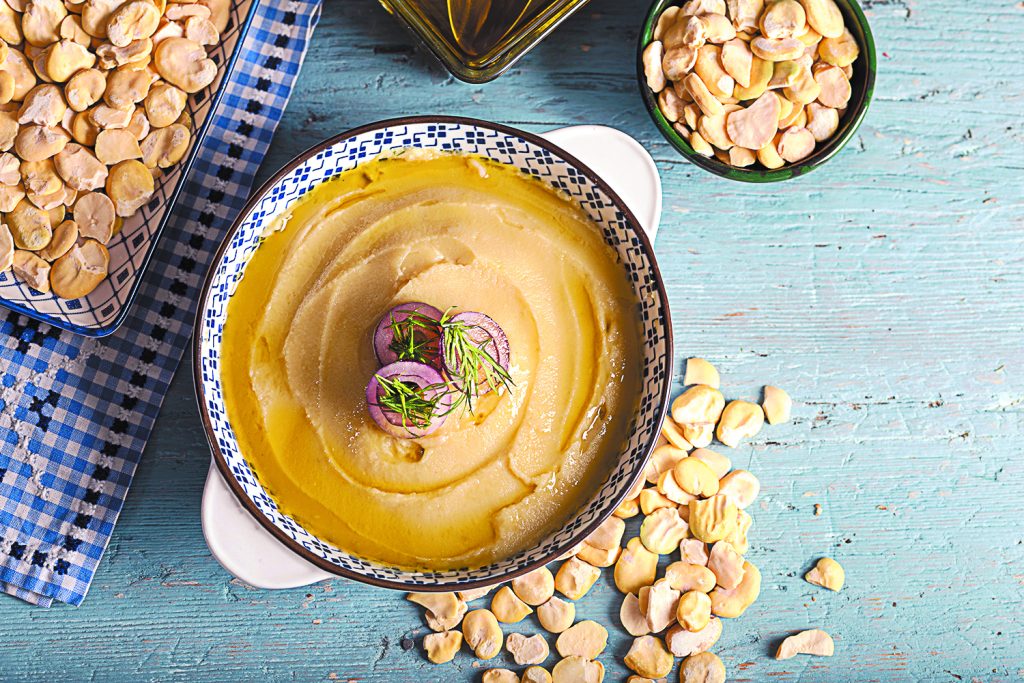
Taditional fava with olive oil. Mashed broad beans fava appetizer.
Don’t confuse this with fava beans—Santorini’s fava is a smooth, golden-yellow purée made from the island’s ancient lathyrus clymenum legume. Grown for over 3,500 years in Santorini’s volcanic soil, it enjoys PDO status and is found in Minoan archaeological sites. Creamy, slightly sweet, and served with onions and olive oil, fava literally couldn’t be grown anywhere other than Santorini, with its unique ecosystem and varieties that need just a fraction of the water of other fruit and vegetables. Served warm or cold, it’s a staple of the local diet and a symbol of sustainability.
Chios – Mastiha Spoon Sweet

traditional greek spoon sweet mastic served in cold water ypovrichio
Chios is the only place in the world where the mastiha tree (Pistacia lentiscus var. Chia) produces the precious resin known as mastiha, and the mastiha spoon sweet—a thick, jelly-like preserve flavored with natural mastiha crystals—is one of the island’s most iconic desserts. Served in water or on a spoon after dinner, it has Byzantine roots and became especially prized during Ottoman times. Mastiha—which is now a PDO product and a UNESCO Intangible Cultural Heritage element—is cultivated in villages in southern Chios which are known collectively as the Mastihohoria or “mastiha-villages”.
Syros – Loukoumi
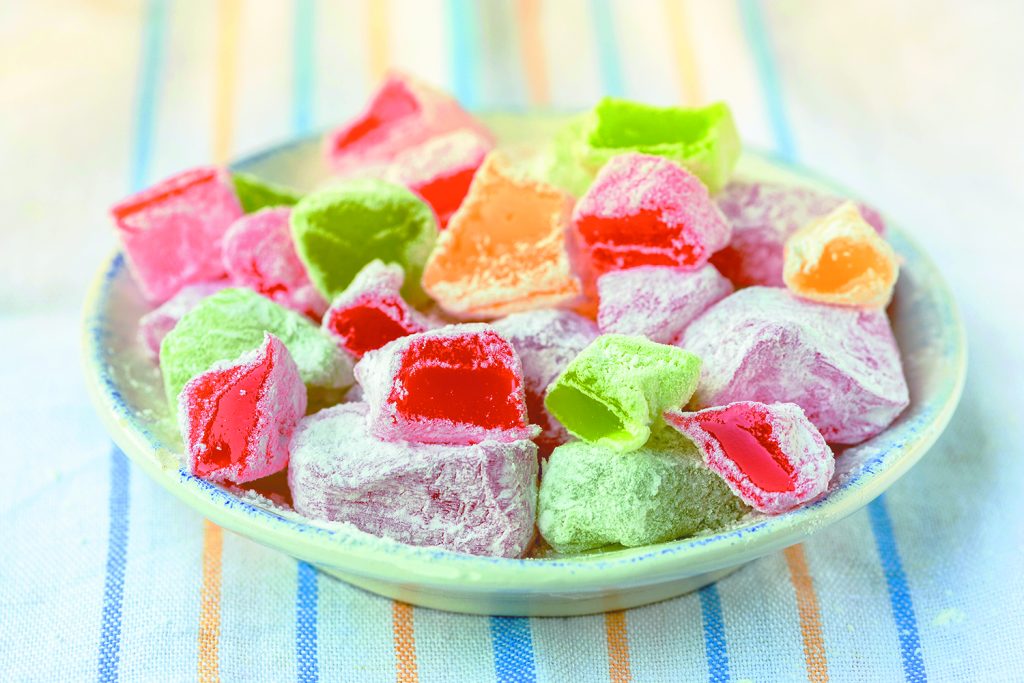
Though loukoumi (Turkish delight) is made across Greece, Syros has defined its identity through it. Introduced by Asia Minor refugees in the 19th century, Syros’s version became famous due to the high-quality local water and copper cauldrons used in the island’s capital, Ermoupoli. It is now a protected product tied to Syros’s industrial rise, with flavors including rose, mastiha, and bergamot. Family-run workshops continue to stir these sugary gems by hand.
Mykonos – Kopanisti
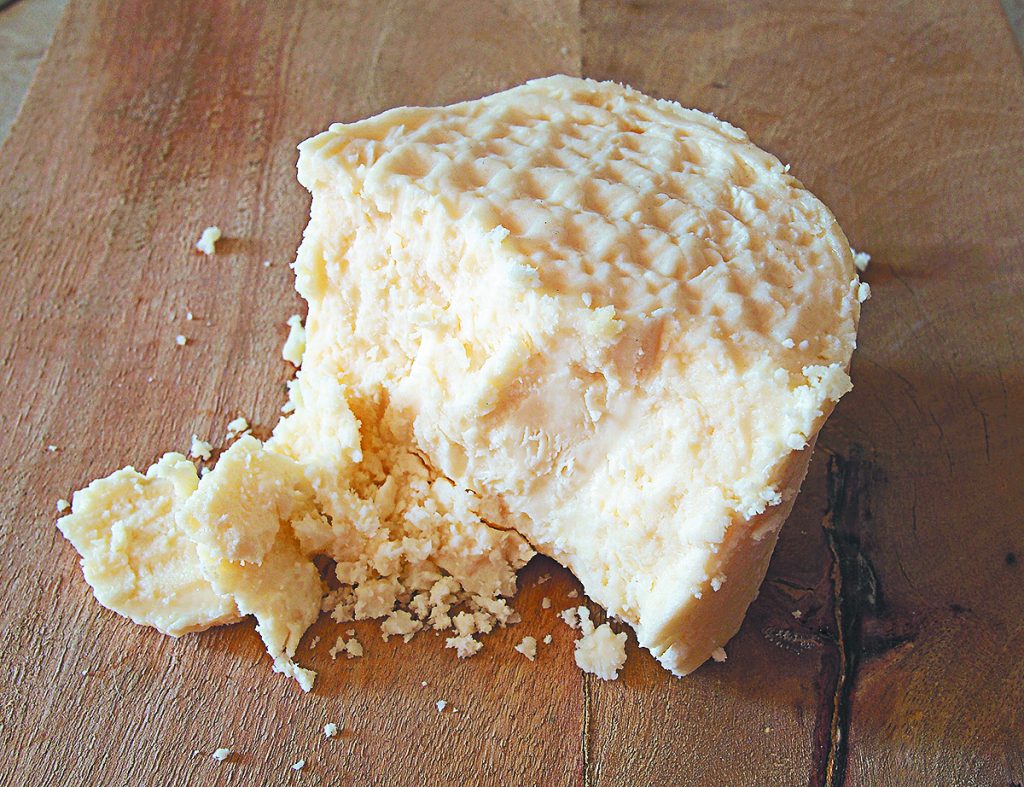
This tangy, spicy, fermented cheese is produced mainly on Mykonos and on a smaller scale on neighboring Tinos. Made from cow, goat, or sheep milk, kopanisti develops its peppery flavor through natural molds that develop during its months-long fermentation process. It’s used in everything from dips to pies and is a PDO product. Known since ancient times, its sharp profile suited Mykonos’s hot climate and the storage challenges it posed. It remains a culinary trademark of the Cyclades’ nightlife capital.
Milos – Karpouzopita (Watermelon Pie)
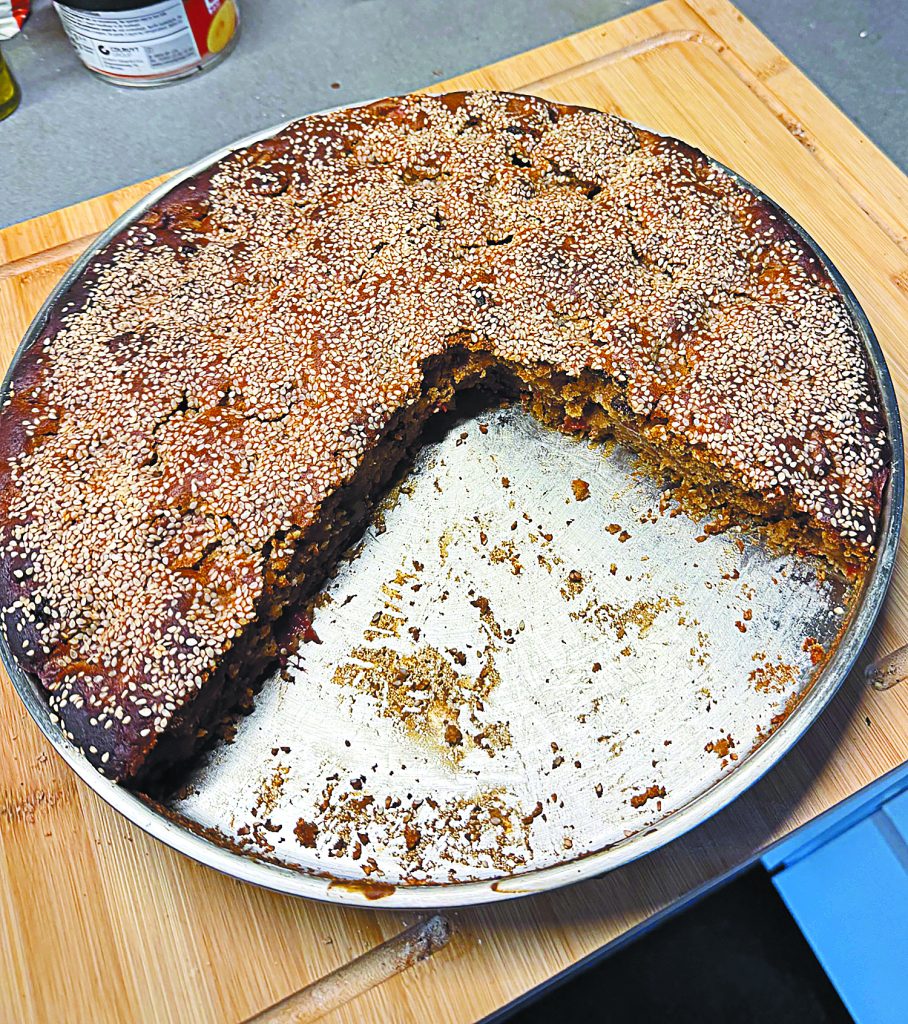
Milos’s sun-scorched soil and sweet summer produce gave rise to karpouzopita, a watermelon pie made with grated watermelon, flour, honey, sesame seeds, and cinnamon. This sweet, sticky treat is indigenous to Milos and nearby Kimolos, where watermelons thrive thanks to the mineral-rich volcanic earth. Traditionally baked in outdoor wood ovens, it’s a summertime delicacy that evolved as a no-waste dessert made from homegrown fruit.
Rhodes – Pitaroudia
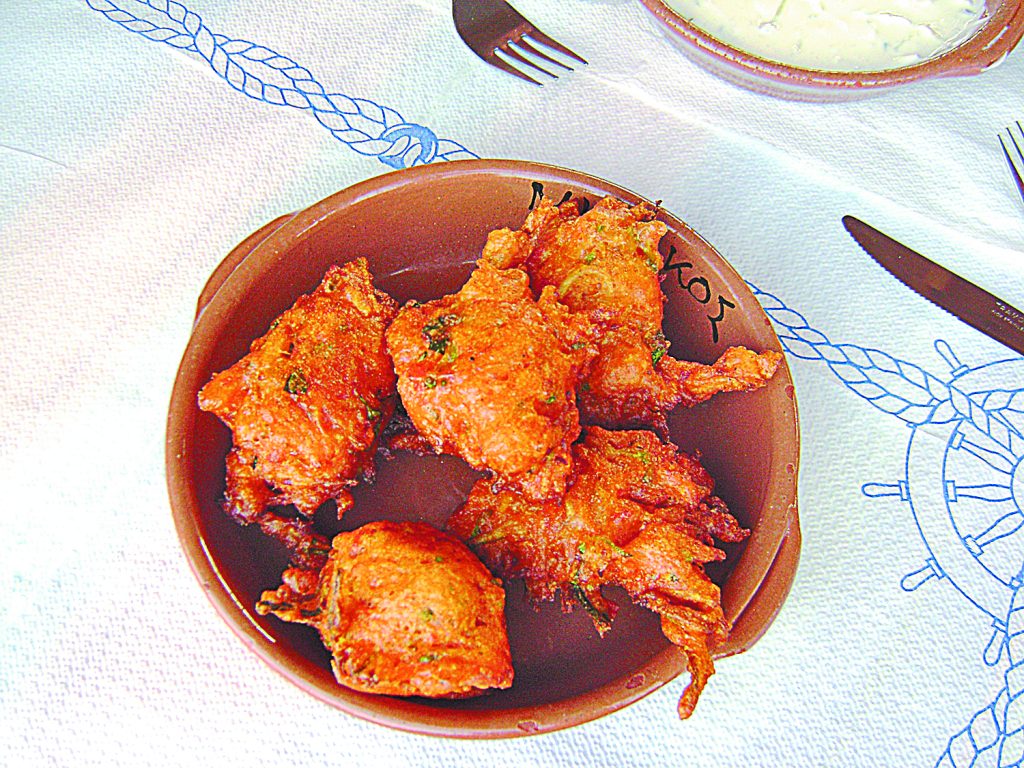
A savory street snack with deep roots, pitaroudia are spiced chickpea fritters enriched with mint, cumin, onion, and tomato. Often dubbed “Greek falafel,” their origin likely blends Ottoman culinary influence with local legumes. Though variations exist, Rhodes adds herbs like spearmint and fried onion to create its distinctive flavors. These golden discs were once festival fare, but are now daily staples in Rhodian mezze spreads.
Naxos – Arseniko Cheese
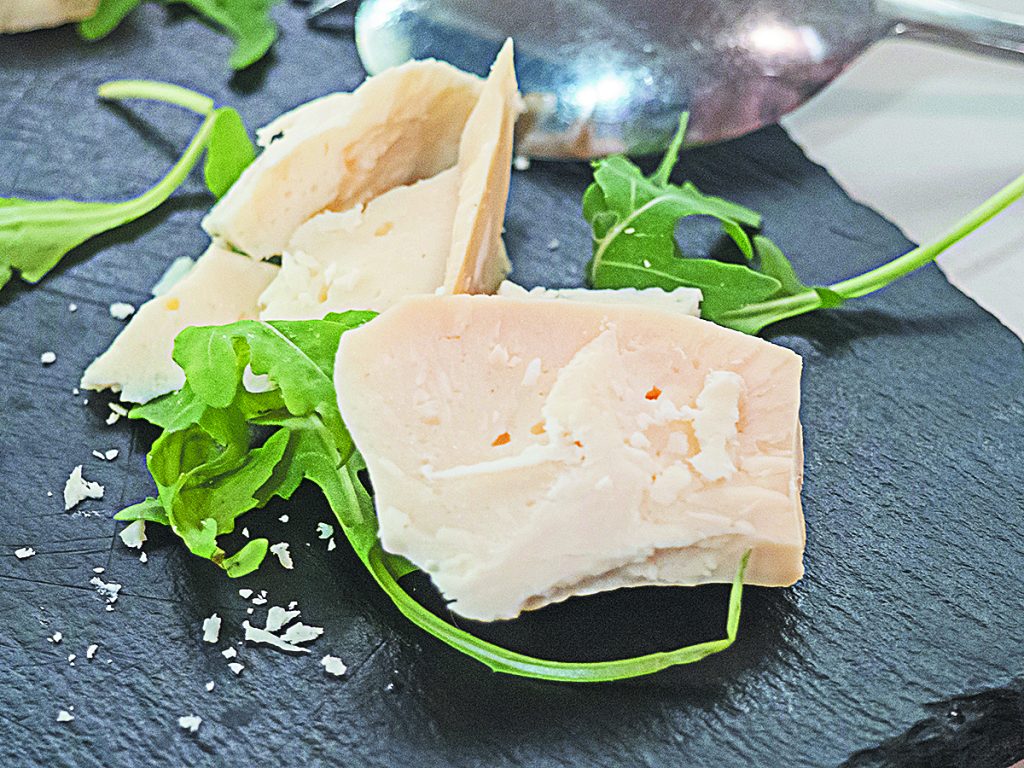
The mountainous pastures of Naxos yield arseniko, a robust, aged goat or sheep milk cheese with PDO status. The name means “masculine”—a nod to its bold flavor and firm texture. Handmade using traditional rennet and cured in cool cellars, it pairs perfectly with local wine and figs. Arseniko is a shepherd’s cheese which is still produced in the stone huts (mitata) found across the island’s highlands.
Crete – Antikristo
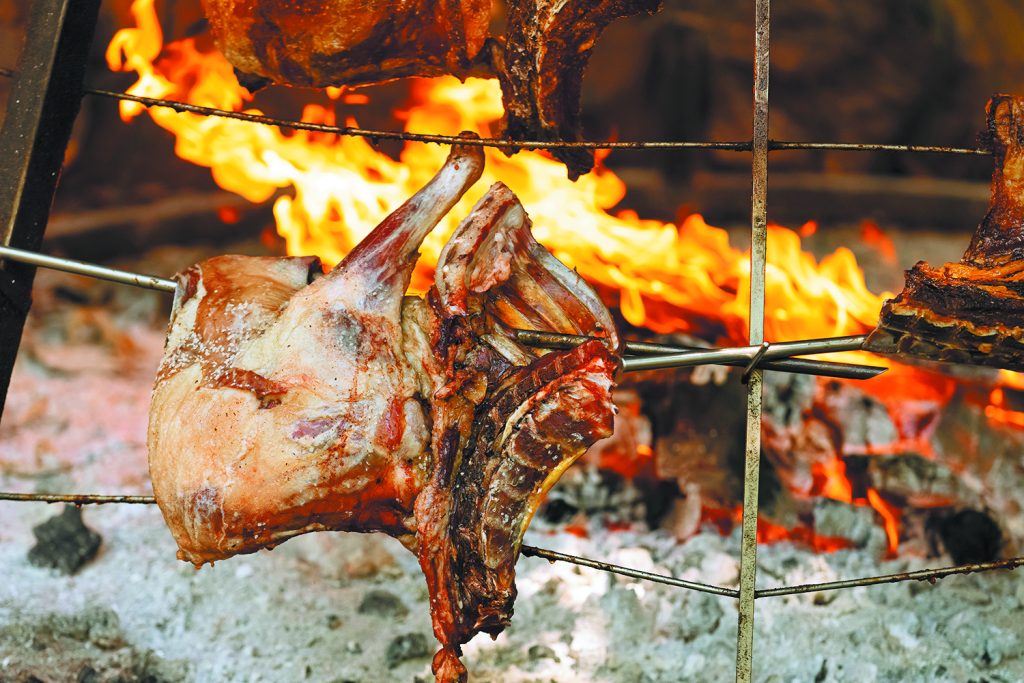
Antikristo, a traditional roasted lamb or goat meat, Crete (Greece). Large pieces of lamb or goat meat, slowly roasted over a fire for 4-5 hours.
Crete’s antikristo is as much a method as a dish. Large cuts of lamb are salted, skewered and placed around an open fire to cook slowly from the radiant heat—a technique that predates Homer. Originating in the island’s mountainous interior, antikristo reflects the resourcefulness of Cretan shepherds. The name means “opposite,” referencing the way the meat is arranged vertically around the flame. Only Crete preserves this tradition, which is especially common in the Mount Ida and Lefka Ori regions.
Kefalonia – Kefalonian Meat Pie (Kreatopita)
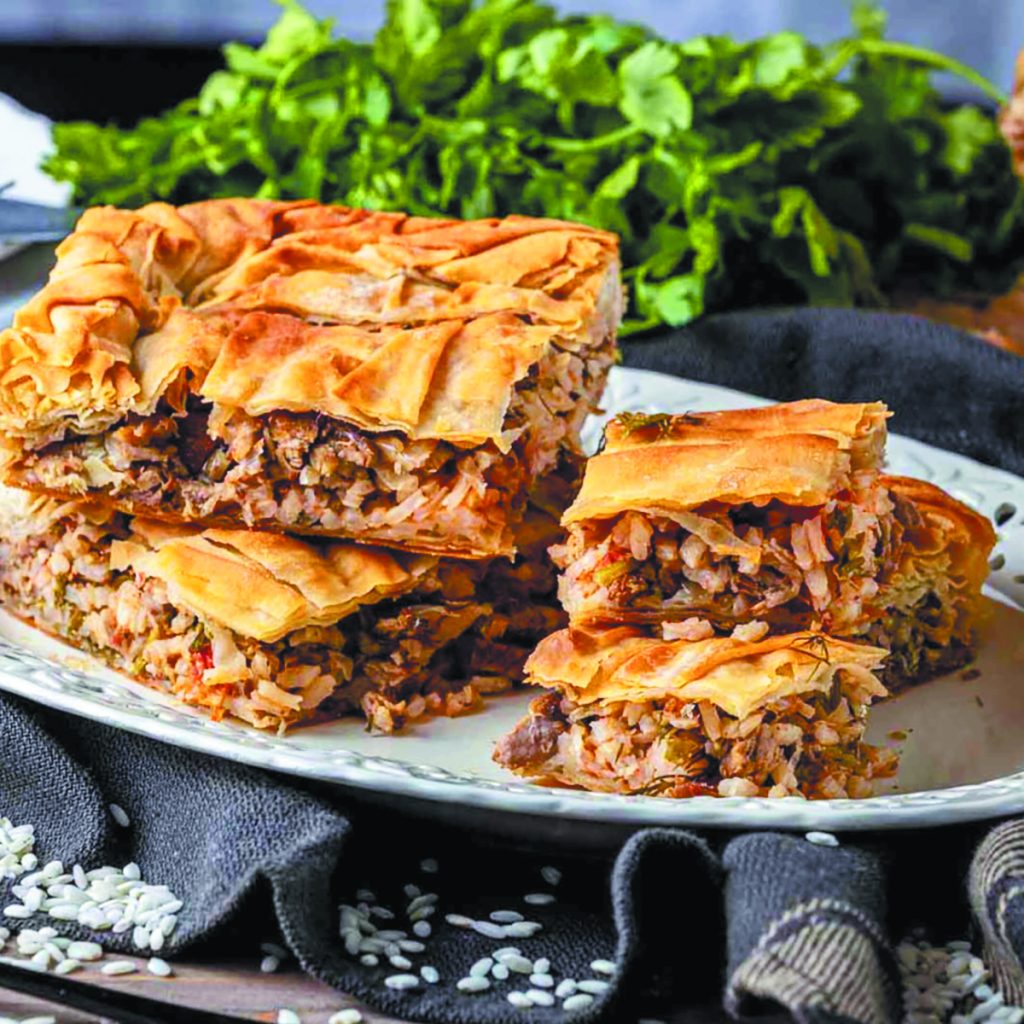
Kefalonian meat pie is a signature savory dish you’ll only find on this one Ionian island. It’s a hearty pie filled with a mixture of lamb, pork, or beef combined with rice, tomato, garlic, and fragrant spices like cinnamon, cloves, nutmeg, and bay wrapped in handmade filo dough and baked until golden. Often enriched with the local Robola wine and served warm at family meals or celebrations, it reflects the island’s rich agricultural and rustic traditions.
Serifos – Fennel Fritters (Marathokeftedes)
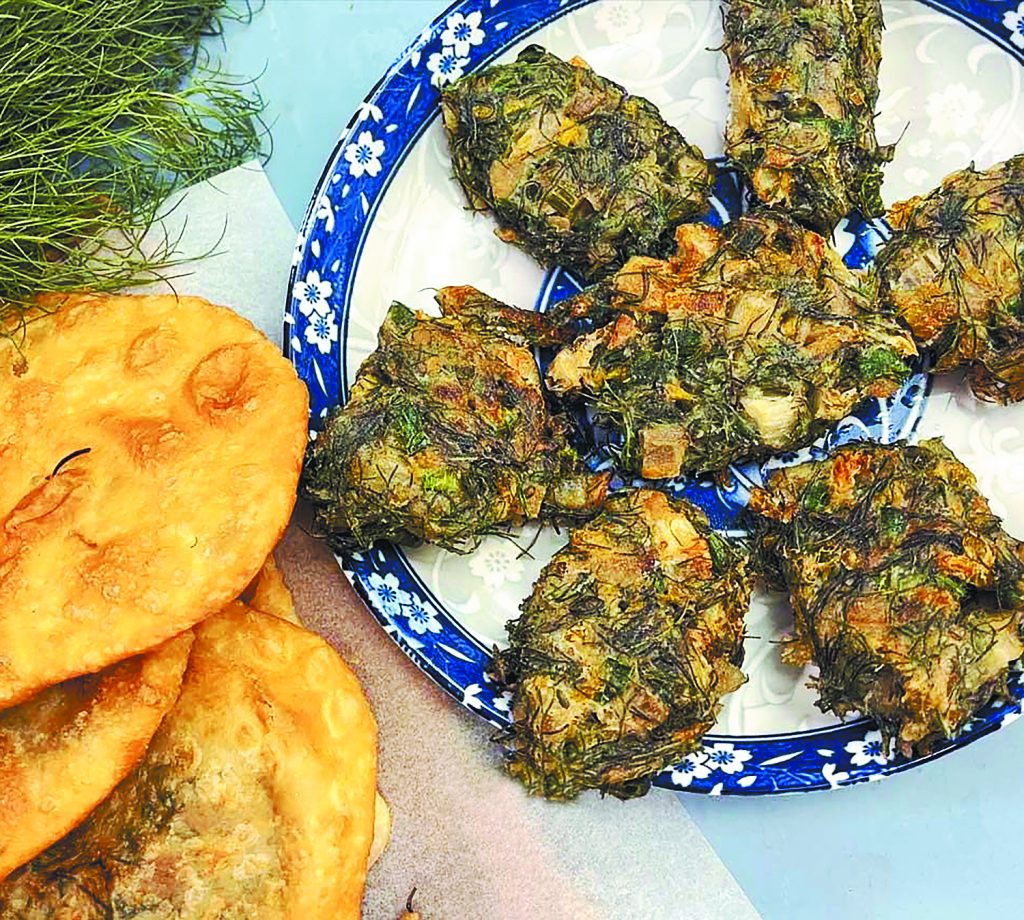
These crispy fritters (sometimes served as a pie) are made exclusively with wild fennel, which is abundant on the dry, rocky slopes of Serifos. Finely chopped fennel fronds and bulbs are mixed with a simple dough or batter and lightly spiced, then fried until golden. The aromatic licorice‑like flavor is unmistakable. Marathokeftedes reflect the island’s rugged terrain and tradition of foraging, and are rarely seen beyond the Cycladic isle. A purely vegetarian specialty, they are especially common during local festivals and tavernas.
Zakynthos – Sartsa
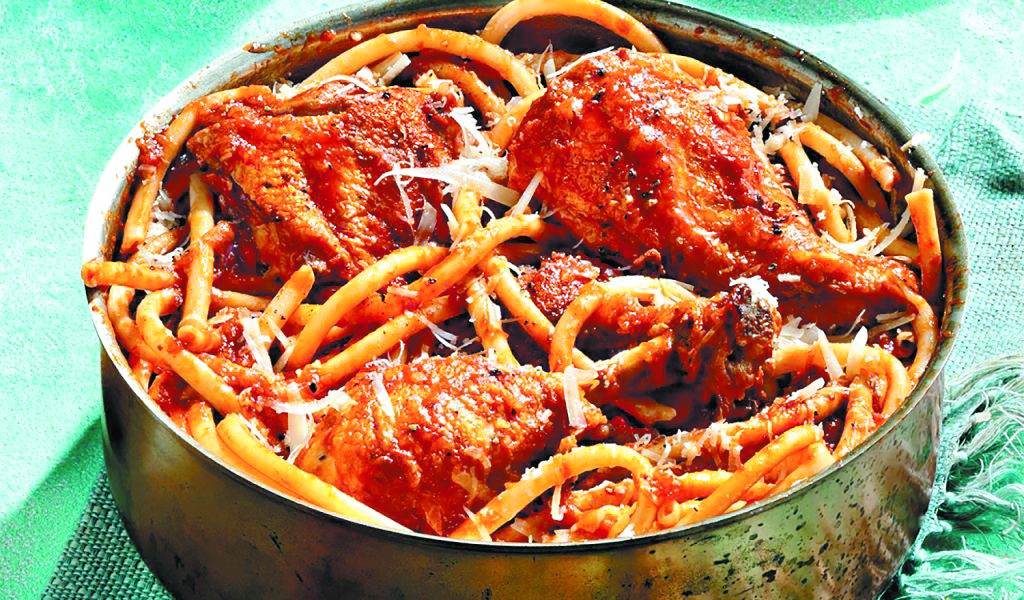
Sartsa is a slow-cooked meat dish native to Zakynthos, and a cornerstone of the island’s home cooking. Made with tender beef or veal simmered in a robust sauce of tomato, garlic, vinegar, and island-grown oregano, it’s usually topped with shavings of local ladotyri—a firm, salty cheese aged in olive oil. Though variations exist across Greece, Zakynthos’s sartsa is a dish you won’t find anywhere else. Rooted in the island’s Venetian-influenced island kitchens, it is often served on name days or village festivals. Its bold flavor and rustic simplicity reflect both the fertility of the Ionian islands and the Zakynthian love for powerful seasoning.
Skopelos – Skopelitiki Tiropita (Skopelos cheese pie)

On Skopelos, the iconic Skopelitiki tiropita is a culinary emblem you won’t find replicated elsewhere in Greece. Thin filo pastry filled with local goat milk cheese (often fresh feta or mizithra) is hand-rolled into a distinctive spiral, then deep-fried in pure olive oil until golden and crisp. Brought over centuries ago by shepherds from nearby Alonnisos, the recipe has evolved into a beloved street snack and taverna staple unique to Skopelos. Its crunchy texture, rich cheese flavor, and distinctive spiral shape define the island’s gastronomic identity.
Karpathos – Byzanti (Stuffed Lamb or Goat)
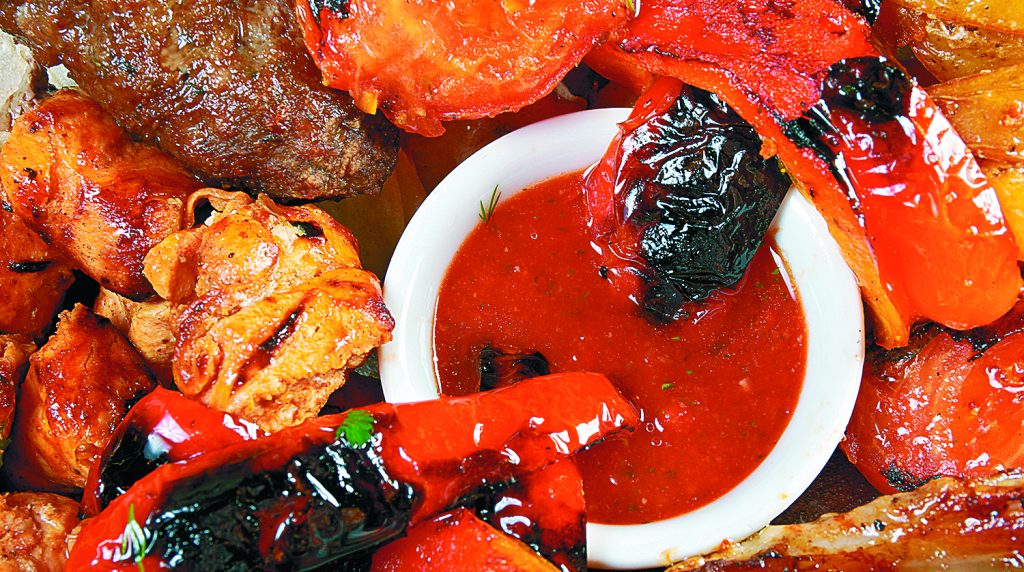
Byzanti Traditional Meat Dish From Karpathos, Greece
Byzanti, a labor‑intensive ritual dish unique to Karpathos, features lamb or goat stuffed with a fragrant mix of rice, liver, pine nuts, raisins, aromatic herbs (fennel, dill, mint), and spices like cinnamon and cumin. The meat is slow-roasted in a clay pot or wood‑oven for hours until the juices meld and flavors deepen. Typically prepared for weddings, Easter, and local festivals, byzanti reflects the island’s pastoral traditions, stone‑oven culture, and resourceful use of seasonal produce.
Kasos – Makarounes with Sitaka
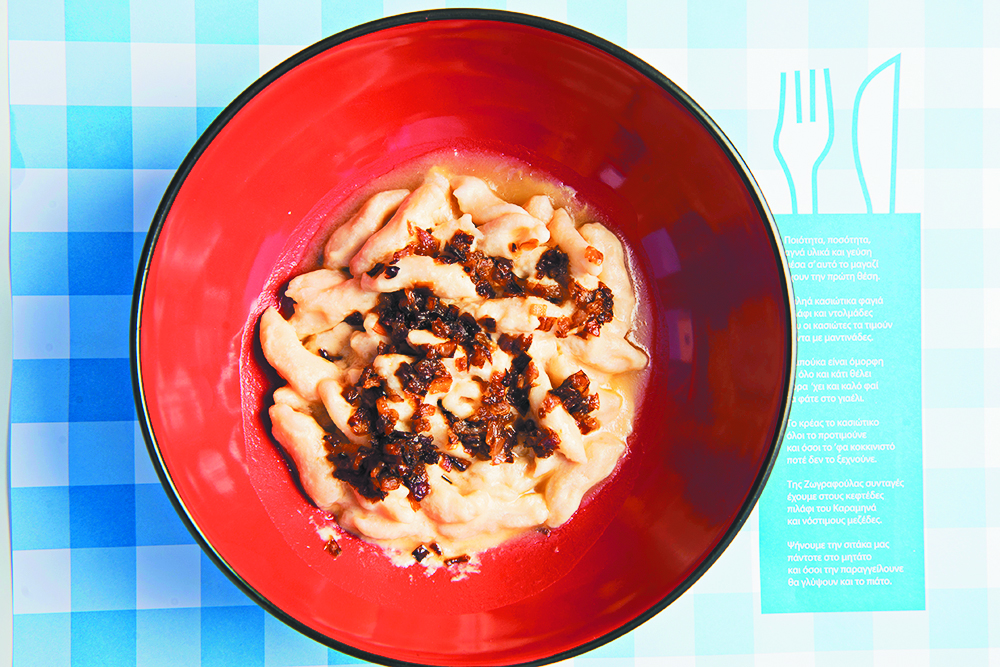
The tiny, rugged island of Kasos is home to one of the most iconic traditional pasta dishes in the Aegean: makarounes with sitaka. The makarounes are hand-rolled, indented pasta noodles made with just flour and water. Shaped individually by Kasian women using their fingertips, they are traditionally boiled then tossed with caramelized onions and topped generously with sitaka, a rare, creamy local dairy product made by slowly simmering fermented sheep or goat milk with flour and salt. This rich, tangy topping is exclusive to Kasos, where it’s considered a culinary treasure and often made in village homes.