 Μake us preferred on Google
Trump has expressed an interest in Greenland. What lies behind this sudden interest, and what role does Arctic warming play, which is occurring nearly four times faster than the global average?
It’s important to understand that the Arctic region is actually eight Arctic nations. Fifty percent of it is in Russia, but the Arctic region also includes Alaska in the U.S, Canada, the Nordic countries, and of course Greenland. And, as you said, climate change is happening at three to four times the global average, which means that global weather patterns affect whatever happens in Greenland or in Alaska, which affects Greece in turn.
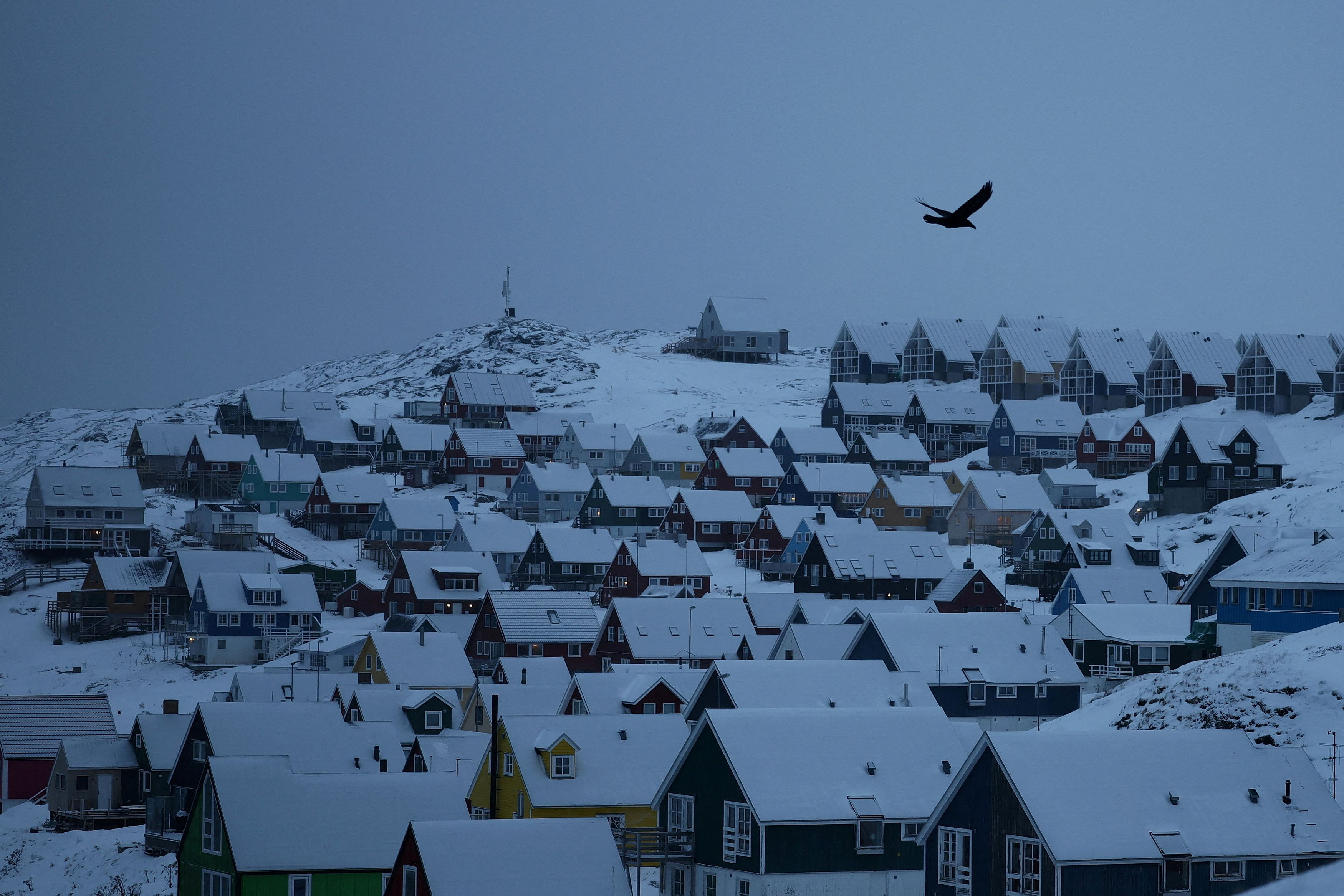
It is also said that the changing Arctic region will affect shipping, as well, which is also relevant from a Greek perspective. All of this is by way of introduction to the Greenland issue. Greenland is the world’s largest island, and it is located at this perfect spot at the top of the world. If you’re sitting in the U.S. in the White House and look at a map, Greenland sits in the continent of North America. But Greenland has been part of Denmark for hundreds of years, and there are 56,000 people living there. Which begs the question: why the sudden interest in Greenland from Donald Trump? And here I would say this: first of all, the interest isn’t new. Historically, the U.S. government has actually shown an interest in Greenland on four or more separate occasions. The U.S. government has tried to purchase Greenland—which fits into a pattern, because the U.S. continent has always grown through large-scale purchases: the purchase of Alaska from Russia, the Louisiana sale, etc. So the current interest is not an historical anomaly.
The Prime Minister of Greenland has stated several times that he has never seen Chinese or Russian vessels around the island, which has led some people to speculate that Donald Trump may primarily be interested in Greenland’s raw materials.
But the problem with that argument is that the U.S. already has access to Greenland’s raw materials–they don’t need to buy the place. Then there are others who say this it’s rooted in security and national defense. But once again, the U.S. has had a defense agreement in place with the Kingdom of Denmark since 1951. So the U.S. can already invest in military bases on Greenland if it wants to; nothing or no one is holding them back. All of which means it’s difficult to speculate what the underlying causes may be. Still, the consequences could not be clearer: the world is finally waking up to the Arctic region! Now, if you look at these eight Arctic states, there are only 4 million people living there. In the old days, that meant its profile remained low on the public agenda. But that is now decidedly not the case.
In December 2024, the Greek prime minister also visited Finland, and specifically the Arctic part of Finland, where they also spoke about the Arctic. So, over the past two years or so, the world has been looking to the Arctic. And this attention is what Donald Trump has just turned up the speed on. Because, with the interest in Greenland, it’s got even stronger now. What we need to ask at this point is how we can move from a security to an economic focus?
What are the risks for Greenland and the region, given the U.S. policies on climate change? Do the risks outweigh the opportunities?
I am concerned about the U.S. government’s lack of focus on climate research and climate science. This is a serious concern, especially in the Arctic region. Because when the Arctic melts, that impacts the whole world. So the whole world should be concerned.
Your second question about Greenland is what are the risks? I think the risk is that the Greenlanders would lose their ability to decide their future for themselves.
Then, there is also a risk that a U.S. take-over would create uncertainty about world government. About world rules. What makes Europe strong is a rule-based order. That’s what makes the European Union strong. What makes NATO strong is that we have allies and partnerships and so on. So there is a major risk associated with this fragmentation. And that leads me to another risk: we already live in a highly polarized world, and I think the Greenland issue can make it even more so. Historically, the Arctic region has been a region of collaboration, a region of partnership. And it still is, but that is being challenged. So fragmentation, polarization and uncertainty are the risks.
Do you think they might want to be part of the United States?
I have been working with Greenland for 20 years now. The Greenlanders are a very proud people and they have a very strong identity and sense of who they are: and that is Inuit, indigenous peoples.
Moreover, they have repeatedly stated that they do not want to be part of the U.S. The Prime Minister has said the same, and all the polls show that to be the case. They are part of the Kingdom of Denmark and they are very proud to be Greenlanders, so it’s up to Denmark and Greenland to decide the island’s future. It’s not up to anyone else. I think it’s also worth noting something else: Greenland’s relationship with the EU. You see, Greenland has not been a member of the European Union since it left the bloc in 1985, while Denmark still is. But the recent polls in Greenland have shown that there is a lot of interest in moving closer to the E.U. rather than the U.S. Because the European Union treats its people with respect.
At least that’s what the Greenlanders believe: that they would get a better deal working with the European Union than they work working with the U.S.
I want to note that this preference relates to the ownership of the land. When it comes to commerce, Greenlanders are open to doing business with the U.S. We have to remember that the U.S. is still a big market, still an important market with a lot of investors. So, if the U.S. wants to open mines, for example, or build hotels in Greenland, the Greenlandic Prime Minister has made it clear over and over again that they are open to doing business; they’re just not for sale.
Which sectors will define the Arctic economy over the next decade?
Traditionally, it was energy, oil and gas, and fisheries. Plus renewable energy and everything connected to shipping, in which Greece has also had a role to play. The tourism sector has also grown slightly, because people want to see the Northern Lights, they want to ride a dog sled and see all of that. And then there has also been an increase in the space sector. Satellites and rockets are being launched from the Arctic, too, because it’s just a better place to do that.
But the major sector that is displaying the greatest growth right now is security and defense. A lot more countries are investing in infrastructure that also serves a defense and security purpose. There is a lot more investment in icebreakers, in ships that can sail and navigate the Arctic. Which is why we’ve seen such a lot of investment in defense and security right now in the Arctic.
When did the EU start taking Arctic policy seriously, and why did it take so long?
Well, the EU introduced their first Arctic policy in 2008. But even today, there are very few people from the European Union working on the Arctic. But then we suddenly learn that Ursula von der Leyen, the president of the Commission, is actually coming to Greenland next month. So how come? Yes, she is coming to the capital, Nuuk, which is a town of 20,000 people. Which shows that the European Union is suddenly taking it seriously.
Canada is waking up to Greenland, too, and a lot of the people are, too. But Europe is late to the party.
What is the greatest threat for the Arctic now, or in the years ahead?
Climate change is the number one threat. No matter how much we talk about security, I think we have to remember that climate change is a massive challenge.
For many years, the Arctic was a zone of no conflict, a zone of collaboration rather than war, and so on. Today, Russia’s largest nuclear arsenal is situated just 160 kilometers from the border with Norway. It contains the bulk of Russia’s nuclear missiles. Of course, they’re not aimed at Norway, they’re pointing elsewhere. If wars elsewhere in the world escalate into the Arctic, that’s also a threat, but a short-term one. The long-term threat comes from climate change.
And then there’s also the threat to the people who live in the Arctic. Because when the Arctic region becomes a climate change hot spot or a security zone, it is no longer a place to call home. And I live in the Arctic region; it’s home to me. There are people who live and work and lead normal lives there, but the rest of the world only ever talks about the Arctic in terms of conflict or climate change. That’s a more philosophical threat, but we must not forget there are people living there. Which means we need to invest in the infrastructure. We need to invest in the people and in the Arctic from a cultural and historical perspective, but also because the Arctic is the future.
When it comes to shipping, for instance, the Arctic Ocean is six times larger than the Mediterranean. The Arctic Ocean is big. And by 2050, you will be able to sail across it, as a whole new ocean is about to open up for mankind. That’s a first in world history, and it’s going to change the region.
In your opinion, which country will pose the biggest threat then?
That’s a good question. But instead of talking about threats, let me say who is capable of sailing up there. In theory, there are between five and eight countries that can: South Korea has a very good shipping industry, and has been conducting polar research in the Arctic for many years. China could definitely sail up there. Russia has a lot of experience: after all, 50% of the Arctic lies in Russia. The U.S. may also have an interest, and perhaps a few European Union member states, too. Denmark, Norway, maybe Sweden or France could have an interest, but they are difficult waters to sail.
There’s an agreement called the Central Arctic Ocean Fisheries Agreement. This is where the European Union met with Russia, China, the U.S., Iceland, Norway, Japan and Korea and agreed not to fish in the Central Arctic Ocean, until we know that it’s sustainable to do so. It was quite a historic agreement. The signatories still meet regularly, despite the current state of the world. And the European Union still attends meetings, because they want to make sure that Arctic development is sustainable.
And that gives me hope.