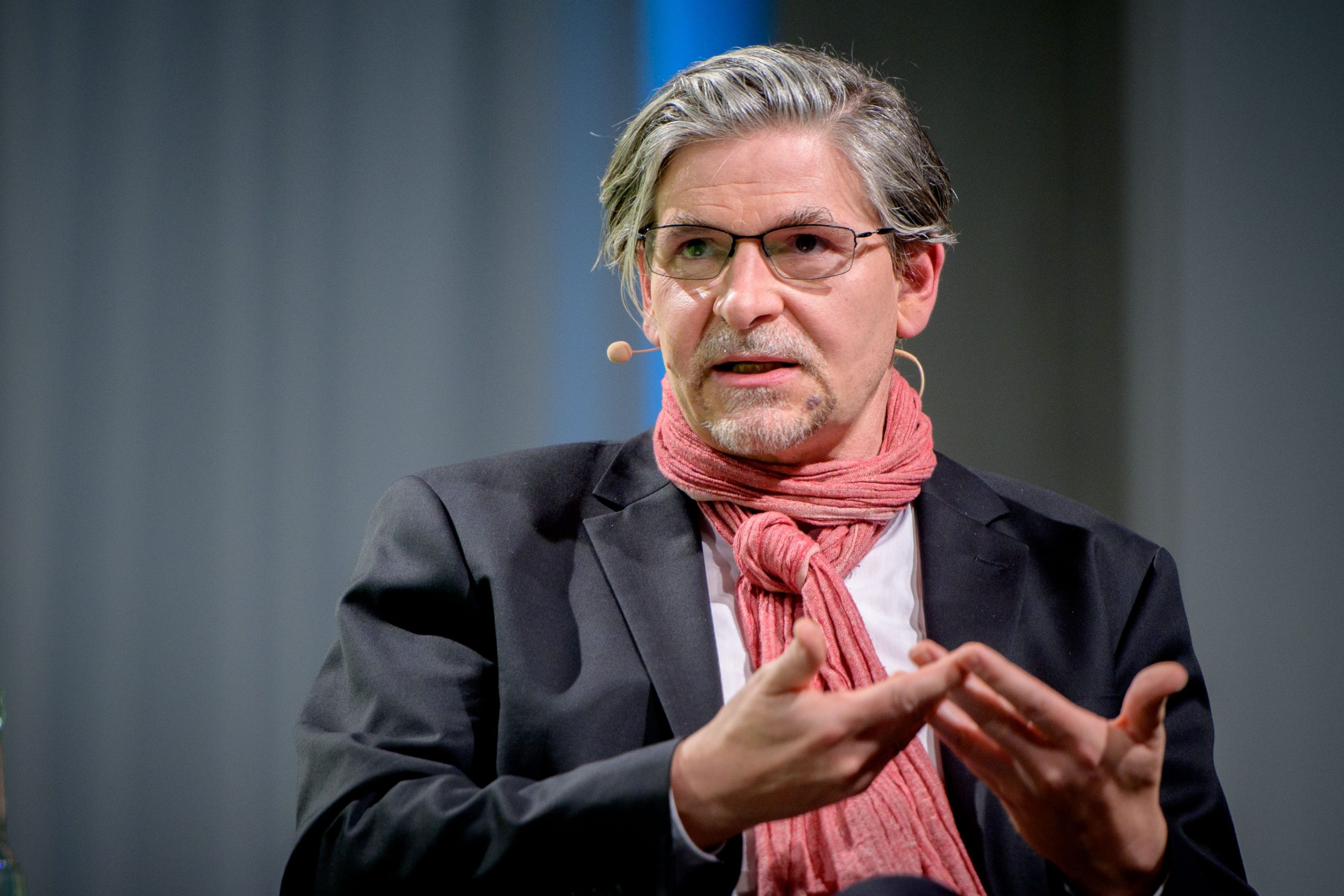
Author of What Is Populism? — often described as a “bible” for students and scholars of political science — and of several acclaimed monographs on democracy, populism, and the relationship between leadership and the electorate, the German political philosopher Jan-Werner Müller is among the world’s most incisive and measured voices in the field of democratic theory and the study of populism.
In our conversation — conducted in the aftermath of the assassination of ultra-conservative activist Charlie Kirk — Müller stresses that political polarization in the United States, despite the peculiarities surrounding Donald Trump, is hardly a new phenomenon. At the same time, he dismisses the notion of an inevitable “populist wave,” insisting instead that today’s challenges can and must be met through coherent, programmatic politics.
For Müller, the imitation of far-right rhetoric and priorities represents a mortal danger for Europe’s institutional center-right. The growing strength of extremist forces, he argues, should not be treated as an unavoidable historical trend driven by external factors, but as the outcome of each country’s own political traditions — and of how effectively democratic actors manage to articulate a credible alternative.
The assassination of Charlie Kirk comes with the fear that Trump and the Alt-Right will weaponize the incident to impose their agenda against the liberals and Left generally. You claim that populism is about excluding others. Do you fear that today, a line can be crossed in USA, when it comes to political tolerance?
It has been crossed in rhetoric for a long time to already. In the 1990s, Newt Gingrich, then the speaker of the House and de facto the leader of the Republican Party, demonized his political adversaries as “traitors.” What we see today was not inevitable, but we also should not pretend that, before Trump, everything had been normal. What is new today is the use of state power to intimidate and even outright suppress free speech at private institutions.
We see a prevalence of right-wing populism, following by the retreat of its left version. Is that related with the Trump phenomenon and what role the establishment conservative elites have played?
It is one of the few robust results of political science that, when center-right elites imitate the far right, the far right wins. Their rhetoric is legitimated and citizens very often end up choosing the original, rather than the pale copy (plus many of these far right parties have never been in power, so appear as the best vehicle for expressing protest). Yet the center-right keeps making the same mistake again and again – most recently Friedrich Merz in the run-up to the federal elections in Germany.
We recently saw a big anti-migration rally in London rally in London. In Japan a far-right party made big election gains. Meloni is in power in Italy and on France National Rally is the biggest party by popular vote in France. The rise of popularity of alt-Right parties how can be stopped politically?
Everything you mention amounts to a serious challenge, but we should also not assume that somehow there is an inevitable “populist wave.” Meloni won, but what happened to Salvini? On the whole, the right-wing bloc in Italy is actually weaker than before. But that’s just a pedantic point on the side. The main point is that politicians opposing the far right have to talk with them, but not like them, that is to say: take on policy challenges, of course, but not uncritically adopt the framings of the far right.
What are the deeper causes for the popularity of those parties? Some analysts tend to emphasize to the abandonment of the working class and their concerns from the Left, others tend to emphasize to the division the identity politics intensify. What’s your opinion on the issue?
Very complex question. Different national contexts matter; there is not one global cause necessarily. I agree that many working-class voters have abandoned social democratic parties, but, contrary to what you hear very often, it is not the case that a large number of workers has moved over to the far right; rather, they stopped voting altogether. But it’s not just structural: the far right has become very skillful at waging culture war, all the while making many citizens believe that it is the left who is sowing divisions. Again: there are structural factors – such as globalization, obviously – but the tactical and strategic choices of elites also matter a great deal.