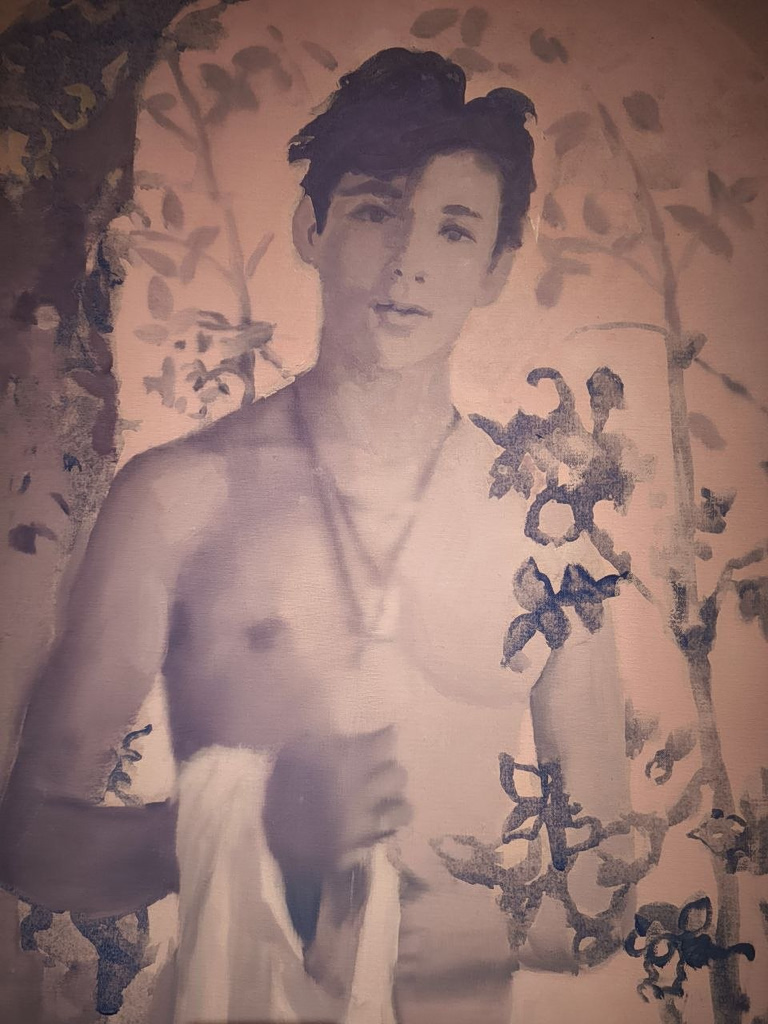
A home where the walls were never left bare. A mother who brought the young Panayiotis Tetsis into the family fold. Yannis Tsarouchis and Maria Callas with the theater of Ancient Epidaurus as a backdrop, and later the indelible stamp of Alexander Iolas. These are but a few of the elements that compose one of the most captivating and exceptionally rare portraits in contemporary Greek painting.
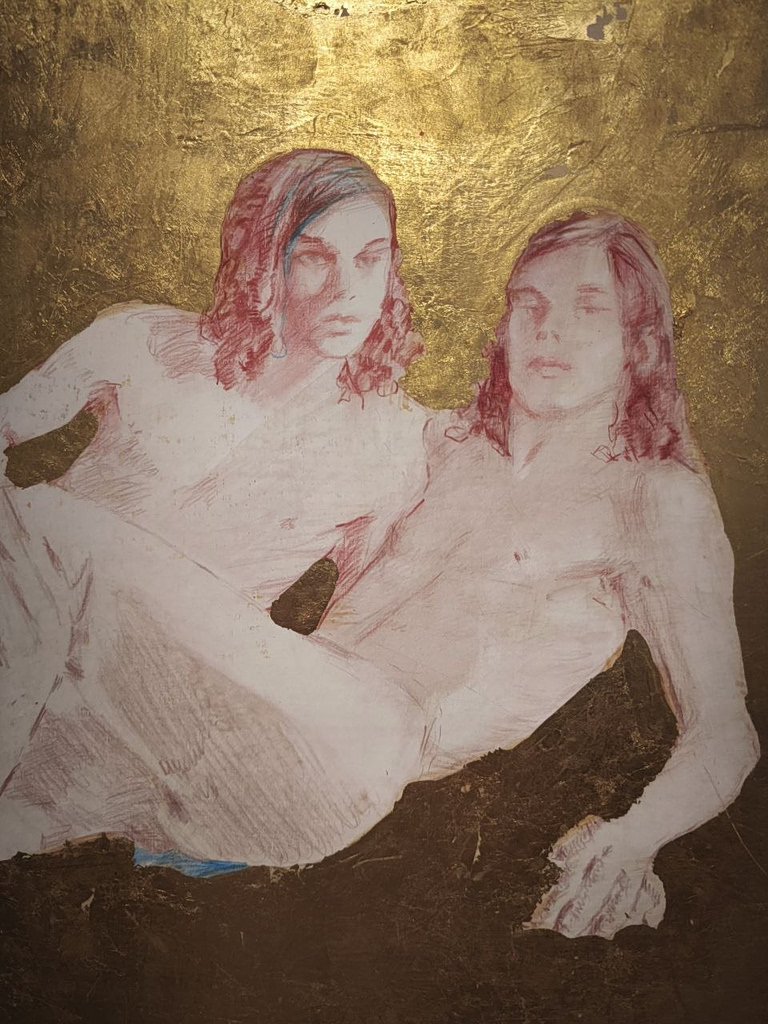
We are, of course, talking about Marina Karella, whose artistic journey was sculpted alongside great masters, backstage, in ateliers and pivotal cities—from Athens and Paris to New York—which served as immersive, lived experiences rather than mere geographical destinations. Beginning with the otherworldly silence of her “white paintings” and her enigmatic draped sculptures, Marina Karella evolved into one of the most significant representatives of magical realism. Today, amidst ceramics that test the limits of the kiln and flowers that outgrow reality in their scale, her painting remains faithful to a profound constant: the mystery of existence, where nothing stays the same, yet everything is transmuted into poetry.
Prompted by her exhibition “Le Passage”, she revisits this journey with no desire to recapitulate. Instead, she turns memory into living, malleable matter, composing an entirely new artistic proposition on the cusp between the visible and the invisible, the earthly and the transcendent. Perhaps it is here, in this constant shift toward the unknown, that the most consistent thread running through her career lies: a form of painting that attempts not to interpret or confine the world, but rather to keep it open and available, with a way of seeing that is different each time.
Your relationship with Panayiotis Tetsis began very early on in your life. How did you meet him, and what do you remember from those early years?
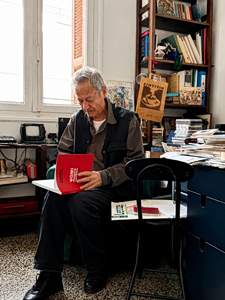
My mother had met him and very much liked what he was doing. He was an extremely young painter back then, still at the very start of his journey. She had asked him to paint a few things for our house, and that is how I met him too. I may have been one of his first students. I was very young, and he taught me the fundamentals. How to look, how to measure, how to draw. All those things that seem difficult at first, and whose importance a young person doesn’t immediately grasp. It was my first serious encounter with painting. We lost touch for a while after that, because I went abroad, too, but it was a lifelong bond. He wasn’t just a teacher. He was someone who left an indelible mark on how I looked—and still look—at art.
Tell us about your first steps.
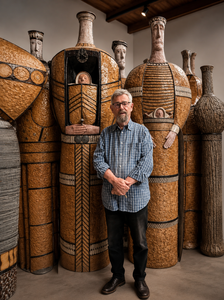
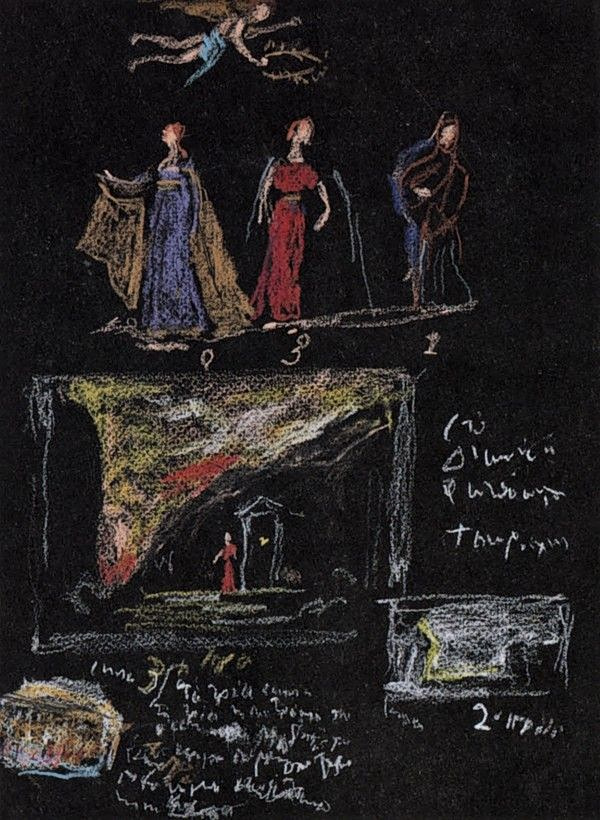
I’ve always painting, for as long as I can remember. I’d painted on all the walls of our house. My father never said a word. I still remember the wall next to our telephone, which I’d covered in my drawings. Back then, telephones were mounted on the wall, and I’d painted the entire space around ours. When I was around fifteen, my older brother showed some of my work to Tsarouchis to see if I had talent. He looked at my drawings and suggested I might pursue set and costume design. At the time, I could never have imagined how deeply that would influence me. Working alongside Tsarouchis, I came to understand what an artistic life truly means. It was an environment brimming with creativity. There were people from the worlds of theater, dance, and music; young people with ideas, passion, and curiosity. I saw a world I had never known existed. And, I must say, that world captivated me—utterly. It was the first time I felt I belonged somewhere. That this was the space I wanted to inhabit. I worked in the theater quite a bit. I designed sets and costumes and had so many unforgettable experiences. I still remember the first time I got paid for my work. I was just nineteen years old. I had taken on the costumes for a play, and my fee was five hundred drachmas. With that money back then, you could buy two pairs of shoes. It wasn’t the amount that mattered. It was the feeling of earning money from my work for the very first time. I was incredibly proud. It was through Tsarouchis that the collaboration with Callas at Epidaurus came about; I was his assistant. I attended every single rehearsal. All of them. For Medea, for Norma. For a young person, it was a staggering experience. You were constantly listening, watching, learning. Opera had already been a part of my life, from a very young age. My brother loved music deeply, and it was through him that I started listening to opera. Later, seeing Callas up close, it was as if an entire world I had previously known only through records had sprung to life right before my eyes. I will never forget her first major appearance in Greece. The crowd went wild. It is one of those moments you never forget.
Later, you found yourself in Paris?
Yes, I went to the École des Beaux-Arts and stayed there for two years. Paris back then was a great school in and of itself. It wasn’t just the academy. It was the city, the museums, the people, the feeling that art was a part of everyday life. For a young person arriving from the Greece of that era, it was a revelation. During my time in Europe, I would go to Salzburg for a while every summer. There I met Oskar Kokoschka, though he was already quite elderly. I didn’t have the time to truly apprentice under him, but his mere presence was significant. I remember he would make us do exercises very rapidly. To draw a head in five minutes, for example. He had a way of forcing you to see things differently.
What did you take away from all these masters?
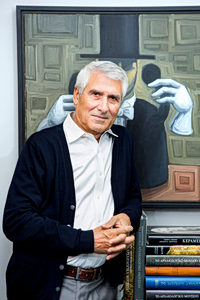
Their presence—how they were, rather than any specific technique. They weren’t people who sat down to give you a lesson in the strict sense. They were artists. You observed how they lived, how they thought, how they approached their work. From them, I learned freedom. Freedom of thought. And I learned what it means to be an artist. I grew up in an environment that was not artistic. My father was an industrialist. So my contact with these individuals was truly decisive.
If you had to pinpoint the “Greekness” in your work, where would you look for it?
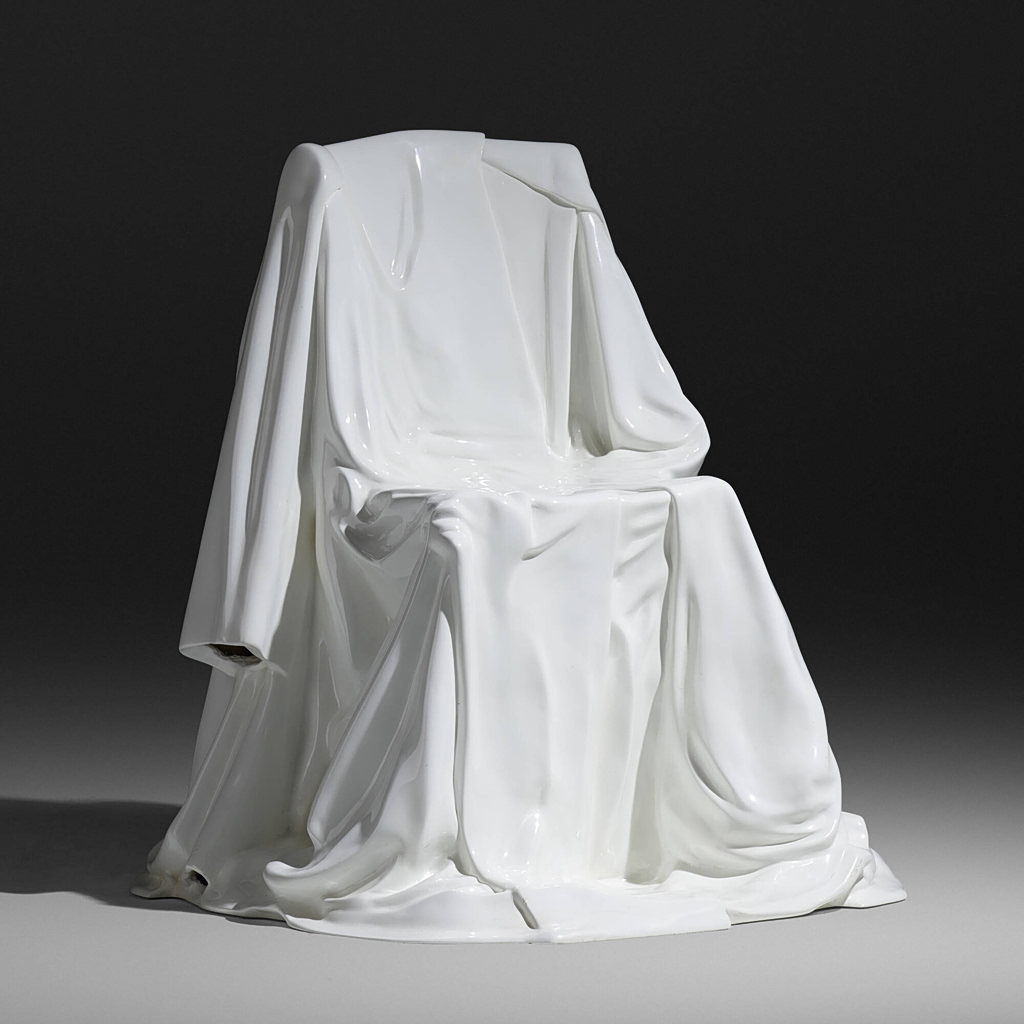
I think it is something I carry within me. I never consciously sought it out. I grew up in Greece. I grew up in this light, next to the marbles of the Acropolis. These things stay inside you. Even when you aren’t thinking about them, they are there. They emerge in ways you don’t expect. I remember, in my early exhibitions, creating these massive white landscapes on sheets. I was almost obsessed with white. I was on a quest for an absolute white. Looking at them today, I see how profoundly Greek those works were. They were all about the light, the landscape, the marble—all the things I carried inside without realizing it.
Another important milestone was your meeting with Alexander Iolas.
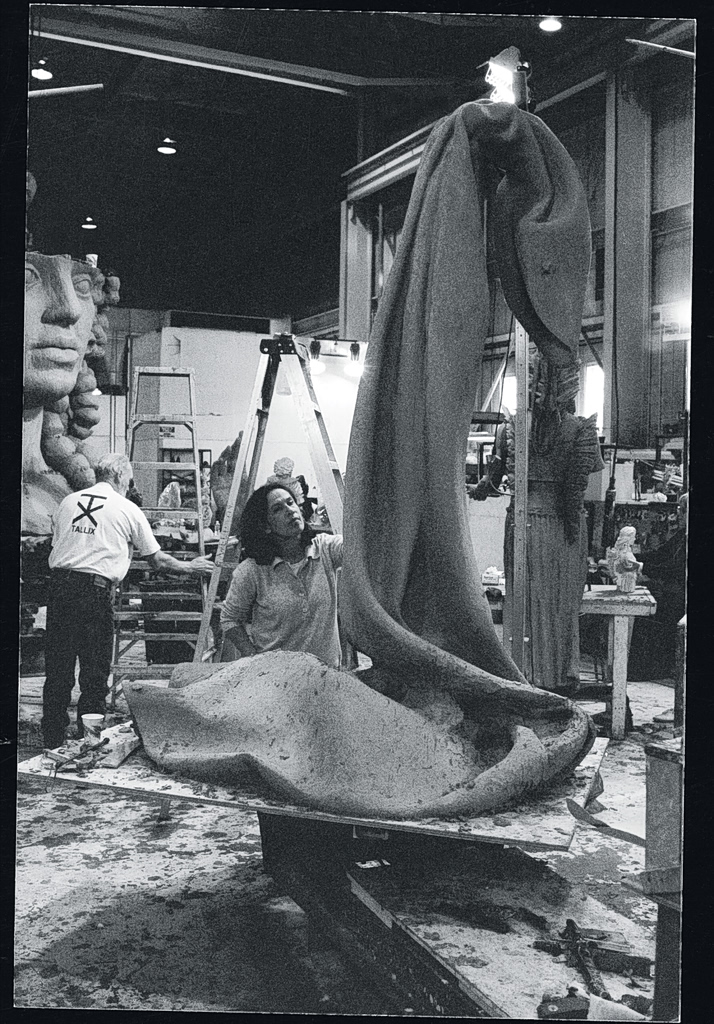
Iolas had a spectacular eye. When he walked into my atelier, it was as if a gust of creativity had swept into the room. He might tell you a piece was terrible and ask you to turn it to face the wall. And then, immediately afterwards, say another piece was “divine, divine, divine.” He knew how to shake you up. The important thing, though, is that in the end, you could see that he was never wrong. It is invaluable for an artist to encounter someone who sees with such striking clarity.
Your new exhibition is entitled “Le Passage”. The passage: What does this mean to you?
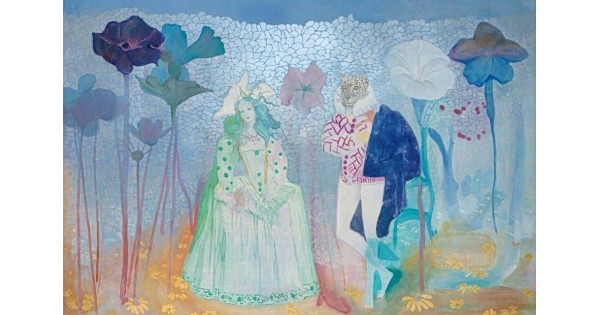
Life itself is a passage. And if life is a passage, then let us sow flowers along its passing. That’s a phrase that encapsulates my entire thought process around this exhibition, and it moves me deeply. Perhaps because flowers have been present in my work for years. Enormous cyclamens, flowers larger than a human being, plants that seem to possess a life of their own. For me, flowers are not decorative elements. They are connected to life, to death and continuity; to the idea that everything is in a state of transformation.
In the exhibition, we see paintings, ceramics, and sculptures. Are you interested in the constant pursuit of new mediums?
Very much so. When I work with a material for a long time, at a certain point I feel I have reached the absolute limit of where it can take me. Then, I look for something new. I might transition from oil to watercolor, from painting to ceramics. Lately, I have been particularly interested in ceramics, because pottery always harbors an element of surprise. You never know exactly what will happen when it comes out of the kiln. I like to surprise myself. When that happens, I feel I have taken another step forward. I believe that every artist actually has one central idea, which they express in many different ways. Someone once asked me what mine was. I answered immediately that it was to do with the afterlife. This subject preoccupies me greatly. That which exists beyond what we see. What follows. It is something that permeates all my work, even when it is not immediately apparent.
Looking at your exhibition, I get the sense that you have confronted the viewer with a world that is familiar, yet simultaneously transformed.
Yes, because I start from reality, but I do not stay there. I am interested in what lies behind what we see. Realism concerns the visible. I am interested in the invisible. I don’t know what it is. I am searching for it. Perhaps that is why I paint. If you look at something from one side, it is different than if you look at it from another. There are many truths, many doors. I try to open them, one by one. This moves me deeply. The feeling that you can go further. When I look at a painting, I do not want it to end where the canvas ends. I want there to be a road that continues. To be able to breathe. Perhaps this is because I am a very claustrophobic person. I cannot stand enclosed spaces, and I cannot stand closed-off artworks, either. I want the viewer to feel that they can travel beyond what they see. That there is a continuation.
Does your charitable work and your journey with the ELIZA Society engage in a dialogue with your painting?
I think that all these things are connected internally. I remember a priest back when I was a child. He had such a sweet voice and such a unique way of speaking about faith, that it left a lasting mark on me. He showed me that one person can open a door for another person. Well, the same is true in art. The same applies to giving. I do not see them as separate things. One feeds the other.
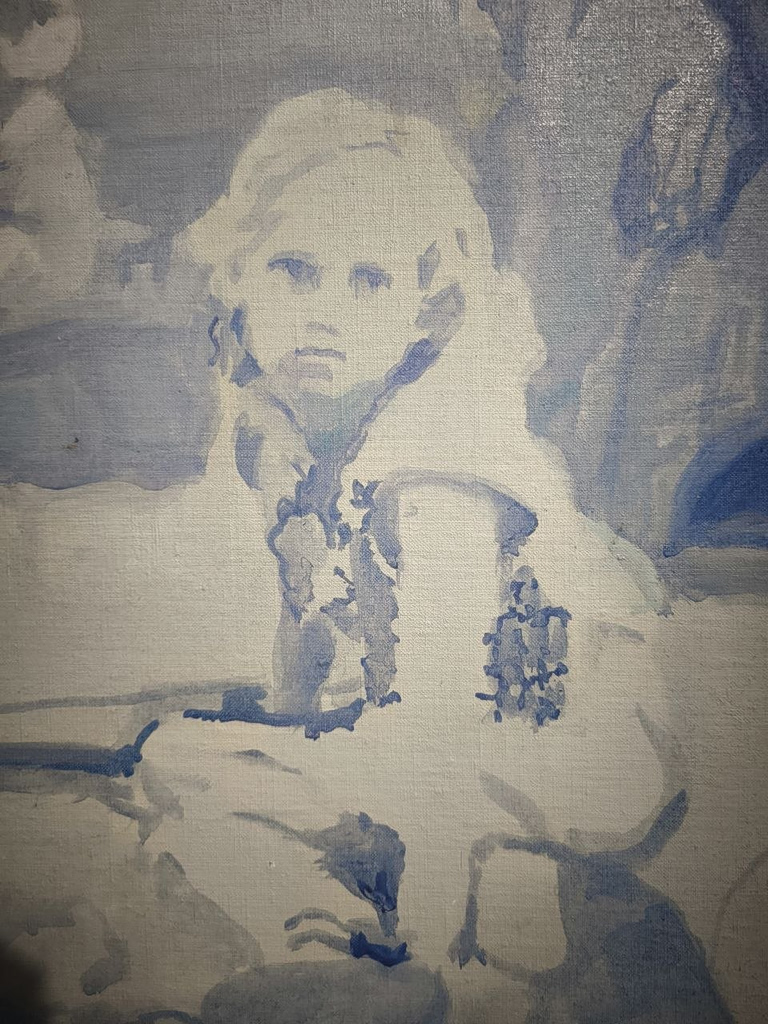
What would you like the visitor to take away with them from the show?
I would like them to take away the sense of a freer world. A more poetic world. As we grow older, I feel we become more liberated. You leave behind many of the things that weigh you down. And perhaps you draw closer to a brighter world. This is present within my work. The idea of a freedom, of a continuity and a reality that isn’t exhausted by what we can see. And perhaps, in the end, this is what I have always sought: a world that lies just a little beyond the visible world. A world that is more poetic, more open, more free.
Exhibition Duration: June 4 – July 4, 2026
Zoumboulakis Gallery
20 Kolonaki Square, Athens
Opening Hours:
Tuesday, Thursday & Friday: 11:00–20:00
Wednesday & Saturday: 11:00–15:00
Sunday & Monday: Closed