 Μake us preferred on Google
 The Greek government wants more from its fish farming industry. At least that’s what the recently appointed Minister for Rural Development and Food, Margaritis Schinas, announced a few months back at the 4th Aquaculture Industry Congress in Athens.
Greek aquaculture, he said, is “without a doubt a national champion, modern export-oriented sector marked by advanced technical expertise, a substantial investment and a low environmental footprint, which is also a major source of local employment and social cohesion.” The government’s ambition is to “increase yearly production by 5% until 2030,” he said, and finish the establishment of the aquaculture industrial zones (POAYs) that are still pending as soon as possible.
Since the conference, the ministry has also announced the approval of 105 projects worth €131 million, “including over €87 million in public funding.”
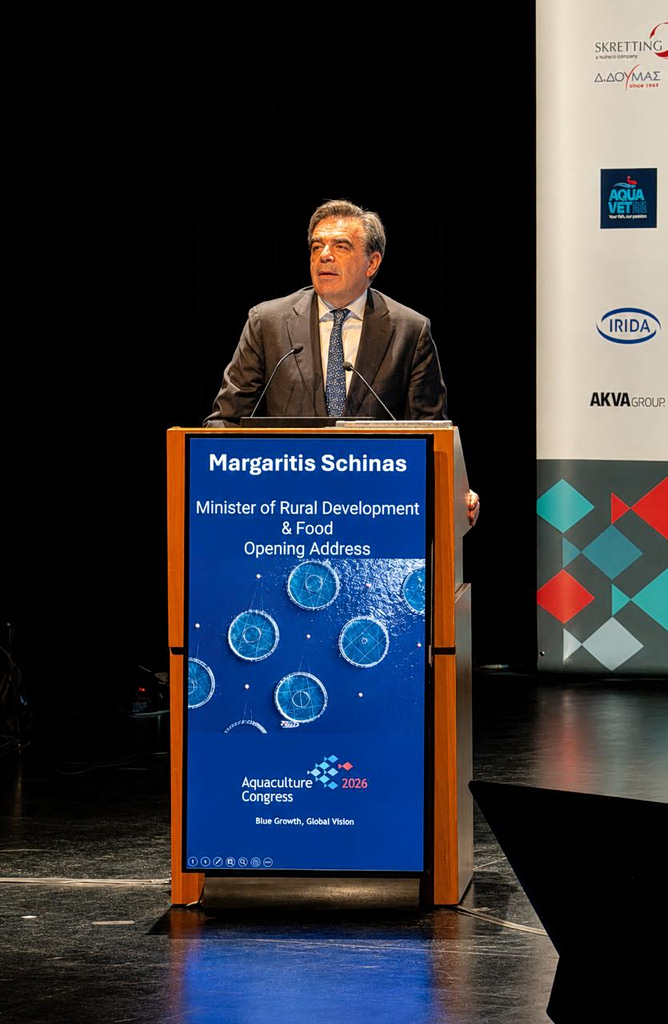
Minister Schinas speaks at Aquaculture Congress 2026, organized by AMBIO in Athens on May 15–16, 2026. Credit: C Novak
The industry’s response was largely skeptical; after all, ministers have been promising to complete the spatial governance framework for almost 15 years now.
The proposed POAYs, an acronym for “Areas of Organized Development of Aquaculture Activities,” have become increasingly contested in recent years in both the court of law and the court of public opinion. Some coastal communities are actively fighting the prospects of proposed expansions, mostly focusing on open-pen fish farming, because they have witnessed for themselves the degredation of the natural environment and damage left behind by bankrupted fish farming companies.
The Governance Conflict over Fish Farming
The Mayor of Poros, George Koutouzis, has become a central political figure in fighting the development of fish farms in his region. He told TO BHMA International Edition that industrial fish farming is incompatible with his island’s tourism industry.
Sitting in his Poros office just moments before a meeting of the 12 local mayors who form the spine of the “Blue Municipalities” network, he talked about the need for all stakeholders to participate on equal terms in the decision-making process for the island’s development. “In an organized country with democratic values, municipalities and communities should have a substantive say in their own development.” Visibly frustrated, he added that “they have been trying to force this specific industry on us for 15 years, when 99% of the people here simply don’t want it.”
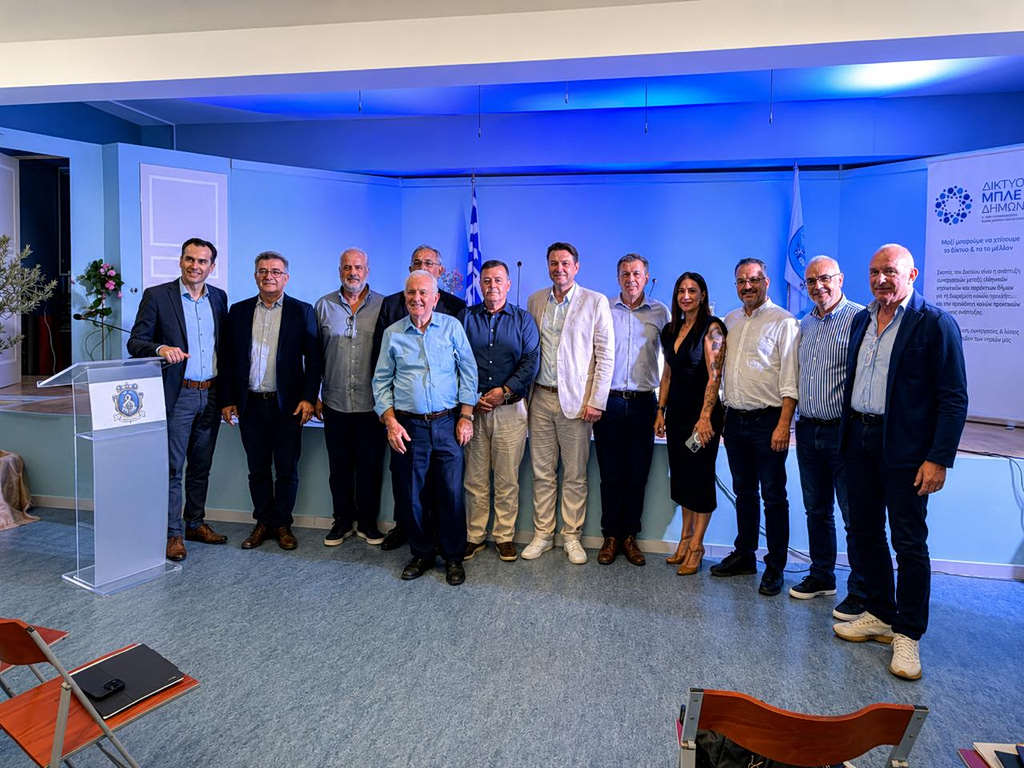
TO BHMA International Edition at an event of the Blue Municipality Network on Poros island on June 22. Credit: C Novak
As the Blue Municipalities meeting unfolded, the discussion focused on aquaculture’s environmental impact and on how to address marine waste stemming from aquaculture activities and abandoned fish farms.
In their remarks, most of the mayors adopted a more nuanced view on aquaculture, explaining to the public that they are not against industrial activity in their municipalities and that they are not all against fish farming. Instead, their objections relate to specific concerns: the right to formulate their own development plans, the burden fish farms place on areas that already support tourism, fishing and other industries, and the location and density of the farms. They also wonder how cash-strapped municipalities can be expected to manage the inevitable impacts fish farms will have, when they lack the authority, expertise, funding and tools to either monitor farms or remove abandoned equipment.
Salamina Mayor George Panagopoulos described a region that is already dealing with the cumulative pressures of the aquaculture industry, refineries, shipping and other industrial activities in an area of historical significance with archeological sites. “How many pressures can our sea withstand?” he asked the audience, stressing the need for Greece to conclude its maritime spatial planning and to bear in mind the carrying capacity of the local environment when doing so.
Poros has successfully fought off the establishment of a POAY off its shores—for now. Still, the mayor is concerned that the issue may somehow be revived. Meanwhile, several other legal challenges have been launched against the establishment of POAYs in several other regions by a combination of stakeholders.
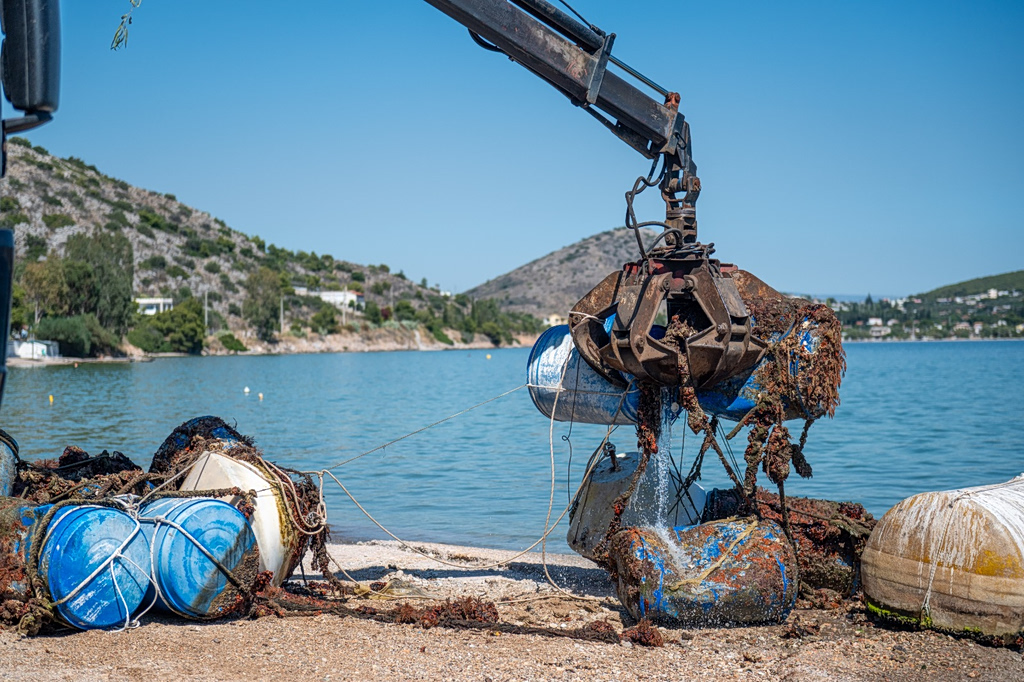
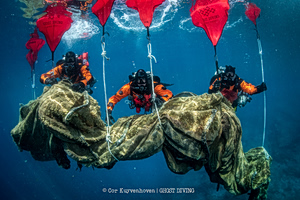
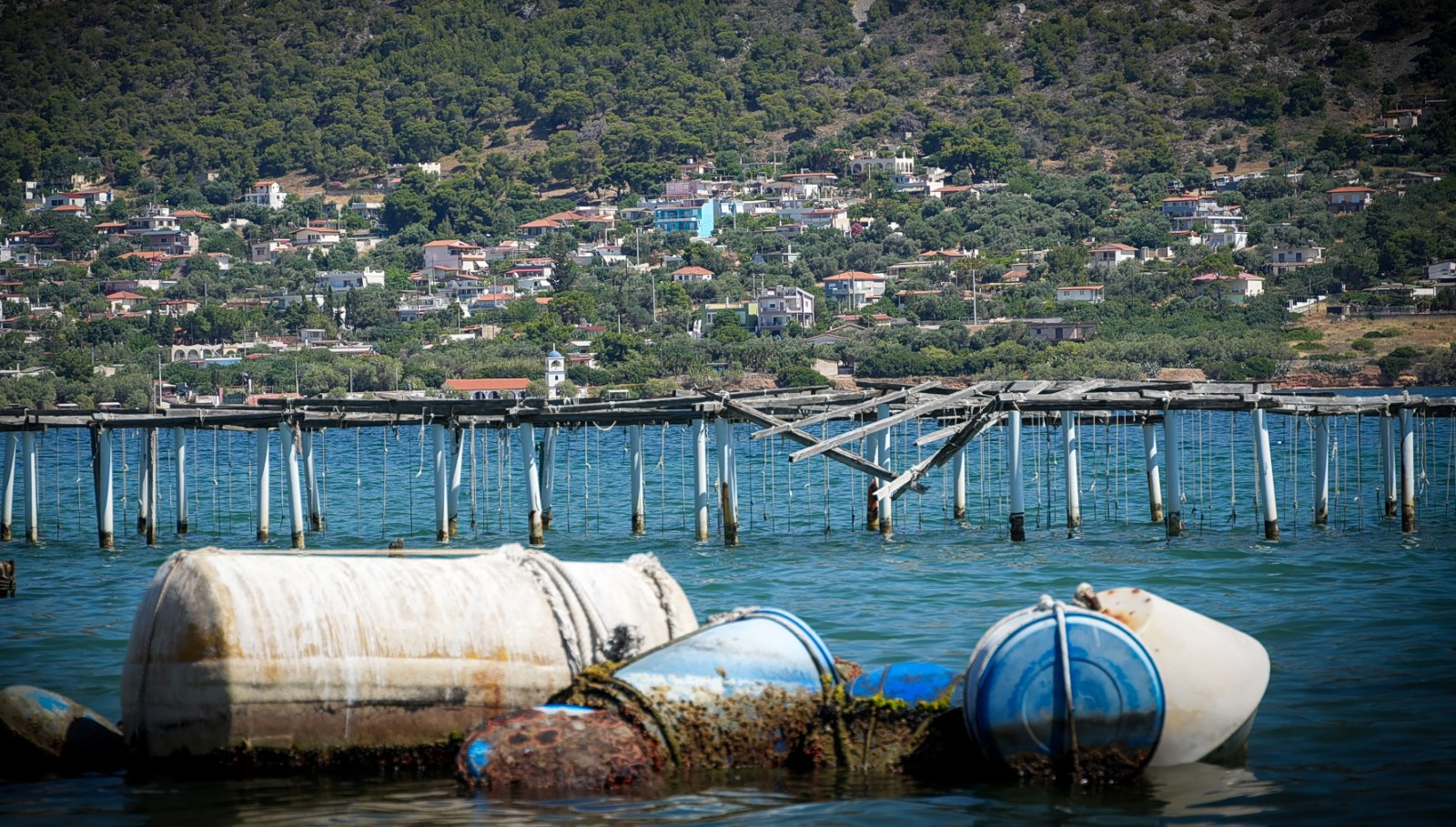
Waste from an abandoned mussel farm off Salamina, which is being loaded into trash trucks as part of a clean-up organized by the nonprofit Healthy Seas. Credit: Cor Kuyvenhoven
The Case for Reform
Xiromero, an area far from the Saronic islands on the west coast of Greece, presents a more complex view of the realities of aquaculture and open-pen fish farming. While an active community is organizing opposition against the existing POAYs, Mayor John Triantafyllakis is more measured. Talking to To Vima International Edition, he stresses that Xiromero is a relatively poor region that is battling depopulation. As he sees it, problems such as environmental pollution can and should be addressed with better regulation and monitoring, and with a strategy that seeks to balance aquaculture with other forms of development.
Some of the loudest calls for reform have come from within the aquaculture industry. Among them, the Hellenic Aquaculture Producers Association (HAPO) has long argued that incomplete zoning legislation (POAYs), slow licensing, and administrative uncertainty deter investment. Talking to TO BHMA International Edition, Apostolos Touralias, HAPO President, is adamant that the sector has been pushing not only for the final green light for the POAY framework, but also for its revision.
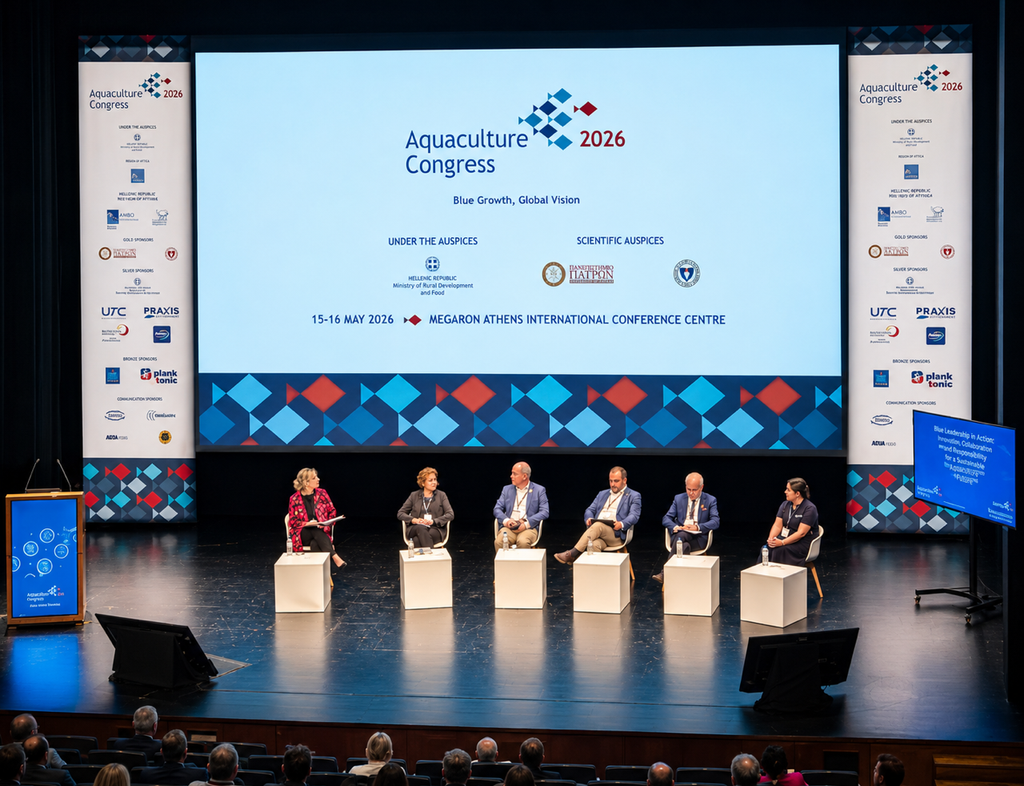
Industry leaders, government officials and researchers take part in a panel discussion during the invitation-only Aquaculture Congress 2026, organized by AMBIO at the Megaron Athens International Conference Centre in Athens on May 15–16, 2026. Credit: M Polymili
“As an industry, we have spent two years asking for a revised framework to be completed by November 2026; obviously, that’s not happening, A revision could resolve existing issues, such as matters concerning local community participation, public consultation; it could even reassess where POAYS are going to be established,” Touralias underlined. ΅We are certain that, if and when the revision process commences and assuming good faith from all parties, we can table the problems we have encountered over the last 15 years and find solutions that work for everyone”.
The issue of public consultation and the way it’s conducted has been a recurring concern for the impacted municipalities. The story of how the mayor of Poros and the municipality was informed that the POAY proposed for their island was just months away from approval, without any meaningful consultation with the local community, is telling. Koutouzis has described how he had just two days to prepare his case against the POAY and send it to Athens.
Eva Douzinas, a Greek-American whose family hails from Poros, is president of the Rauch Foundation and currently one of the most prominent voices against open-pen fish farming. She was on the island when Koutouzis got the news, and she remembers how stressful it was. “Part of the problem for local communities is that, even when they are given all of the information about proposed POAYs well in advance, the information is highly technical, relies on complicated environmental modeling, and the anticipated environmental impacts are not clearly communicated,” she says. “It’s hard for communities to engage meaningfully with the process.”
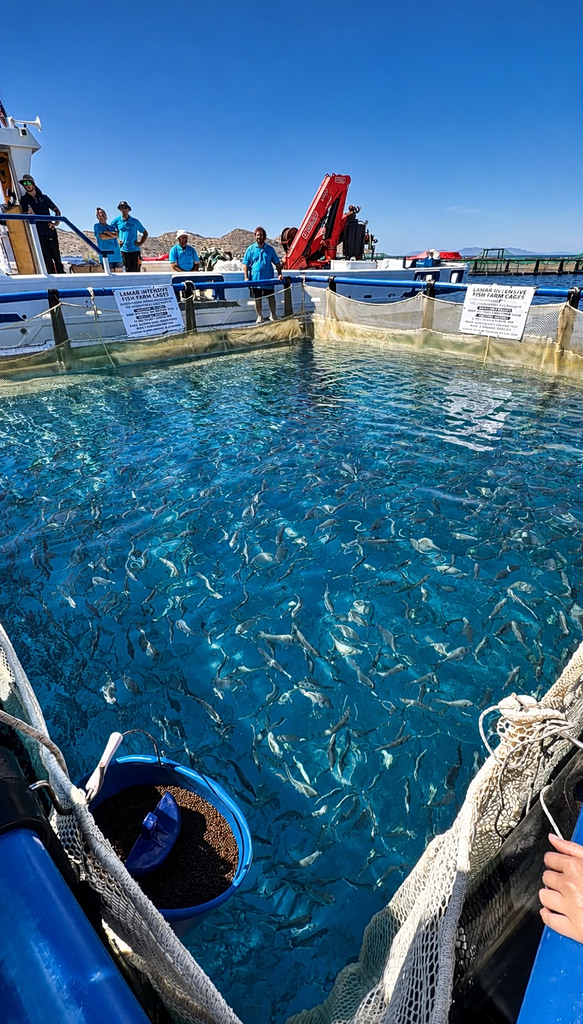
TO BHMA International Edition visits Lamar fish farm and Blutopia off the coast of Rhodes. Blutopia aims to demonstrate that low impact fish farming and tourism are compatible. Lamar operates in a Natura 2000 zone is is still waiting for the region’s POAY to be established. Credit: C Novak
A Reckoning and Fail Safes
Another point of convergence among all sides of the debate is the need to push for harsher penalties for operators that violate environmental rules or abandon equipment once they wrap-up their operations. Over the last couple of years, both the national and international media have spotlit the problem of abandoned fish farming operations, known as ghost-farms, forcing a conversation around the issue.
According to the HAPO president, the “law clearly states that a business owner who ceases operations for any reason is obliged to restore the area to exactly the condition it was in before they set the fish farm up. At least as far as moorings, cages, and equipment go. The problem is that the administrative fine for failing to do so is far too low. So, our suggestion is to make the fine a thousand times larger.”
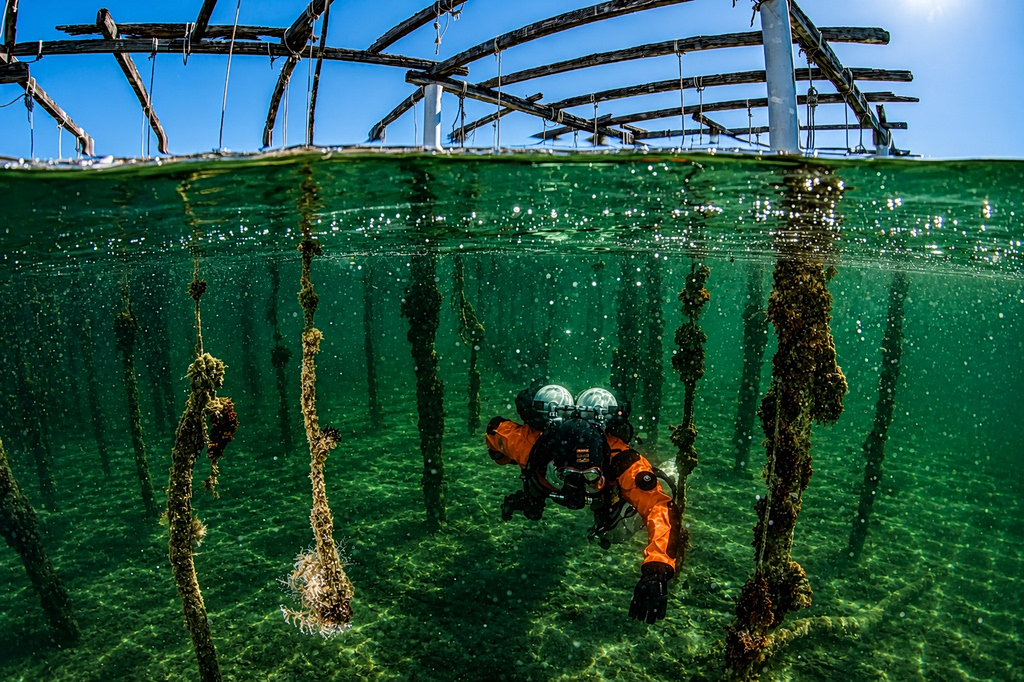
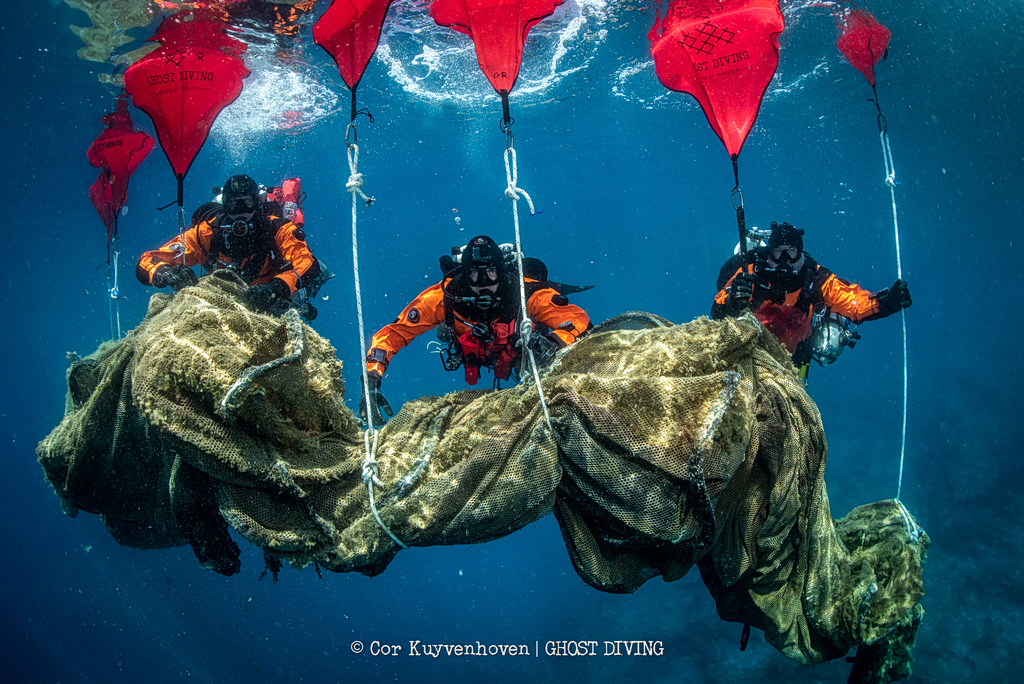
Underwater inspection and preparation for a clean-up by Healthy Seas. The clean-up was carried out with the support of Hyundai Motor Europe and in collaboration with Ghost Diving volunteers, IGMAR Group, OZON NGO, DOTANK Plus and other local stakeholders, commissioned by the Decentralized Administration of Attica and under the auspices of the Municipality of Salamina. The waste included 15.7 tons of concrete & other construction materials, 11.3 tons of plastic (barrels, boats and others), 4.8 tons of fishing nets and 4.1 tons of metal. Credit: Cor Kuyvenhoven
The NGO Healthy Seas has argued that Greece could also consider obliging companies to buy bankruptcy insurance as part of the licensing procedure, which is common in the EU context. The Secretary General for the Environment, Petros Varelidis, confirms to To Vima International Edition that a fine structure is in place, but that it is not always implemented by the relevant authorities. The ministry is open to proposals but would have to consider each one carefully.
For Touralias, tougher penalties are part of a broader argument the industry is attempting to make, regarding the sector’s intentions and stance: namely, that—unlike other producer-polluters—aquaculture professionals cannot afford a degraded environment. “There are industries that pollute, but it does not affect their end product,” he argues. “But our industry is immersed in its marine environment. That’s where our fish live and breathe; that’s where our assets are. So, if the system collapses, if oxygen levels drop, it means sick or dead fish, stunted growth, and poor production results. So even if you assume we’re all completely callous, if we want to make money as a business, we have to be the first to protect the environment we operate in, since it affects the health of our fish.”
Despite the industry’s proclamations that it relies on healthy ecosystems, critics of the industry contest it directly: reviews funded by Douzinas’ Rauch Foundation analyzing how environmental modeling has been applied to establish the fish farming and aquaculture sector in general understate its footprint rather than guard against it.
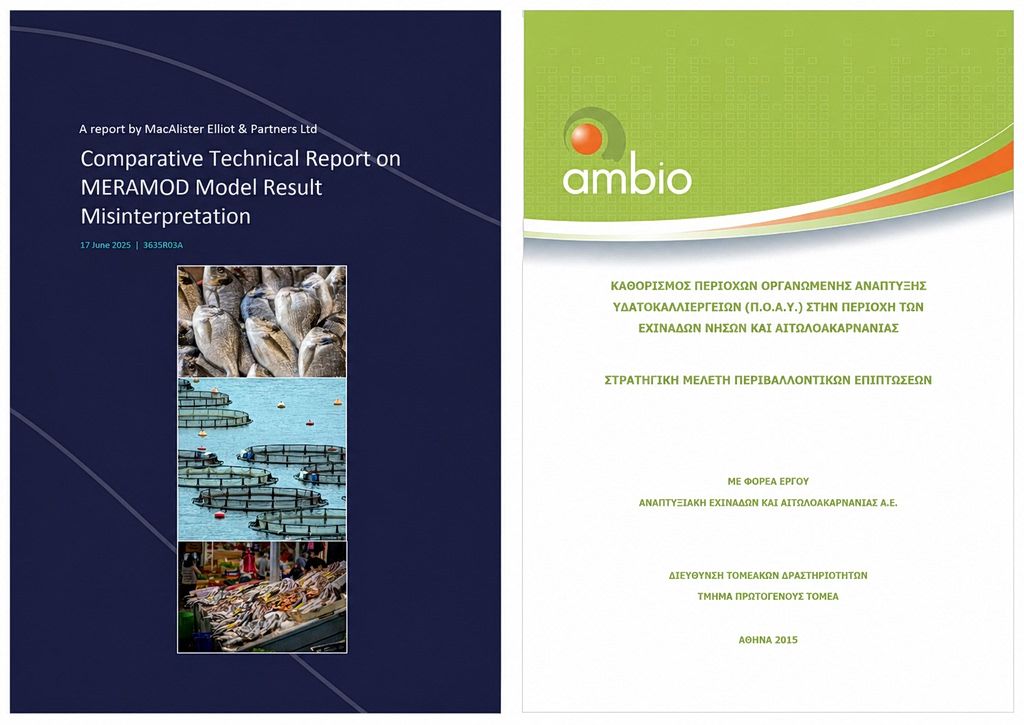
Caption: The debate over scientific modelling used to determine the carrying capacity of POAY zones has become a war of scientific reports. Eva Douzinas’ Rauch Foundation has funded technical reviews (left) contesting the environmental impact assessments (EIAs) behind Greece’s aquaculture zones, arguing they do not apply environmental modelling properly, and fail to clearly communicate to the public the inevitable level of harm to the environment. Meanwhile, the aquaculture industry stands by their research and reports, which they say have been peer-reviewed, are based on the reporting requirements at the time, are scientifically sound, and have been conducted by researchers and experts at Greece’s universities.
The Autumn Review
For over a decade, the Greek government insisted that the regulatory framework and governance of the aquaculture sector did not need reform. But now, after years of intense scrutiny, public backlash, and pressure from multiple stakeholders on every side, it appears reform is on the table.
Addressing the environmental challenges posed by aquaculture, the Secretary General Spiros Protopsaltis of the Ministry of Rural Development and Food reveals to TO BHMA International Edition that “The Ministry is working to establish the appropriate institutional tools to facilitate more effective environmental monitoring. This effort will also be supported by legislative provisions that are expected to be submitted to Parliament shortly.”
Protopsaltis also recognizes the importance of meaningful public consultation as means of combating misinformation and assuring transparency in the development of POAYs:
“In many areas, concerns about environmental impact, the scale and concentration of production, tourism, fisheries, visual impact, monitoring, enforcement and the long-term use of coastal space are genuine and legitimate. Local communities are entitled to receive clear answers based on reliable and accessible information. At the same time, parts of the public debate may be affected by incomplete information, misunderstanding of available information, or misinformation.”
He clarifies, “For example, the overall boundaries of a proposed POAY may sometimes be interpreted as an area that will be entirely occupied by aquaculture installations, although the actual zones of production may represent only a part of the wider planning area. The increase in opposition is therefore likely to reflect a combination of factors: legitimate environmental and spatial concerns, the long delays in finalizing clear spatial rules, limited trust in monitoring and enforcement, prior experiences from older or poorly managed installations, insufficiently accessible consultation documents and, in certain cases, inaccurate information.”
Protopsaltis admits that there is also a broader issue of what he calls “confidence in governance,” explaining that “When spatial-planning procedures remain unfinished for many years, this leads to uncertainty for local communities and responsible businesses alike. Clear rules and timelines, plus effective enforcement, are essential for both sides.”
The Uncertain Pathway to Growth
So how will Greece reach the goal of 5% growth set by Minister Schinas? Protopsaltis clarifies that “the proposed increase is not an annual target; it’s for 5% growth by 2030.”
Moreover, “the overall objective is not simply to produce more,” Protopsaltis, explains. Neither does it “amount to a general or automatic commitment to expand every existing facility, issue new licences in every area, or adopt a single production model, whether offshore, coastal or land-based. Any increase in production must remain compatible with the environmental carrying capacity of the receiving area, the environmental conditions attached to each license, the applicable spatial-planning framework, and the need to avoid or manage conflicts with other uses of the marine and coastal space.”
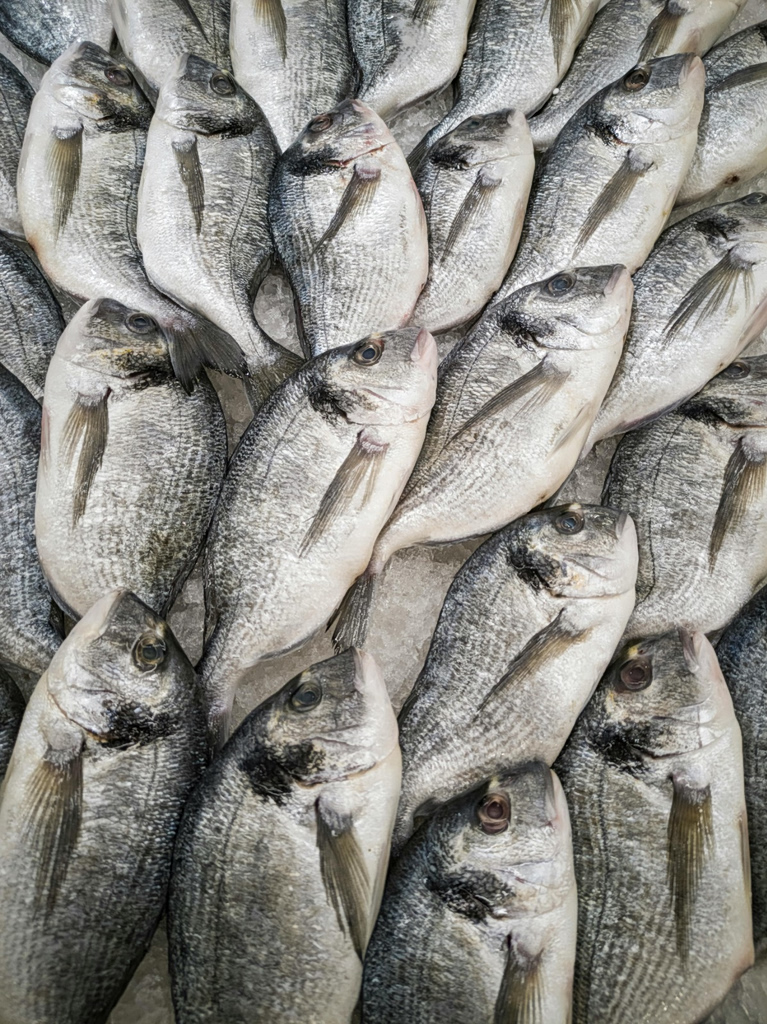
Greek farmed fish as seen at a local supermarket in Athens
Along these lines, the €4 million package that was just announced aims to support the organized operation and environmental monitoring of approved POAYs, including aquatic-environment programs, operating studies, environmental protection, and public information. Applications can be submitted until Dec. 29, 2028, and funded work must be completed by the end of 2029, Protopsaltis notes.
On the timeline for the establishment of the rest of Greece’s POAYs, the secretary general hinted that the process is bound to take time. Protopsaltis noted that spatial planning is essential “for responsible investment and for the protection of the environment and coastal areas.” They have taken longer than expected, as they are a “complex, multi-stage institutional process” which “forms part of Greece’s broader national spatial-planning framework, for which the Ministry of Environment and Energy is the competent authority.”
Moreover, the secretary general underscored that, in “areas where a POAY has not yet been approved, new licences for the establishment of aquaculture units cannot be issued.”
The ministry, Protopsaltis underlines, supports “clearer and more comparable technical requirements, reliable baseline data, better consideration of cumulative impacts at the level of a wider coastal area or POAY, and improved coordination between licensing, environmental and monitoring authorities.”
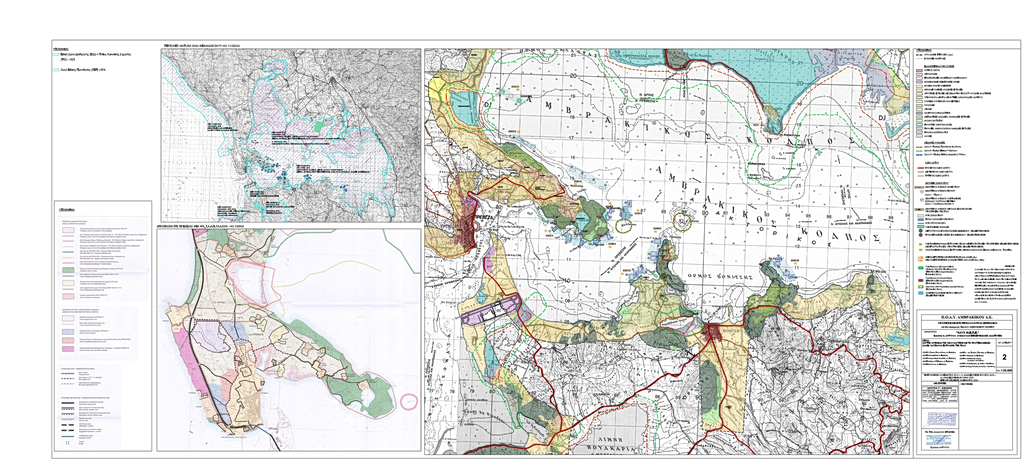
An image of the POAY zone in the Ambracian Gulf off the west coast of Greece. The zone is highly contested by the public and industry alike, as the enclosed gulf is subject to a variety of environmental pressures. The complexity of the map reveals the challenges of establishing and community POAY zones to the public. Source: The Ministry of Environment and Energy of Greece.
Warmer seas, narrower margins?
Greece’s aquaculture debate has exposed the depth and breadth of the challenges and governance failures that have plagued the fish farming sector. The Greek government acknowledges that communities have legitimate questions about consultation, environmental oversight, accountability, and the ability to shape coastline development at a local level, while also recognizing the frustrations of the industry where regulatory uncertainty threatens investment and competitiveness.
For now, the parties involved appear, finally, to be converging on the need to reform the spatial planning framework and turn the page.
But another debate—which may prove to be the most critical—is already emerging.
Scientists and industry figures point to marine heatwaves, disease and biosecurity as growing operational risks. Industry representatives say technology, veterinary management, and offshore production can help farms adapt. Yet some scientists—and even industry representatives—question expansion under environmental conditions that are increasingly difficult to predict.
So while Greece works on revamping its off-shore aquaculture governance framework, whether or not the industry can adapt to new environmental pressures may ultimately become the industry’s defining challenge.
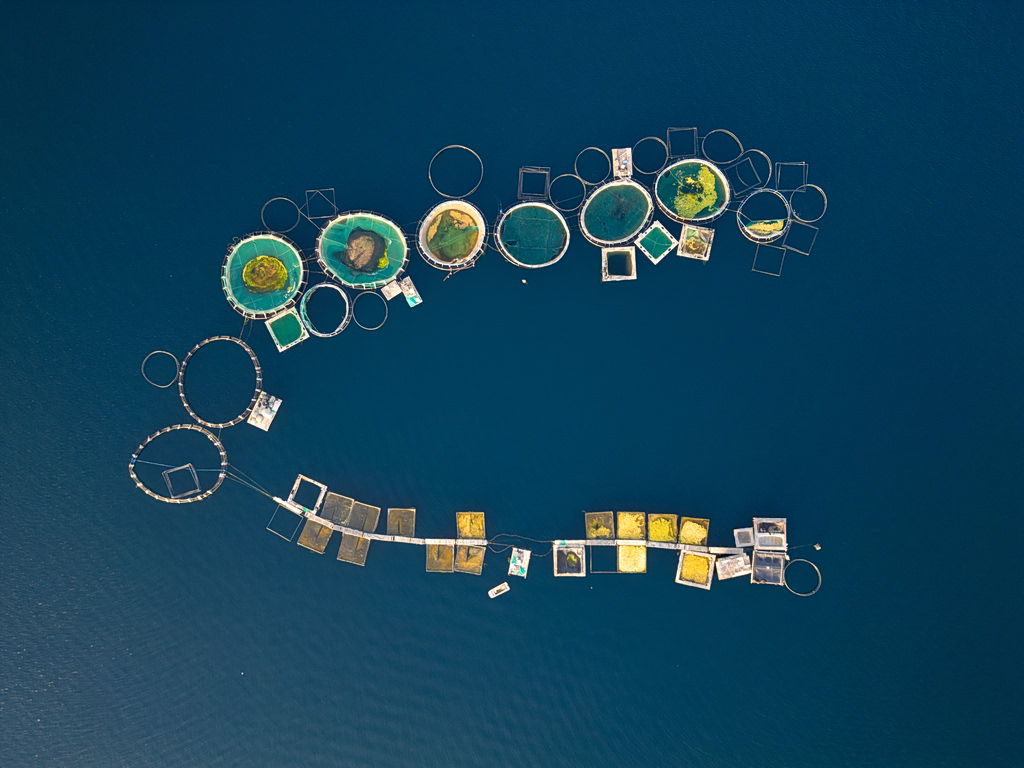
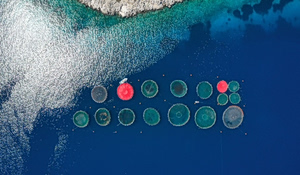
Aerial view of aquaculture fish farms in Sithonia, Greece.