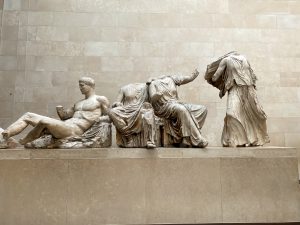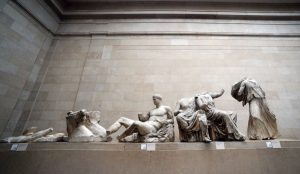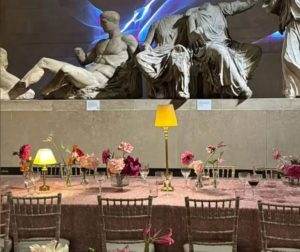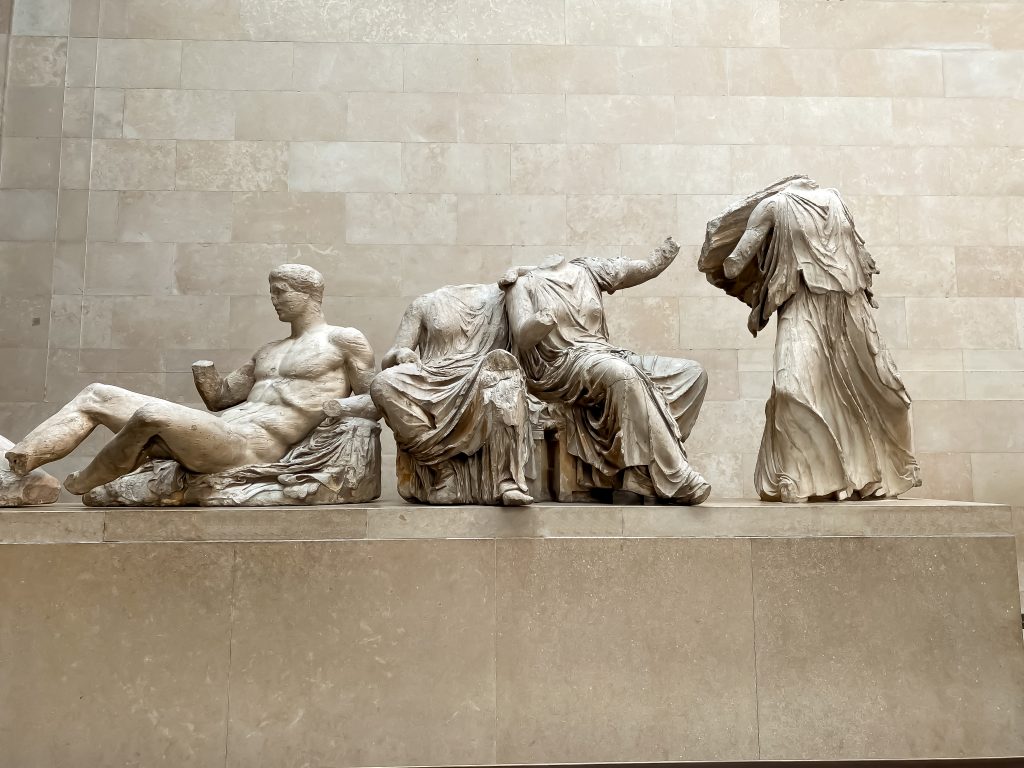

The British Museum has a “moral obligation” to acknowledge that the Parthenon Sculptures belong to Greece, declares Victoria Hislop, announcing through TA NEA her joining of the Parthenon Project, the British organization that in recent years has been systematically promoting a mutually beneficial solution that would lead to the permanent reunification of the classical masterpieces at the Acropolis Museum. The award-winning British author—who has been a naturalized Greek since 2020—states that she will work toward a “win-win” agreement between the two countries and criticizes the president of the London institution, George Osborne, for having so far “achieved nothing except creating false hopes.”
At the same time, through interventions in TA NEA, the famous British author and actor Stephen Fry, the two presidents of the Parthenon Project—and leading British politicians—Lord Ed Vaizey and Baroness Thangam Debbonaire, along with the organization’s founder, Giannis Lefas, present their proposal for how the Sculptures could be returned.
The author of The Island—and ten other bestsellers translated into 40 languages—first publicly supported repatriation in March 2021, after being “outraged” when reading an interview of Boris Johnson in TA NEA, in which the then-British Prime Minister ruled out the return of the artifacts to Greece. Since then, her passion for reuniting the unparalleled treasures designed by Phidias has “grown enormously,” as she says. “I am thrilled to join the advisory board of the Parthenon Project. Giannis Lefas’ invitation was a great honor for me. I hope to be able to support the campaign for a mutually beneficial solution,” she emphasizes in TA NEA.
“I firmly believe the British Museum has a moral obligation to recognize that Elgin had no legal right to remove the sculptures from the Parthenon and, consequently, to acknowledge that it possesses stolen objects,” Hislop continues, arguing that “even without the historical background of theft and vandalism, this is not an ordinary repatriation case. As the Greek Prime Minister has said, it is as if the British Museum were exhibiting half of the ‘Mona Lisa’ while the other half is elsewhere. The Sculptures must be displayed together, under the brilliant Athenian light.”
The Arrogance of the Museum
The distinguished author and member of the Royal Society of Literature in the United Kingdom notes: “I have no hesitation in speaking openly about the British Museum’s arrogance. Its stance remains unchanged, despite evidence of Elgin’s vandalism, despite the thousands of artifacts recently stolen by one of the museum’s curators—many of which have not been recovered and the perpetrator has yet to be prosecuted—and despite the significance of Anglo-Greek friendship, which seems to hold no value for them.”
According to the 66-year-old Hislop: “The initial enthusiasm for talks between Britain and Greece aimed at finding a solution has faded. Not only mine, but also that of everyone who wants reunification.”
She explains that “it seems no real progress has been made in the four years since talks began (as revealed by TA NEA). Four years of talks? Are we serious? The Chinese build entire cities in 18 months. Why? Because they want to!”
Referring to the well-known “ping-pong” between the British government and the Museum that houses the Marbles: “The British Museum claims the decision must be made by the government and that a 1963 law prevents it from acting. Yet we all know that a law can be changed very easily. They must be dizzy from all these circles they keep going through!”
She then targets the Museum president: “I was very confused by Osborne’s apparent optimism in the Sunday Times last Sunday. There is no evidence that he has achieved anything, except to cultivate false hopes. Unless, of course, they are going to announce that the British Museum has decided to do the right thing. That is the only reason I can think of for such a display of self-satisfaction.”
“This issue is not a joke,” emphasizes the honorary member of the National Society of Greek Writers. “It genuinely concerns the Greek people—and not only them. Many Britons feel ashamed of the outdated stance of the British Museum. The Sculptures belong to the world’s heritage. In a sense, they belong to all of us, but their physical presence belongs in Athens, where they must all be together.”
She concludes: “By joining the Parthenon Project, while also remaining a member of the British Committee for the Reunification of the Parthenon Marbles (BCRPM), I will continue to strengthen our common struggle with even greater passion and determination.”
Giannis Lefas
“It is an honor and a special privilege for me to welcome Victoria Hislop to the Parthenon Project. Although not born Greek, she became Greek in heart and mind. She has managed to express the feelings, dreams, and aspirations of Greeks in the best possible way. Her prior significant contribution to the reunification effort will continue with new energy as we look toward the future,” said Giannis Lefas, founder of the Parthenon Project, to TA NEA.
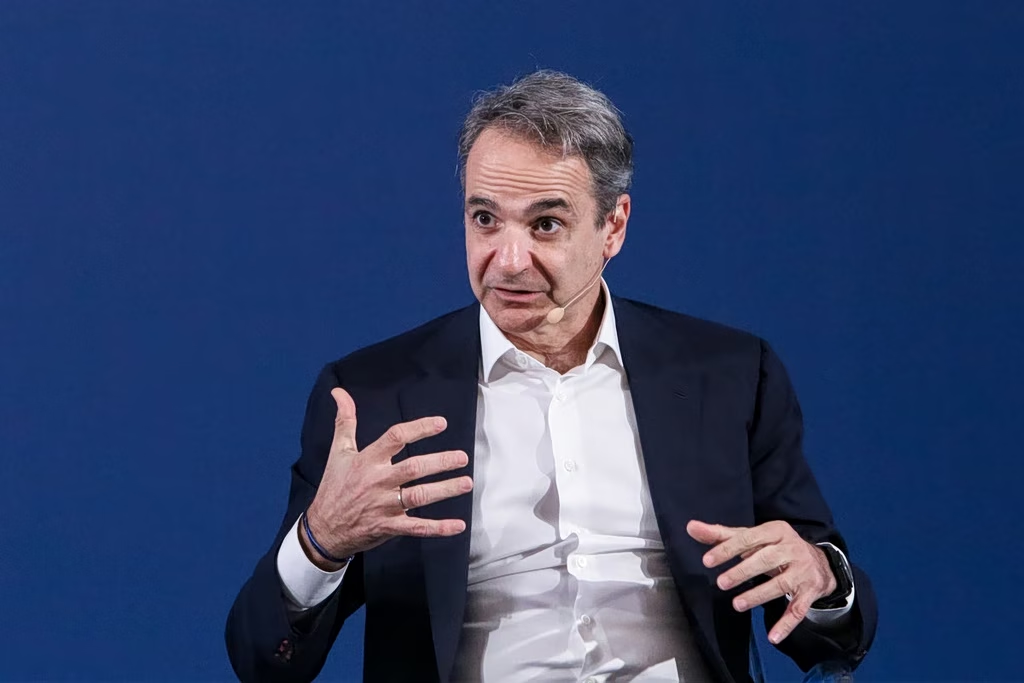
Speaking from Oxford earlier this month, Prime Minister Kyriakos Mitsotakis responded to TA NEA: “Not yet,” when asked whether he is optimistic about a positive outcome in negotiations with Osborne.
A few days earlier, TA NEA revealed that the president of the British Museum proposed transferring 20% of the Sculptures—specifically frieze stones—to Athens for a short period.
Lefas noted:“We are at a crossroads where important decisions must be made, as we chart the course for the next hundred years. The redesign and reconfiguration of the British Museum’s West Wing, where the Parthenon Sculptures are currently housed, presents both a unique opportunity and a threat. The opportunity is that, due to the refurbishment of the Duveen Gallery, the Sculptures can be reunited permanently at the Acropolis Museum. This is the only logical and fair solution. The alternative—and here lies the threat—is further fragmentation of this unparalleled work of art. That would be a terrible outcome for all of us.”
He added: “It is our duty to reunite and take advantage of opportunities for collaboration, not fragment them. We hope to cooperate with Greeks everywhere and our numerous British friends to do what is right. To do the best for our children and future generations.”
The Latest Poll
In the latest UK poll on the issue (last September, by JL Partners on behalf of the Parthenon Project), most Britons clearly supported the return of the Sculptures. 61% of respondents who were shown photos of the artifacts said they should be returned to Greece unconditionally, while 67% stated that their repatriation would reflect British values and highlight the country’s role as a leading force in cultural diplomacy.
The Parthenon Project aims for the permanent reunification of all the Sculptures in Athens and the organization of periodic exhibitions with other Greek artifacts at the British Museum in a gallery to be named the Prince Philip (or King Charles) Hellenic Gallery. “The philosophy of our proposal is based on the principle of ‘agreeing to disagree’ (to circumvent legal ownership challenges), adopting a ‘win-win’ approach (as both countries need an acceptable and beneficial narrative), and a ‘cultural partnership’ (which ensures a continuous flow of ideas and collaboration),” Lefas emphasized.
“We also propose a dynamic fundraising campaign, if both sides develop a sustainable collaboration, which would be attractive to donors worldwide. We believe these components can pave the way for the definitive resolution of this longstanding issue.”