
 Μake us preferred on Google
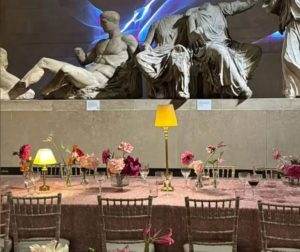
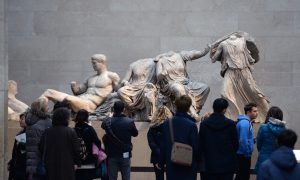
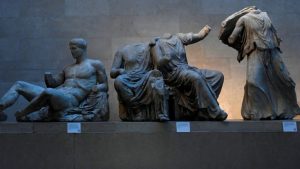
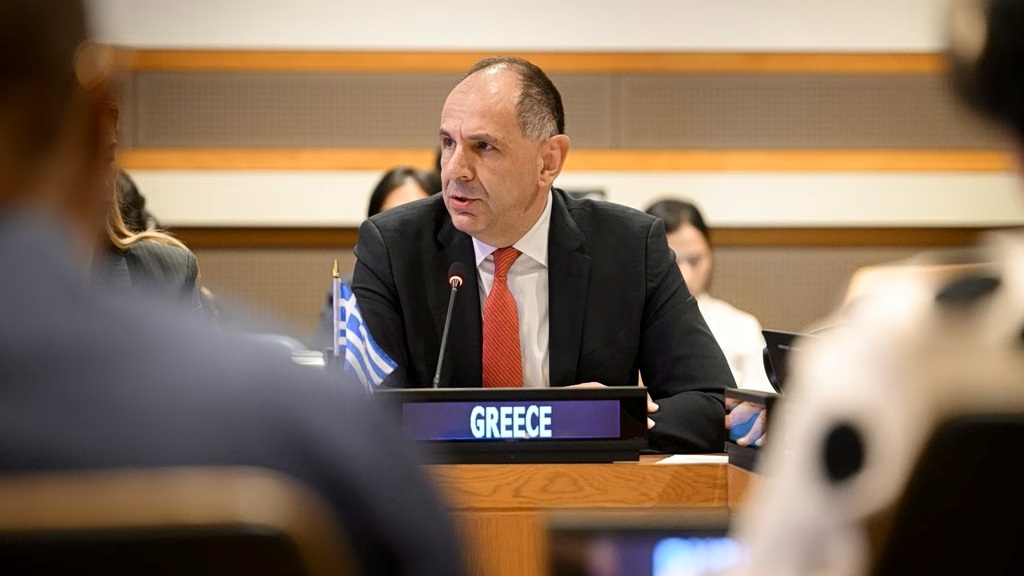
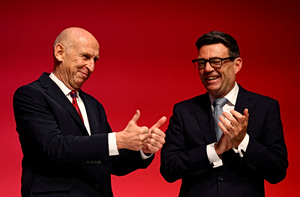
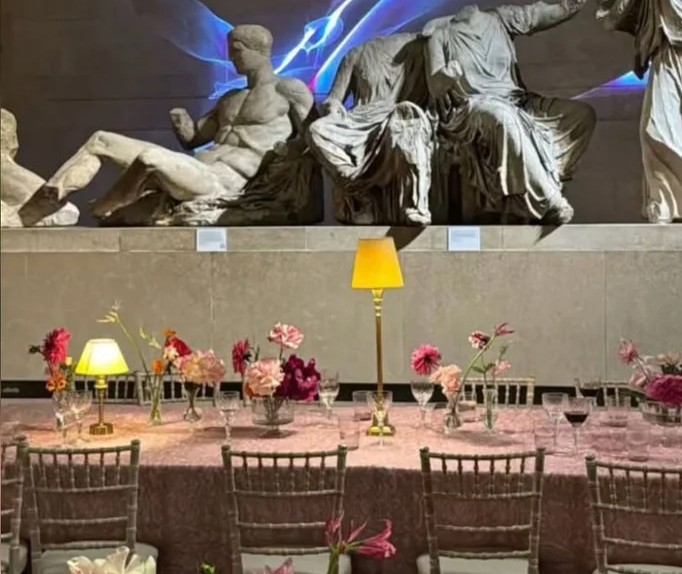
 The British government has expressed a renewed willingness to address the longstanding debate over the Parthenon Marbles, according to the country’s new Minister of State for Culture, Ian Murray, in an exclusive interview with Ta Nea.
Asked whether he is optimistic about finding a mutually beneficial solution for the classical masterpieces removed by Lord Elgin nearly 220 years ago, Murray stated plainly: “I am looking for solutions to all the problems that arise.” He added that the government “will continue to work on resolving all the issues we face, which are many. Certainly, this includes the Parthenon Marbles.”
The Scottish Labor politician, who assumed office in early Sept., did not specify the type of solution he envisions. Nevertheless, his commitment to engaging with the matter marks a clear departure from his predecessor, Chris Bryant, who in May had insisted that the UK government “is not involved in discussions regarding the Parthenon Marbles” and had “no intention of changing the law” to allow their return.
Bryant had also dismissed the possibility of permanent or indefinite loans, suggesting that the artifacts could only be sent to Athens under a temporary “open individual export license” granted by the UK for up to three years.
Two months later, another culture minister, Baroness Fiona Twycross, left a narrow window open for loans but only if Greece provided guarantees for their eventual return to London. In contrast, Murray, the UK’s most senior culture minister, indicated a willingness to actively engage in resolving the bilateral dispute.
A year earlier, UK Culture Secretary Lisa Nandy had told Ta Nea that she was determined to cooperate with the Greek government “to resolve” the issue, emphasizing the desire for dialogue and a long-term solution. Yet, no official government-to-government negotiations have taken place to date, with Greece’s interlocutor remaining the British Museum chairman, George Osborne.
According to Ta Nea, Osborne admitted last June that “the agreement with Greece regarding the Marbles is 95% complete,” adding that the remaining 5% “is the most critical and it is unknown when, or if, it can be resolved. But we will try, and I hope we succeed.”
Cultural Relaunch in Europe
One of Prime Minister Keir Starmer’s top priorities since taking office in July 2024 has been to “relaunch” the UK’s relationship with the European Union. Asked how this ambition might play out in the cultural sector, Murray highlighted recent agreements enabling UK artists to tour EU countries without obstacles—a development of “utmost importance for the British music industry and its artists.”
He further emphasized the government’s focus on cultural dialogue and exchanges with European partners, describing them as a core area of sustained effort. “The relaunch is already underway. I believe the UK has reconnected with Europe and the EU, and I hope this brings mutual benefits,” he said.
Looking ahead, Murray outlined eight key areas of development in the Labor government’s strategy, including cultural and creative industries. “The UK possesses one of the world’s leading creative sectors, admired and emulated globally. Our cultural plan aims to strengthen these industries further and enhance their already significant contribution to the national economy,” he stated.
Concluding the interview, Murray emphasized his personal commitment: “My first priority is to ensure that we can implement this vision. We are determined to work closely with the industries themselves and their various sectors to achieve it.”