Wool, silk, and cotton carry landscapes within them—climate, economies, and the movements of populations across centuries. In today’s accelerated world of industrial production, these practices move in the opposite direction. They are manual, embodied, and demanding: requiring physical presence, repetition, endurance, sharp eyes, and hands that remember.
It is precisely for this reason that they are re-emerging—not as relics, but as spaces for reflection on what it means to produce, to create, and to belong. Within this context, a new—and at the same time ancient—generation of creators and artisans is reinterpreting tradition, insisting on continuity without falling into replication.
Aristidis Tzonevrakis – The Tailor of Memory
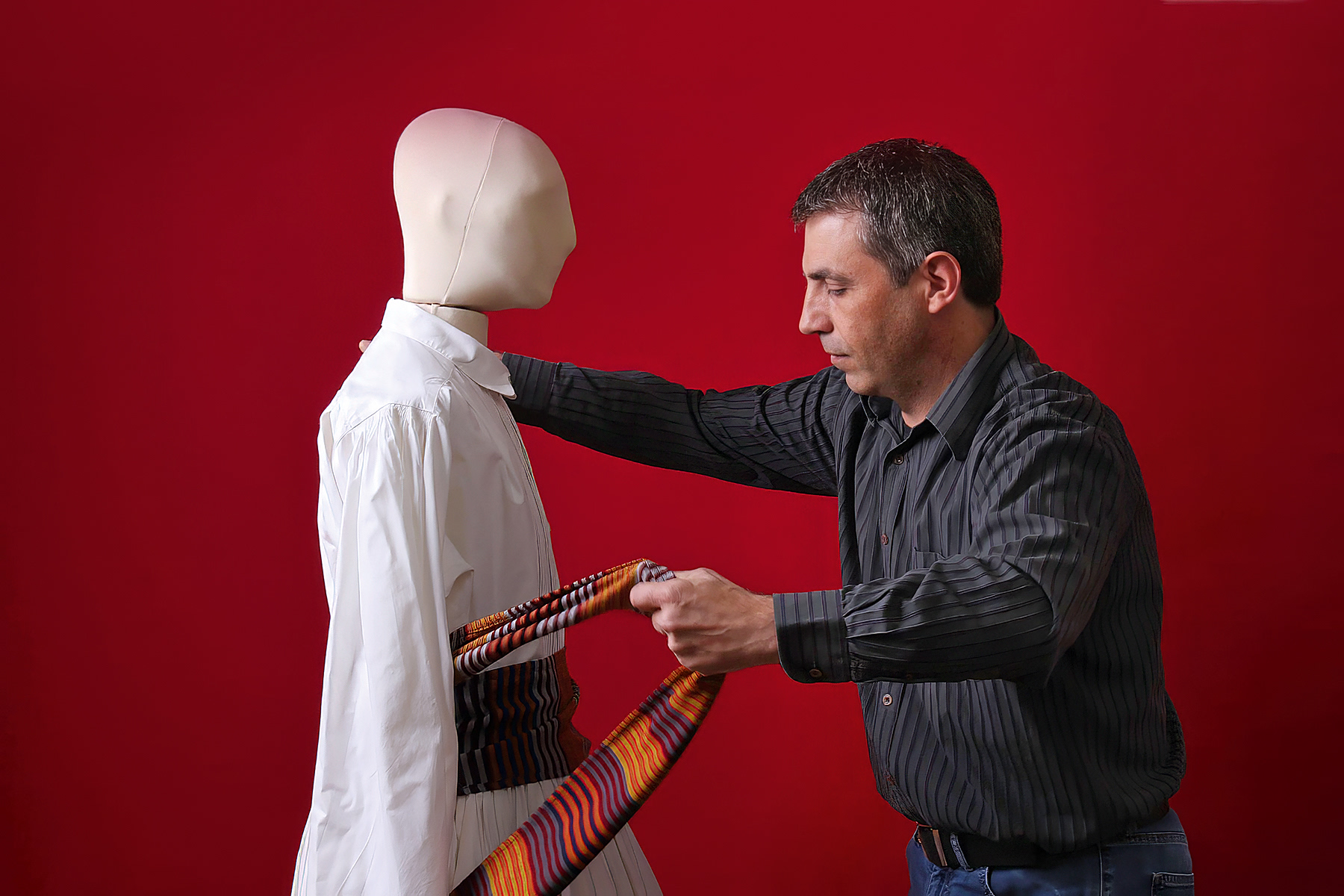
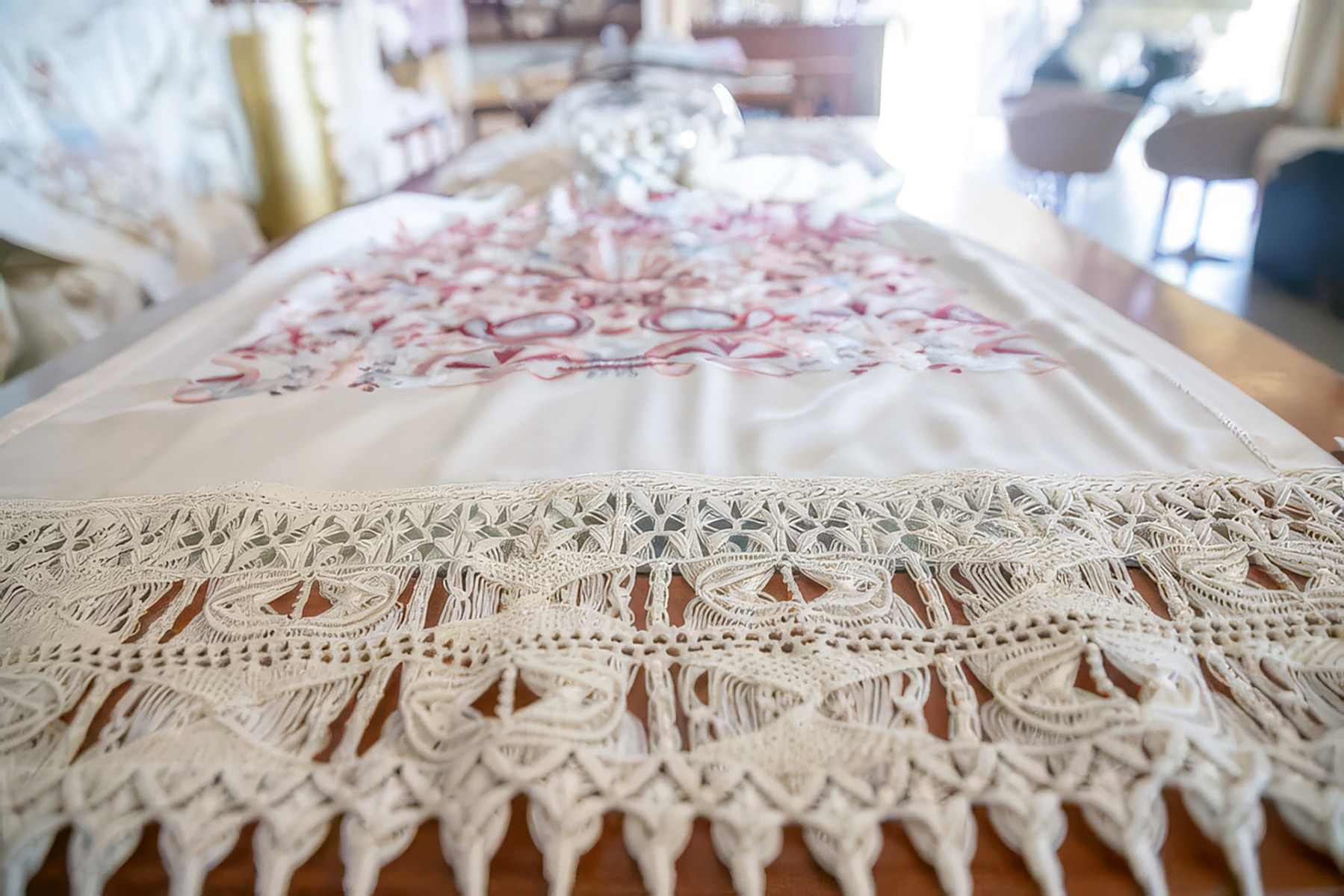
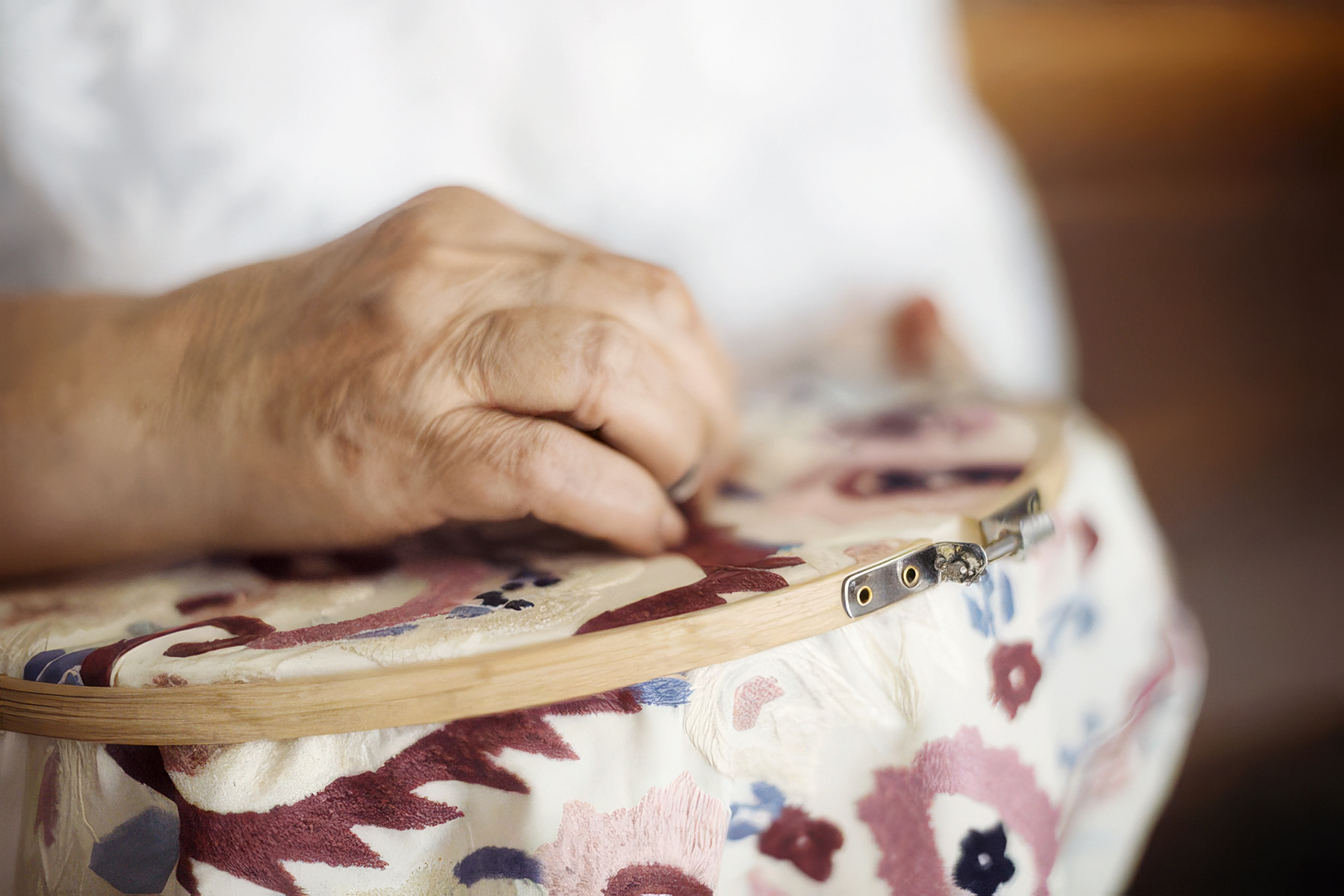
At the “Aristotechnima” workshop in Argos, Aristidis Tzonevrakis continues a craft that for years was largely confined to museum archives. A tailor specializing in traditional Greek garments (known as a “terzis”), he draws from the Costume Collection of the Peloponnesian Folklore Foundation and trained under master craftsman Konstantinos Gikas. Tzonevrakis treats clothing as a vessel of historical memory that remains active in the present.
In 2021, during the bicentennial celebrations of the Greek Revolution of 1821, he created the doulamas (a traditional ceremonial coat) worn by Gianna Angelopoulos-Daskalaki during the March 25 national celebrations marking Greece’s independence anniversary.
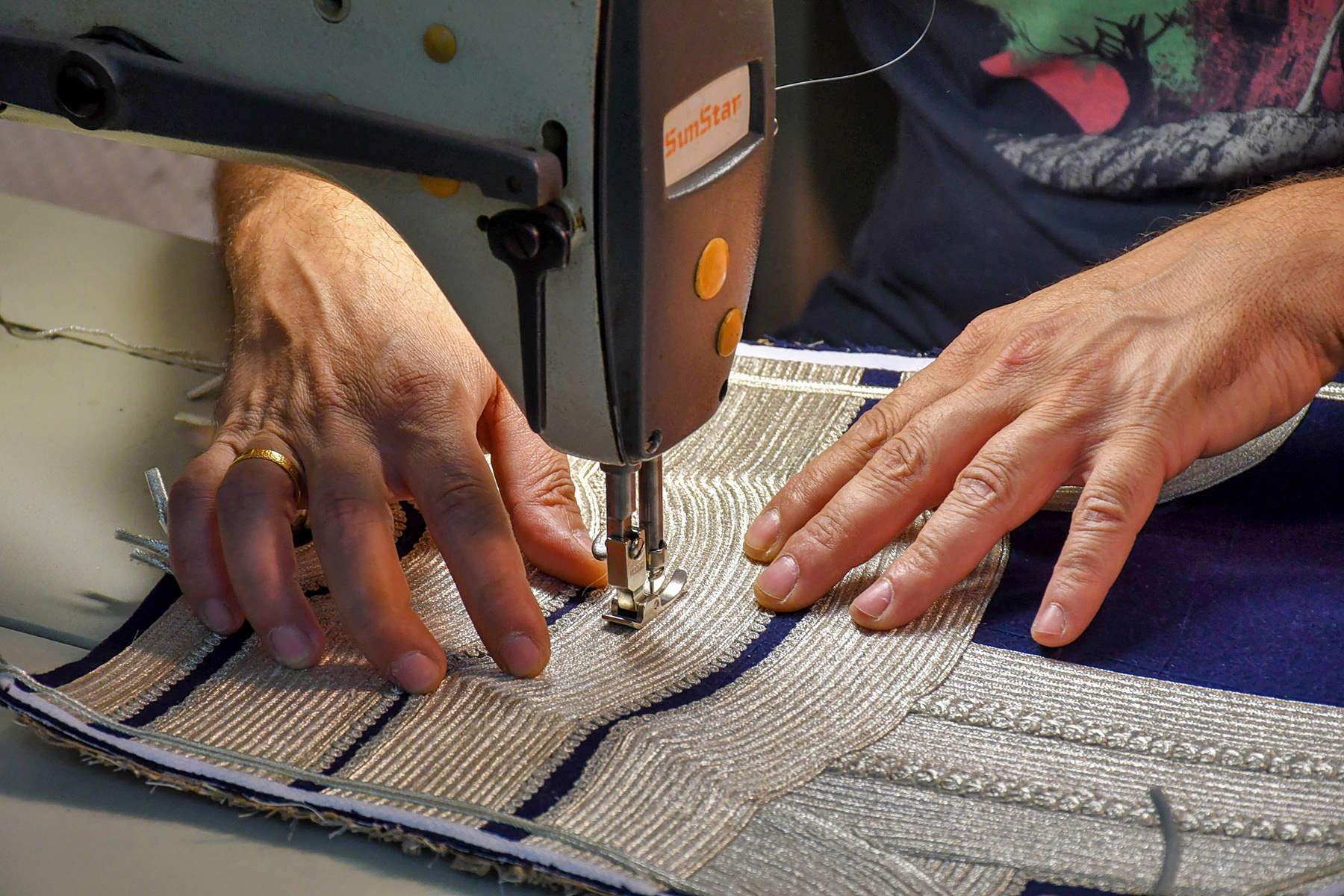
His work extends far beyond that moment. As part of Dior’s “Cruise 2022” collection, presented at the Panathenaic Stadium in Athens (a historic stadium built for the first modern Olympic Games in 1896), he contributed to the creation of the “Greek Bar Jacket,” where European haute couture intersected with Greek traditional dress.
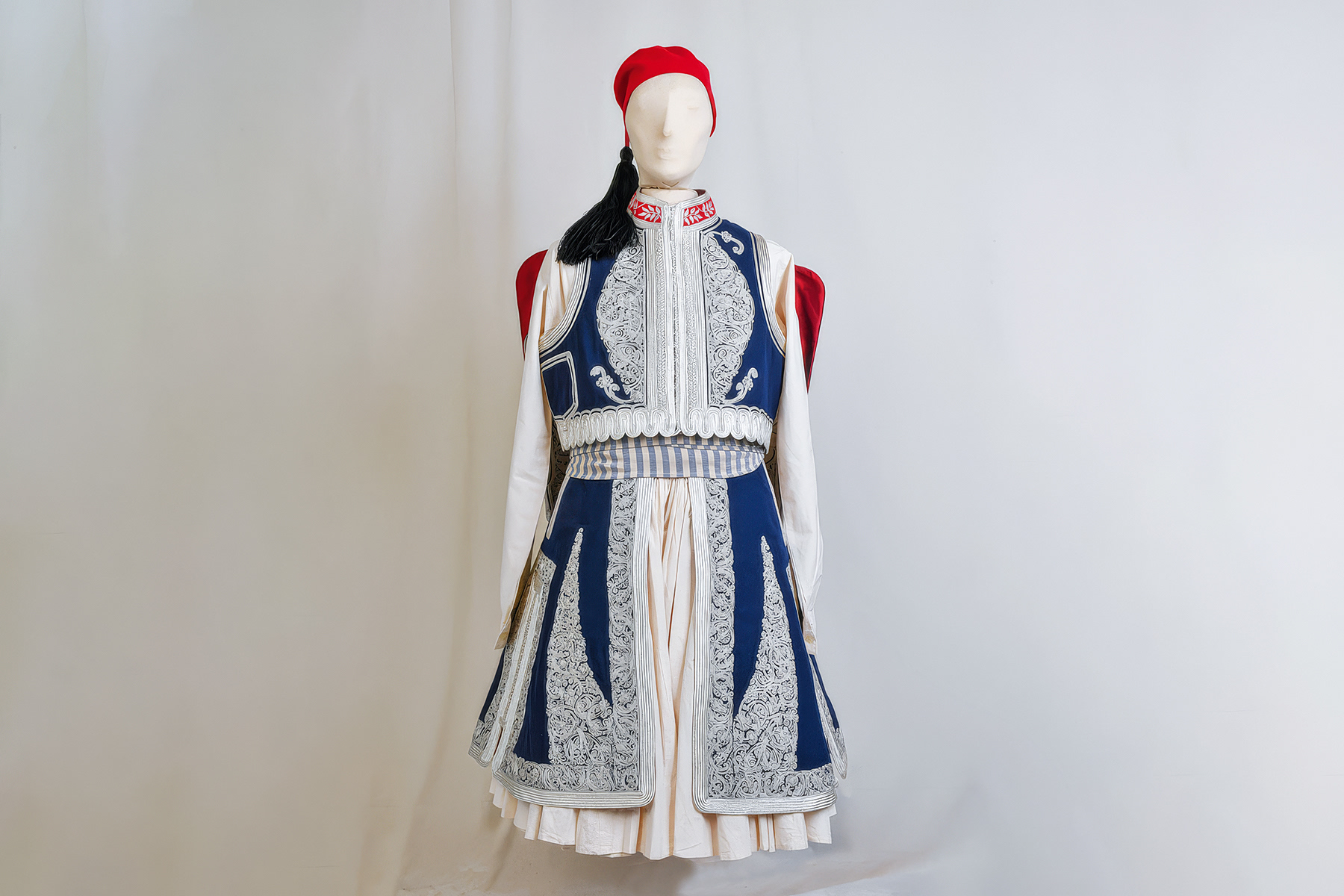
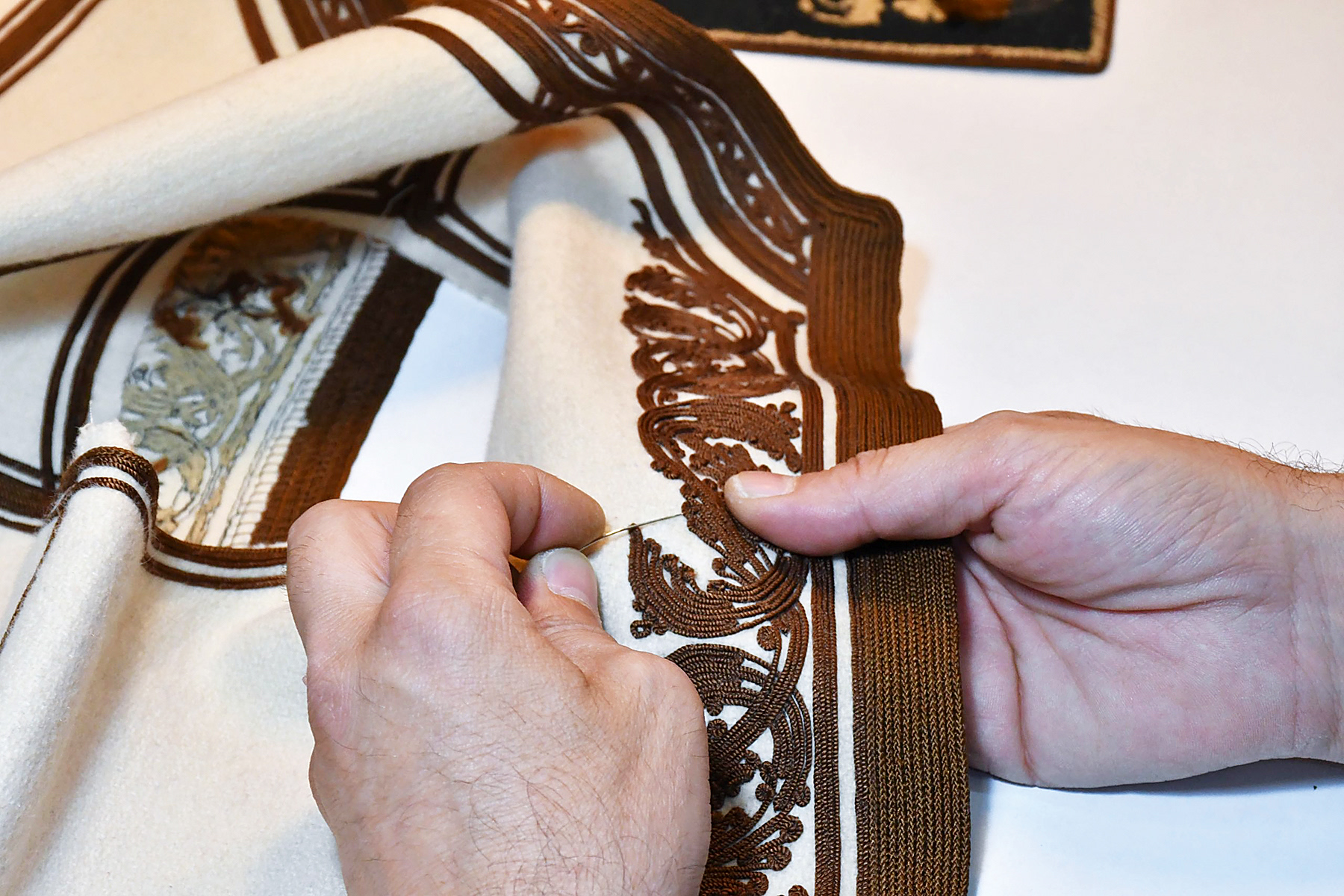
In his practice, embroidery is not decoration but language—a method of translating tradition into the present. Each motif is recomposed rather than blindly reproduced. The difficulty of the materials, the precision of the gesture, and the responsibility of continuity form a field of work demanding patience, focus, and time.
Alexandra Bissa – Architect of the Woven World
Alexandra Bissa redefines weaving through the encounter of the handmade and the digital. Working with an electronic loom, she translates computer-generated designs into woven surfaces, where technology does not replace the hand but extends it.
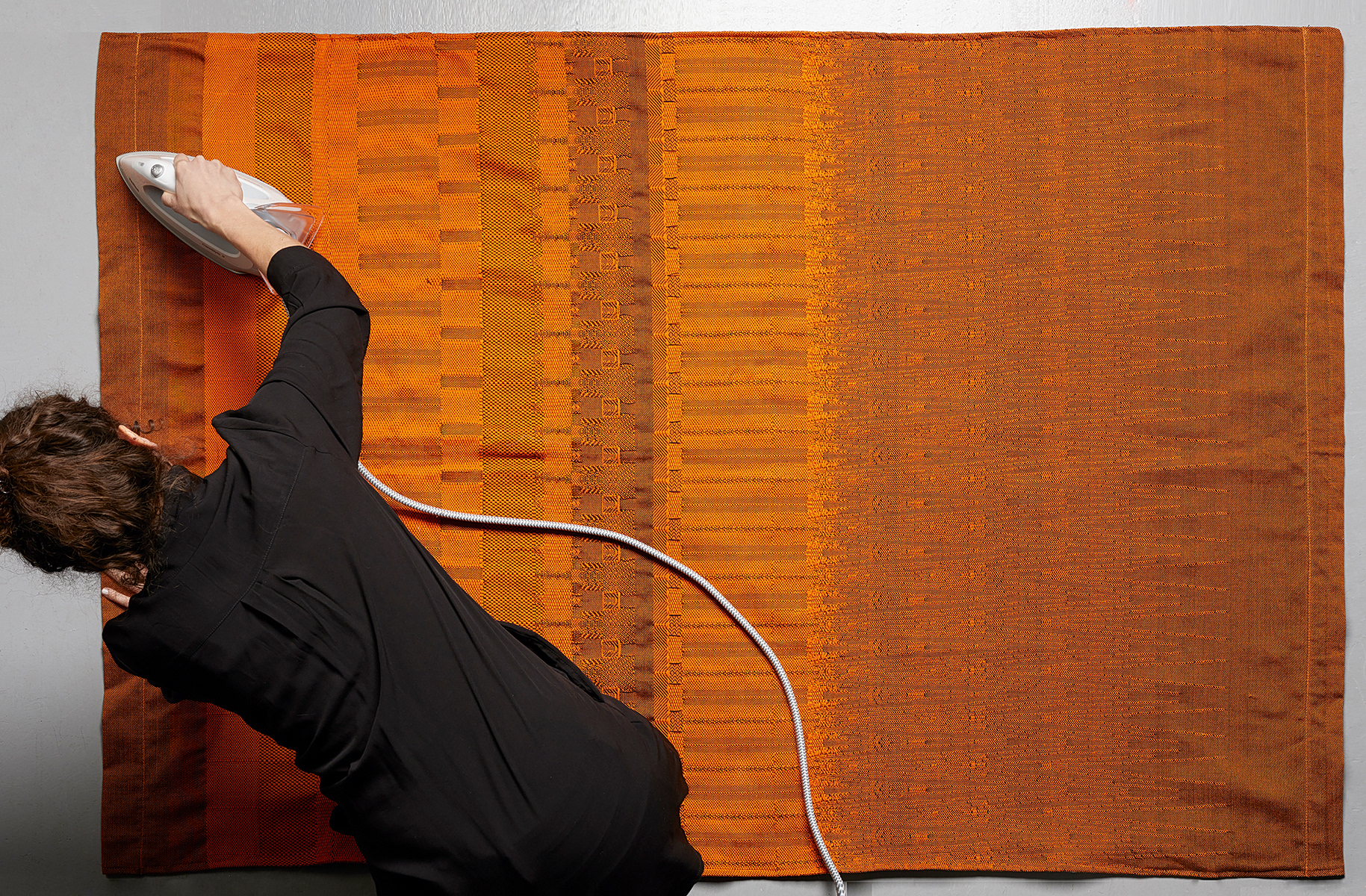
With studies in interior architecture at the Technological Educational Institute of Athens and a postgraduate specialization in textile design in London—where she trained in both electronic loom technology and traditional weaving techniques—she has developed a practice balancing design precision with manual discipline.
Her personal history is also tied to Metsovo, the mountainous region in northwestern Greece from which her family originates. There, through her aunt, she first encountered the traditional loom and retains vivid memories of her grandmother’s textiles in a time when weaving was still part of everyday life before gradually disappearing from the local economy.
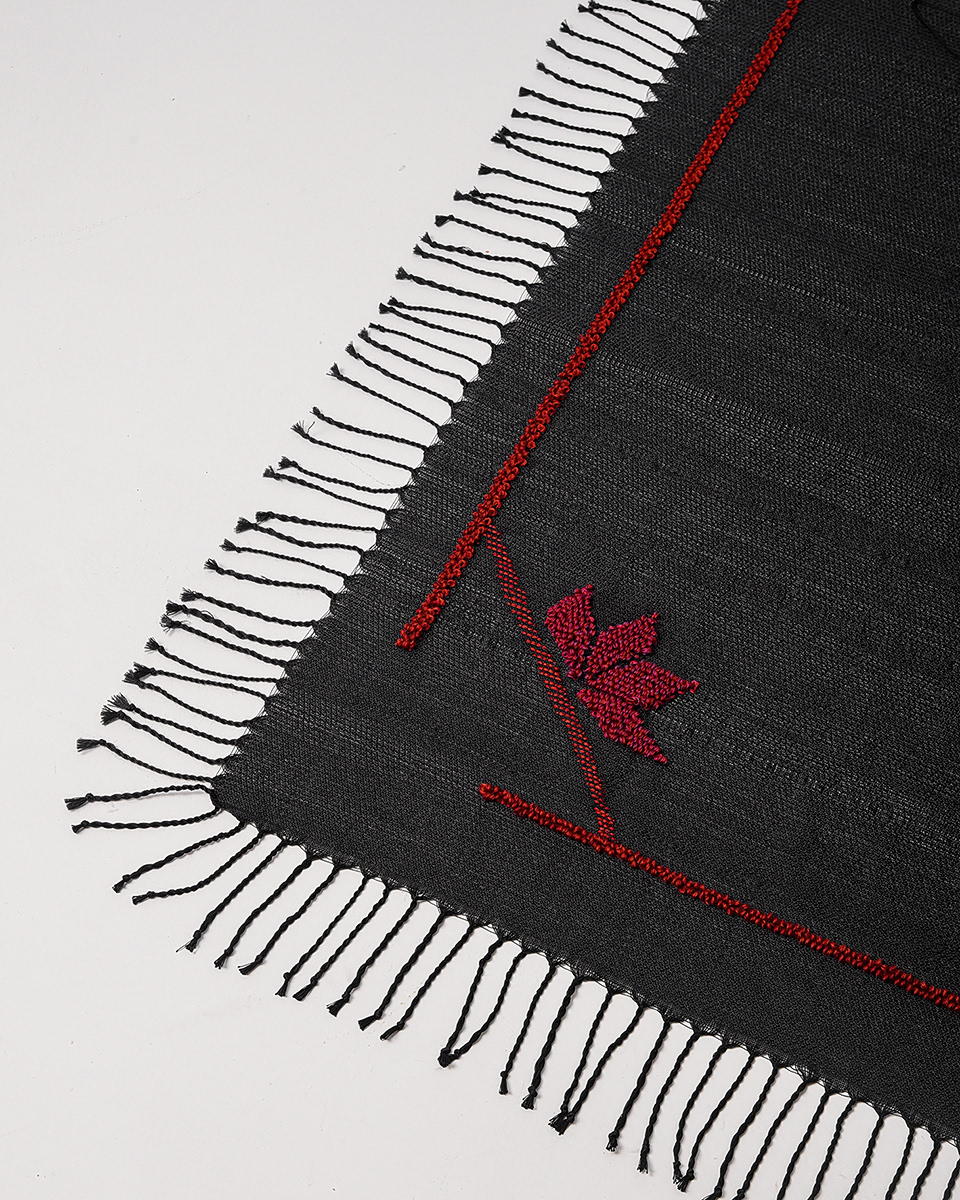
Today, she produces small series or unique pieces made from natural fibers, ranging from garments to throws, scarves, and cushions. She has collaborated with brands such as Zeus+Dione, with her double-sided wool pochets among her most distinctive creations.
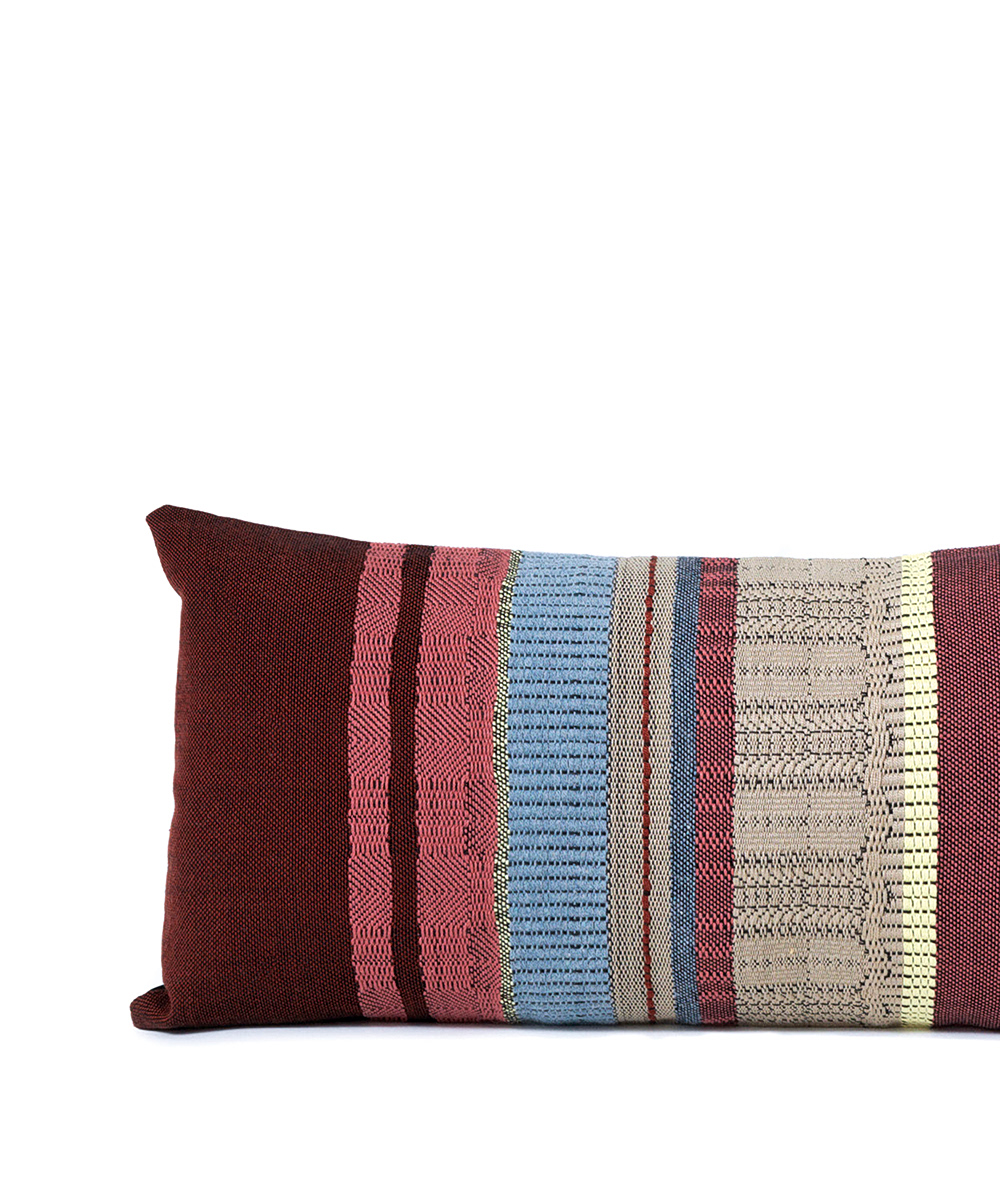
Her work traces the transition from the traditional wooden loom of rural Greece to industrial and now digital weaving, while preserving weaving’s essence as a physical, demanding, and fundamentally design-driven act.
Kostantinos Mouchtaridis – Silk Supplier to Dior
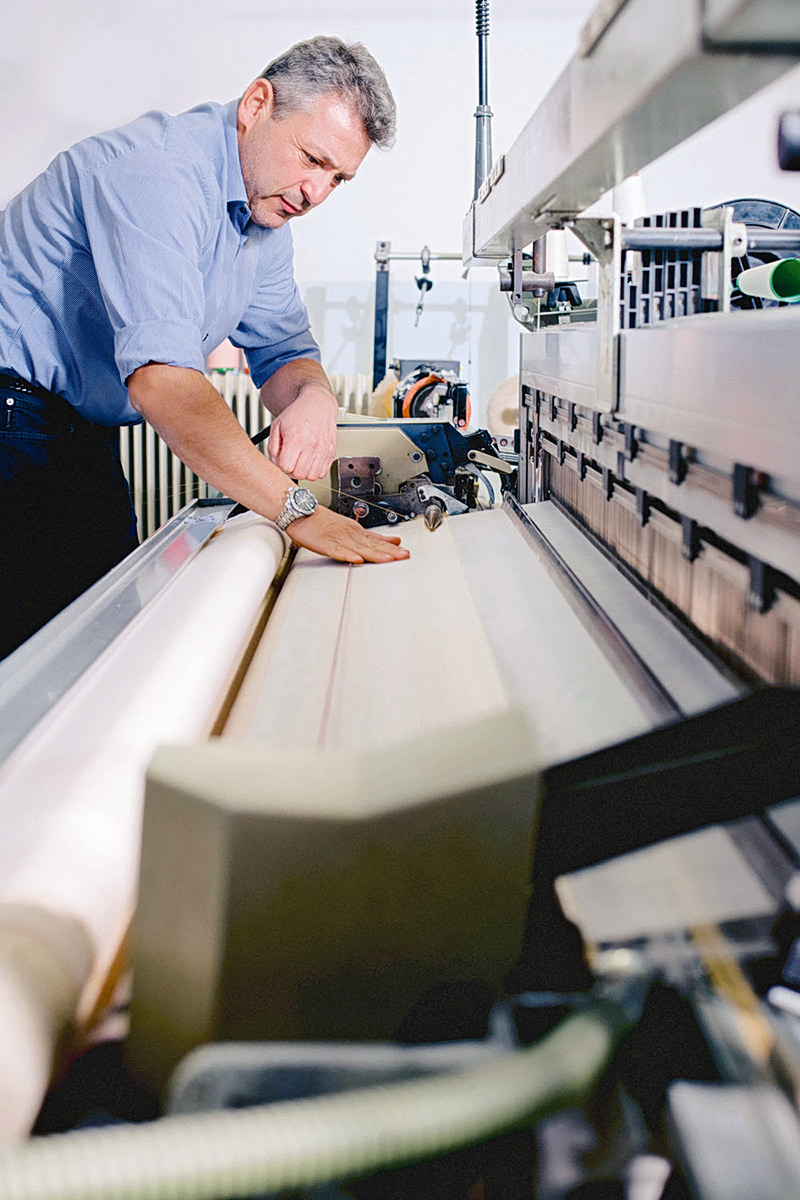
In Soufli, a town in northeastern Greece that lives and breathes silk tradition, Kostas Mouchtaridis continues a family legacy that began in 1963 when his father, Thanasis, founded Silk Line. What started as a small workshop with a single loom producing just 15 meters of fabric per day gradually evolved into a full-scale enterprise.
A pivotal moment came after a trip to Japan in 1978, when the family fully committed to silk production. By 1993, operations had moved to privately owned facilities outside Soufli, developing into a modern silk fabric and thread manufacturing unit.
Kostas Mouchtaridis later brought a new strategic vision and outward-looking approach, placing Silk Line at the center of international collaborations—most notably its participation in Dior’s “Cruise 2022” collection. The first contact with the French fashion house came in 2020, when Maria Grazia Chiuri visited the Soufli factory and selected fabric samples, integrating Greek silk textures into a global haute couture narrative.
Among the selected materials were classic pied de poule patterns reimagined with silk and metallic thread, as well as traditional “spathoto” weaves in gold and ivory variations—already developed through collaborations with Zeus+Dione and experimental loom work.
Virginia Matseli & NEMA – A Guardian of Textile Heritage
The story of Virginia Matseli highlights preservation as a collective act, through the revival of the historic Mentis-Antonopoulos Silk Mill (NIM.A.) in the Athens neighborhood of Petralona. The project was carried out under the auspices of the Benaki Museum, aiming to save an entire industrial world that collapsed with the closure of the two factories in 2011 and 2014.
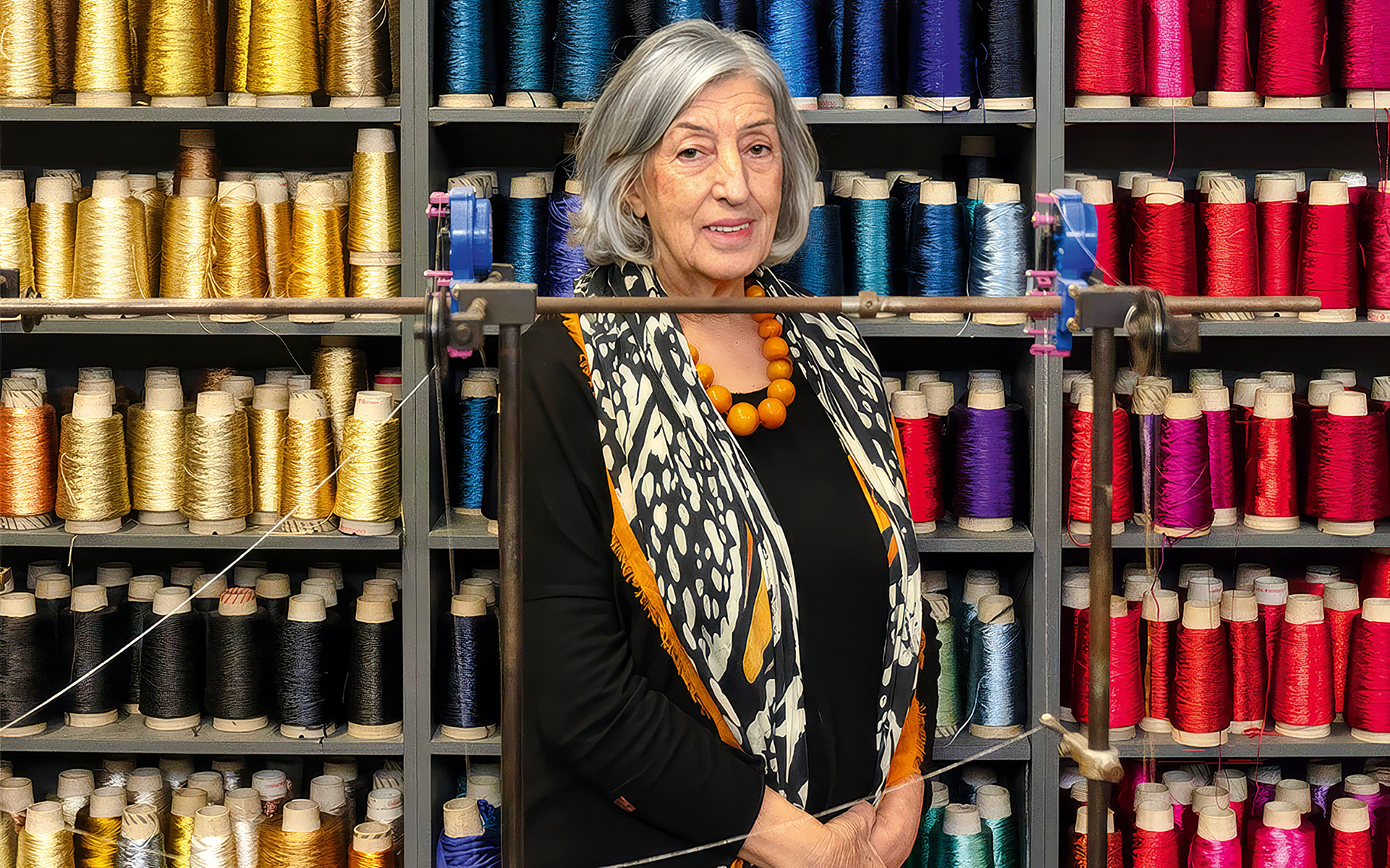
These silk industries dated back to the 19th century and had been key suppliers to the Royal Guard and later the Presidential Guard of Greece, the National Opera, the National Theatre, and the Athens Concert Hall, as well as producing military uniforms and ecclesiastical garments for both domestic and international markets.
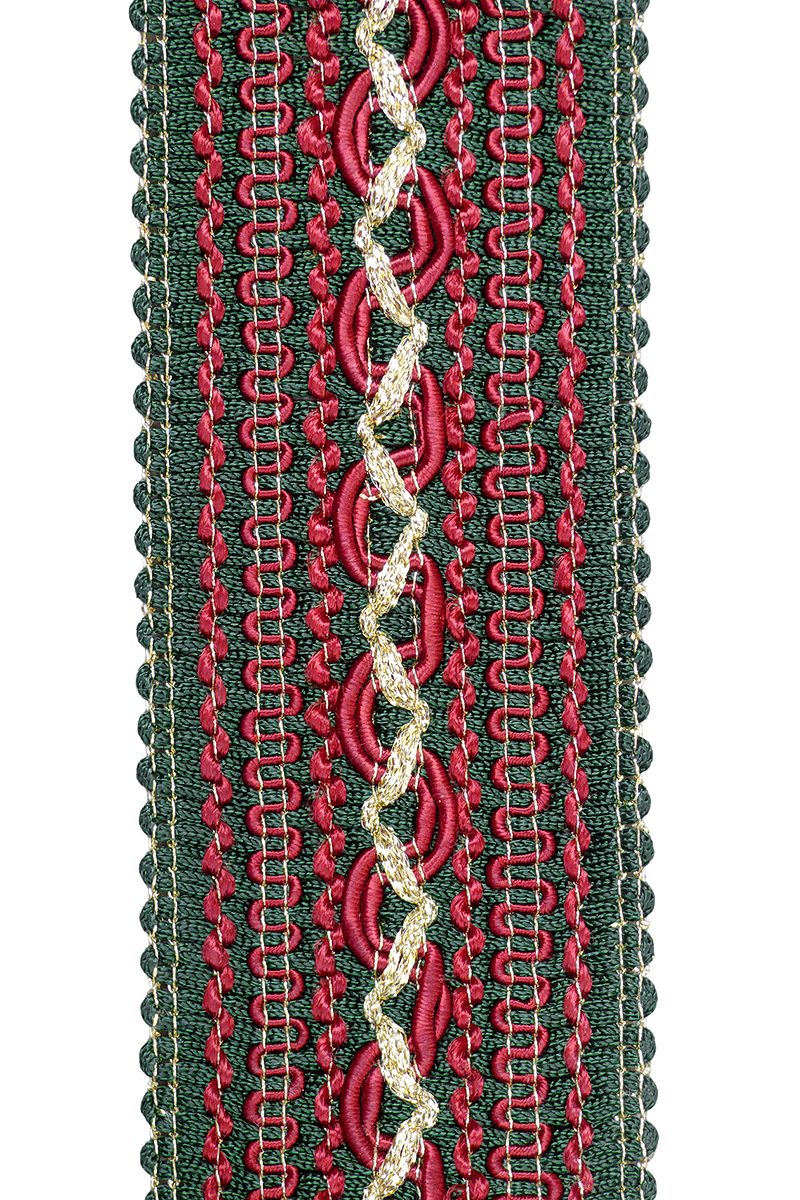
Matseli, then an ethnologist at the Ministry of Culture, intervened during the financial crisis to preserve the Mentis factory equipment, transferring it to the Benaki Museum. She later organized the re-establishment of the workshop on Polyfimos Street, keeping alive old machinery and techniques such as ribbon weaving, textile production, and dyeing.
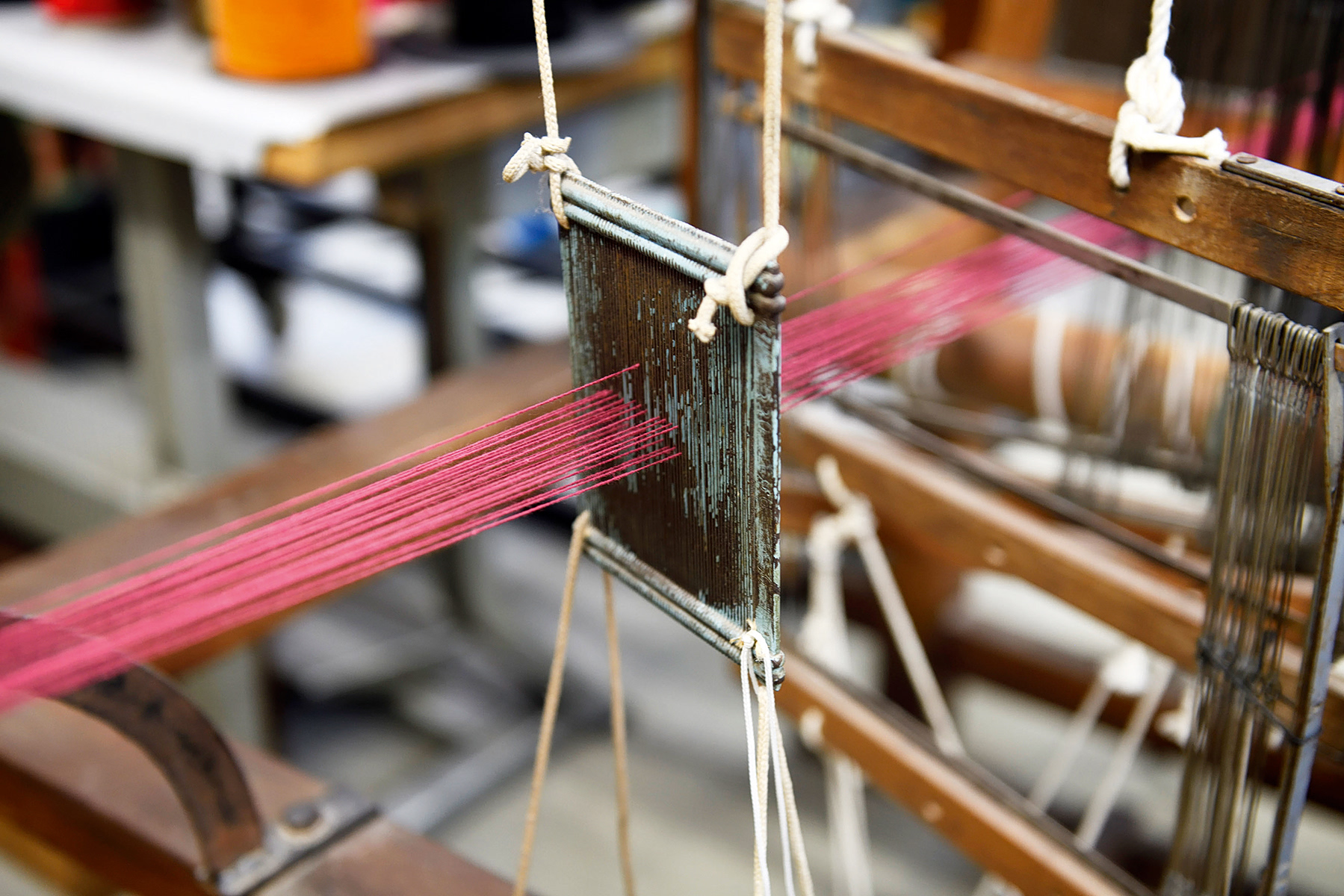
The Antonopoulos silk mill was also integrated into NIM.A., adding rare technological artifacts, including two original Jacquard looms by Joseph Marie Jacquard—considered precursors of computer logic due to their use of punched cards.
Faye Chatzi – The Weaver of Mykonos
On the Cycladic island of Mykonos, Faye Chatzi follows a path that begins with necessity and evolves into a complete worldview. It all started when she touched a handwoven shawl and decided to learn the craft. From that moment, weaving became a way of life.
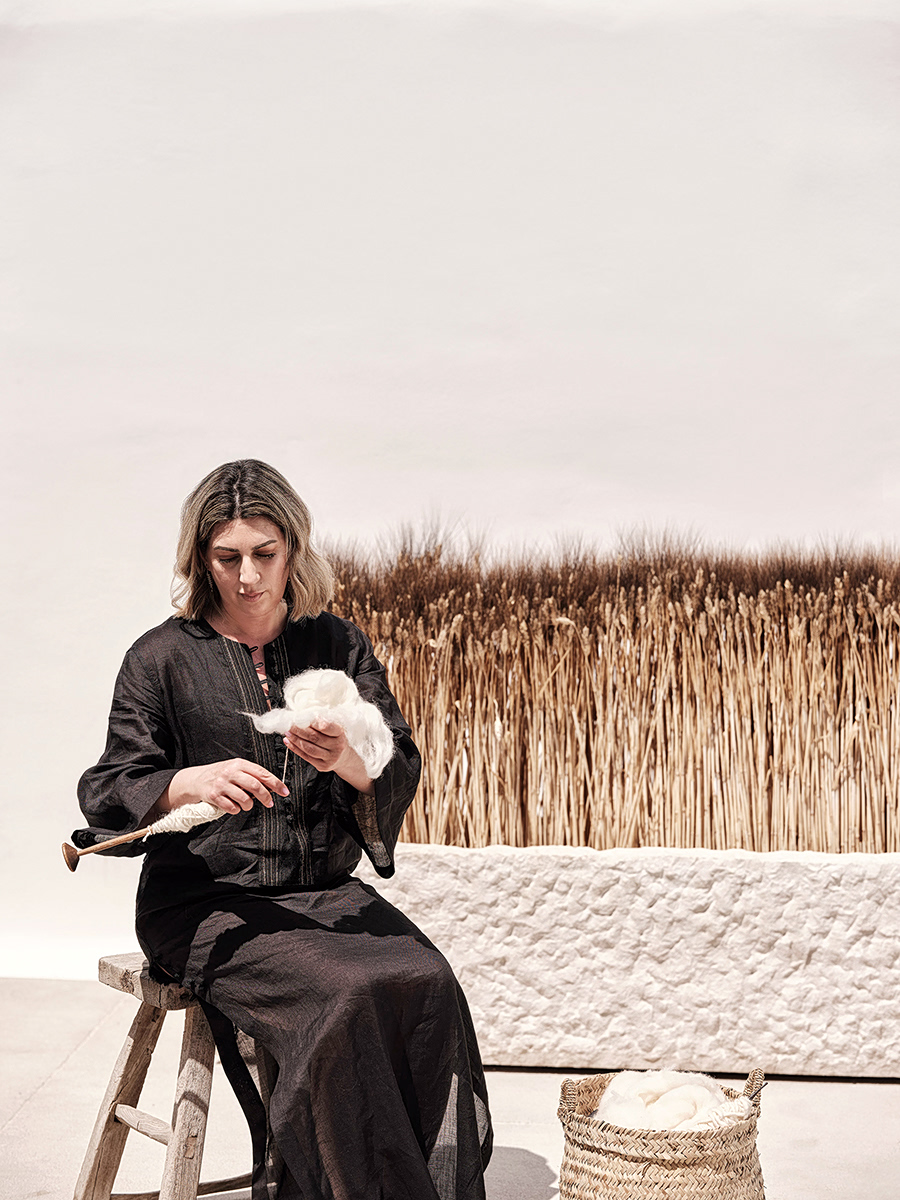
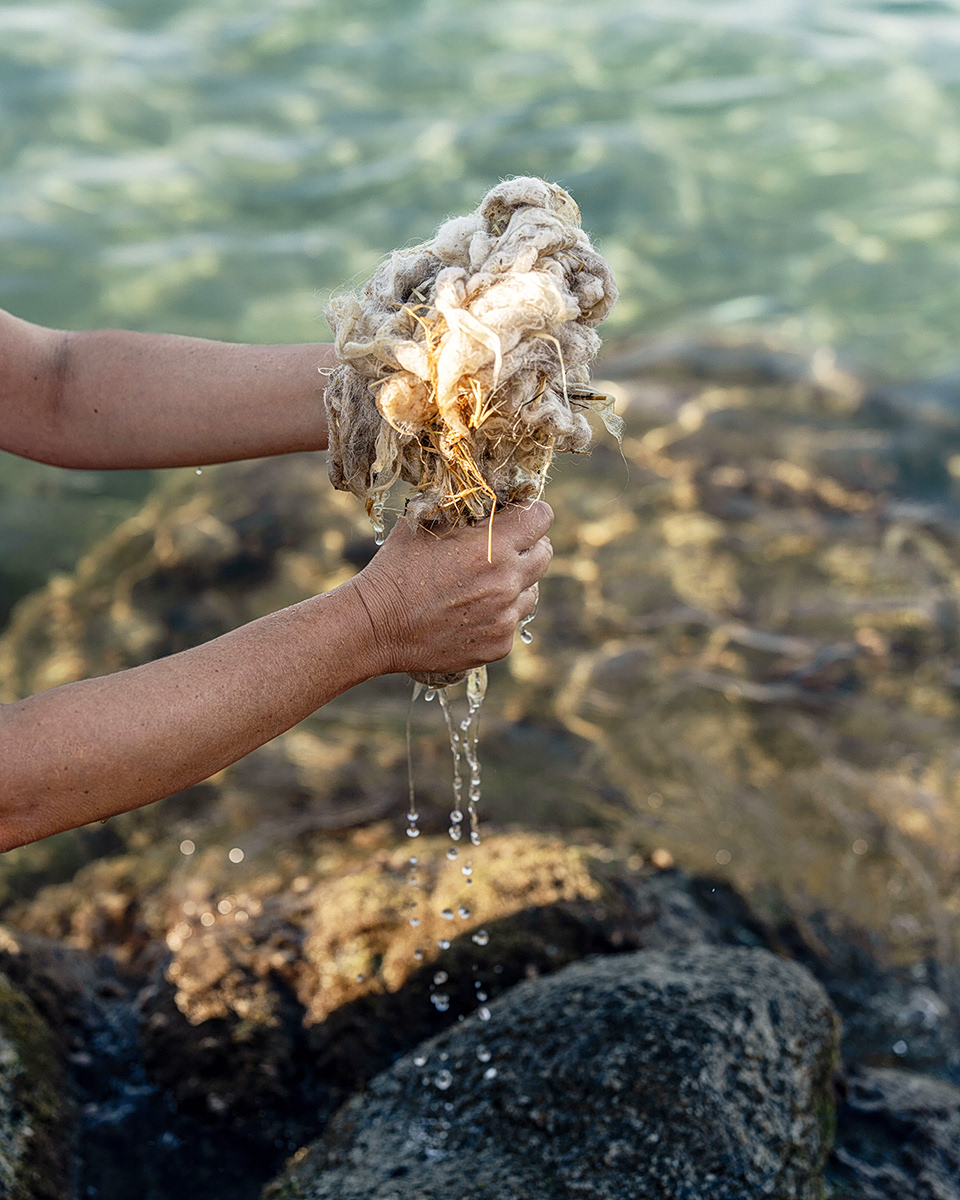
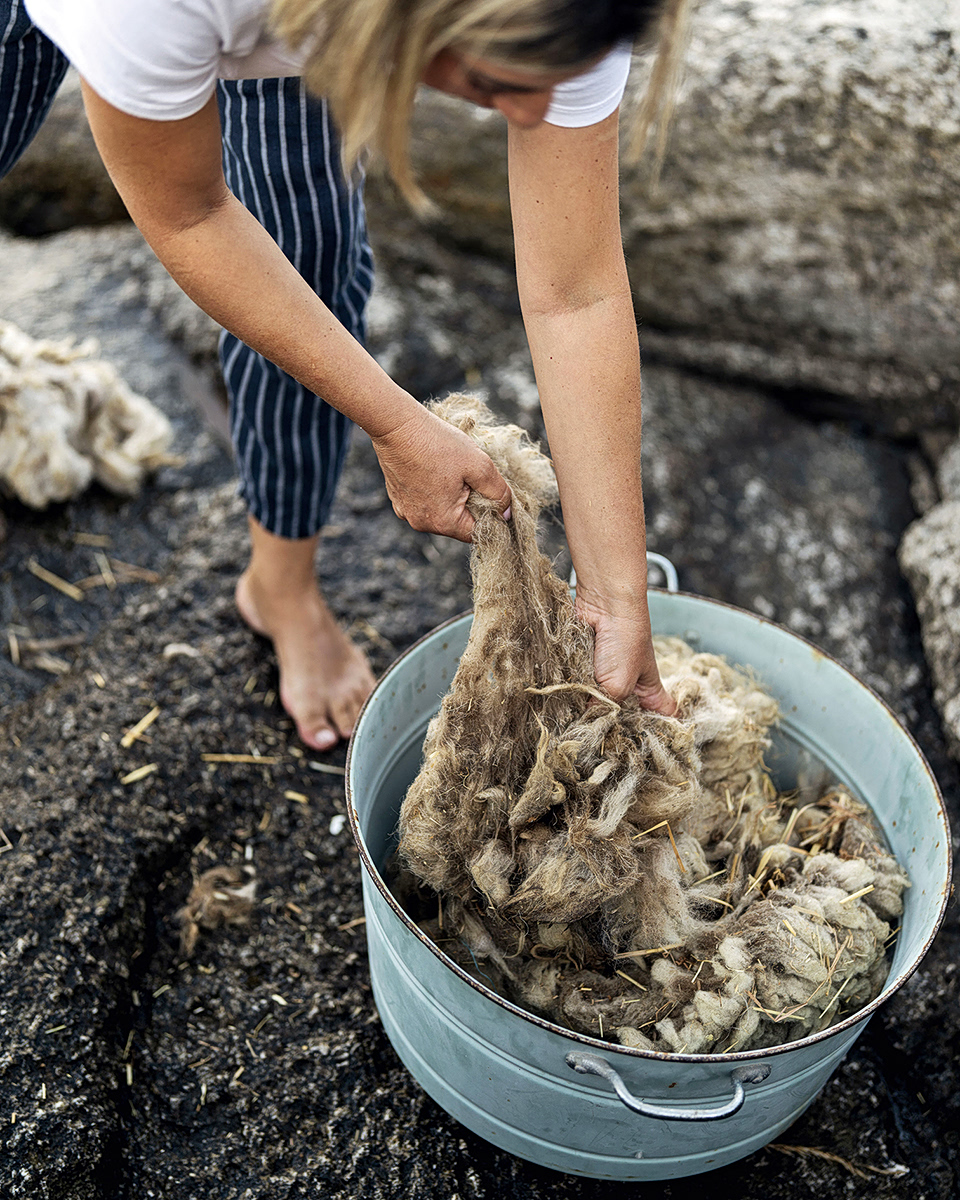
She collects wool from Mykonian sheep, participates in shearing, and in recent years has also begun raising silkworms, reviving the forgotten practice of sericulture in a place more often associated with tourism excess. Her textiles are minimal and restrained, carrying a nearly Doric discipline.
She creates outside the logic of seasonal collections, working with waiting lists rather than mass production, following a rhythm closer to nature than to industry.
During a visit to Knossos, the then Prince Charles admired her dress “Pasiphae,” commissioned by a non-profit organization and exhibited at the Archaeological Museum. In 2020, another of her works, “Minotaur,” entered the British Museum collection, offering a contemporary textile interpretation of an ancient mythological symbol.
For Chatzi, Mykonos is light, energy, and inspiration drawn directly from nature. From the white Cycladic courtyard of her small workshop—surrounded by wool and silk textures—emerges a practice that follows not production cycles, but the rhythm of life itself.
Maria Sigma – The Artisan of Ecological Thought
Maria Sigma works on a different, more introspective level, where weaving becomes a form of research and artistic inquiry. With studies in textile conservation and further specialization in London, she has developed a personal language focused on materiality and touch.
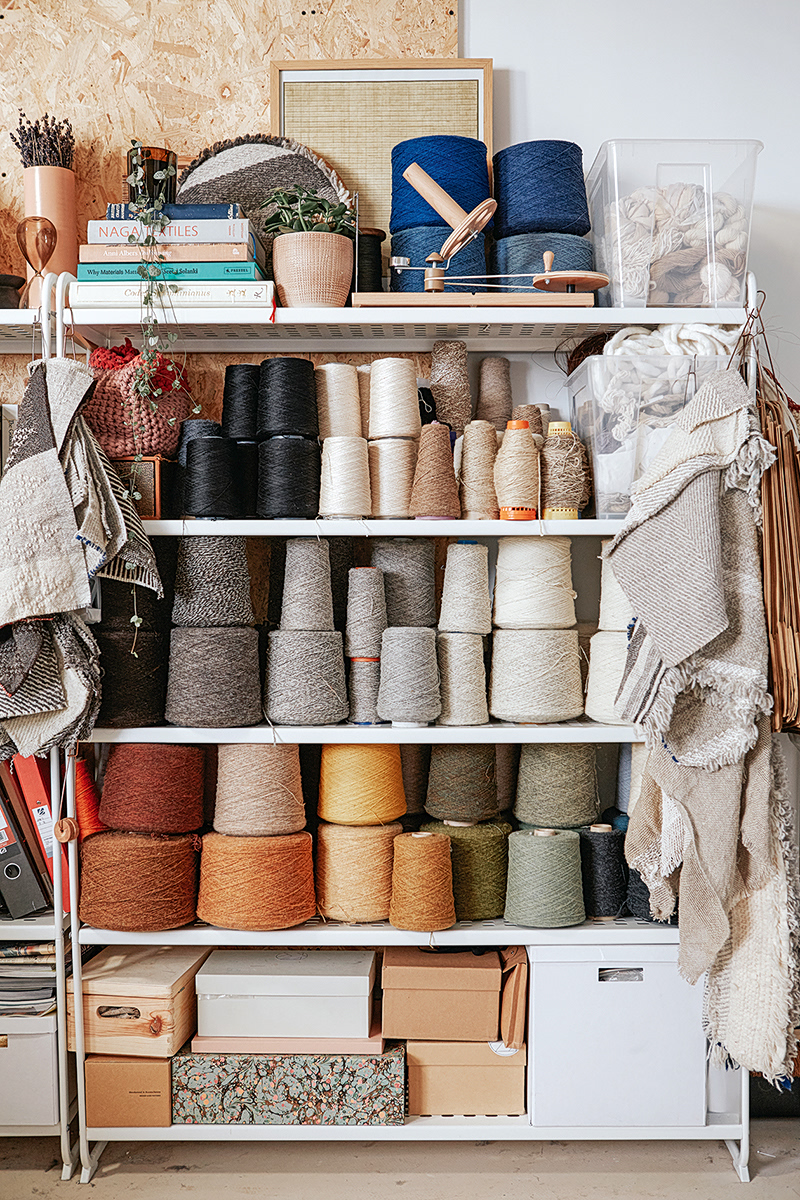
She works primarily with natural, undyed fibers such as wool, linen, hemp, and silk, combining creativity, mathematical thinking, design, and material expression in a direct, physical way. Her works do not belong to standard collections; instead, they emerge from commissions, collaborations with architects and designers, and specific environments requiring tailored interventions.
Her relationship with tradition is subtle and non-dogmatic. References to place operate as underlying structures—silent frameworks that support form without constraining it. Weaving becomes a field where craft, design, and art coexist.
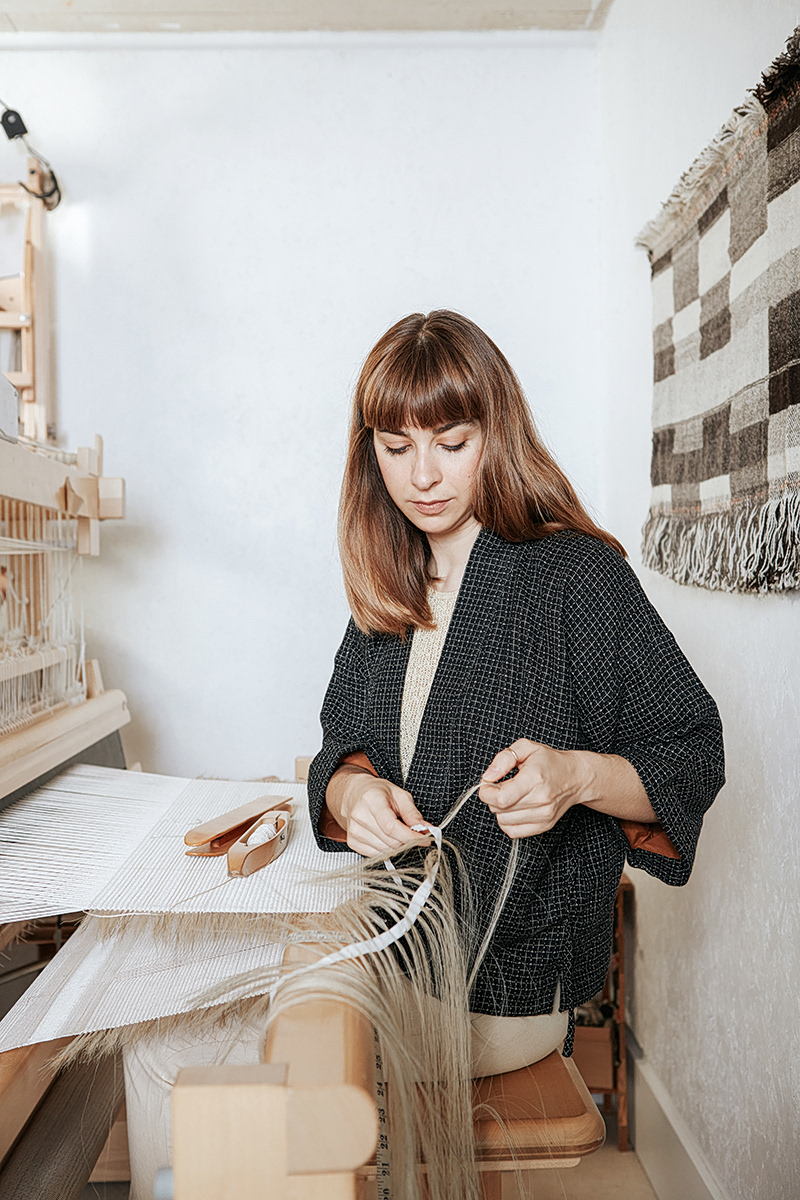
Key milestones in her career include participation in the inaugural exhibition at Make Hauser & Wirth in Bruton, where she now holds a residency, and more recently her work for the Manna Hotel, where personal narrative and architectural identity were integrated into textile form.
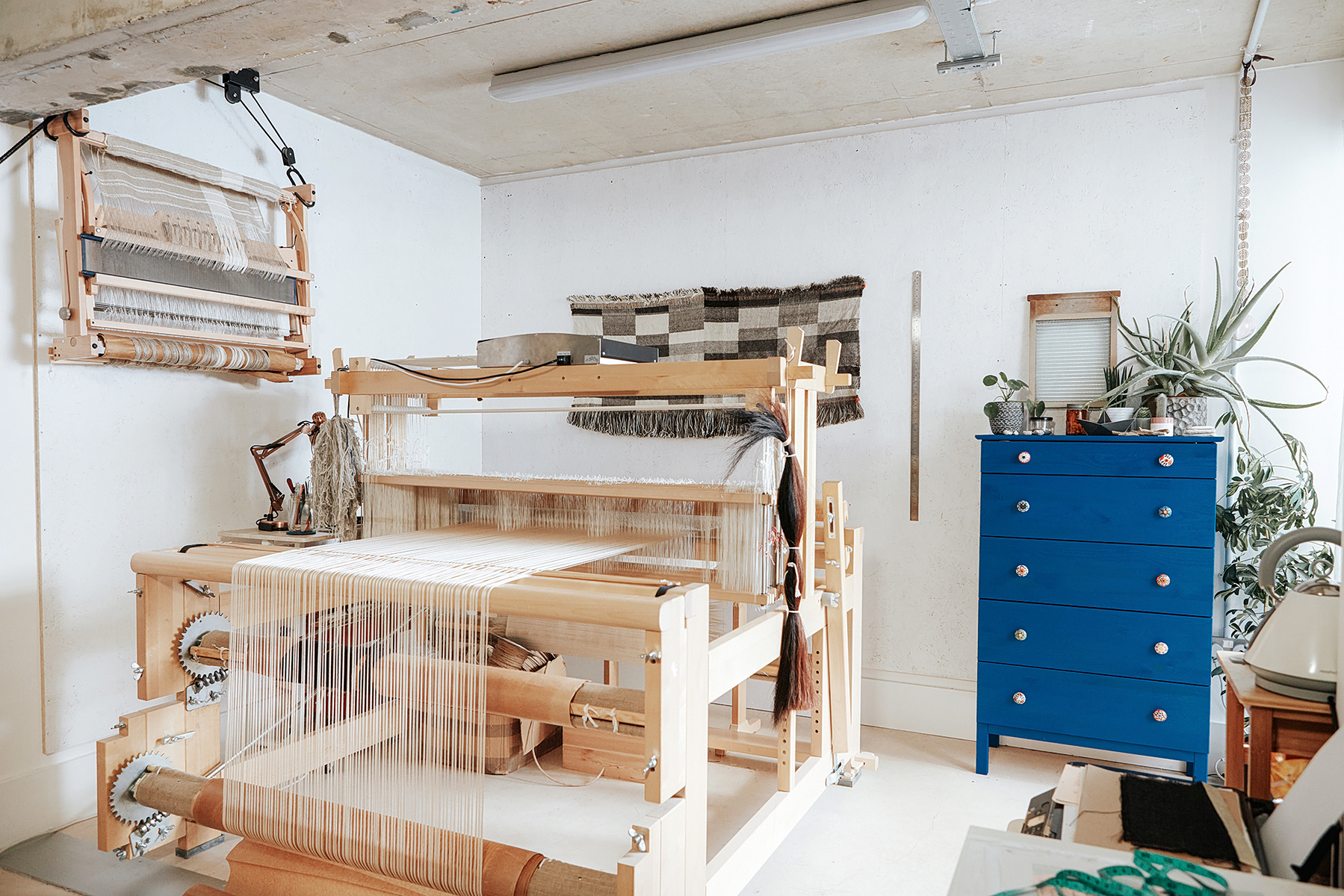
She also teaches weaving in Athens through the lifelong learning program of the University of West Attica, continuing to move fluidly between art, design, and craft as a unified, open field