 Μake us preferred on Google
 The long shadow of a rain-soaked vote
The photograph could have been taken yesterday, yet it belongs to another political age.
A queue of voters stretches along a rain-swept street. Umbrellas bend under gusts of wind. Water gathers in puddles outside a church hall serving as a polling station. Faces are serious, determined. Some clutch shopping bags. Others stand silently, hands buried in pockets. Few could have known that the crosses they were about to place on a ballot paper would shape British politics, the economy and even the country’s sense of identity for years to come.
On 23 June 2016, more than 46 million people were entitled to vote in what became only the third nationwide referendum in British history. The question was deceptively simple: should the United Kingdom remain a member of the European Union or leave?
By dawn the following morning, Britain had delivered its answer.
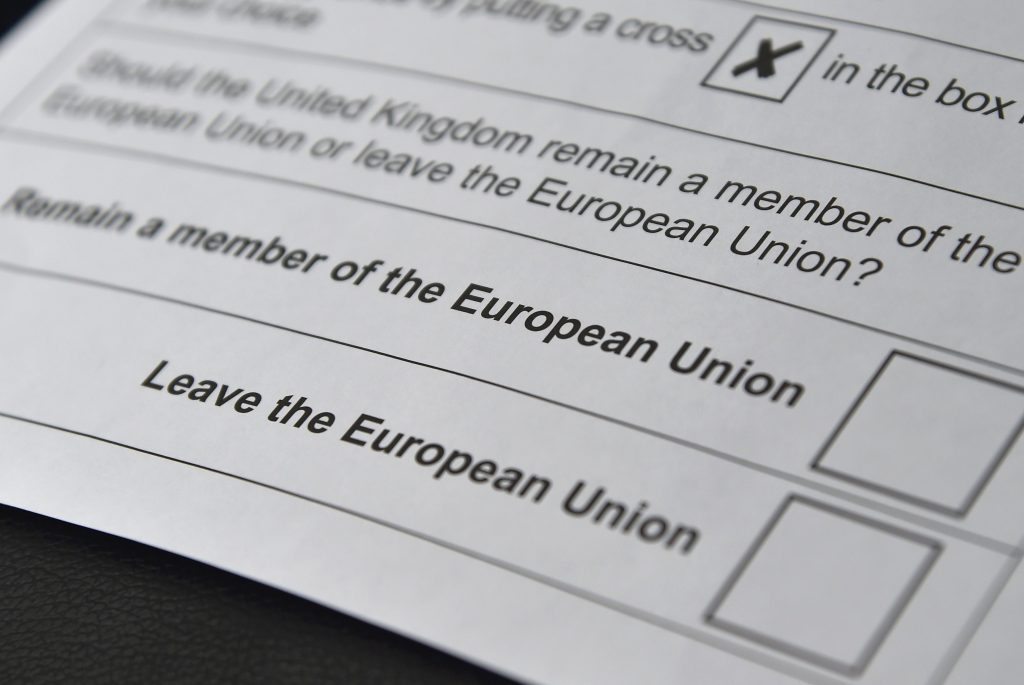
Detail of a postal vote ballot paper for the EU referendum is seen in London, Britain, June 7, 2016. REUTERS/Toby Melville
The result – 52 per cent for Leave, 48 per cent for Remain – triggered one of the most consequential political transformations in modern European history. It ended nearly half a century of British membership of the European project and launched years of political turmoil, negotiations and national soul-searching.
Ten years later, Brexit remains deeply contested. Its supporters argue it restored democratic sovereignty. Its critics see it as a self-inflicted economic wound. Yet beyond the political arguments and economic statistics lie the experiences of ordinary people whose lives and livelihoods have been shaped by the decision.
For this special anniversary report, TO VIMA spoke to farmers, exporters, logistics executives, academics and European residents living in Britain about a decade that continues to divide opinion.
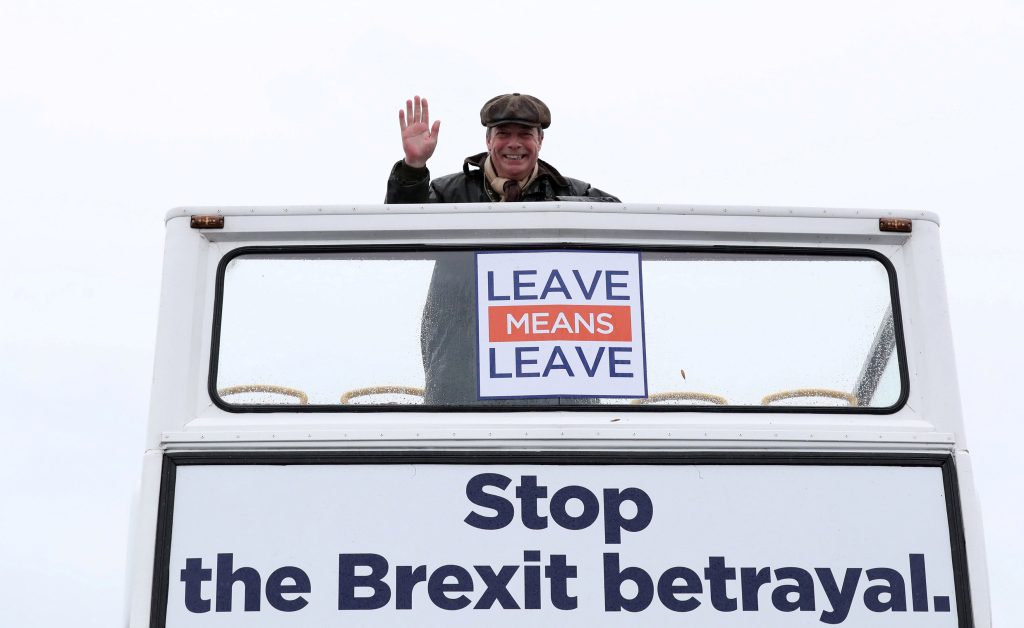
Brexit campaigner Nigel Farage gestures during ‘Brexit Betrayal’ march from Sunderland to London, in Sunderland, Britain March 16, 2019. REUTERS/Scott Heppell TPX IMAGES OF THE DAY
Sunderland: the city that announced Brexit to the world
The symbolism remains powerful.
Shortly after midnight on 24 June 2016, Sunderland became the first major district to declare a decisive vote for Leave. More than 60 per cent of voters backed Brexit.
The former shipbuilding city on England’s north-east coast quickly became the face of the referendum result. Long after its industrial glory days had faded, Sunderland appeared to embody the frustrations of communities that felt overlooked by political and economic elites.
What followed was not the immediate rupture many had predicted. Instead, Brexit became a gradual process whose consequences unfolded over years.
Today, many of those consequences are still being debated.
‘The biggest act of national self-harm’
Few sectors illustrate the Brexit debate more starkly than farming.
Andrew Brown, a farmer in Rutland in England’s East Midlands, opposed Brexit from the beginning. Ten years on, his views have only hardened.
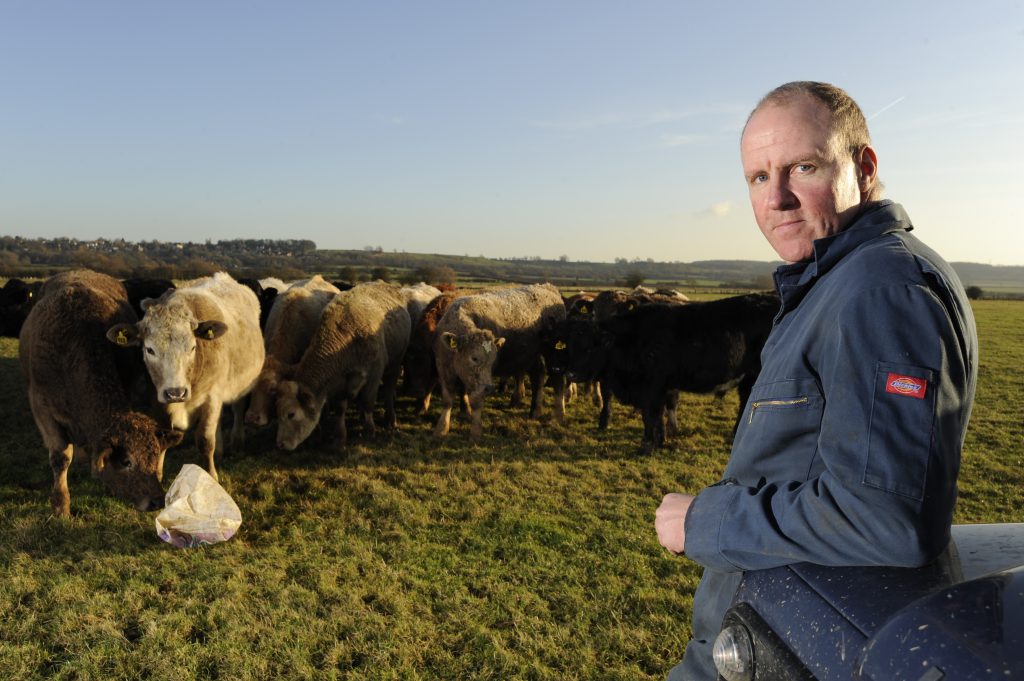
Andrew Brown
“Disastrous,” he says when asked to describe Brexit’s impact on his farm.
Brown argues that the removal of EU-era support mechanisms has left English farmers at a disadvantage.
“The support payments have gone to zero from the level that we’re at,” he explains. “Scotland, Northern Ireland and Wales still have the basic payment scheme area payments. So we’re at a complete disadvantage.”
He never expected Britain to leave the EU.
“I voted Remain,” he says. “All along, I was very adamant that we needed to stay. It is economic suicide to leave the biggest trading bloc in the world.”
His frustration remains evident a decade later.
“I could not understand why any farmer would vote to leave the institution that basically kept them in business for the last 40 years. It’s utter madness. It’s the biggest act of national self-harm any country has ever inflicted on itself.”
Brown supports environmental protection but fears current policies are reducing domestic food production.
“If that lost production is being made up from somewhere where you’re knocking the rainforest down to grow the same food, not only have you shot yourself in the foot environmentally, you’ve shot yourself in the head.”
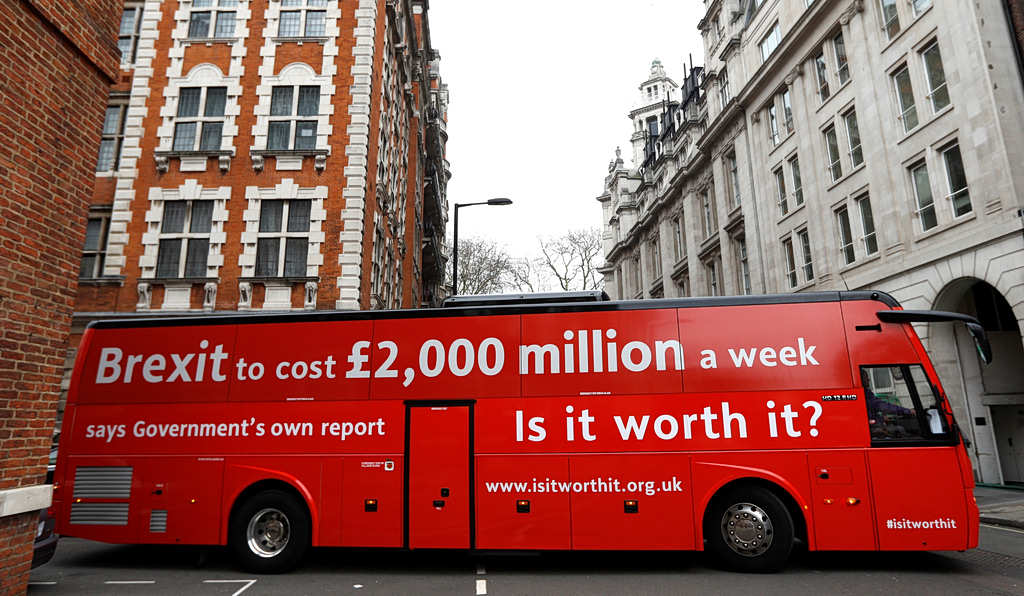
The anti-Brexit campaign group ‘Is it worth it?’ launch their campaign bus to the press before it embarks on an eight-day tour of the UK from outside parliament in London, Britain, February 21, 2018. REUTERS/Peter Nicholls
Looking ahead, his prescription is clear.
“The first thing we’ve got to do is rejoin the customs union and the single market. That is essential.”
His message to the public on the referendum’s tenth anniversary is equally direct:
“Think very long and hard about the decision you made.”
Exporting fish, importing bureaucracy
Hundreds of miles north, in Selkirk in the Scottish Borders, Brexit transformed a business built around European trade.
Julia Stryj, Director of fish product processing business Just Food Services, says the company was forced to fundamentally reshape its operations after losing much of its export market.
“We’ve lost most of our export customers and had to restructure our business from being a mainly export business to a UK business,” she says.
The challenge, she explains, has been navigating a web of paperwork, regulations and additional costs that did not exist before Brexit.
“Paperwork, legislation, tariffs, added time and cost for transport and admin.”
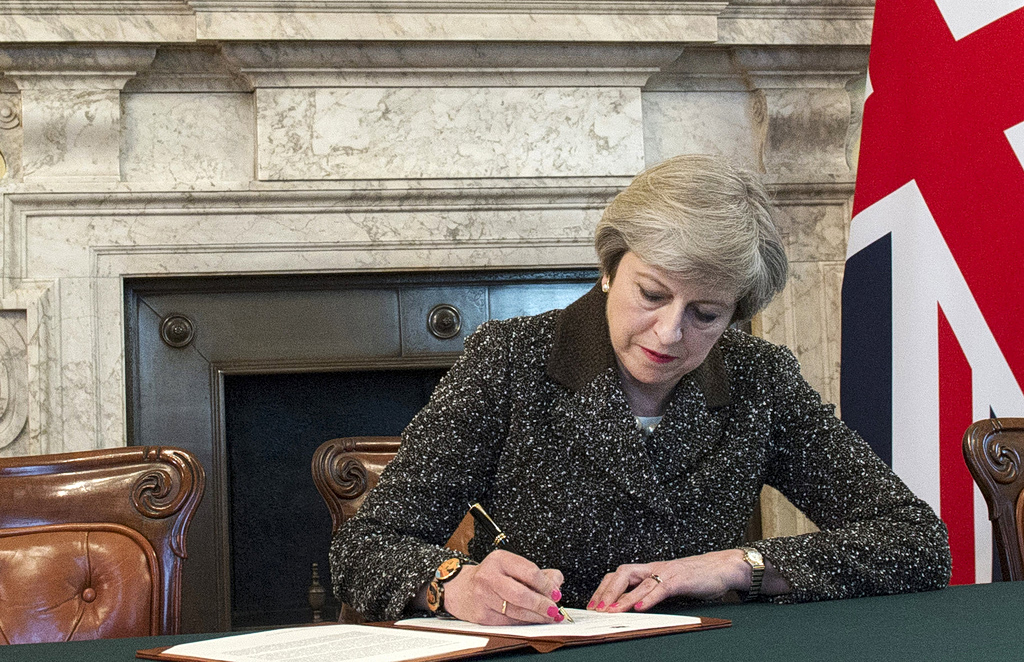
A handout photo made available by 10 Downing Street on 29 March 2017 shows former British Prime Minister Theresa May signing a letter of notification to the President of the European Council setting out the United Kingdom’s intention to withdraw from the European Union at 10 Downing Street in London, Britain, 28 March 2017. May will deliver a statement to parliament in London on 29 March. EPA/JAY ALLEN / NO10 / MOD / HANDOUT MOD Crown Copyright 2016 © HANDOUT EDITORIAL USE ONLY
One experience remains particularly memorable.
After an Italian customer complained about a shipment of smoked salmon, the company agreed to take the goods back.
What followed became a lesson in post-Brexit trade.
After finding a transport company willing to return the pallets to Britain, the company spent significant time proving the products were not returning for resale. Despite those efforts, the goods were ultimately ordered to be destroyed because inspectors were not satisfied.
For smaller seafood exporters, Stryj says the situation has been especially difficult.
Physical inspections, export health certificates and customs documentation have increased costs while introducing delays that can be devastating for perishable products.
Her solution is straightforward.
“One of the biggest barriers is the requirement for manual inspections and Export Health Certificates,” she says. Removing routine border checks and simplifying export systems would significantly help businesses like hers.
The economy Britain never had
For Professor John Barry of Queen’s University Belfast, Brexit’s most significant impact has been economic.

John Barry
“Brexit has made the UK economy smaller than it otherwise would have been,” he says.
The effect, he argues, was not dramatic or immediate.
“The effect has not been a sudden collapse, but a gradual and cumulative drag on trade, investment and productivity.”
Barry estimates the economy is between six and eight per cent smaller than it might have been had Britain remained in the EU.
He points to weaker investment, slower trade growth and the additional barriers businesses now face when dealing with European markets.
At the same time, the end of free movement created labor shortages in sectors such as agriculture, hospitality and food processing.
Yet Brexit also produced unexpected outcomes.
While migration from the EU declined, migration from outside Europe rose significantly through work and study routes.
“The post-Brexit immigration system has allowed much higher non-EU migration,” Barry notes. “This has more than offset the fall in EU migration.”
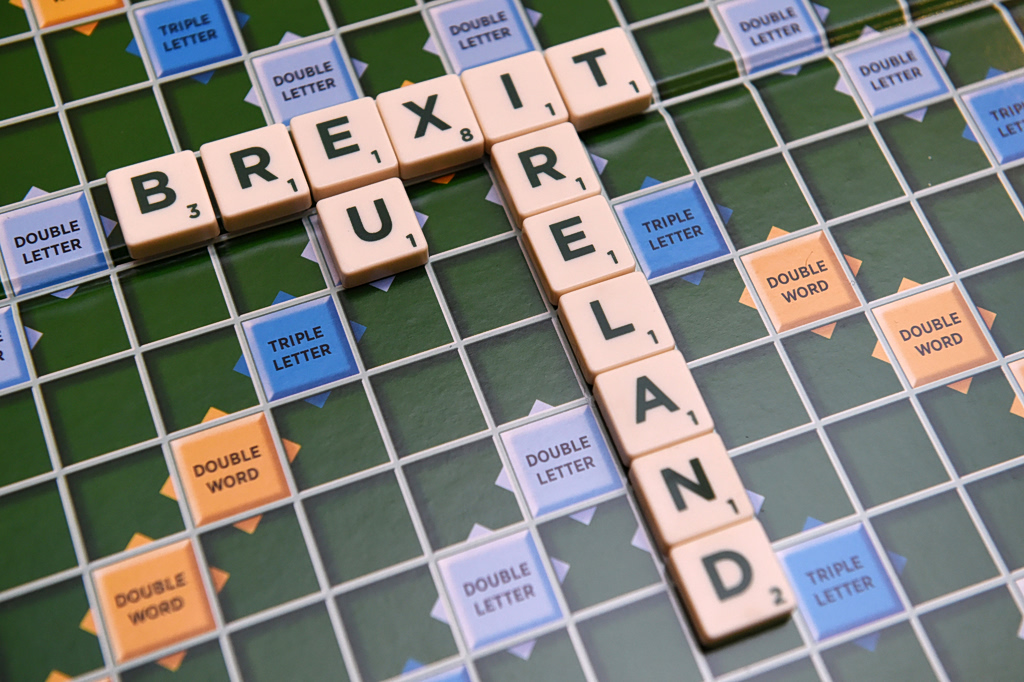
A scrabble board spells out Brexit in Dublin, Ireland. REUTERS/Clodagh Kilcoyne/File Photo
Northern Ireland: a unique Brexit settlement
No part of the United Kingdom experienced the complexities of Brexit more acutely than Northern Ireland.
The need to avoid a hard border on the island of Ireland produced the Protocol, later modified through the Windsor Framework.
The arrangement allows Northern Ireland to remain within the UK customs territory while retaining access to elements of the EU Single Market for goods.
The result is a uniquely complex system reflecting the region’s equally unique political circumstances.
Brexit, once promoted as a means of simplifying sovereignty, ultimately created one of the most intricate constitutional arrangements in modern Europe.
‘There are everyday inconveniences’
Not everyone views Brexit entirely through the lens of loss.
Ian Baxter, chair of logistics company Baxter Freight, opposed Brexit and campaigned for Remain. Yet his assessment ten years later is measured.

Ian Baxter
“It’s made logistics between the UK and the European Union more complicated,” he says.
That complexity created new opportunities for companies able to help customers navigate customs procedures and regulatory requirements.
But Baxter remains unconvinced that the added bureaucracy was worth it.
“The truth is it’s adding cost and complexity for our customers.”
He notes that businesses have gradually adapted.
“There’s no catastrophic consequence, but there are everyday inconveniences caused by being outside the European Union.”
Promises that Brexit would reduce bureaucracy have not materialized, he argues.
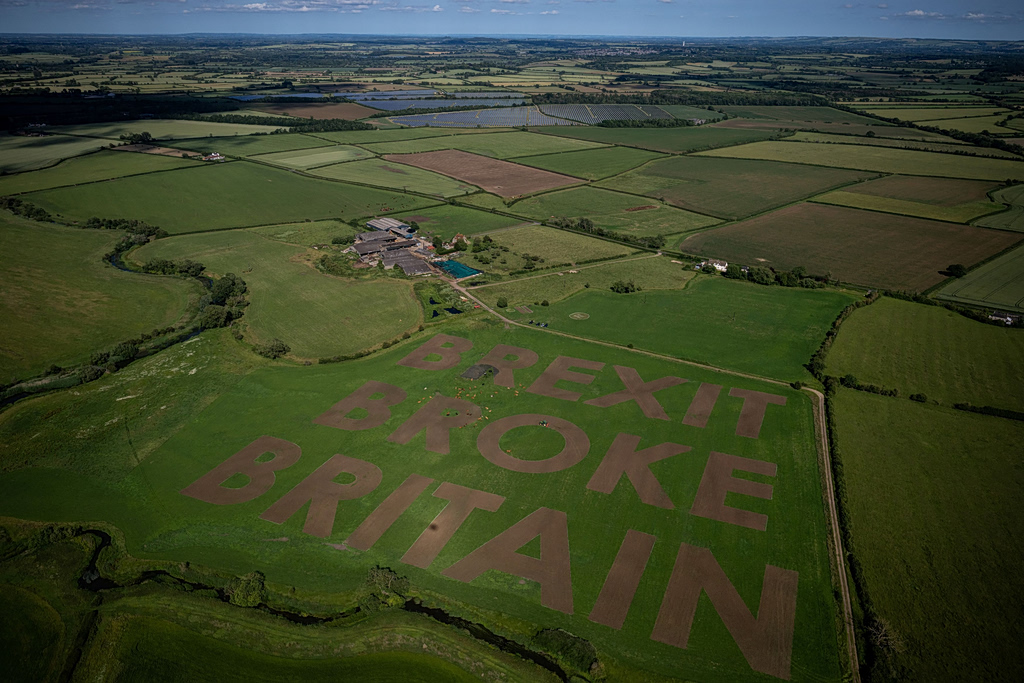
Activists and political campaign group Led By Donkeys mow a huge message into a farmer’s field for the 10-year anniversary of Brexit, near Cricklade, Wiltshire, Britain, June 19, 2026. REUTERS/Chris J. Ratcliffe
“We’ve basically got pretty much all the regulations we had before, plus some new regulations that are the consequence of leaving the European Union.”
Nevertheless, he believes businesses have become more resilient after navigating Brexit, Covid-19, inflation, geopolitical conflicts and supply chain disruptions.
“People have worked out how to manage their supply chains and to be more dynamic and flexible.”
Looking ahead, Baxter welcomes efforts to improve relations between Britain and the EU.
“We’re actually now looking at things in a more pragmatic way,” he says. “Our relationship is important.”
A more distant Europe
For Jenny and David, a London-based acoustic music duo who have spent many years living and working in Britain as EU citizens, Brexit’s effects are visible in everyday life.
“Inflation and the rising cost of living have had a significant impact on everyday life,” they say.
Travelling between Britain and Europe has become more complicated, while freedom of movement has diminished.
They also sense a broader cultural change.
“We have noticed a reduction in European tourism in some areas and a sense that the UK has become slightly less connected to its European neighbours.”
Perhaps most significantly, they believe political and social divisions have deepened.
“There has been a rise in support for more radical political movements, alongside a strengthening of community identities and a tendency for different groups to become more isolated from one another.”
The politics of a divided decade
Public opinion has shifted significantly since 2016.
A recent YouGov poll suggests 57 per cent of Britons believe leaving the EU was the wrong decision, while 55 per cent support rejoining.
Yet Professor Anand Menon of King’s College London cautions against simplistic interpretations.
Public opinion, he argues, has changed partly because younger, more pro-European voters have entered the electorate and because older Leave-supporting voters have passed away.
“It hasn’t changed because loads and loads of people have changed their minds,” he says.
Nonetheless, he acknowledges a growing perception that Brexit has not delivered as promised.
“There’s a general sense that it’s not going well.”
Yet despite changing public attitudes, Menon does not believe rejoining the EU is politically realistic in the near future.
“Rejoin is just too difficult for a prime minister to do.”
Instead, Britain is likely to continue seeking closer cooperation while remaining outside the Union.
Will Britain return?
Professor Alex de Ruyter, Director of the Centre for Brexit Studies at Birmingham City University, believes history may not be finished with Brexit.

Alex de Ruyter
“Any exit was bound to raise costs and trade barriers,” he says.
The promised economic benefits, he argues, have largely failed to materialise.
At the same time, geopolitical pressures are encouraging closer cooperation between Britain and Europe, particularly in defence and security.
De Ruyter believes public sentiment is increasingly moving towards re-engagement.
“I do think this will eventually happen,” he says when asked whether Britain will one day rejoin the EU.
“Ultimately it is a matter of political will on both sides.”
From regret to reconsideration
For Tom Brufatto, Policy and Research Director at Best for Britain, the tenth anniversary of the referendum marks a moment when Brexit is increasingly viewed through the lens of its economic consequences rather than its political symbolism.
“I think it’s pretty conclusive now and recognized across British society that Brexit has been a substantial failure from most angles from which you look at it,” he told TO VIMA. According to research conducted by Best for Britain, around 60 per cent of the public now view Brexit as more of a failure than a success, largely because of its impact on the economy.
Brufatto points to estimates suggesting that the British economy is between 4 and 6 per cent smaller than it would otherwise have been, with households feeling the effects through higher food prices, rising energy costs and a prolonged cost-of-living squeeze. Beyond economics, he argues, Britons have also experienced the practical and social consequences of Brexit, from longer queues at European borders to a growing sense of separation from the continent.
These experiences, he says, have helped create a stable majority in favor of rejoining the European Union. While welcoming recent efforts by London and Brussels to reset relations through closer cooperation on trade, energy and youth mobility, Brufatto believes such measures represent only a first step. “These are welcome but small changes,” he says. “What we need now is to take stock and go further than we have so far.”
According to Brufatto, public enthusiasm for intermediate arrangements such as the customs union or single market remains limited compared with growing support for full EU membership. He argues that shifting geopolitical realities – including renewed instability in Europe, conflict in the Middle East and the return of Donald Trump to the White House – have fundamentally altered the assumptions that underpinned the Brexit vote.
“The idea that there were alternative trade deals that could replace Europe and allow the UK to thrive in a liberal global order is simply no longer true,” he says. In this new environment, he believes closer integration with Europe is not merely desirable but increasingly necessary.
“It’s not only realistic,” Brufatto argues of eventual EU membership. “It should be the imperative and the priority if we really want to get the economy going.” Most importantly, he believes the issue no longer carries the same political toxicity it did a decade ago. “We’re not in 2016 anymore,” he says. “People have seen the changes and they’ve moved on as well.”
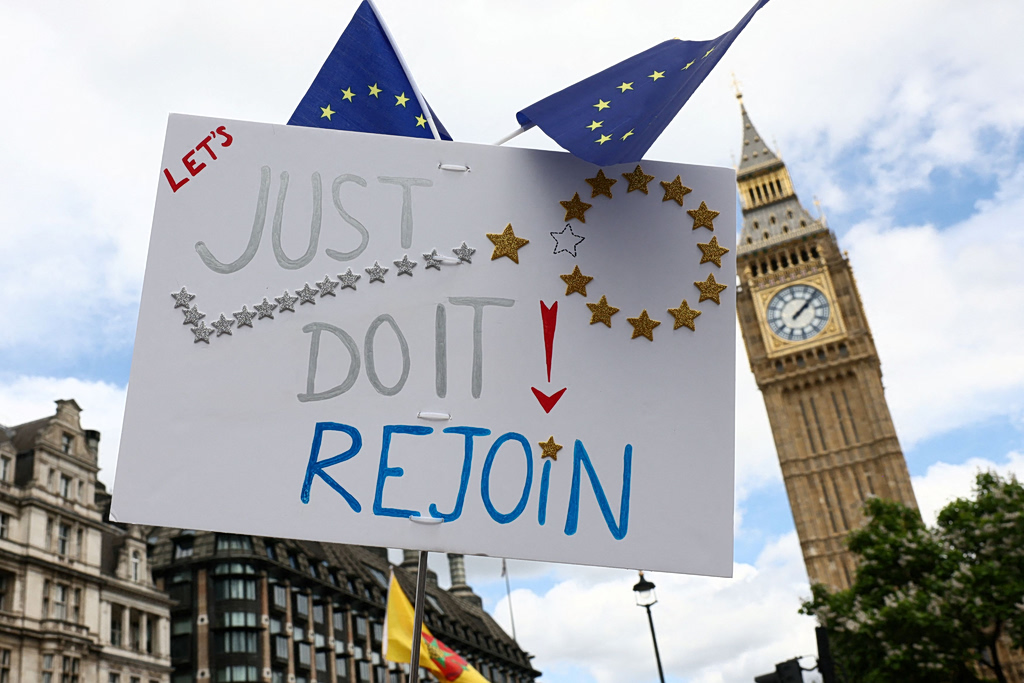
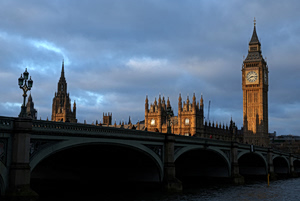
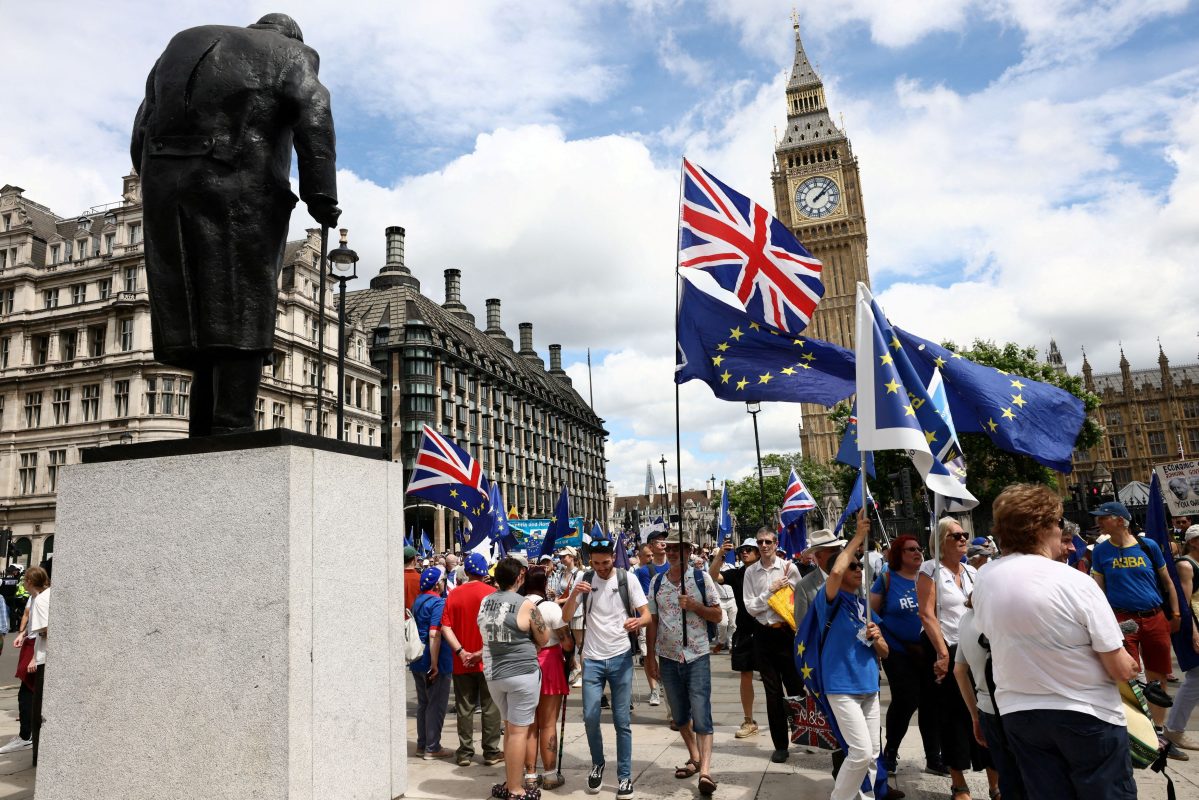
A placard is held as people walk past the Elizabeth Tower, commonly known as Big Ben, during the National Rejoin March IV organised by National Rejoin March (NRM), marking ten years since Britain voted to leave the European Union in 2016 and calling for closer cooperation between Britain and Europe, in London, Britain, June 20, 2026. REUTERS/Jack Taylor
The march back towards Europe?
Last weekend, around 1,500 people marched through central London to mark the referendum’s tenth anniversary.
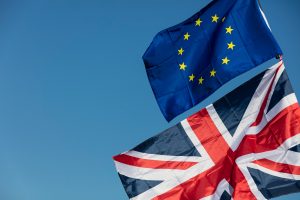
Waving European Union flags and carrying banners reading “We Want Our Star Back”, participants in the National Rejoin March walked from Temple to Parliament Square.
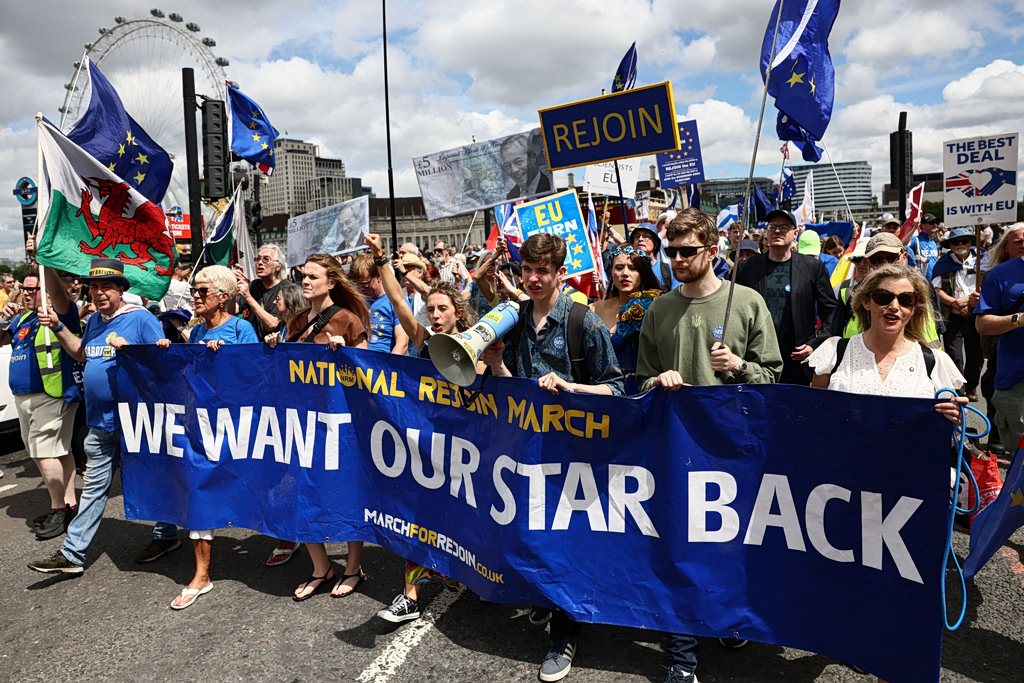
People carry a banner along Westminster Bridge during the National Rejoin March IV organised by National Rejoin March (NRM), marking ten years since Britain voted to leave the European Union in 2016 and calling for closer cooperation between Britain and Europe, in London, Britain, June 20, 2026. REUTERS/Jack Taylor
The demonstration was modest in size compared with the enormous Brexit protests that once filled Westminster. Yet it reflected a broader change in mood.
The fierce battles that once dominated British politics have subsided. The slogans are quieter now. The arguments are more pragmatic.
Ten years after the referendum, Brexit is no longer an event. It is a condition.
It has reshaped trade, altered political alignments, changed migration patterns and transformed Britain’s relationship with its closest neighbors. It remains unfinished, contested and deeply emotional.
The rain-soaked voters who queued outside polling stations in June 2016 believed they were settling a question.
Instead, they began a national conversation that continues today.
A decade later, Britain is still living with the answer.