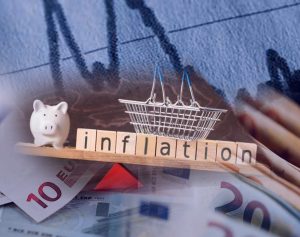
Across the euro area, annual inflation stood at 1.9% in February 2026, up from 1.7% in January and in line with Eurostat’s preliminary reading.
Rising commodity prices and oil volatility are forcing Greek companies and officials to reassess budgets and prepare contingency measures as the Middle East conflict clouds the economic outlook.
Geopolitical tensions and rising energy costs are reshaping Greece’s wage debate as the government considers a smaller increase to the minimum wage, while a new sector-wide labor agreement signals a potential revival of collective bargaining.
Yannis Stournaras says the European Central Bank should keep its options open as the Iran conflict adds fresh uncertainty to the inflation outlook and threatens Europe’s fragile growth.
Eurozone inflation eased to 1.7% in January 2026, while consumer prices in Greece fell month over month, according to final data from Eurostat. Services remained the main driver of price pressures across the euro area
With a new increase set for April 1, 2026, most institutions back a moderate rise that would lift the gross monthly minimum wage to about 915 euros, as the government keeps its sights on 950 euros by 2027.
IOBE's latest quarterly report on the Greek economy points to stronger growth, falling unemployment and rising investment, while warning that global uncertainty, structural weaknesses and pressure on household incomes continue to cloud the outlook
Across the European Union, Cyprus posted the lowest inflation at just 0.1%, while France recorded 0.7%, Italy 1.2%, and Finland 1.8%.
Mitsotakis outlined plans on rising prices, housing support, farmer compensation, transport pressures, energy deals, and a sea-drone partnership with Ukraine
Fresh data show Greece’s inflation rate easing to 1.6% in October, driven by lower increases in energy and services, though average inflation for 2025 remains above the eurozone.
With €2.5 billion in wage hikes, bonuses, and tax cuts, Greece is loosening its purse strings to ease household strain — cautiously, and amid widespread discontent with government performance
Food, rent, and hospitality costs pushed prices higher in Greece in October, while olive oil prices dropped sharply, according to ELSTAT’s latest inflation data
More than 50 companies and 10 supermarket chains in Greece join an initiative to cut supermarket prices by an average of 8%, as inflation in consumer goods falls to its lowest level in four years
BoG Governor Yannis Stournaras cautioned that sudden wage rises risk economic instability, while pointing to falling debt, strong growth and new competition in banking
After months of tracking high-income earners’ positive economic outlook, America’s middle-income households appear to be losing confidence
The European Central Bank left its key interest rate at 2% and is expected to maintain that stance next month before reopening talks on possible cuts in the autumn.
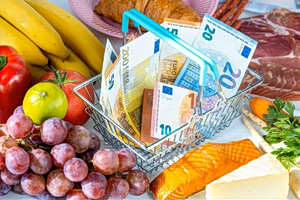
Consumers face higher costs as fruits, meat, fish, coffee, and sweets see price hikes, with further increases expected due to rising production and labor costs.
Inflation in Greece accelerated in July, driven by surging rents, higher energy bills, and rising prices in clothing, food, and hospitality, despite a sharp drop in olive oil prices
Greek Prime Minister Kyriakos Mitsotakis revealed the establishment of a national authority tasked with market price oversight and consumer protection during his address at a cabinet meeting on Wednesday morning in Athens. The Greek Prime Minister said the new body would be set up on the Swedish model, adding that protecting Greek households was a […]
Compared to February, inflation decreased in 16 member states, remained unchanged in one, and rose in ten.