Greece has emerged as one of Europe’s strongest tourism performers in the opening months of 2026, according to the latest European Tourism: Trends & Prospects report by the European Travel Commission (ETC). Despite geopolitical uncertainty, pressure on consumer spending and disruptions to air travel linked to the conflict in the Middle East, the country has recorded some of the continent’s most impressive tourism gains.
The standout figure is a 38.3% year-on-year increase in international arrivals in the first quarter of 2026—the highest among the European destinations covered by the ETC. Bank of Greece data, cited in the report, also show that inbound travel rose by 27.1% between January and April, while tourism receipts jumped by 36.9% compared with the same period in 2025.
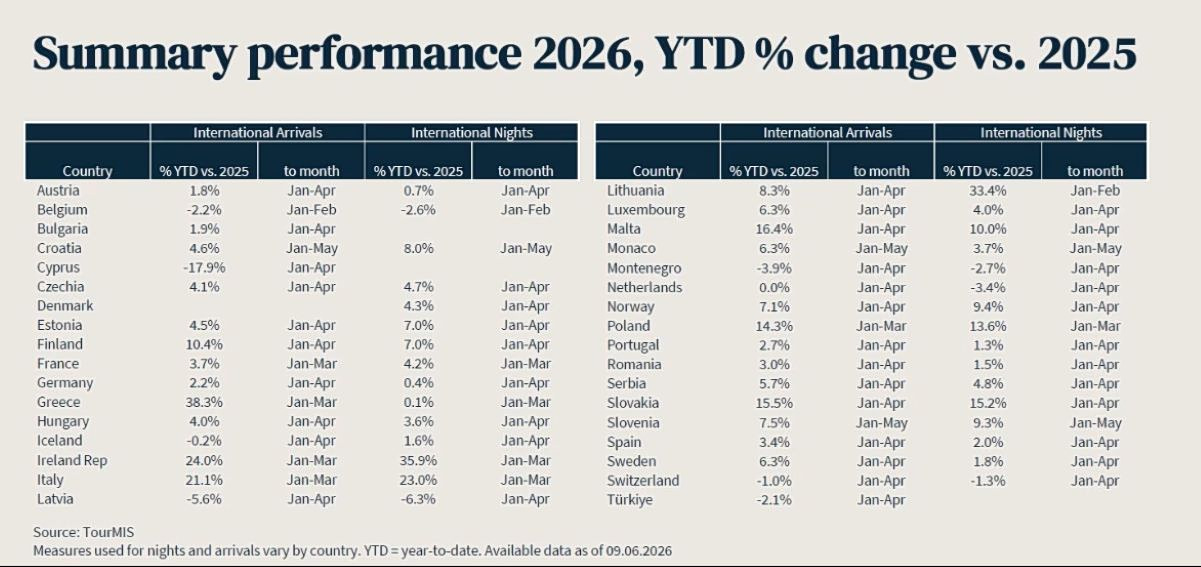
Greece’s performance comfortably outpaced the European average, where international arrivals increased by 5.0% and overnight stays by 4.8%. The ETC attributes the country’s strong momentum to improved air connectivity and rising cross-border road traffic.
While visitor numbers surged, overnight stays were broadly unchanged, increasing by just 0.1%. This suggests that more travellers are opting for shorter breaks or arriving by road, rather than extending the length of their holidays.
The report also highlights robust demand from Greece’s core European markets. Arrivals from Germany rose by 21.6% between January and May, reflecting the country’s enduring appeal to repeat visitors seeking coastal holidays. The UK market was even stronger, with arrivals soaring by 49.3%, as Greece increasingly benefited from its reputation as a safe Mediterranean destination. Additional Jet2 capacity from July is expected to support continued growth during the summer season.
France also posted solid growth, with arrivals up 27.6%, despite subdued outbound demand from French travellers across Europe. In contrast, arrivals from the United States fell by 8.6%, a decline the ETC attributes primarily to higher travel costs and more cautious consumer spending rather than geopolitical concerns.