Schools are out and university entrance exam results are in. For some students and their families, it’s a time to celebrate; for others, it’s a chance to take a break before the next chapter begins. Either way, summer offers young Europeans the perfect opportunity to travel independently and, as teachers in Greece often say, “expand their horizons”.
The good news is that exploring Europe doesn’t have to come with a hefty price tag. Thanks to a range of EU-backed initiatives, discount schemes and alternative travel programs, young people can see the continent for far less than they might expect.
From free rail passes and student exchanges to farm stays, volunteering opportunities and work-for-accommodation arrangements, thousands of young Europeans travel each year for a fraction of the usual cost. TO BHMA International Edition has rounded up some of the best options for young travelers who are ready to start discovering the world.
Rail Travel Schemes

DiscoverEU
If you’re 18 and live in an EU member state or another country participating in Erasmus+, you could travel across Europe for free through DiscoverEU.
Successful applicants receive a rail pass valid for up to 30 days, along with a discount card offering savings on accommodation, attractions, food and other activities. Around 40,000 passes are awarded in each application round.
Applications open twice a year, in spring and autumn. The next round runs from October 1 to 15, 2026, for applicants born between January 1 and December 31, 2008. Successful candidates will be able to travel between March 2027 and May 2028. The program applies only to 18-year-olds.
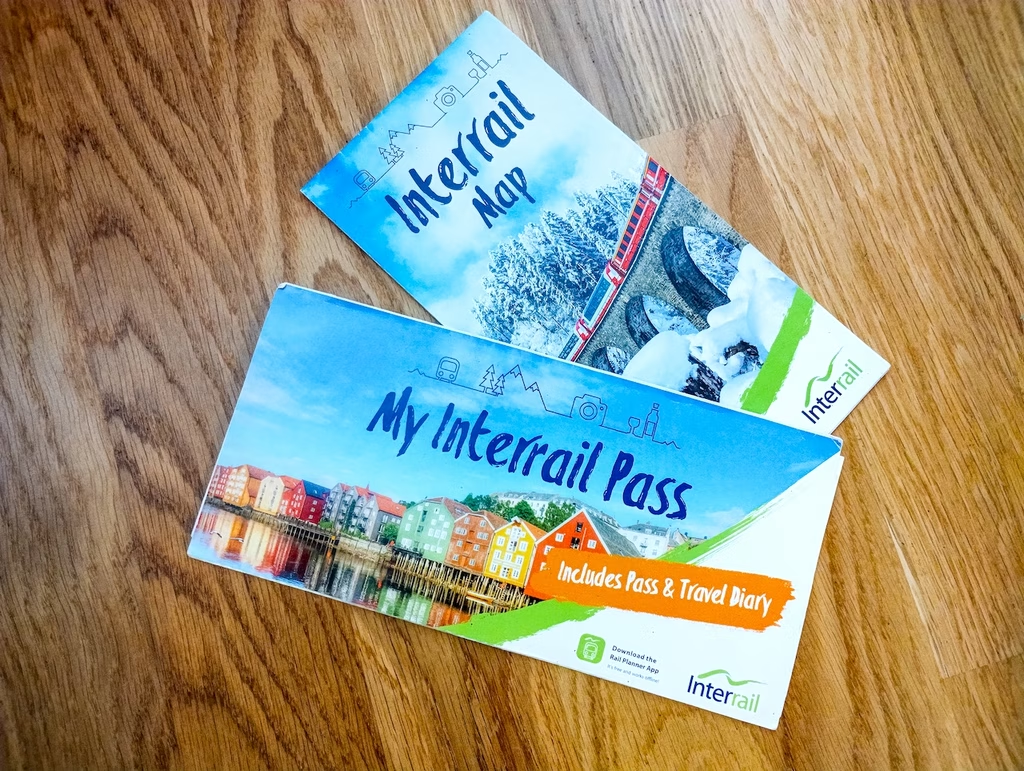
An Interrail pass and a folded Interrail map of Europe lying on a wooden floor. October 05, 2022 – Stockholm, Sweden
Interrail Youth Pass
Missed the DiscoverEU age window? The Interrail Youth Pass is available to travelers aged under 28 and offers discounts of up to 25%, making it one of the most flexible ways to explore Europe by train.
There are several pass options to choose from:
– Interrail Global Pass, which offers unlimited train travel to more than 30,000 destinations across 33 countries, ideal for multi-country trips or travelers keeping their plans flexible.
– Interrail One Country Pass, which covers unlimited rail travel in a single country.
– Interrail Plus Pass, which combines the benefits of an Interrail Pass with seat reservation costs on most trains.
Keep in mind that Interrail passes do not include:
– Seat reservations on many high-speed and overnight trains.
– Local public transport fares including buses, trams and metro systems.
– Accommodation, although partner discounts are available.
– Domestic rail travel, except for one outbound and one inbound travel day in your country of residence.
Interrail Pass for Erasmus+
Interrail also offers a dedicated pass for Erasmus+ participants traveling to and from their placement abroad. Available in four- or six-day versions, the pass can be used over a six-month period and allows holders to explore Europe while traveling to their host destination. Depending on the Erasmus+ grant, part or all of the cost may be covered through the program’s Green Travel option.
- Education and Exchange Programs

European Solidarity Corps
One of the least-known but most affordable ways to travel and live abroad is through the European Solidarity Corps (ECS) Volunteering Activities. This program offers young people aged 18-30 the chance to volunteer in another European country for two to 12 months.
Projects range from environmental protection and education to youth work, culture, social inclusion, health, sport and humanitarian aid. The ECS covers travel, accommodation, meals, insurance and a small living allowance, making it an ideal and affordable opportunity for young people who want to travel, develop new skills, and experience life in another country while giving back to the community.
In Greece, Ecogenia places young people in paid, full-time teams working on environmental restoration, wildfire resilience, climate adaptation, and community projects. Participants are recruited by Ecogenia itself and work on its programs.
Erasmus+
Best known for its student education, training, youth, and sport exchange programs, Erasmus+ also supports internships, training, volunteering, youth exchanges and study opportunities abroad.
The scheme is open to students, apprentices, recent graduates, educators, and young people, and helps participants gain international experience while developing new skills and improving their career prospects. Depending on the activity, Erasmus+ provides financial support to help cover travel and living costs, making it easier for participants to spend time in another European country as part of their education or professional development. It also subsidizes Interrail passes, and offers extra funding for lower-carbon travel, including rail journeys.
AIESEC
AIESEC, the world’s largest, youth-led non-profit organization, offers students and recent graduates aged 18 to 30 international volunteering placements, leadership programs and professional internships in more than 120 countries.
Volunteer placements last several weeks, while paid internships provide career experience in fields including education, IT, marketing and business.
- Volunteering and Work Opportunities

For young people looking for other affordable ways to travel, several international programs combine volunteering with accommodation.
Service Civil International (SCI) organizes short-term volunteer camps focused on environmental, cultural, and community projects, with accommodation usually provided at low cost.
WWOOF connects volunteers with organic farms across Europe, where a few hours of work each day is exchanged for accommodation and meals.
Similar platforms such as Workaway and HelpX match travelers with hosts offering opportunities on farms, in hostels, guesthouses and family homes in exchange for a few hours of help each day.
Those wanting to earn money while travelling can also consider seasonal work. Ski resorts in France, Austria, Switzerland and Italy recruit winter staff, often including accommodation, while summer camps across Europe hire activity leaders and childcare staff with meals and lodging provided.
Many hostels and hospitality businesses also offer short-term positions in reception, housekeeping or events, with some providing free accommodation in exchange for part-time work.
Student and Youth Discount Cards
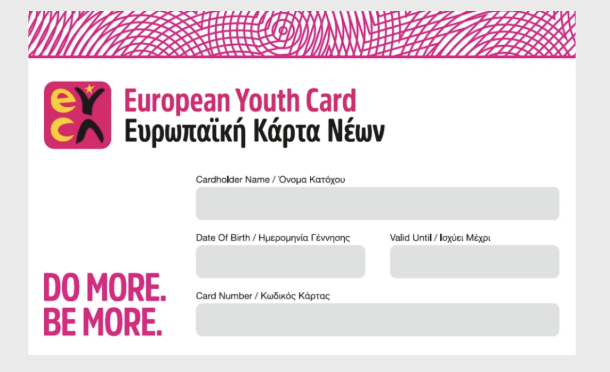
European Youth Card
The European Youth Card offers discounts on hostels, museums, transport, learning, services and food in 34 countries plus special summer discounts.
The card is available for anyone up to 31 years old and you apply through your country’s dedicated website. The card costs around 17 euros and is available digitally through the myEYC app.
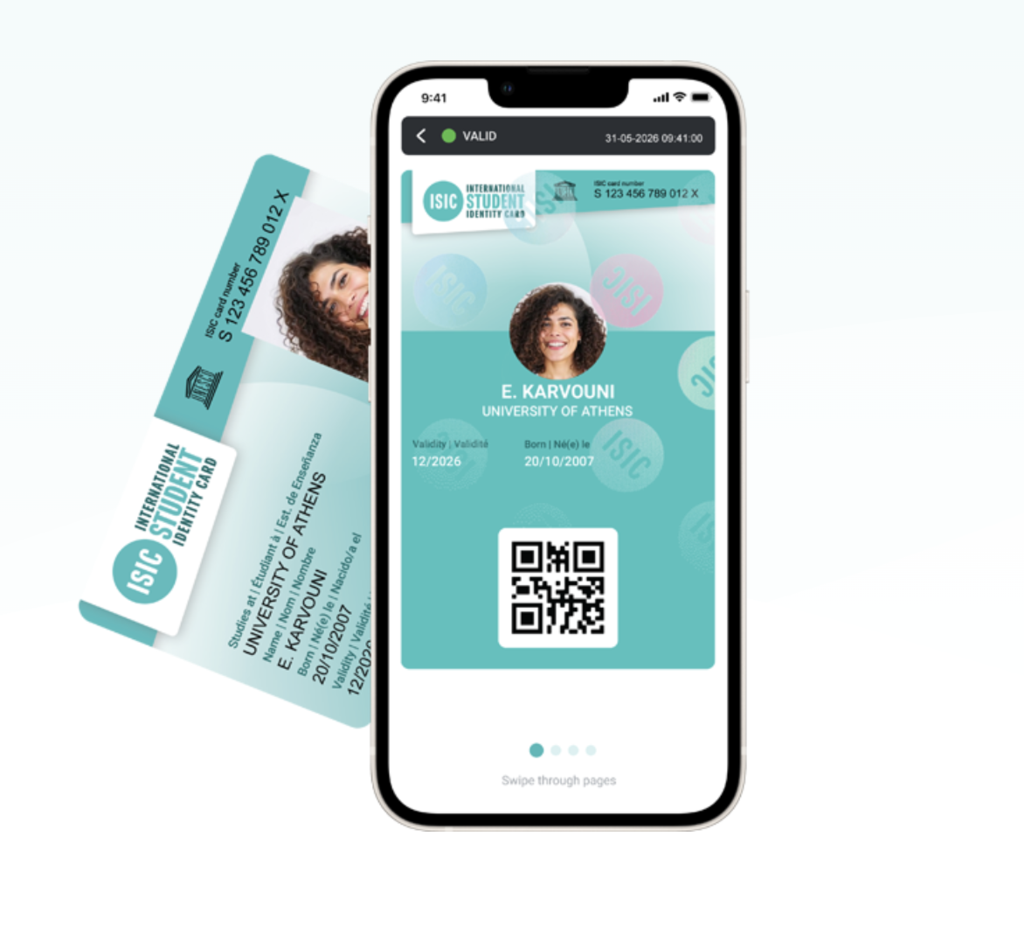
International Student Identity Card
Recognized in more than 130 countries, the International Student Identity Card (ISIC) is the only internationally accepted proof of student status. It offers holders access to more than 150,000 benefits and discounts in over 130 countries and is available to full-time secondary school, university and postgraduate students. There is no upper age limit, although applicants must be at least 12 years old.
Tips for Young Travelers
– Night travel can replace accommodation. So why not sleep on the train or bus.
– Ask about student or youth discounts everywhere—museums, public transport, ferries, attractions and even some airlines offer youth fares.
– Consider funding part of your trip as you go. This means getting a seasonal job in tourism or babysitting.
– Set a realistic budget before you leave, including transport, laundry, mobile data, attraction tickets and unexpected expenses.
– If you’re under 18, check minimum-age requirements before booking accommodation.
– Keep with you at all times, your passport or national ID, European Health Insurance Card (if eligible), copies of important documents and emergency contact details.
– For your safety, it’s best to travel with friends. Agree in advance on spending limits, shared expenses, safety expectations and what to do if someone wants to leave the group.
– Rather than rushing through multiple destinations, spend longer in fewer places. You’ll save money, meet more people and enjoy a richer travel experience.