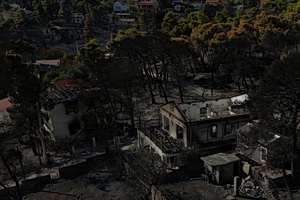
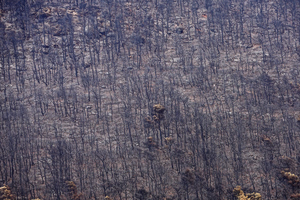
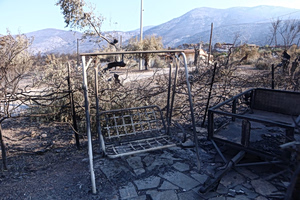
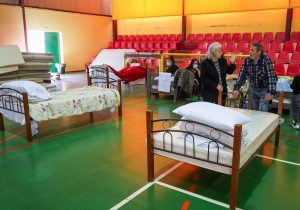
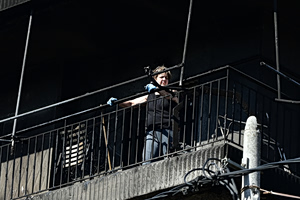
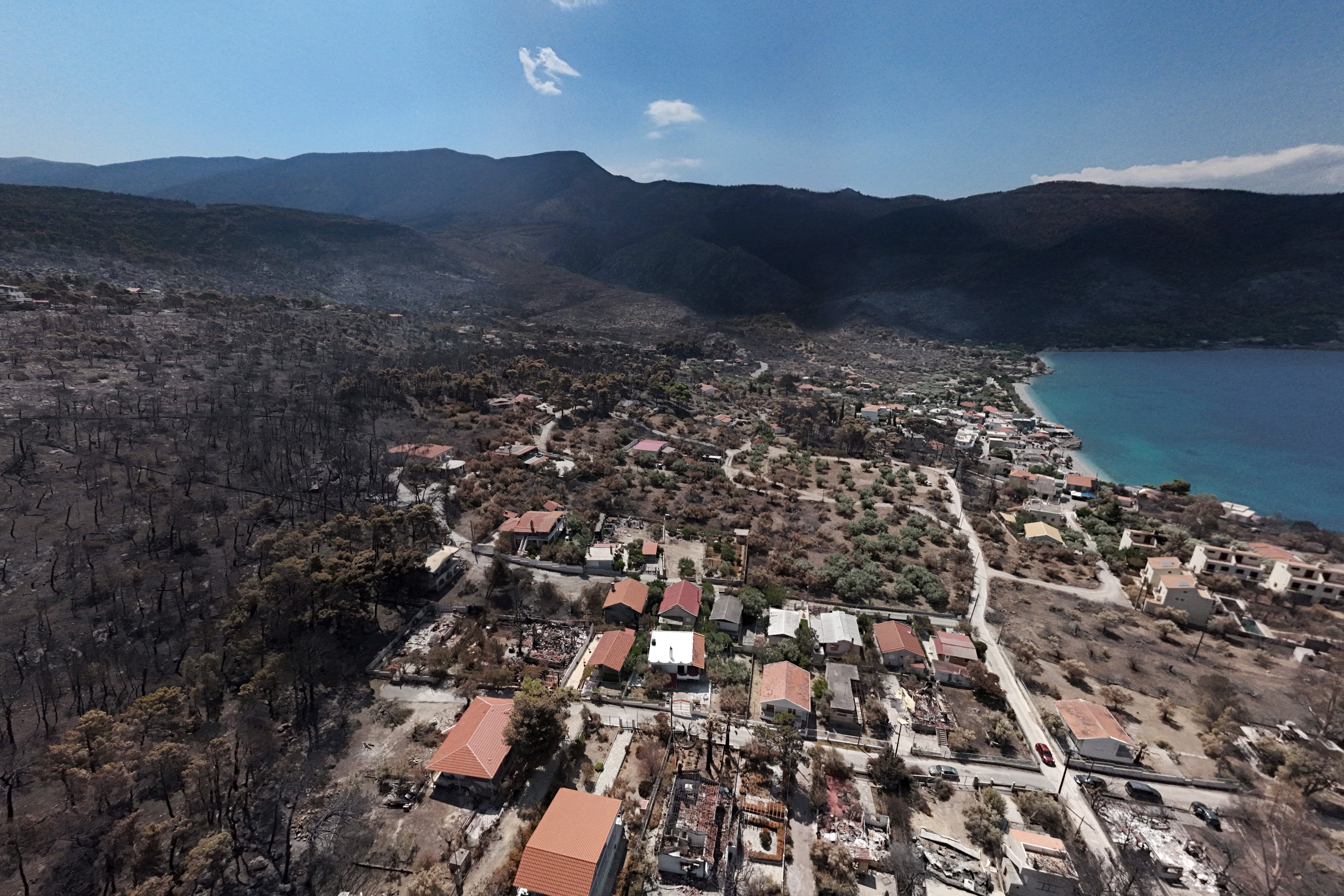
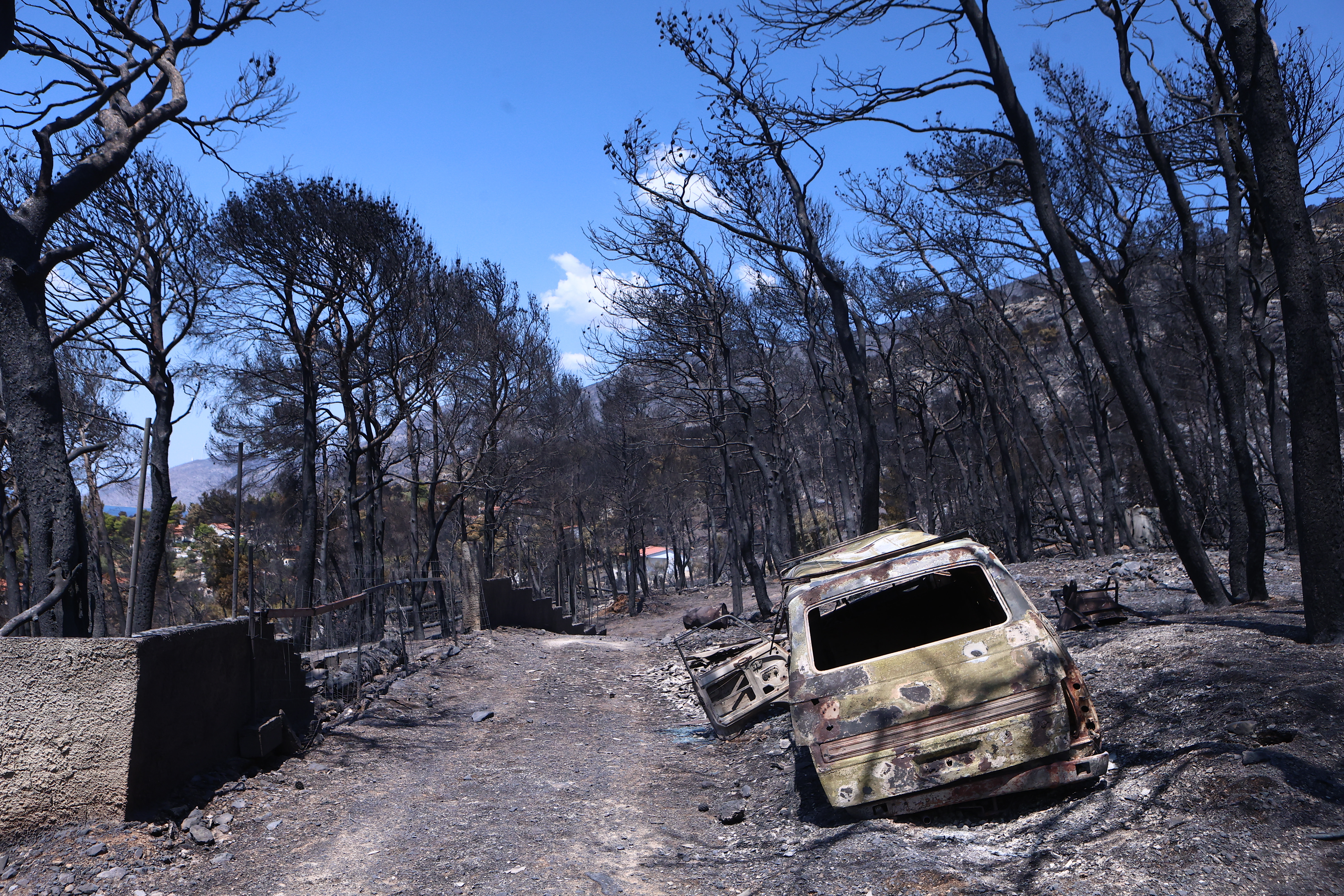
For four days, residents of Porto Germeno watched their community through television broadcasts, a handful of videos from people who remained near the fire and home security cameras, until the power finally went out. When the roads reopened, they returned to a place they struggled to recognize.
“The camera could pass right in front of your house and you might not even realize it,” says Giorgos Pappas.
Until the early hours of Saturday, Aug. 1, he searched the community’s social media page for a photograph, a video, any sign of his home. Television crews had stopped broadcasting, while the village webcams showed the fire reaching all the way down to the beach. In one image, a neighbor’s house appeared to be burning. In another, the house next door. He was certain his own home had been lost as well.
INTIME NEWS
He tried to comfort his mother, telling her they would rebuild it better than before. They slept for two hours. The next morning, they continued watching a landscape that had changed so much they could no longer tell where the camera was positioned.
The first indication that the house might have survived came from a pine tree in the yard. Pappas’ partner, Sofia, recognized it in a television shot from the harbor. The electricity pole had fallen and the hillside had burned, but the pine tree was still standing.
A short while later, the phone rang. It was his cousin, Meletis Margaritis, a volunteer forest firefighter who had cut down trees around the yard before heading to the fire front. The following morning, he entered the settlement.
“The house was saved,” he told him.
INTIME NEWS
At noon on Saturday, Pappas tried to return. He passed the first police checkpoint, but before the large bend at Psatha, dense smoke forced him to turn back. For him, as for many other residents, returning became possible only last Tuesday, when the roads reopened.
Among them was Katerina Anagnostidi, who until then had no idea what had happened to her home. She had watched her security cameras until the power went out at 12:44 a.m. on Friday, July 31.
“All I could see was that the fire had arrived. Then the screen went black,” she tells TO VIMA.
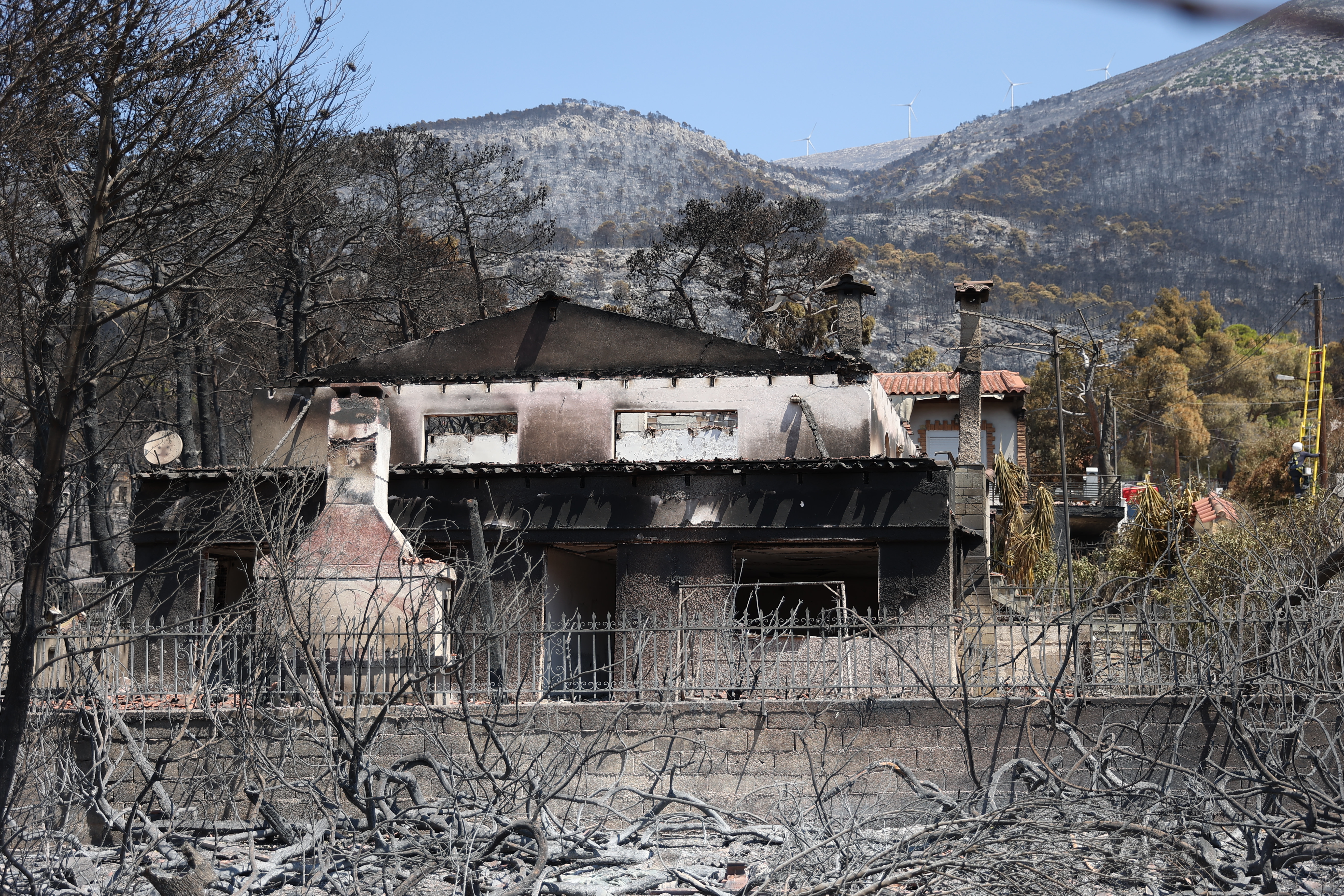
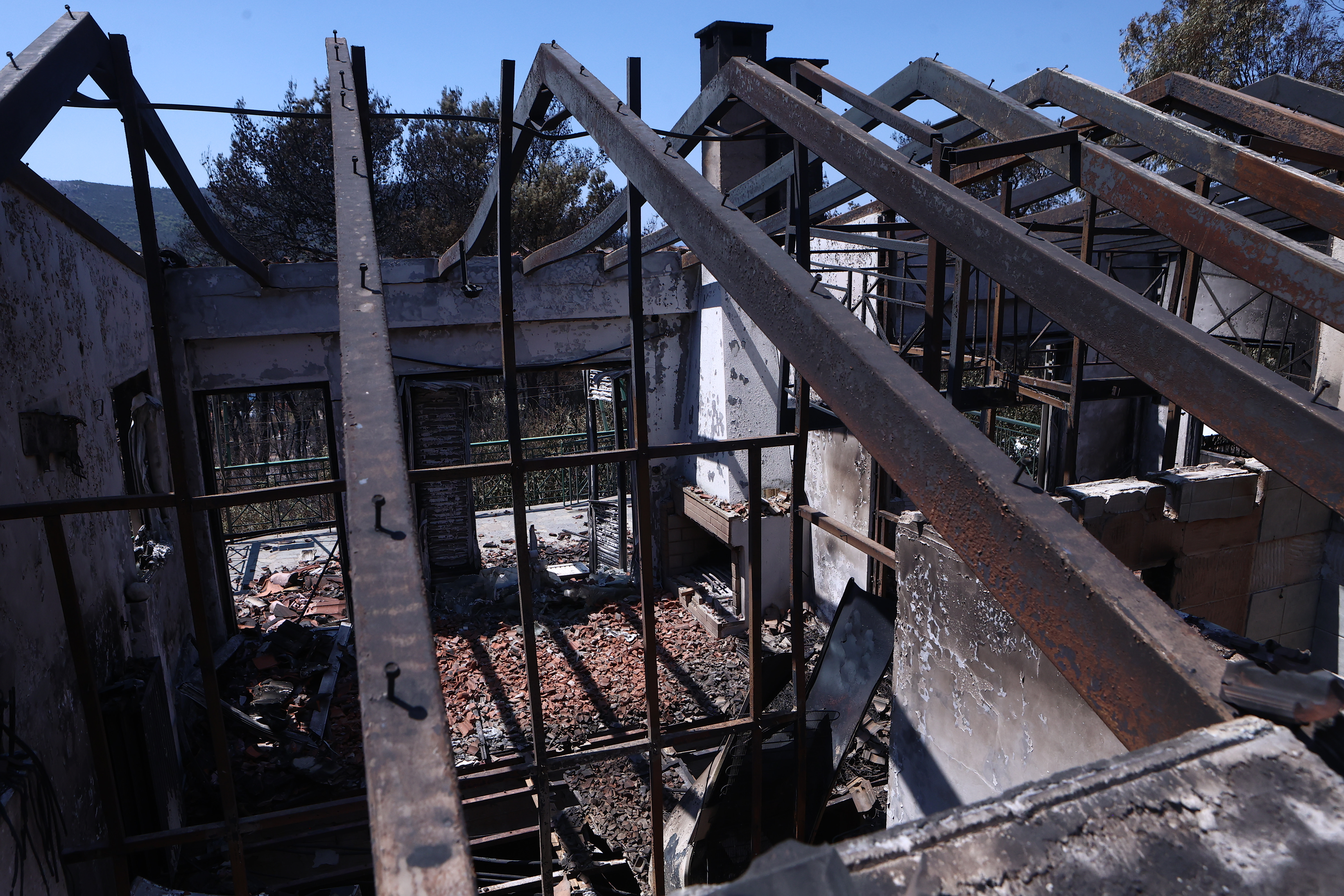
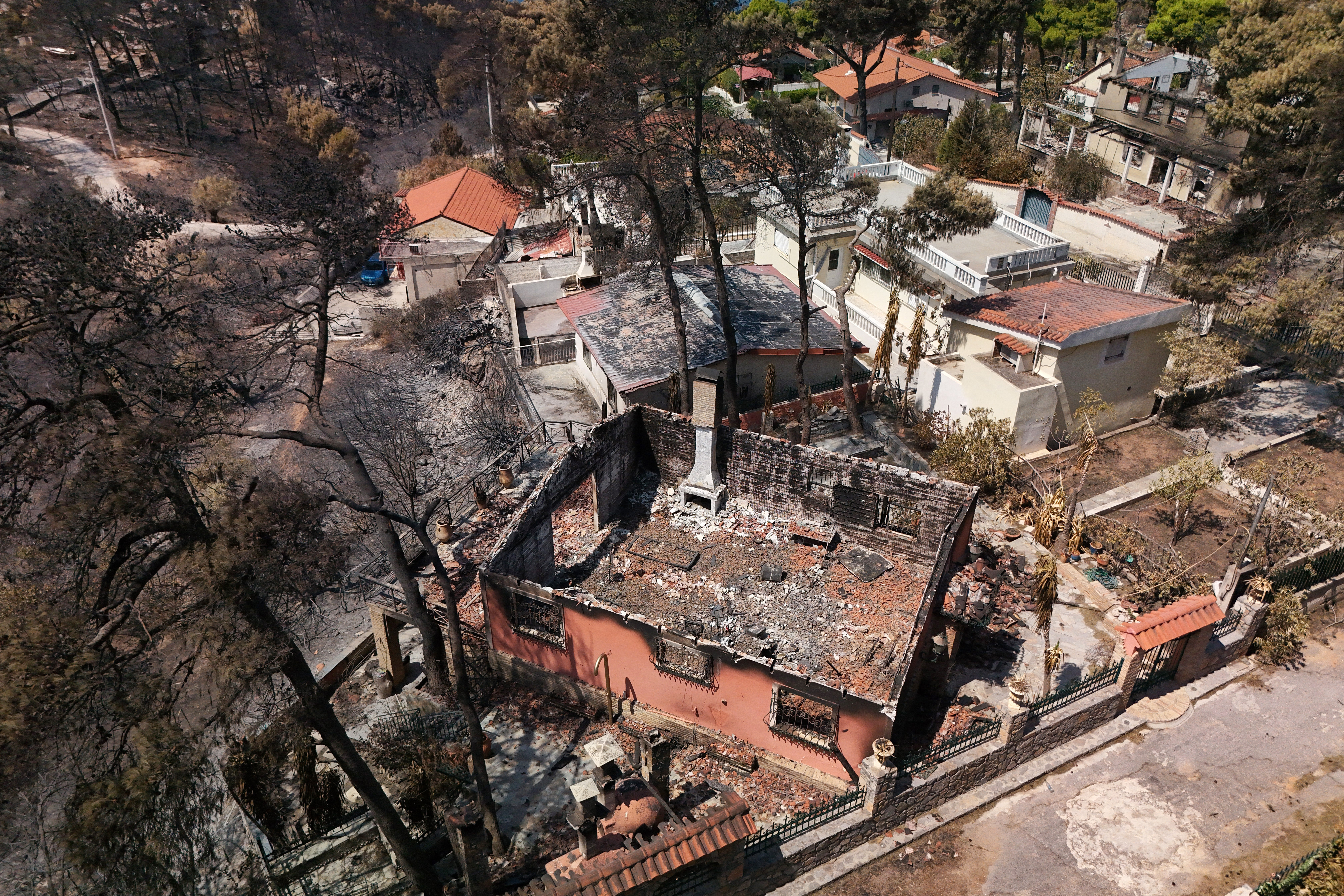
Her house is at the end of Pindou Street, at one of the highest points of the settlement. When she finally reached it, she found the ground floor still standing. The upper floor had been completely destroyed.
“You Hurt for the Other Person”
Almost every house around her had burned.
“We’re one big group here. We’ve been together since childhood,” she says.
The home of one of her childhood friends was completely destroyed. Another friend lost the upper floor of her house. They all lost the homes where they had spent every summer for decades.
INTIME NEWS
“It’s not only our own house,” she says. “You hurt for the other person because you know what that house means to them. I’ve been coming here since I was a baby. My children grew up here.”
She turns toward the blackened hillside.
“You look around now and you don’t recognize the place anymore,” she says.
Nikitas Moschos never left Porto Germeno.
On Friday night, shortly after 9 p.m., he tried to reach his home. Police checkpoints had been set up along the road. He placed a blue rotating beacon on the roof of his car — one he had kept from earlier fire-prevention patrols in the area — and passed through the checkpoint at the Psatha bend.
INTIME NEWS
He headed toward Prosili, where for about half an hour he and other residents watched the fire front move down the hillside.
“The fire was coming little by little, lined up, with tremendous force,” he recalls.
Fire trucks and volunteers were stationed outside his home. He left water for firefighters he knew from Vilia and stayed with them for a while.
A little later, police officers told him to leave.
“They would make me go, I’d leave, park the car farther away and then come back on foot,” he says.
Eventually, he left with the last fire trucks. Before going, he saw something he says he will never forget. A powerful gust of wind suddenly pushed the flames downward. For a few seconds, he thought they were about to enter the settlement. Instead, they abruptly turned toward the forest.
“The fire shot away like an arrow,” he recalls.
He believes the pruning of pine trees carried out in previous months helped stop the flames from spreading to many homes.
When he managed to return to his house, he found four separate hotspots in the yard. Using a garden hose, he began putting them out one by one.
“If I had arrived 15 minutes later, I wouldn’t have been able to save it,” he says.
Over the next several hours, he moved from street to street, sending videos to the community’s social media page. Neighbors asked him to check their homes or send them photographs.
“No One Ever Called Me”
As Moschos moved through the village, he realized the main threat was no longer the primary fire front, but flare-ups.
“Many houses had not burned when I passed them the first time. Half an hour later, some had caught fire, while others did two or three hours later,” he says.
INTIME NEWS
During the night, he called people he knew in the Fire Service, local government and other agencies. He told them the main fire front had moved away and that the air was no longer suffocating. He asked for even a small number of crews to be sent in to deal with the flare-ups.
“They told me someone in charge would call me. No one ever did,” he says. “The only firefighter who called me was a neighbor who was operating elsewhere in the area. He asked me, if I could, to go by his house, see what was happening and spray some water.”
Moschos says his criticism mainly concerns the hours after the main blaze had passed.
“When the fire arrived, that huge wave could not be stopped. We’re talking about 20-meter flames. You could hear gas cylinders exploding to the right and left, as if you were on a firing range. The issue is what happened afterward. Once the main front passed, houses continued burning because of flare-ups. No help came. They let the houses burn.”
A few hundred meters away, at the small harbor of Porto Germeno, Savvas Karadimas was trying to save his own home.
It was around 1:30 a.m. when the first embers landed in his yard. He was there alone with a garden hose, trying to contain the fires. At the same time, according to his account, fire trucks were leaving the area.
INTIME NEWS
“I went out into the street and shouted at them to stop. I told them, ‘Just spray some water in the yard and then leave.’ They answered, ‘We’re leaving, we’re going to burn.’”
He stayed behind alone. A short while later, Giannis Giokas, president of the local residents’ association, arrived with the association’s small pickup truck. Together, they managed to save the house, which sustained damage only to the surrounding property.
The Warnings
Giokas says the residents’ accounts do not surprise him at all.
As president of the local residents’ association, he had taken part in a wildfire-preparedness meeting on June 12 at the Municipality of Mandra-Eidyllia. According to him, residents had warned that Porto Germeno was particularly vulnerable because it has only one evacuation route and had asked for more aerial firefighting resources and better operational planning.
“Nothing we said that day was followed. Absolutely nothing. If anything, the opposite happened. What are we supposed to say? That when the final evacuation order was issued late at night, the Fire Service left first and the residents followed afterward? There were hundreds of people in Porto Germeno at the time,” he says.
After the final evacuation, six people remained in the settlement.
INTIME NEWS
Using the residents’ association’s old pickup truck — a makeshift firefighting vehicle equipped with a water tank and pump that residents jokingly call “the old lady” — they drove from street to street throughout the night. They refilled from the water tankers that remained and returned again and again to the flare-ups.
“We kept calling and asking for crews to be sent in for the flare-ups. The answer was that they could not get down into the settlement because they had been cut off by the fire. That seemed impossible to us, because we were already inside at the time, trying to put out the fires ourselves,” he says.
A Place Transformed
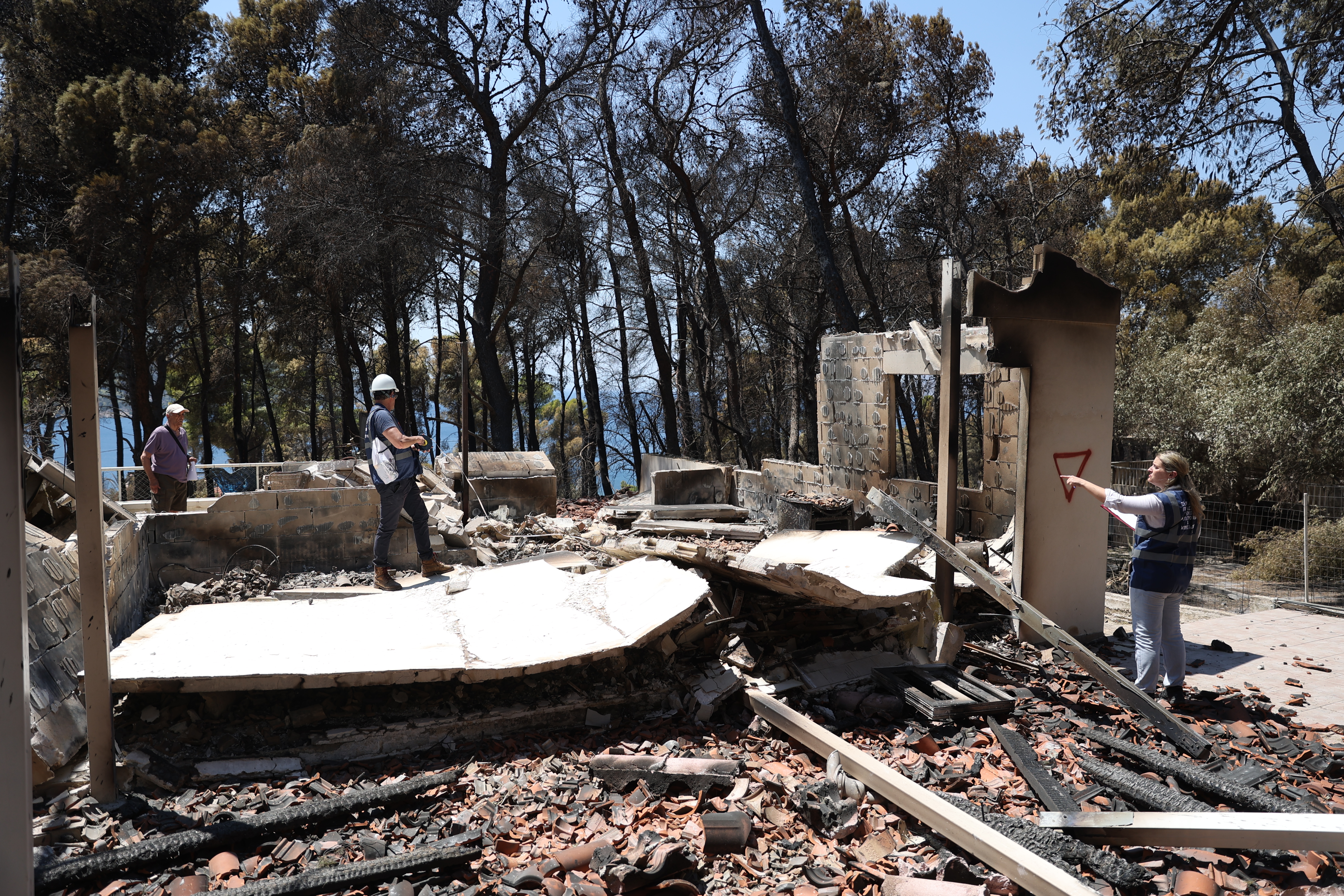
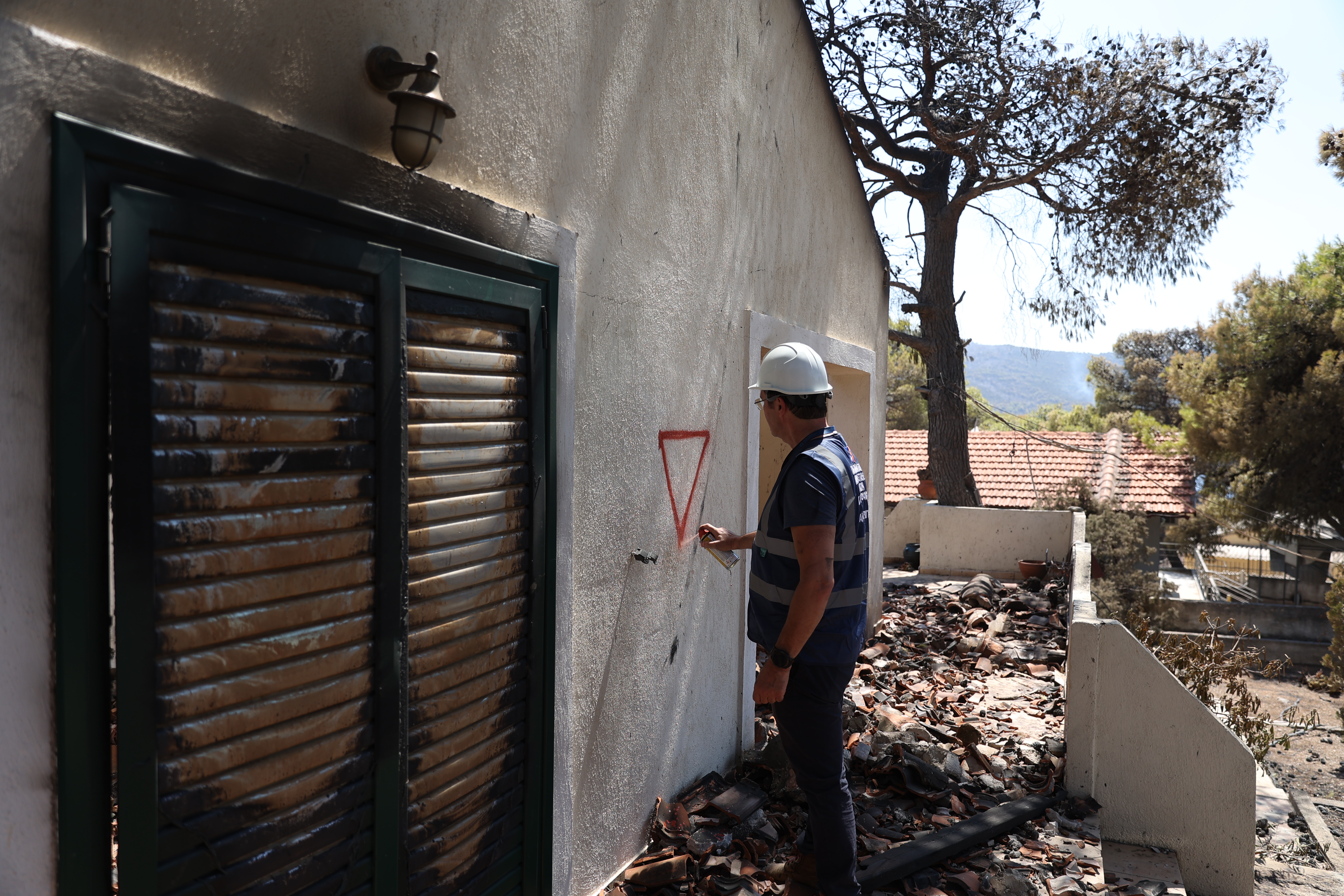
Damage assessments are still underway.
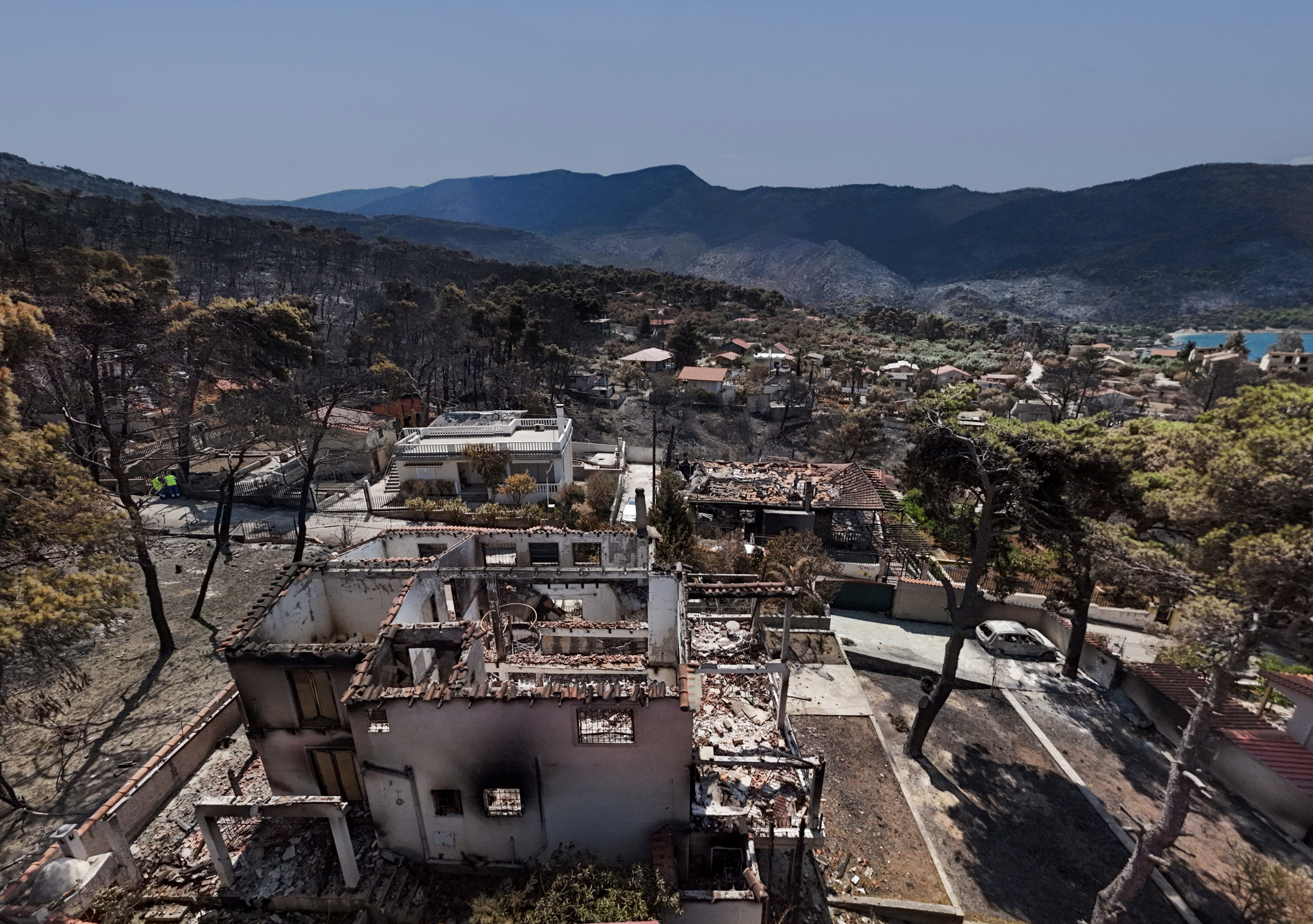
According to estimates by residents and the local association, more than 250 homes have sustained damage, ranging from minor destruction to complete loss. Business owners in the settlement are already counting losses in the tens of thousands of euros and are considering remaining closed for the coming months.
The conversation in Porto Germeno has now shifted. It is no longer only about what was lost, but also about what residents believe could have been saved.
© 2026 Intime p.a. / Chalkiopoulos Nikos
For years, people here oriented themselves by a pine tree, a rock, a hillside.
Many of those landmarks no longer exist.
It will take time for them to recognize their home again.