
 Μake us preferred on Google
The surveys are scheduled to run through Jan. 31, 2027, in the offshore blocks A2 and South of Peloponnese, according to a Nov. 17 application published by the Hellenic Coast Guard.
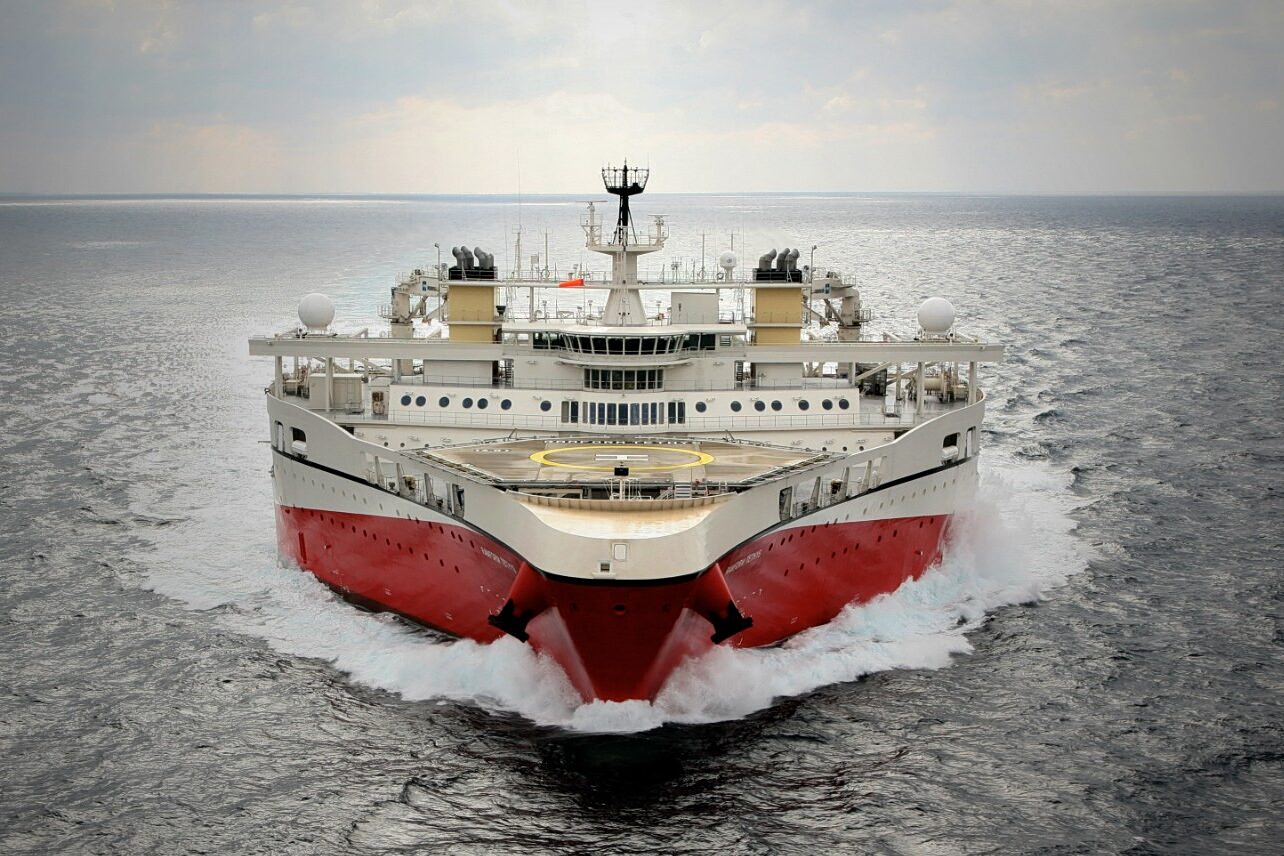
The application concerns the seismic research vessel Ramform Tethys, sailing under the flag of the Bahamas, the support vessel Thor Freyja, under the Faroe Islands flag, and the escort vessel EDT Niovi, under the Liberian flag. The request seeks the necessary exemption under Greek maritime legislation for the vessels to conduct the planned operations.
The consortium has also submitted requests for NAVTEX announcements covering the survey operations. The applications constitute a procedural step toward launching the work, which is intended to collect geophysical data to assess the hydrocarbon potential of the two offshore concession areas.
Cabotage exemption procedure
The application for exemption from cabotage requirements was submitted under the provisions of Greece’s maritime legislation, as the planned operations involve vessels flying foreign flags and activities that partially extend into Greek territorial waters.
The coast guard’s notice provides for consultations with maritime authorities and relevant shipping associations to determine whether a suitably equipped vessel under the Greek flag is available to undertake the work. The deadline for responses is Thursday, Nov. 19.
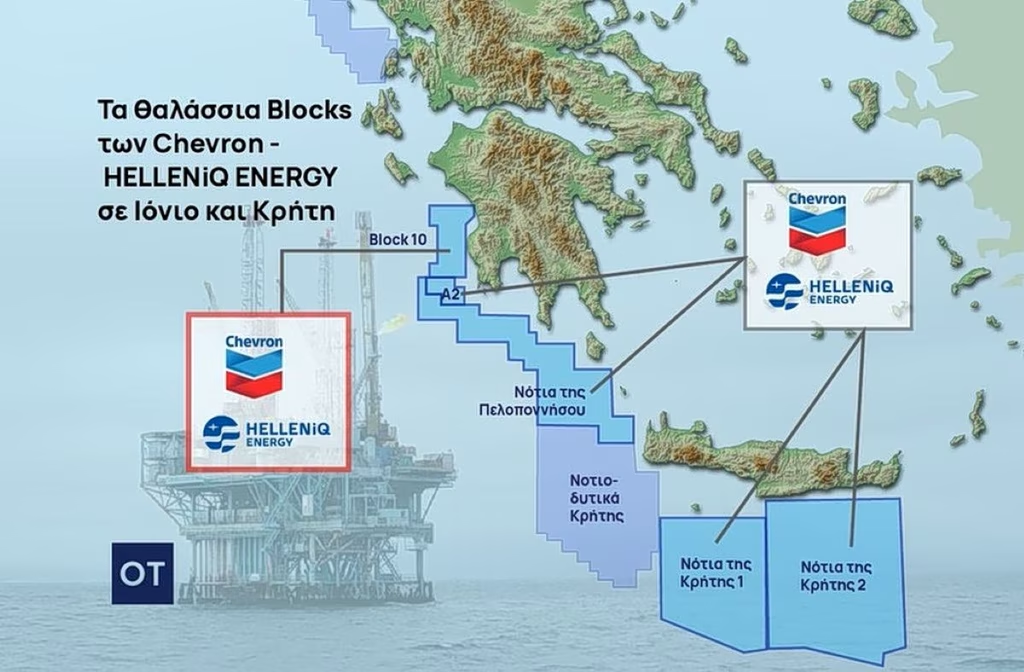
The three vessels are expected to operate in the two offshore concession areas covered by Law 5287/2026, which ratified the agreements between the Greek state and the Chevron-HELLENiQ ENERGY consortium.
The four concessions awarded to the consortium comprise Block A2, South of Peloponnese, South Crete 1 and South Crete 2, covering approximately 47,000 square kilometers. Chevron holds a 70% operating interest, while HELLENiQ ENERGY holds the remaining 30%.
The initial survey phase south of the Peloponnese is part of a broader exploration program intended to assess potential hydrocarbon deposits. Seismic surveys are an initial stage of exploration and do not establish the existence of commercially recoverable reserves.
The next phase south of Crete
The surveys south of the Peloponnese are expected to precede exploration work in the two concession areas south of Crete, which form part of the same four-block program. The timetable outlined earlier by the Greek government and the consortium envisaged surveys in the Ionian, south of the Peloponnese and south of Crete, with the southern Crete areas expected to be examined during 2027.
The two areas south of Crete have a more pronounced geopolitical dimension because of their proximity to the maritime claims outlined in the controversial and, by and large, disputed 2019 Turkey-Libya memorandum on maritime delimitation. Athens and the EU reject the memorandum, arguing that it disregards the maritime rights of Greek islands, including Crete, under international law.