 Μake us preferred on Google
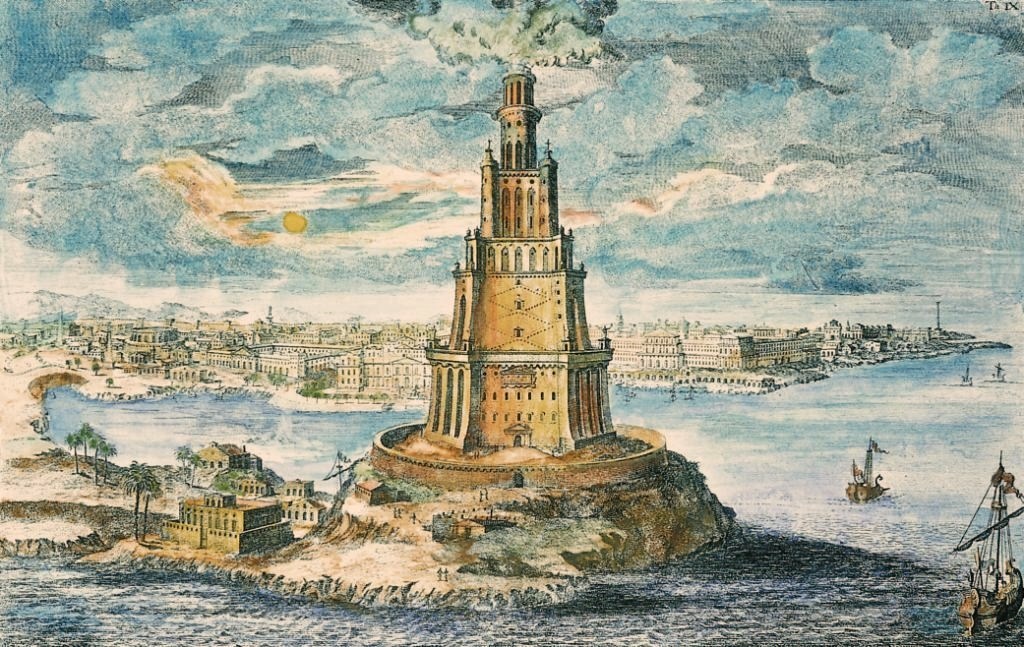
 On August 8, 1303, the earth shook violently in the Egyptian city of Alexandria. According to historians, this earthquake marked the beginning of the end for one of the most extraordinary achievements of the ancient world: the Lighthouse of Alexandria. Rising an estimated 120 meters (390 feet) into the sky, it had stood since 279 BCE—an engineering marvel and one of the famed Seven Wonders of the World.
The word pharos—meaning lighthouse in many languages—comes from the name of the small island of Pharos, just off Alexandria’s coast. In the 3rd century BCE, this rocky outcrop was chosen as the site for a colossal beacon that would guide ships into the busiest port in the Mediterranean.
Born in the Age of the Ptolemies
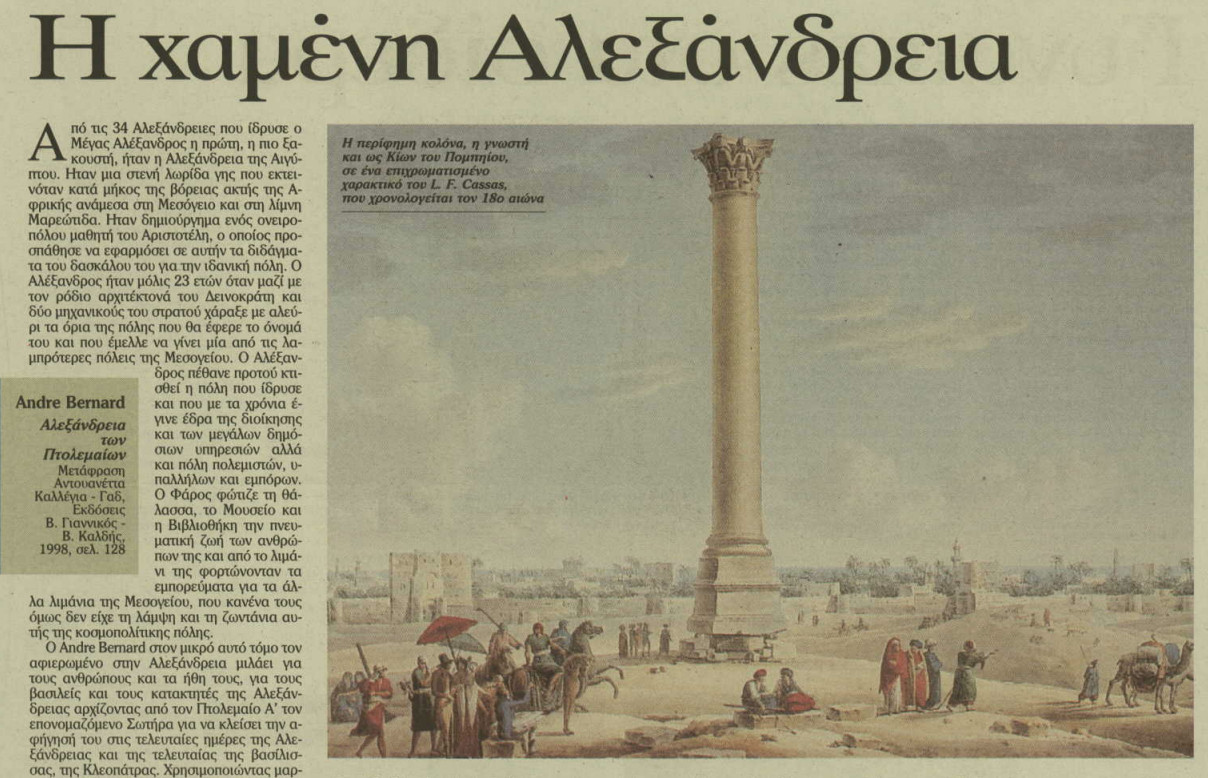
Fifty years after Alexander the Great founded Alexandria in 331 BCE, his successors ruled Egypt under the Ptolemaic dynasty. Around 279 BCE, during the reign of Ptolemy II Philadelphus, the architect Sostratus of Cnidus was commissioned to design a lighthouse unlike any the world had seen.
It was part of a grand vision. Alongside the Heptastadion, a causeway linking Pharos Island to the mainland, the lighthouse transformed the port into a hub of trade and culture. Ancient accounts say it remained operational until the Arab conquest of Alexandria in the 7th century CE—a span of nearly a thousand years.
Alexandria: Jewel of the Mediterranean
Of the 34 cities named Alexandria that Alexander the Great founded or renamed, this was the crown jewel. The city occupied a narrow strip between the Mediterranean Sea and Lake Mariotis. Alexander, then just 23, worked with the Rhodian architect Deinocrates and two military engineers to lay out its boundaries—famously using flour to mark the streets on the sand.
Though he died before construction was complete, his city became the Ptolemaic capital, home to officials, merchants, scholars, and soldiers. Its Museum and legendary Library lit the minds of the ancient world, just as the lighthouse lit its harbors. Ships bearing goods, scrolls, and treasures sailed in from across the Mediterranean, and none could match the city’s cosmopolitan brilliance.
A Wonder in Stone
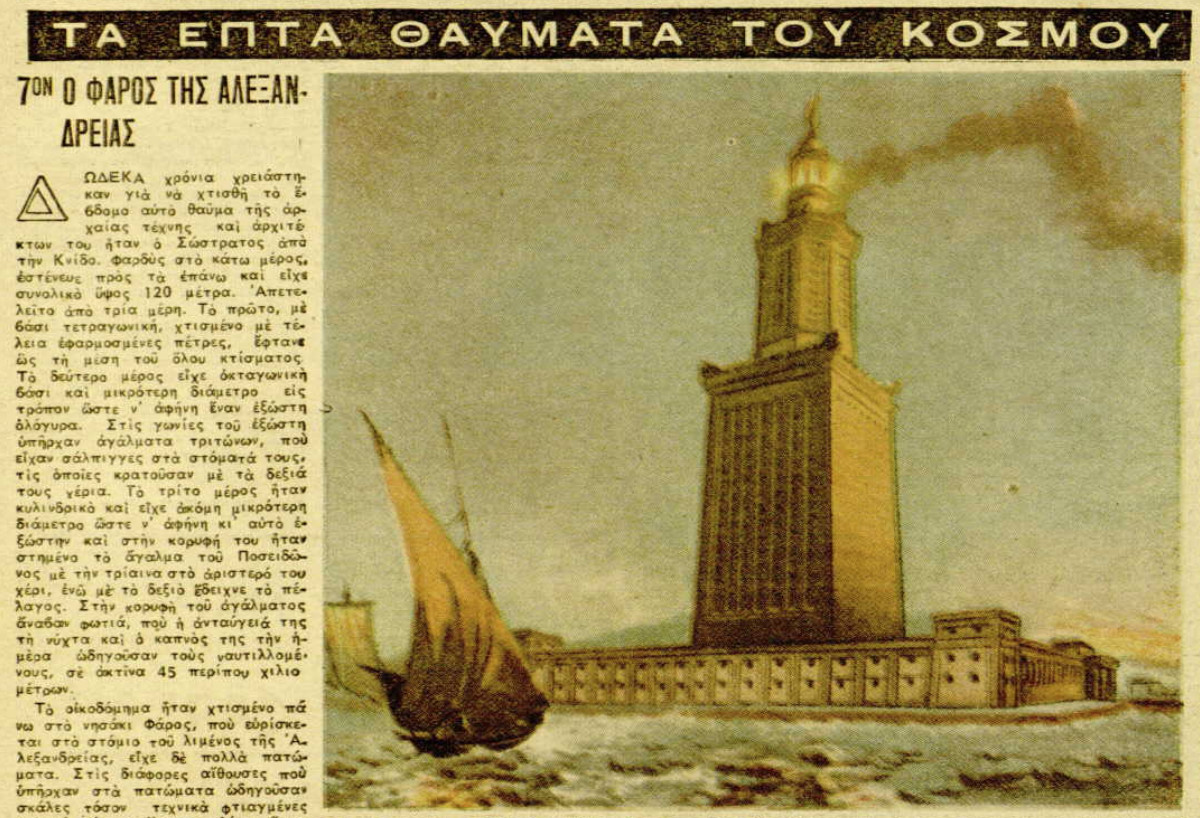
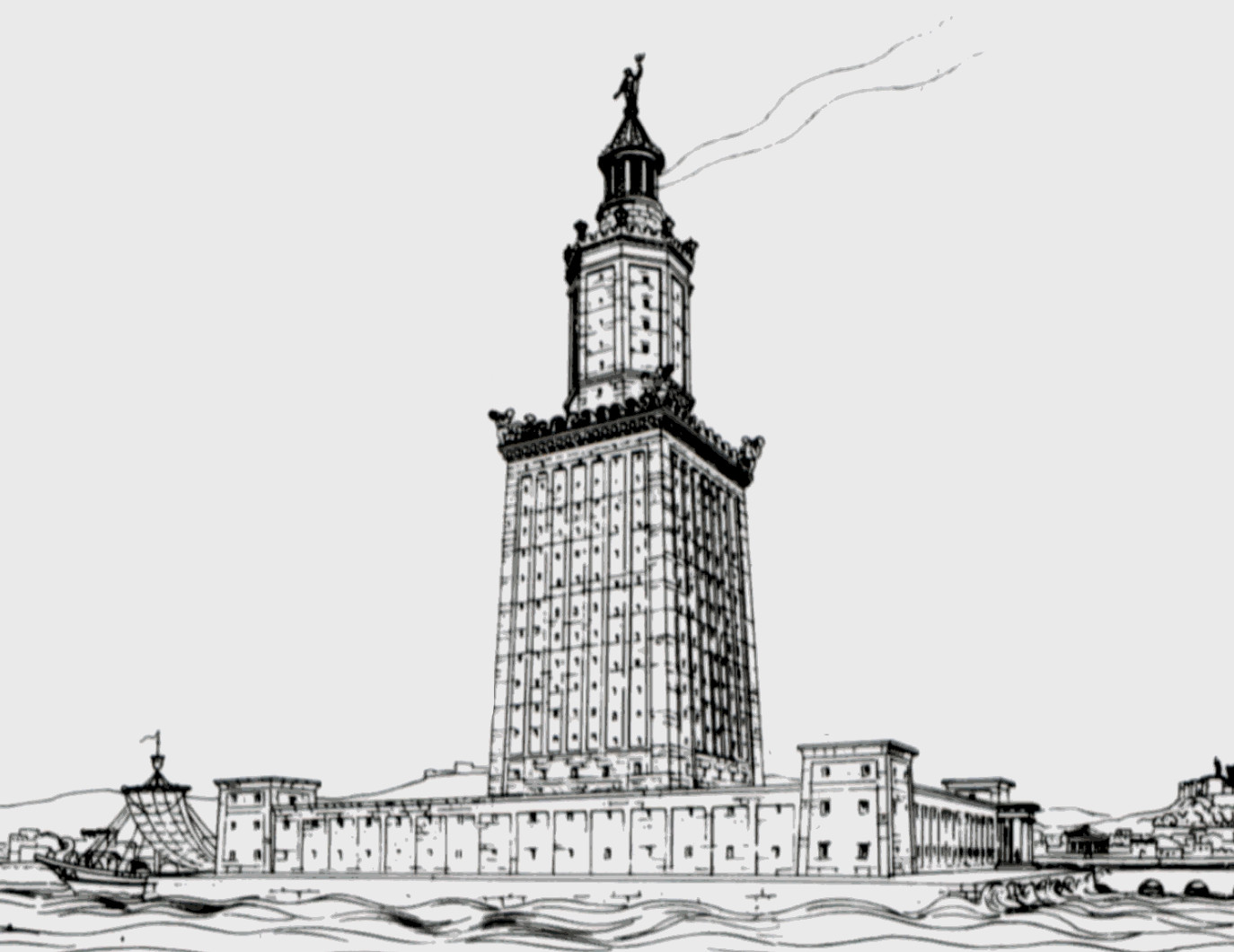
Building the Lighthouse of Alexandria took twelve years. It was constructed in three tiers:
- The Base: A square platform of perfectly fitted stone blocks, rising halfway up the tower.
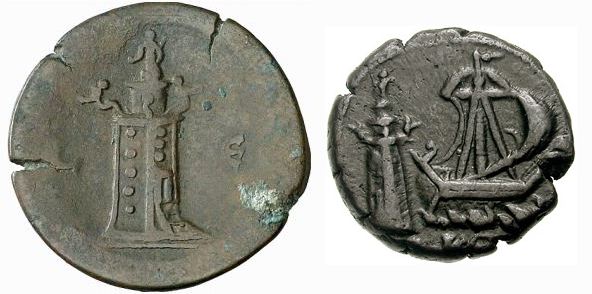
- The Middle: An octagonal section with a broad balcony, where statues of tritons stood at each corner, trumpets at their lips.
- The Top: A cylindrical tower crowned with a statue of Poseidon, trident in one hand and the other pointing to the open sea.
At the very top, a blazing fire—its light reflected by polished bronze mirrors—could be seen nearly 45 kilometers (28 miles) away. By day, a column of smoke guided sailors; by night, the fire became a beacon against the dark horizon.
Ingeniously, the interior included ramps wide and gradual enough for pack animals to carry fuel to the top. Ptolemy II spared no expense, sheathing the exterior in gleaming white plaster. Ancient writer Lucian records that Sostratus secretly carved his own name into the stone, covering it with plaster inscribed with Ptolemy’s dedication. As the plaster wore away over centuries, Sostratus’s name emerged—immortalized.
Earthquakes, Repairs, and Decline
Over time, the lighthouse faced an unrelenting enemy: the earth itself. A series of earthquakes, beginning in the 4th century CE, steadily damaged the structure. After each tremor, the people of Alexandria repaired what they could. The most significant restoration came in 874 CE, under Arab rule, when the great dome atop the lighthouse was rebuilt.
But as Alexandria’s Great Harbor silted up and its commercial importance waned, maintenance ceased. Stones were scavenged for other buildings, and the once-proud tower began to crumble.
The coup de grâce came in 1324, when a powerful earthquake brought down the last of the lower square section. The ruins lay abandoned until the 15th century, when the Mamluk Sultan Qaitbay used the surviving stone to build the fortress that still stands on the site today.
A City’s Fate Mirrors Its Lighthouse
The lighthouse was not the only casualty. The city it served—the glittering Alexandria of the Ptolemies—also declined. Its Museum and Library, its plazas, gardens, temples, and statues vanished over centuries of conquest and catastrophe. Romans, Byzantines, Arabs—all left their mark, often dismantling monuments for their materials. Earthquakes toppled what invaders spared, and the rising sea claimed the rest.
Eventually, large parts of ancient Alexandria sank into sand and memory. What was once the intellectual and commercial heart of the Mediterranean became a shadow of its former self, its grandeur forgotten—until modern archaeology began to uncover the stones and statues buried offshore.
Legacy of the Light
Today, the Fort of Qaitbay guards the same stretch of coast once watched over by the Lighthouse of Alexandria. Divers have found massive blocks beneath the waves—silent remnants of the wonder that for centuries guided sailors home.
The lighthouse’s legacy lives on in every port and harbor. The very word pharos, born from that small island off Alexandria, endures in languages around the world. And though the light has long gone out, the story of its rise, glory, and fall still shines brightly in human memory.